
Last Updated: March 27, 2026
Sharpening your lawn mower blade is one of those tasks that seems simple, but doing it right makes a big difference. A sharp blade cuts grass cleanly, helps your lawn stay healthy, and reduces wear on your mower. If you use a grinder, you can restore a dull blade to like-new sharpness quickly and efficiently.
Many people are unsure about using a grinder, or they worry about safety and damaging the blade. This guide will walk you through the entire process step by step. You’ll learn not only how to sharpen a lawn mower blade with a grinder but also how to avoid common mistakes and get the best results.
Why Sharpening Matters
A dull lawn mower blade tears grass instead of cutting it. This leaves your lawn looking ragged, and the torn edges can turn brown and invite disease. A sharp blade slices cleanly, keeping your lawn greener and healthier. Studies show a sharp blade can reduce mowing time by up to 20% and even lower fuel consumption, since the mower doesn’t have to work as hard. If you notice the grass tips turning brown or uneven patches after mowing, it’s time to check the blade.
Tools And Materials You Need
Before you start, gather everything so you won’t have to stop halfway through. Here’s what you need:
- Angle grinder (or bench grinder)
- Grinding wheel (medium or coarse grit)
- Work gloves and safety goggles
- Ear protection
- Sturdy workbench or clamp
- Socket wrench or spanner (to remove the blade)
- Metal file (for touch-ups)
- Blade balancer (optional but recommended)
- Stiff brush (for cleaning the blade)
- Permanent marker (to mark the blade)
- Rags and oil (for cleaning and protecting the blade)
A small but important point: Always use the right grinding wheel for steel blades. Using the wrong wheel can overheat the metal or cause uneven grinding.

Credit: www.youtube.com
Removing The Blade Safely
Removing the blade may sound obvious, but many beginners make mistakes here. First, disconnect the spark plug wire. This prevents any accidental starting while you work. Tip the mower on its side, with the air filter facing up to avoid oil leaks.
Use a socket wrench to loosen the bolt that holds the blade. If the bolt is stuck, a little penetrating oil can help. Mark the bottom of the blade with a permanent marker so you won’t reinstall it upside-down.
Some mowers have blade adapters or washers—keep track of these parts. Lay the blade on your workbench and clean off any grass, dirt, or rust with a stiff brush. A clean blade makes sharpening easier and safer.
Inspecting The Blade
Before you sharpen, look closely at the blade. Check for cracks, deep nicks, or bends. If you see cracks or the blade is heavily bent, it’s safer to replace it instead of sharpening. Minor nicks can be smoothed out with a grinder, but large chips can cause vibration or uneven cuts.
Also, check the thickness of the blade. If it’s worn thin, sharpening may not be enough. Most mower blades are designed to be sharpened several times, but after years of use, they can get too thin to be safe.
Setting Up The Grinder
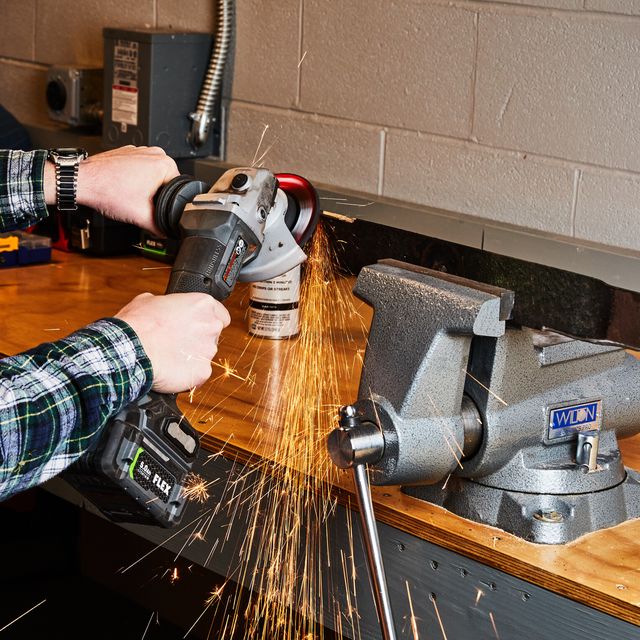
A grinder is a powerful tool, so safety comes first. Clamp the blade firmly to your workbench, with the cutting edge facing up and away from you. Put on your safety goggles, gloves, and ear protection. Make sure the grinder’s guard is in place, and the grinding wheel is secure.
If you’re using an angle grinder, hold it with both hands for better control.
Set the grinder to medium speed. Too fast, and you can overheat the blade; too slow, and it takes much longer to sharpen.
Sharpening The Blade: Step-by-step
- Find the right angle: Most mower blades have a cutting edge angle of 30 to 40 degrees. Check your blade or the owner’s manual. If you’re not sure, 35 degrees works for most blades.
- Mark the edge: Use a permanent marker to color the blade’s edge. As you grind, you’ll see the marker disappear, making it easier to keep a consistent angle.
- Start grinding: Hold the grinder against the edge and move smoothly from one end to the other. Apply steady, even pressure. Let the grinder do the work—don’t press too hard.
- Keep the blade cool: Grinding creates heat, which can weaken the metal. Every few passes, dip the blade in water or take breaks to keep it cool. Blue coloring on the blade means it’s overheated.
- Check your progress: After a few passes, check the edge. You want a sharp, clean bevel, not a razor-thin edge. A too-thin edge can chip easily. The marker trick helps you see any spots you’ve missed.
- Repeat on the other side: Always sharpen both ends of the blade evenly. Uneven sharpening makes the blade unbalanced, causing vibration and possible mower damage.
Comparing Grinder Types
Choosing the right grinder makes a difference. Here’s a quick comparison:
| Grinder Type | Pros | Cons |
|---|---|---|
| Angle Grinder | Portable, fast, good for most blades | Requires steady hand, can overheat blade |
| Bench Grinder | Stable, easy to keep angle, less chance of overheating | Less portable, needs space |
| Belt Grinder | Very smooth finish, quick sharpening | Expensive, not common for home use |
For most home users, an angle grinder is the best mix of speed and control.
Checking Blade Balance
Many people forget this step, but it’s critical. An unbalanced blade can cause your mower to shake and even damage the engine. After sharpening, check the balance:
- Hang the blade on a nail or use a blade balancer.
- If one side dips, remove a little more metal from the heavier side.
- Repeat until the blade sits level.
If you don’t have a balancer, a simple nail in the wall works as a substitute.

Credit: www.youtube.com
Reinstalling The Blade
Before putting the blade back, clean the mounting area on your mower. Make sure any washers or adapters go back in the right order. Tighten the bolt firmly but don’t over-tighten—check your owner’s manual for the right torque. Reconnect the spark plug wire.
When reinstalling, make sure the sharpened edge faces the correct direction. The marker you used earlier should help as a reminder. Installing the blade upside-down is a common mistake that leads to poor cutting.
Common Mistakes And How To Avoid Them
- Overheating the blade: Grinding too fast can make the edge blue and weak. Take breaks, use water, and go slowly.
- Sharpening at the wrong angle: Too steep makes the edge weak; too shallow makes it dull quickly. Stick to about 35 degrees.
- Ignoring blade balance: Always check after sharpening.
- Forgetting safety gear: Eye protection is a must. Metal sparks can cause injury.
- Reinstalling the blade wrong way up: Mark the blade before removal to avoid confusion.
Credit: www.popularmechanics.com
How Often Should You Sharpen?
Most people should sharpen their lawn mower blade after every 20-25 hours of mowing, or at least twice per season. If you mow over sticks, sand, or rocks, you might need to sharpen more often. Check the blade if you notice ragged grass tips or the mower is working harder than usual.
When To Replace Instead Of Sharpen
Sharpening works well for normal wear, but not all blades can be saved. Replace the blade if you see:
- Large cracks or splits
- Major bends
- Deep chips or missing pieces
- Blade is worn thin (less than 1/8 inch thick at edge)
A damaged blade is unsafe and can break during use.
Simple Maintenance Tips
Keeping your blade sharp is only part of mower care. Here are a few more tips:
- Clean the blade after each use to prevent rust.
- Store your mower in a dry place.
- Check the mounting bolt for tightness regularly.
- Avoid mowing over stones or debris.
Doing these will keep your mower running smoothly and your lawn looking its best.
Grinder Vs. Other Sharpening Methods
You might wonder if a grinder is the only way. There are other options, each with their own pros and cons.
| Method | Speed | Edge Quality | Skill Needed |
|---|---|---|---|
| Grinder | Fast | Very Sharp | Medium |
| Metal File | Slow | Good | Easy |
| Sharpening Stone | Very Slow | Fair | Easy |
| Professional Service | Fast | Excellent | None |
A grinder gives you a sharp edge fast, but a metal file or stone is safer if you are nervous about power tools.
Real-world Example
Let’s say you have a typical 21-inch push mower. After a summer of weekly mowing, the blade edge is dull and has a few small nicks. You remove the blade, clean it, and use an angle grinder with a medium grit wheel.
After a few passes on each side (about 2-3 minutes per side), the edge looks shiny and sharp. You check the balance, reinstall, and notice the mower cuts cleaner and faster on the next use. The whole job takes less than 30 minutes.
Safety Reminders
Don’t skip safety steps, even if you’re in a hurry. Here are a few key reminders:
- Always disconnect the spark plug before removing the blade.
- Wear goggles, gloves, and ear protection.
- Clamp the blade securely before grinding.
- Keep children and pets away from the work area.
For more information about lawn mower maintenance, you can visit the official Oregon Products Lawn Mower Blade Sharpening Guide.
Frequently Asked Questions
How Do I Know If My Lawn Mower Blade Is Dull?
If your grass looks uneven, with torn or brown tips after mowing, the blade is likely dull. You might also notice the mower is harder to push or the engine seems to struggle.
Can I Sharpen A Blade Without Removing It From The Mower?
It’s possible, but not recommended. Leaving the blade on makes it harder to get a consistent edge and is less safe. Removing the blade gives better results and lets you check for damage.
What’s The Best Angle For Sharpening A Mower Blade?
Most lawn mower blades are sharpened at a 30-40 degree angle. Check your owner’s manual. If unsure, 35 degrees is a safe choice for most blades.
How Do I Balance The Blade After Sharpening?
Hang the blade on a nail through its center hole. If one side dips, remove a little more metal from that side. Repeat until it sits level.
Is It Dangerous To Use A Grinder For Sharpening?
A grinder is safe if used correctly. Always wear safety gear, clamp the blade, and avoid overheating the metal. Follow all safety instructions for your grinder.
Sharpening your lawn mower blade with a grinder may seem intimidating, but with careful steps, it’s a straightforward task. The payoff is a healthier lawn, a mower that works better, and money saved on repairs. Take your time, follow safety guidelines, and you’ll see the difference on your next mow.
