
Last Updated: March 21, 2026
Are your hedge trimmer blades not cutting as smoothly as they used to? Dull blades can make your trimming tasks frustrating and can even damage your plants.The good news is, sharpening your hedge trimmer blades is simpler than you think—and it can save you time and money on replacements. In this guide, you’ll discover easy and effective ways to sharpen your blades using tools you might already have.Whether you’re a beginner or looking for a faster method, this article will help you get your hedge trimmer back to peak performance quickly. Keep reading to learn the step-by-step process that will make your next trimming job a breeze!Tools For Sharpening
Sharpening hedge trimmer blades requires the right tools for effective results. Choosing the proper tool depends on blade condition and user skill. Some tools offer speed, while others provide precision. Understanding each tool’s strengths helps maintain your trimmer efficiently.Angle Grinder Benefits
The angle grinder works fast on dull or damaged blades. It uses a flap disc to remove metal quickly. This tool saves time on heavy sharpening jobs. It requires steady hands to avoid removing too much metal. Angle grinders are ideal for users with some experience.Flat File Advantages
A flat file suits routine sharpening and gentle touch-ups. It lets you control pressure and angle easily. This manual method is safer for beginners. Files sharpen blades slowly but with high precision. Use smooth, even strokes along the blade’s edge.Dremel With Stone Bit Use
The Dremel tool fits tight spaces and detailed work. A stone bit on the Dremel shapes blade edges finely. It offers great control for delicate blades. This tool is perfect for minor sharpening and touch-ups. Work slowly and carefully to avoid overheating the blade.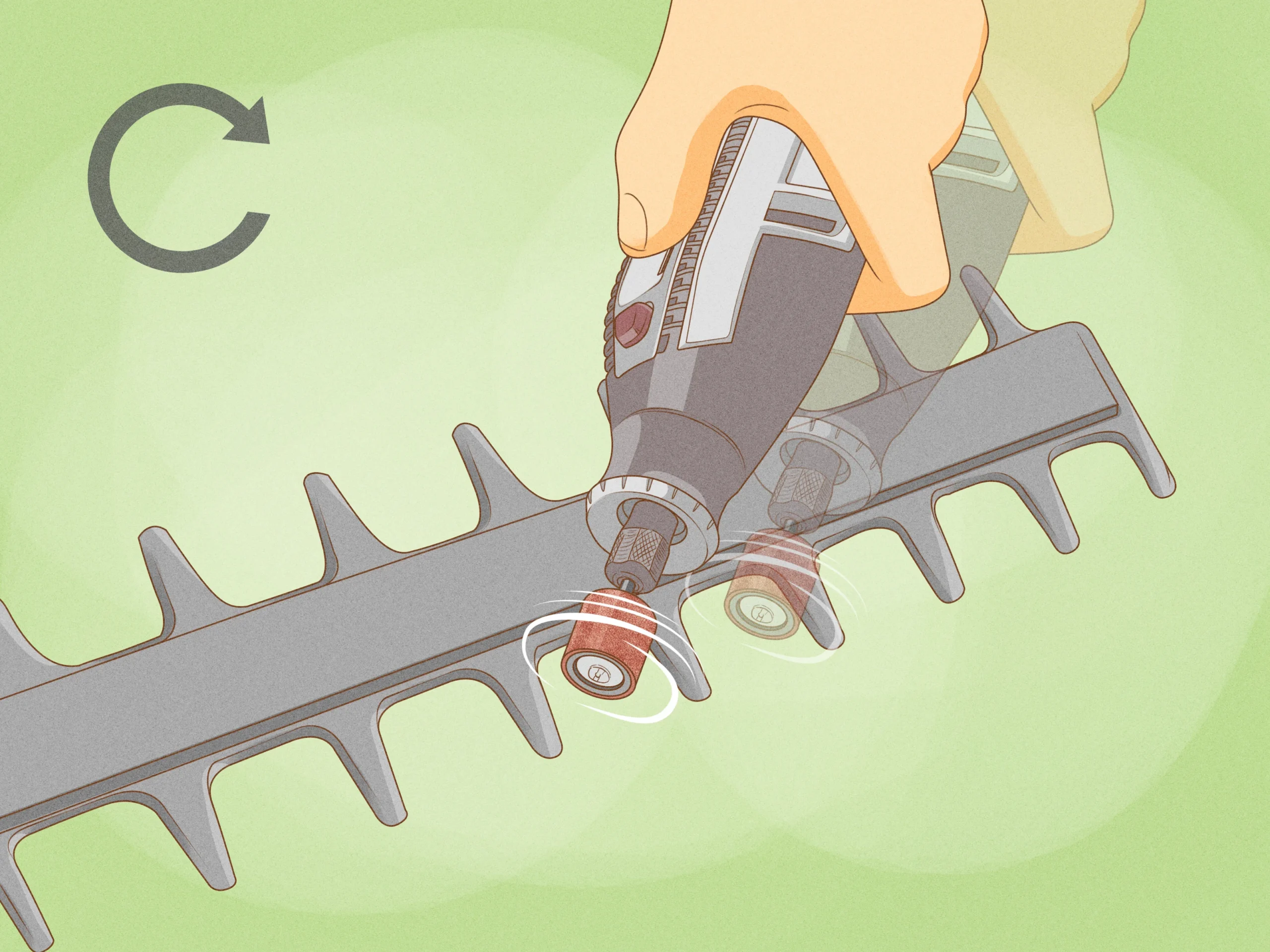 Credit: www.wikihow.com
Preparing The Blades
Preparing the blades is the first step to sharpening your hedge trimmer effectively. Proper preparation ensures safety and better results. This process includes cleaning the blades and checking them for damage. Clean blades sharpen more easily and last longer. Inspecting for damage helps avoid worsening any existing issues during sharpening.Cleaning Dirt And Debris
Remove all dirt and plant residue from the blades. Use a stiff brush or cloth to wipe away dirt. For sticky sap, apply a small amount of soapy water or rubbing alcohol. Clean blades reduce friction and prevent clogging the sharpening tool. Dry the blades completely before moving to the next step.Inspecting For Damage
Look closely at each blade for cracks, bends, or chips. Small nicks can be sharpened out, but large cracks need professional repair. Bent blades may cause uneven cuts and should be straightened carefully. Do not sharpen damaged blades without fixing these problems first. Proper inspection keeps your trimmer safe and efficient.Sharpening With A Flat File
Sharpening hedge trimmer blades with a flat file is a simple and effective method. It requires minimal tools and gives you control over the sharpening process. This technique works well for routine maintenance, keeping blades sharp and ready for clean cuts. Follow these steps to sharpen your blades efficiently and safely.Choosing The Right File
Select a small, flat file with fine teeth for best results. A file about 6 to 8 inches long fits most hedge trimmer blades. Avoid coarse files, which can remove too much metal and damage the blade. A smooth, flat file helps maintain the blade’s edge evenly and precisely.Maintaining The Bevel Angle
Keep the original bevel angle of the blade while filing. This angle usually ranges between 30 to 45 degrees. Holding the file at the correct angle preserves blade sharpness and cutting efficiency. Use the existing bevel as a guide, matching it closely to avoid dulling the blade.Filing Technique Tips
File the blade in one direction, away from your body. Use long, smooth strokes to create a sharp edge. Avoid sawing motions, which can create rough edges. File each tooth evenly, checking progress often. Clean the blade after sharpening to remove metal filings and prevent rust.Using An Angle Grinder
Using an angle grinder is a fast and effective way to sharpen hedge trimmer blades. This tool works well for blades that are very dull or damaged. It removes metal quickly and restores the sharp edge. Proper technique is important to keep the blade safe and sharp. Follow the steps below for the best results.Safety Precautions
Wear safety goggles to protect your eyes from sparks and metal shards. Gloves are necessary to avoid cuts and burns. Use ear protection since angle grinders are loud. Work in a clean, dry area to prevent slips or accidents. Secure the blade firmly before starting to avoid movement. Always check the angle grinder’s guard is in place for safety.Correct Grinding Method
Hold the angle grinder at a 30-degree angle to the blade edge. Move the grinder smoothly along the blade in one direction only. Avoid grinding back and forth, which can dull the blade. Keep steady pressure to remove metal evenly. Grind each tooth of the blade equally for uniform sharpness. Stop frequently to check your progress and avoid over-sharpening.Avoiding Overheating
Overheating can damage the blade’s temper and make it brittle. Use short grinding bursts to keep the blade cool. Dip the blade in water between passes to reduce heat. Avoid pressing too hard, which causes extra friction and heat. If the blade changes color, stop grinding and let it cool. Proper cooling preserves the blade’s strength and sharpness.Refining With A Dremel
Refining with a Dremel offers a precise way to sharpen hedge trimmer blades. The tool’s small size allows detailed work that larger tools cannot achieve. It removes small amounts of metal, perfect for maintaining sharp edges. Using a Dremel can extend your blades’ life and improve cutting performance.Selecting The Best Bit
Choose a stone or grinding bit designed for metal. A 1/8-inch or 1/4-inch stone bit works well for most hedge trimmer blades. Avoid coarse bits that remove too much metal quickly. The right bit ensures smooth, controlled sharpening without damaging the blade.Detailed Edge Sharpening
Hold the blade steady and turn on the Dremel at low speed. Gently run the bit along the blade’s edge at the original bevel angle. Keep the movement steady and light to avoid overheating the metal. Sharpen each tooth evenly for a consistent edge. Take breaks to cool the blade if it gets too hot.Handling Hard-to-reach Spots
Use smaller bits or angled attachments to reach tight spaces. Carefully maneuver the Dremel to sharpen between teeth and near the blade base. Patience is key for these tricky areas to avoid damage. This attention to detail keeps the entire blade sharp and effective.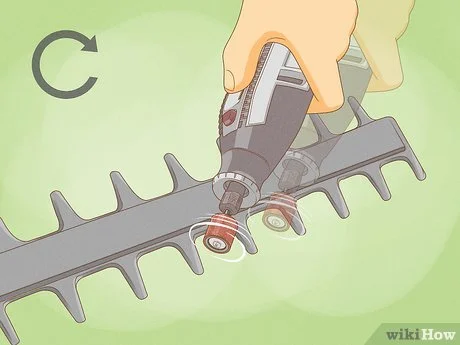 Credit: www.wikihow.com
Finishing Touches
After sharpening hedge trimmer blades, the finishing touches make a big difference. These steps ensure your blades cut smoothly and last longer. Proper care after sharpening keeps your tool safe and efficient. Follow these simple actions to complete the sharpening process perfectly.Removing Burrs With A Whetstone
Sharpening often leaves small burrs on the blade edges. These burrs can cause rough cuts or even damage plants. Use a fine whetstone to gently remove these burrs. Hold the blade at the same angle used for sharpening. Rub the whetstone along the blade edge in a smooth motion. This process smooths the blades and improves cutting quality.Lubricating The Blades
After burr removal, lubricate the blades to reduce friction. Use a light machine oil or spray lubricant designed for garden tools. Apply a thin layer over the entire blade surface. Lubrication prevents rust and keeps blades moving smoothly. It also helps protect the metal from moisture and wear.Testing Sharpness Safely
Check blade sharpness carefully before use. Avoid testing on your skin or near others. Use a piece of paper or soft branch to test cutting performance. The blade should slice cleanly without tearing. If cutting feels rough, sharpen again or remove more burrs. Always handle blades with care to avoid injury.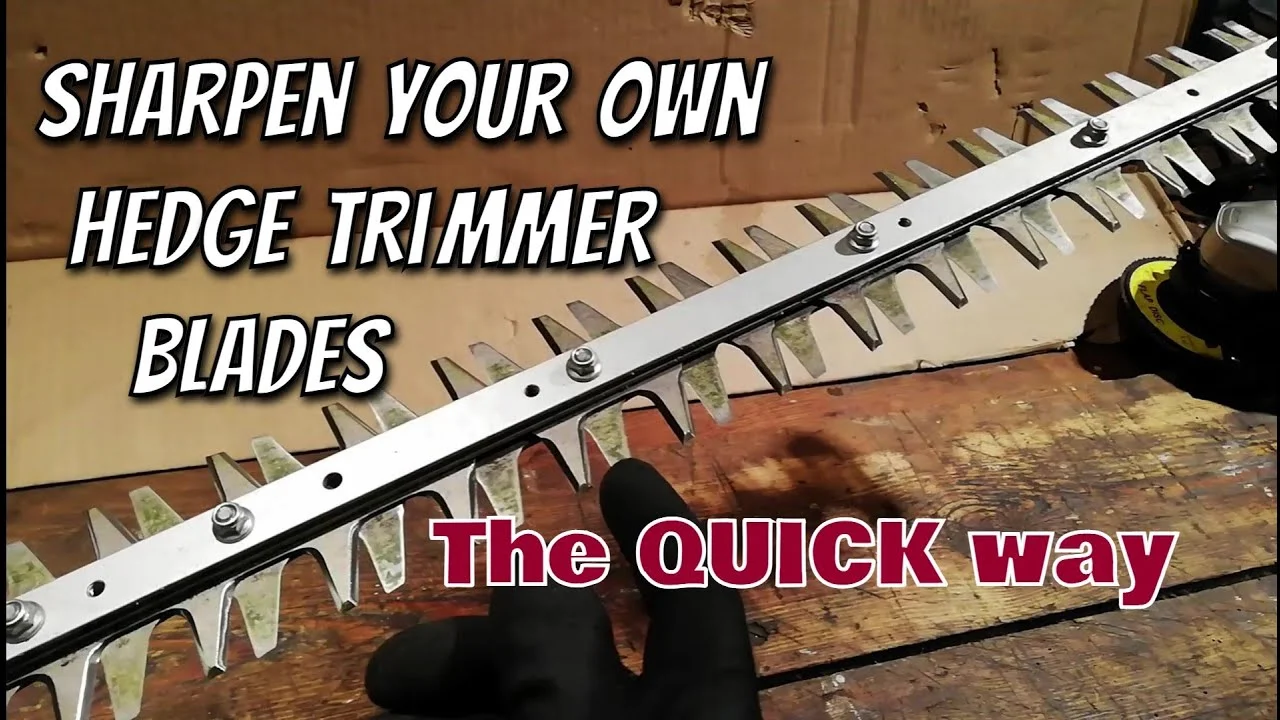 Credit: www.youtube.comFrequently Asked Questions
What Is The Best Tool For Sharpening Hedge Trimmers?The best tool for sharpening hedge trimmers varies by need. Use an angle grinder for fast, heavy sharpening. Choose a flat file or Dremel with a stone bit for precise, routine sharpening and delicate blades. Maintain the original bevel angle for optimal results.What Kind Of File Do You Use To Sharpen Hedge Trimmer Blades?Use a small, flat file to sharpen hedge trimmer blades. File along the cutting edge, maintaining the original bevel angle.How Do I Make My Trimmer Blades Sharper?Use a flat file or Dremel with a stone bit to sharpen trimmer blades. File along the cutting edge, maintaining the original bevel angle. Remove burrs with a whetstone. For heavily dull blades, an angle grinder speeds up sharpening. Regularly clean blades for best results.What Is The Best Way To Sharpen A Bush Hog Blade?Use a flat file or angle grinder to sharpen bush hog blades. Maintain the original bevel angle. File in one direction, then remove burrs with a whetstone. Angle grinders suit dull blades; files work best for routine sharpening. Always wear safety gear during sharpening.What Tools Are Best For Sharpening Hedge Trimmer Blades?Angle grinders work fast for dull blades; files and Dremel tools suit light, precise sharpening.How Often Should I Sharpen My Hedge Trimmer Blades?Sharpen blades after every 10 hours of use or when cutting feels less smooth.
Credit: www.youtube.comFrequently Asked Questions
What Is The Best Tool For Sharpening Hedge Trimmers?The best tool for sharpening hedge trimmers varies by need. Use an angle grinder for fast, heavy sharpening. Choose a flat file or Dremel with a stone bit for precise, routine sharpening and delicate blades. Maintain the original bevel angle for optimal results.What Kind Of File Do You Use To Sharpen Hedge Trimmer Blades?Use a small, flat file to sharpen hedge trimmer blades. File along the cutting edge, maintaining the original bevel angle.How Do I Make My Trimmer Blades Sharper?Use a flat file or Dremel with a stone bit to sharpen trimmer blades. File along the cutting edge, maintaining the original bevel angle. Remove burrs with a whetstone. For heavily dull blades, an angle grinder speeds up sharpening. Regularly clean blades for best results.What Is The Best Way To Sharpen A Bush Hog Blade?Use a flat file or angle grinder to sharpen bush hog blades. Maintain the original bevel angle. File in one direction, then remove burrs with a whetstone. Angle grinders suit dull blades; files work best for routine sharpening. Always wear safety gear during sharpening.What Tools Are Best For Sharpening Hedge Trimmer Blades?Angle grinders work fast for dull blades; files and Dremel tools suit light, precise sharpening.How Often Should I Sharpen My Hedge Trimmer Blades?Sharpen blades after every 10 hours of use or when cutting feels less smooth.Conclusion
Sharpening hedge trimmer blades keeps your tool working well. Use the right tool for your skill and blade condition. Regular sharpening improves cutting and saves time. Always follow safety steps to avoid injury. Clean blades after sharpening to stop rust.With care, your hedge trimmer will last longer and cut better. Try these tips to keep your garden looking neat.Related reading: How to Clean Hedge Trimmer Blades.
nn