
Last Updated: March 20, 2026
You might think using a hammer is simple—just swing and hit, right? But there’s actually a right way to handle this common tool that can save you time, prevent injury, and make your work look professional.
Whether you’re driving nails for a quick home fix or starting a bigger project, knowing how to use a hammer properly will boost your confidence and results. You’ll discover easy steps and smart tips to master your hammer skills, protect your hands and eyes, and get every strike just right.
Ready to become your own handy expert? Let’s get started!
Choosing The Right Hammer
Choosing the right hammer is key for any project. The right hammer helps you work faster and safer. It also makes your job easier and gives better results. Not all hammers are the same. You need to pick one that fits the task and your comfort. Knowing the types of hammers and handle materials guides you to the best choice.
Types Of Hammers
Hammers come in many shapes and sizes. A claw hammer is common for driving and removing nails. A ball-peen hammer is good for metalwork and shaping. A sledgehammer is heavy and used for demolition. A mallet has a soft head to avoid damaging surfaces. Choose a hammer type based on the job you plan to do. This choice improves your control and safety.
Hammer Handle Materials
Hammer handles come in wood, fiberglass, and steel. Wooden handles absorb shock well and feel natural. Fiberglass handles reduce vibration and are strong. Steel handles are very durable but can transfer more shock to your hand. Pick a handle material that feels good and reduces fatigue. A comfortable grip helps you work longer and with less pain.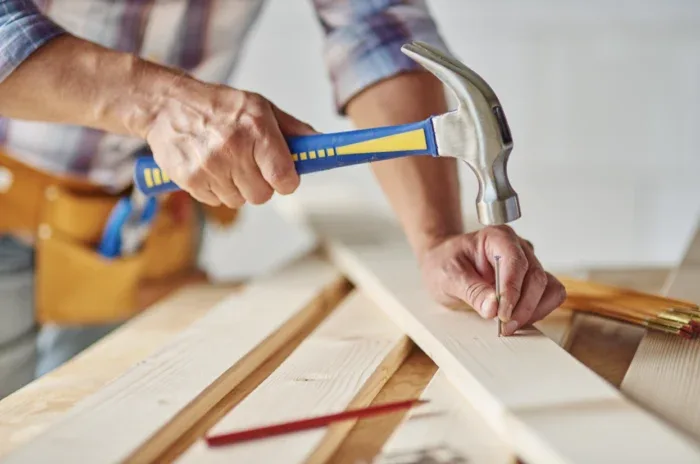
Credit: canalhr.com
Safety Gear Essentials
Using a hammer safely requires the right gear. Protecting your body reduces injury risk. Safety gear shields you from flying debris and sharp edges. It also helps you work comfortably and confidently. Here are the must-have safety items to wear before picking up a hammer.
Eye And Hand Protection
Always wear safety goggles to protect your eyes. Tiny wood or metal chips can fly off when hammering. Goggles stop these from causing eye injuries. Use impact-resistant glasses for the best defense.
Wear sturdy gloves to guard your hands. Gloves prevent cuts, blisters, and bruises. Choose gloves that fit well and allow a good grip. This helps you hold the hammer firmly and avoid slips.
Proper Work Attire
Wear clothes that cover your skin. Long sleeves and pants protect against scratches and flying particles. Avoid loose clothing that can get caught in tools.
Use closed-toe shoes with good grip. They protect feet from dropped tools or nails. Non-slip soles help you stay steady while working.
Preparing For Use
Preparing your hammer and workspace is essential before starting any project. It ensures safety and helps you work efficiently. Taking a few moments to get ready reduces the risk of accidents and damage. Focus on key steps like checking your hammer and securing your materials. These simple actions set a strong foundation for successful hammer use.
Inspecting Your Hammer
Always check your hammer before use. Look for cracks or damage on the handle. Make sure the hammerhead is tight and does not wobble. A loose head can fly off and cause injury. Check the striking face for any dents or chips. Using a damaged hammer can affect your work and safety. Replace your hammer if you see any serious damage.
Securing The Workpiece
Hold your workpiece firmly to keep it stable. Use clamps or a vise if needed. This prevents the material from moving while hammering. A steady workpiece makes your strikes more accurate. It also protects your hands from slips and accidents. Always place your hands away from the nail or target area. This simple step keeps you safe and improves your results.
Proper Grip And Stance
Proper grip and stance are crucial for effective hammer use. A firm grip ensures control and power. A stable stance helps maintain balance and accuracy. Together, they reduce fatigue and prevent injury. Learning these basics makes every strike count.
Holding The Hammer Correctly
Hold the hammer near the end of the handle. This gives more leverage and force. Wrap your fingers firmly around the handle. Keep your thumb along the side, not over the top. Avoid gripping too tight; a relaxed grip aids control. Use your wrist and elbow to swing, not just your shoulder.
Body Positioning Tips
Stand with feet shoulder-width apart for balance. Position your body facing the nail directly. Keep your knees slightly bent to absorb shock. Lean slightly forward to reach the nail easily. Keep your eyes focused on the nail head. Swing the hammer in a smooth, controlled motion. This stance helps deliver accurate, strong hits every time.
Techniques For Hammering Nails
Hammering nails requires proper techniques to ensure safety and efficiency. Using the right method helps drive nails straight and prevents damage to your materials. Focus on control and precision rather than force.
Learning how to start nails correctly and drive them efficiently makes your work cleaner and faster. These techniques reduce mistakes and help avoid bent nails or injury.
Starting The Nail
Hold the nail near its head with your thumb and index finger. Place the nail tip on the wood where you want it. Tap the nail lightly with the hammer to set it in place. Use gentle, controlled taps to avoid bending the nail.
Once the nail stands firm on its own, remove your fingers. Keep your eyes on the nail tip for better accuracy. Starting the nail carefully prevents slipping and injury.
Driving The Nail Efficiently
Grip the hammer near the end of the handle for better leverage. Swing the hammer with your wrist and elbow, not just your arm. Hit the nail squarely on the head to drive it straight into the wood.
Use smooth, controlled strokes instead of fast, wild swings. Let the hammer’s weight do most of the work. Stop hammering when the nail head is flush with the surface.
Maintaining a steady rhythm and focus improves nail placement. Practice these techniques for stronger, cleaner results every time.
Credit: www.youtube.com
Avoiding Common Mistakes
Avoiding mistakes while using a hammer is crucial for safety and efficiency. Many beginners face common errors that lead to injury or damage. Simple habits can prevent these issues and improve your hammering skills. Focus on control and tool condition before each use. Safety starts with awareness and proper technique.
Preventing Slips And Glancing Blows
Hold the hammer near the end of the handle for better control. Keep your wrist firm but flexible to guide the swing accurately. Aim to hit the nail squarely to avoid glancing blows. Glancing blows cause nails to bend or fly off, risking injury. Wear gloves to improve grip and reduce hand slips. Always check your stance to maintain balance during each strike.
Handling A Damaged Hammer
Inspect your hammer before every task. Look for cracks in the handle or a loose head. A loose head can fly off and cause serious injury. Do not use a hammer with a splintered or cracked handle. Replace damaged tools immediately to ensure safety. Using a damaged hammer reduces effectiveness and increases risk. Store your hammer properly to prevent damage over time.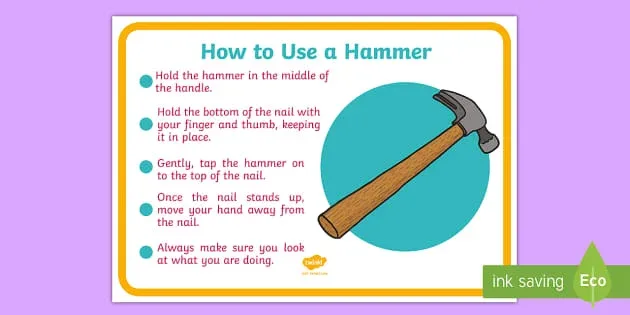
Credit: www.twinkl.com
Conclusion
Using a hammer safely and correctly takes practice. Always wear safety gear to protect yourself. Check your hammer before each use for damage. Strike nails squarely to avoid slips and injury. Hold the hammer firmly and control your swing. Small steps help you work better and safer.
Keep these tips in mind for every project. Your confidence and skill will grow with time.
Frequently Asked Questions
Hold the hammer near the end of the handle for control. Focus on the nail while swinging. Strike squarely with the hammer’s flat face. Start with light taps, then increase force. Always inspect the hammer and wear safety gear before use.
The four rules for using hammers are: wear safety gear, inspect the hammer before use, strike the target squarely, and maintain a firm grip. These steps ensure safety and effective hammering.
Hold the hammer firmly near the handle’s end. Aim squarely at the nail head. Start with light taps, then increase force. Wear safety gear and check the hammer for damage before use. Keep your eyes on the nail for accuracy.
Hold the hammer near the end of the handle. Focus your eyes on the nail. Swing with a bent arm, striking squarely and controlled. Start with light taps, then increase force gradually. Maintain a firm grip for accuracy and safety.
Hold the hammer near the end of the handle for better control and stronger swings.
Aim carefully, keep your wrist firm, and hit the nail squarely on the head.
