
Last Updated: March 14, 2026
When you look at a multimeter, you might see the words Cat III or CAT III on the front, often next to the voltage rating. For many, this small label is confusing. But understanding what Multimeter Category Rating Cat III means is essential for safety and the right tool choice. If you work with electricity, even as a beginner, knowing category ratings can protect you from dangerous mistakes. Let’s explore what Cat III is, how it compares to other ratings, and why it matters more than you might think.
What Is A Multimeter Category Rating?
Multimeter category ratings are safety standards. They tell you where and how you can safely use a multimeter. The system comes from international standards (IEC 61010), which classify electrical environments into four categories: CAT I, CAT II, CAT III, and CAT IV. Each step up means the environment is more dangerous, with higher risk from electrical spikes and surges.
- CAT I is for the least risky places, like testing batteries or small electronics.
- CAT II covers things like wall outlets and appliances.
- CAT III is for wiring and equipment inside buildings.
- CAT IV is for power lines and outdoor connections.
The higher the number, the tougher the multimeter needs to be.
Why Category Ratings Matter
Choosing the wrong multimeter for the environment can be a fatal mistake. Category ratings are not just labels. They show how much transient voltage (sudden, short spikes) a tool can survive without failing or causing harm. Imagine a lightning strike or a big power surge: the higher the CAT rating, the better the tool protects you.
Two mistakes many beginners make:
- Thinking voltage rating is enough. But a 1000V CAT II meter is not the same as a 1000V CAT III meter.
- Using a low-category meter in a high-category environment, risking explosion or fire.
Detailed Explanation Of Cat Iii
A CAT III multimeter is designed for measurements in the distribution part of a building’s electrical system. This includes:
- Main circuit breakers
- Distribution panels
- Fixed wiring (inside walls)
- Industrial equipment connected directly to building wiring
CAT III means the meter can handle the higher surges found in these areas. For example, testing a breaker panel is much riskier than testing a lamp.
Cat Iii Voltage Ratings
Every CAT rating is paired with a voltage number. Common ones are CAT III 600V and CAT III 1000V. The voltage tells you the highest voltage the meter can safely measure in that environment. For example, CAT III 600V means:
- You can use the meter in CAT III environments, up to 600 volts.
- It is NOT safe for CAT IV or higher voltages.
Typical Uses For Cat Iii Multimeters
- Checking circuit breakers
- Testing distribution boards
- Measuring voltage in industrial machines (if connected to building wiring)
- Troubleshooting fixed installations
If your work involves opening breaker panels, working with building wiring, or industrial panels, you need at least CAT III.
Cat Iii Vs Other Category Ratings
Understanding how CAT III compares to other categories helps you choose the right tool. Let’s look at the main differences.
| Category | Typical Use | Transient Withstand | Example Location |
|---|---|---|---|
| CAT I | Low energy circuits | 800 V | Small electronics |
| CAT II | Appliances, outlets | 2500 V | Wall sockets |
| CAT III | Fixed wiring, panels | 4000 V | Breaker box |
| CAT IV | Outdoor, power lines | 6000 V | Utility lines |
Key insight: CAT III meters are much safer for building wiring than CAT II. If you use a CAT II meter in a CAT III situation, you risk a surge that the meter cannot handle.
How To Identify A Cat Iii Meter
Look for the CAT rating mark on the front or back of the multimeter, often near the voltage rating. For example: “CAT III 600V”. If you cannot find a CAT rating, the meter may not be safe for serious electrical work.
| Marking | Safe Use Environment |
|---|---|
| CAT I 300V | Low-voltage, electronics only |
| CAT II 600V | Wall outlets, appliances |
| CAT III 600V | Breaker panels, fixed wiring |
| CAT III 1000V | High-voltage fixed wiring |
Non-obvious tip: Some cheap meters claim high voltage but skip the CAT rating. This is a red flag. Always check for both voltage and CAT number.
Why Not Use The Highest Category For Everything?
If CAT IV is safest, why not use CAT IV everywhere? The answer is cost and practicality. CAT IV meters are built tougher, with more insulation and safety features. They are heavier and more expensive. For most home or building work, CAT III gives strong protection without extra cost.

Credit: www.vcelink.com
Inside A Cat Iii Multimeter: What Makes It Safer?
A real CAT III meter has design features to survive big surges:
- Better internal insulation
- High-quality fuses (often ceramic, not glass)
- Stronger case to stop arc flash
- Separation between input circuits
Some meters add extra protection like blast shields and reinforced input jacks. These details mean the meter does not fail if a powerful surge hits.
Pro tip: Open the battery cover of a CAT III meter and look for ceramic fuses and thick circuit boards. These are signs of real protection.
Real-world Example: Using The Wrong Meter
Imagine you test a breaker panel with a CAT II meter. If a surge happens, the meter can explode or catch fire, causing burns or even death. This is not just theory—accidents happen every year because of wrong tool choices.
A proper CAT III meter in the same situation will safely absorb the surge, protecting you and the device.
Common Mistakes When Choosing A Meter
- Ignoring the CAT rating: Some people only check voltage. Always check both.
- Trusting all meters are equal: Cheap meters may lie or skip real tests.
- Using old meters: Older models may not meet modern CAT standards.
- Assuming higher voltage means higher safety: A 1000V CAT II is less safe than 600V CAT III for building wiring.
- Not checking leads: Test leads also need correct CAT ratings.
Non-obvious insight: Even if your meter is CAT III, using CAT II test leads reduces the overall safety. Both must match.
How To Choose The Right Multimeter For Your Job
Follow these simple steps:
- Identify the environment: Are you testing small electronics, wall outlets, or breaker panels?
- Check the highest voltage: Know the maximum voltage you’ll measure.
- Pick the right CAT rating: Use CAT III for building wiring and anything downstream of the main panel.
- Buy from trusted brands: Cheap, unbranded meters may fake ratings.
- Check test leads: Make sure they match or exceed the meter’s CAT rating.
Example: Choosing A Meter For Home Electrical Work
If you need to test outlets and breaker panels:
- Choose CAT III 600V or CAT III 1000V
- Make sure test leads are also CAT III rated
- Avoid CAT II only meters, as they are for less risky jobs
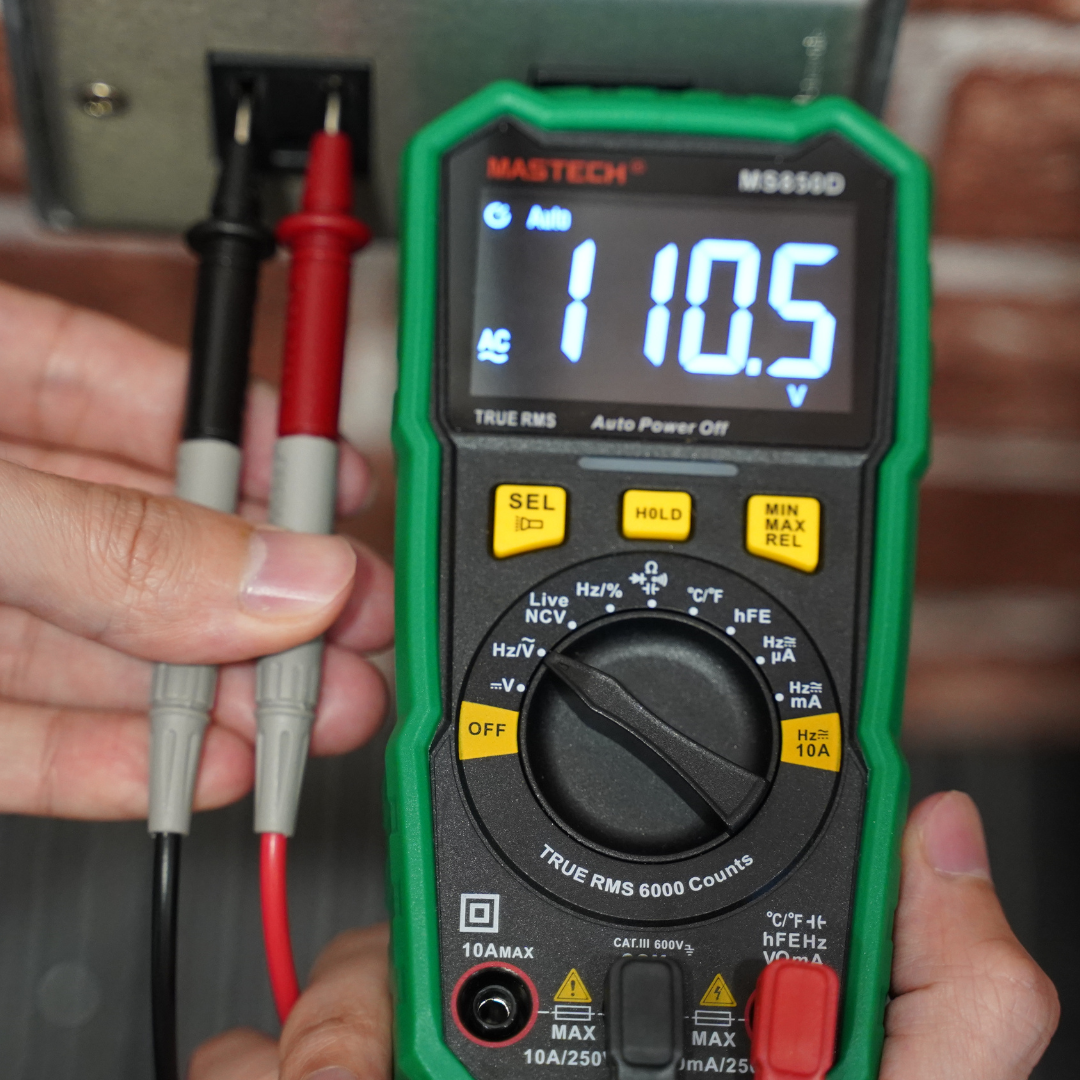
Credit: www.mastech-group.com
Comparing Popular Multimeter Models
To help, here’s a quick look at some well-known meters and their category ratings.
| Model | CAT Rating | Max Voltage | Typical Use |
|---|---|---|---|
| Fluke 117 | CAT III | 600V | Home, commercial wiring |
| Uni-T UT61E+ | CAT III | 1000V | Industrial, lab |
| Klein Tools MM6000 | CAT IV | 600V | Outdoor, main service |
| Extech EX330 | CAT II | 600V | Appliances, outlets |
Notice how higher CAT ratings often come with more robust designs and higher prices.
Safety Tips For Using Cat Iii Multimeters
- Always inspect your meter and leads for damage before use.
- Never use a meter with cracked casing or exposed metal.
- Keep your fingers behind the guards on test probes.
- Store your meter in a dry, clean place.
- Replace fuses with the same type and rating.
Expert tip: Even a CAT III meter cannot protect you from unsafe habits. Training and caution are as important as the right tool.
Where To Learn More
For deeper technical details, check standards like IEC 61010 on Wikipedia. Manufacturers like Fluke also have guides explaining CAT ratings.
Frequently Asked Questions
What Does Cat Iii Mean On A Multimeter?
CAT III means the meter is safe for measuring in fixed building wiring, like breaker panels and distribution boards. It can handle high-energy surges found in these parts of an electrical system.
Can I Use A Cat Iii Meter On Outlets?
Yes, a CAT III meter is safe for wall outlets, appliances, and also for more dangerous places like breaker panels. It is more than enough for household tasks.
Is A Cat Iii 1000v Meter Better Than A Cat Ii 1000v Meter?
Yes. CAT III 1000V can handle much larger surges and is safer for building wiring. CAT II 1000V is only for appliances and outlets, not fixed wiring or panels.
Do Test Leads Need To Match The Meter’s Cat Rating?
Absolutely. Test leads must have the same or higher CAT rating as your meter. If not, the leads could fail even if the meter is safe.
What Is The Difference Between Cat Iii And Cat Iv?
CAT IV is for the most dangerous environments, like the main service entrance or outdoor lines. CAT III is for building wiring and panels inside the building. CAT IV meters are tougher and cost more, but not always needed for indoor work.
Using the right multimeter category rating is not just about following rules—it’s about protecting yourself and your tools. For most electrical work inside buildings, a CAT III meter offers strong safety and reliability. Always check both the voltage and category ratings, and don’t risk your safety to save a few dollars or minutes.

Credit: www.youtube.com