
Last Updated: March 20, 2026
If you’re deciding between a track saw and a circular saw, you’re probably wondering which one fits your needs best. Both tools can cut wood, but they do it in very different ways.
Your choice will affect the quality of your cuts, how easy your work feels, and even the kinds of projects you can tackle. Imagine making clean, straight cuts on plywood without the usual splinters, or quickly ripping through framing lumber on a job site.
Which saw makes that easier for you? You’ll discover the key differences, benefits, and drawbacks of each tool. By the end, you’ll know exactly which saw is right for your projects—and why. Keep reading to find out how to get the best results with your next cut.
Precision And Accuracy
Precision and accuracy matter most in woodworking and DIY projects. Choosing the right saw impacts the quality of your cuts. Track saws and circular saws serve different roles in cutting tasks. Track saws focus on delivering straight, clean cuts with minimal effort. Circular saws offer versatility but may lack the fine control of track saws. Below, explore key features affecting precision and accuracy in both tools.
Straight Cuts And Splinter Control
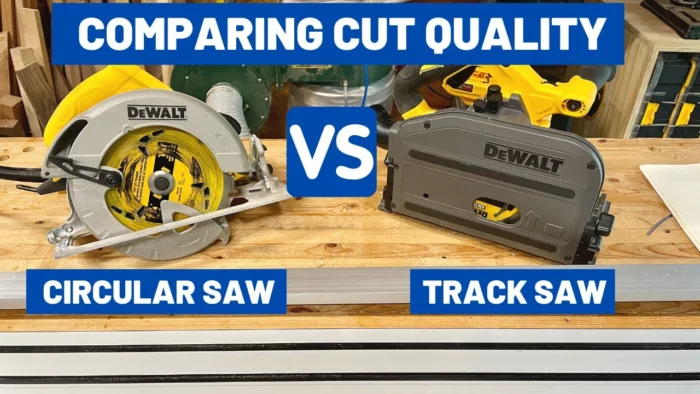
Track saws run on a guide rail, ensuring perfectly straight cuts every time. This rail prevents the saw from wandering off line. It also helps reduce splintering on delicate sheet materials like plywood. Circular saws rely on the user’s steady hand or external guides. Without a track, cuts may not be as straight or clean. Splinter control is often weaker with circular saws unless special blades or guides are used.
Plunge Cutting Feature
Track saws excel at plunge cuts, starting cuts in the middle of a board easily. This feature allows precise entry points and reduces tear-out around the cut. Circular saws can do plunge cuts but require more skill and care. The plunge mechanism in track saws is smooth and controlled. It helps avoid sudden blade drops that can damage the workpiece or cause injury.
:max_bytes(150000):strip_icc()/288-tracksaw-vs.-circular-saw-5710a63e51d44496b26fd310a8af2ccd.jpg)
Credit: www.woodmagazine.com
Versatility And Use Cases
The versatility of track saws and circular saws varies widely across tasks. Each tool fits different needs based on its design and features. Understanding where each excels helps choose the right saw for the job.
Sheet Goods And Furniture Making
Track saws shine with sheet goods like plywood and MDF. They use a guide track for straight, clean cuts. This reduces tear-out and leaves smooth edges. Furniture makers prefer track saws for precise, splinter-free panels.
Circular saws can handle sheet goods too but often need extra guides. Cuts may be less accurate without a track. Circular saws risk chipping edges or rough finishes on delicate materials.
Framing And Demolition Tasks
Circular saws suit framing and demolition well. They are lightweight and easy to maneuver around sites. Their ability to cut through thick lumber fast makes them ideal for rough work.
Track saws are less common in framing due to limited cutting depth. They also take longer to set up with tracks. For demolition, circular saws provide more flexibility and speed.
Portability And Convenience
Portability and convenience are important when choosing between a track saw and a circular saw. Both tools serve different needs, and how easy they are to carry and use affects your work. Understanding their weight, maneuverability, and setup can help you pick the right one.
Weight And Maneuverability
Track saws tend to be heavier than circular saws. The added weight comes from the guide rails and extra features. This weight can make the track saw less easy to carry around a job site. Circular saws are lighter and more compact, making them simple to move and use in tight spaces. Their design allows quick changes in direction and angle. For projects that need mobility, a circular saw might be more practical.
Setup And Guide Systems
Track saws require a guide rail to make straight, clean cuts. Setting up the track takes a few moments but ensures accuracy. This setup adds time but improves the quality of the cut. Circular saws do not need a guide rail. They can be used right out of the box. Some users attach aftermarket guides to improve straight cuts. This makes circular saws faster to start but sometimes less precise without guides. The track saw’s built-in guide system offers convenience for precise cutting jobs.
Dust Collection And Cleanliness
Dust collection and cleanliness play a big role in woodworking. Sawing generates a lot of dust. This dust can cause health problems and mess up your workspace. Choosing the right saw affects how much dust you must clean up.
Built-in Dust Control In Track Saws
Track saws come with built-in dust control systems. They often have dust ports that connect to a vacuum. This setup captures most dust right at the cut. It keeps the air cleaner and the workspace tidy. Less dust means less time cleaning after a project. The guide track also helps control where the dust falls. This design reduces dust spreading around the area.
Challenges With Circular Saws
Circular saws usually lack built-in dust collection. Dust escapes freely during cutting. This dust can float in the air and settle on surfaces. It creates a mess that needs frequent cleaning. Using a vacuum with a circular saw is possible but less effective. Dust control attachments may not fit well or capture all dust. This makes circular saws harder to keep clean in dusty environments.
Cost And Value
Understanding the cost and value of a track saw versus a circular saw helps you choose the best tool. Both have different prices and benefits that affect your budget. Knowing these differences ensures you invest wisely in the right saw for your needs.
Price Differences
Circular saws are usually cheaper than track saws. A basic circular saw can cost less than $100. Track saws often start around $300 and can go higher. The price gap comes from the track saw’s design and added features. Track saws include guide rails and better dust control. Circular saws have fewer extras but can handle many tasks. For simple cuts and occasional use, a circular saw fits most budgets.
Long-term Investment
Track saws offer better precision and cleaner cuts. This can save money by reducing waste on materials. Their durability also means fewer replacements over time. Circular saws are versatile but may need extra tools for accuracy. This can add to costs in the long run. If you often cut large panels or want perfect lines, a track saw is a smart choice. It pays off by improving your work quality and efficiency.

Credit: www.youtube.com
Converting Circular Saws
Converting circular saws into track saws offers a budget-friendly option for precise cuts. Circular saws are common and versatile. Adding a guide track helps improve accuracy and straight cuts. This method blends the flexibility of circular saws with some benefits of track saws.
Using Aftermarket Guide Tracks
Aftermarket guide tracks attach to circular saws to guide cuts. They create a straight path for the saw to follow. Installation is often simple and does not require tool modification. These tracks improve cut accuracy significantly over freehand cuts.
Some tracks come with clamps or non-slip strips for stability. This reduces the chance of the saw slipping during cutting. Users can cut large sheet goods or long boards more confidently. The guide tracks are portable and easy to store.
Limitations And Considerations
Not all circular saws fit every aftermarket guide track. Check compatibility before buying any system. The saw’s base plate size and shape matter for proper fit. Also, circular saws lack built-in dust collection found in track saws.
Track saws offer plunge cuts, which many circular saws cannot do safely. This limits some cutting styles with converted circular saws. While accuracy improves, it may not reach the precision level of dedicated track saws. Users should weigh cost versus performance needs.
Credit: www.youtube.com
Frequently Asked Questions
Are Track Saws Better Than Circular Saws?
Track saws deliver precise, clean, straight cuts with less splintering, ideal for cabinetry. Circular saws offer versatility, portability, and affordability but less accuracy. Choose track saws for fine woodworking and circular saws for general, rough cutting tasks.
Can I Use A Circular Saw As A Track Saw?
Yes, you can use a circular saw as a track saw with aftermarket guide rails. It offers less precision and splinter protection than a dedicated track saw.
What Are The Disadvantages Of A Track Saw?
Track saws have limited cutting depth and rely on guide tracks. They cost more and handle complex cuts less effectively.
Can I Rip A 2×4 With A Track Saw?
Yes, you can rip a 2×4 with a track saw. It provides straight, clean cuts but may require multiple passes for thicker lumber.
What Is The Main Difference Between Track Saw And Circular Saw?
A track saw uses a guide rail for straight cuts; a circular saw is more general and freehand.
Which Saw Provides More Accurate Cuts, Track Saw Or Circular Saw?
Track saws offer better accuracy with straight, clean cuts due to their guide tracks.
Conclusion
Choosing between a track saw and a circular saw depends on your project needs. Track saws offer clean, straight cuts and reduce splintering. Circular saws provide versatility and work well for rough cuts and framing. Consider precision versus flexibility before deciding.
Both tools serve important roles in woodworking and construction. Use each saw where it fits best for efficient, quality results.
{ “@context”: “https://schema.org”, “@type”: “Article”, “headline”: “Track Saw Vs Circular Saw: Ultimate Guide to Precision Cutting”, “description”: “Track saw vs circular saw compares two cutting tools, highlighting their design differences and typical uses for precise and versatile woodworking tasks.”, “url”: “https://www.powertoolstoday.com/track-saw-vs-circular-saw/”, “datePublished”: “2025-11-12”, “dateModified”: “2026-03-18”, “author”: { “@type”: “Organization”, “name”: “Power Tools Today”, “url”: “https://www.powertoolstoday.com” }, “publisher”: { “@type”: “Organization”, “name”: “Power Tools Today”, “url”: “https://www.powertoolstoday.com” }, “mainEntityOfPage”: { “@type”: “WebPage”, “@id”: “https://www.powertoolstoday.com/track-saw-vs-circular-saw/” }, “image”: { “@type”: “ImageObject”, “url”: “https://www.powertoolstoday.com/wp-content/uploads/2025/11/Track-Saw-Vs-Circular-Saw–1024×576.webp” } }nn