
Last Updated: March 27, 2026
Welding thin metal is a true test of skill for both beginners and experienced welders. Thin sheet metal—anything under 3mm—offers unique challenges. The risk of warping, burn-through, and weak joints is high if you use the wrong technique or settings.
But with the right approach, you can achieve strong, neat welds that hold up under pressure. This guide will walk you through every essential tip for welding thin metal, from choosing the best welding process and settings to mastering advanced techniques that minimize distortion and errors.
Why Welding Thin Metal Is Challenging
Thin metals like sheet steel, aluminum, or stainless steel behave very differently under a welding arc compared to thick plate. Because there is less material to absorb heat, the metal heats up rapidly. This can cause:
- Burn-through: The weld pool melts straight through, leaving a hole.
- Distortion: The metal bends or twists due to uneven heating and cooling.
- Poor strength: Weak welds if penetration is not properly controlled.
Even a small mistake can ruin a part, so attention to detail is critical. Let’s look at the main strategies for success.
Choosing The Right Welding Process
Selecting the right process is key for thin metal. Here’s a comparison of the three most common methods:
| Process | Best For | Pros | Cons |
|---|---|---|---|
| MIG (GMAW) | Automotive panels, thin steel | Fast, easy to learn, less clean-up | Can burn through easily, wire feed must be fine-tuned |
| TIG (GTAW) | Stainless, aluminum, artistic work | Precise, clean welds, best for thin metal | Slower, requires more skill |
| Stick (SMAW) | Repairs, outdoor work | Portable, cheap equipment | Hard to control on thin metal, more slag |
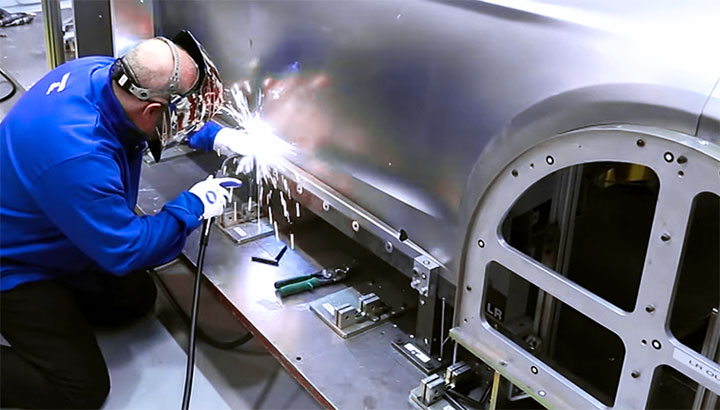
MIG welding is a popular choice for thin metal because it is fast and can be easily automated. TIG welding offers the most control and produces the cleanest results, making it ideal for critical or visible welds. Stick welding is generally not recommended for thin sheet metal due to its aggressive arc.
Credit: www.millerwelds.com
Setting Up Your Equipment
Power Settings
One of the most common beginner mistakes is using too much power. For thin metal, always:
- Use the lowest possible amperage for the material and wire size.
- Start low and increase power only if the weld does not penetrate.
Wire And Electrode Selection
Use small-diameter wire or electrodes for thin metal. For MIG, 0. 6mm or 0. 8mm wire (ER70S-6 for mild steel) is best. For TIG, a 1. 0-1. 6mm tungsten electrode works well. Larger wires or rods create a bigger weld pool and increase the risk of burn-through.
Shielding Gas
For MIG, use a gas mix of 75% argon/25% CO2. For TIG, pure argon is preferred. The right gas helps stabilize the arc and keeps the weld clean.
Torch Angle And Travel Speed
Keep your torch at a 10-15° angle from vertical, and move quickly. Lingering in one spot causes overheating and burn-through.
Essential Welding Techniques For Thin Metal
1. Tack Welding
Before you run a full bead, use tack welds to hold the pieces in place. Place a small weld every 2–4 inches along the joint. This minimizes movement and reduces warping.
2. Stitch Welding
Instead of one long weld, use the stitch or “skip” technique:
- Weld a short section (about 1 inch)
- Move to a spot several inches away and weld again
- Repeat until the joint is complete
This allows the metal to cool between welds, preventing distortion.
3. Pulse Welding
Many modern MIG and TIG machines have a pulse function. This rapidly turns the arc on and off, reducing heat input. Pulse welding is especially useful for thin aluminum and stainless steel.
4. Backing Bars
Placing a copper backing bar behind the joint absorbs heat and supports the weld pool. Copper does not fuse with steel, so it won’t stick. This is a secret trick that helps control burn-through.
5. Gaps And Fit-up
Thin metal must be fitted tightly—even a small gap can lead to holes. Use clamps and magnets to hold parts together and check fit before striking an arc.
Preparing Thin Metal For Welding
Cleaning
Remove all oil, paint, and rust from the weld area. Contaminants can cause porosity (tiny holes) and weak welds. Use a wire brush, grinder, or acetone to clean the surface.
Edge Preparation
For thin metal, a square edge (no bevel) is usually best. Beveling removes too much material and makes burn-through more likely. Make sure the edges are straight and smooth.
Joint Types
Some joints are easier on thin metal than others. Here’s a quick comparison:
| Joint Type | Strength | Ease of Welding |
|---|---|---|
| Lap | Good | Easy |
| Butt | Fair | Harder |
| Edge | Poor | Difficult |
Lap joints are most forgiving and distribute heat better.
Controlling Heat And Preventing Warping
Thin metal warps easily, but you can limit this with a few tricks:
- Short welds: Never run a long bead. Stop often and let the metal cool.
- Alternate sides: If possible, weld a short section on one side, then switch to the opposite side.
- Clamping: Use heat-resistant clamps to keep the workpiece flat.
- Cool down: Use compressed air or a damp cloth between welds (never pour water on hot metal, as this can cause cracks).
Pro tip: Some pros weld with a copper bar underneath and a damp rag on top, switching back and forth. This absorbs heat from both sides.

Credit: yeswelder.com
Grinding And Finishing Welds
Thin metal is sensitive to grinding, so use a light touch:
- Use a flap disc or sanding pad, not a hard grinding wheel.
- Move the grinder quickly and don’t linger in one spot.
- For visible parts, finish with 320-grit sandpaper.
Don’t grind too much—you could weaken the weld or even grind right through the metal.
Common Mistakes And How To Avoid Them
Too Much Heat
Beginners often think “more power = better weld. ” On thin metal, the opposite is true. Always start with low settings and test on a scrap piece.
Poor Fit-up
Even a small gap can cause problems. Use clamps, and don’t try to “fill” a gap with extra weld metal.
Dirty Metal
Oil, paint, and rust ruin welds. Clean thoroughly before starting.
Wrong Wire Or Rod Size
Large wires create a big, hot weld pool. Use the thinnest wire or rod that will still provide a stable arc.
Credit: www.millerwelds.com
Advanced Tips For Welding Thin Metal
Use A Push Technique
When MIG or TIG welding thin metal, use a push angle rather than pulling the torch. This gives you more control and helps spread heat out.
Practice On Scrap
Before welding your actual project, practice on scrap pieces of the same thickness. This helps you dial in your settings and improve your technique.
Try Spot Welding
For very thin sheet (under 1mm), spot welding may be better than arc welding. This uses pressure and electricity to join the sheets with minimal heat.
Use Heat Sinks
In addition to copper bars, aluminum or even steel blocks can be used as heat sinks to absorb excess heat and prevent warping.
Learn To Read The Weld Pool
With thin metal, the weld pool will form quickly. Watch for color changes—if the pool turns bright orange or even white, you are overheating the metal.
Safety Considerations
Welding thin metal produces intense light, fumes, and sparks. Always wear:
- A quality auto-darkening welding helmet
- Gloves and long sleeves
- Respirator if working with galvanized or painted metal
Thin metal projects are often small, so be careful of hot edges and sharp corners.
Real-world Applications Of Thin Metal Welding
Welding thin metal is a must-have skill in:
- Auto body repair: Fixing car panels, exhausts, and frames
- HVAC fabrication: Making air ducts from galvanized steel
- Art and sculpture: Creating intricate metal artwork
- Home projects: Repairing appliances, furniture, and garden tools
Many industries rely on strong, neat welds on thin material.
Essential Tools For Thin Metal Welding
Having the right tools makes a big difference:
- Quality MIG or TIG welder with fine adjustment
- Small-diameter wire or filler rods
- Copper backing bars or heat sinks
- Clamps and magnets for precise fit-up
- Wire brush and acetone for cleaning
Don’t use oversized grinders or torches—precision is key.
How To Troubleshoot Thin Metal Weld Problems
Burn-through
- Lower the amperage or voltage
- Move faster
- Add a copper backing bar
Warping
- Use shorter welds and alternate sides
- Clamp tightly
- Allow time to cool between welds
Porosity
- Clean the metal thoroughly
- Check your shielding gas flow and coverage
- Avoid welding in windy conditions
Weak Welds
- Make sure you have full penetration
- Avoid cold laps by keeping the torch angle steady
When To Choose Tig Vs. Mig For Thin Metal
Both MIG and TIG can work well, but each has advantages:
| Feature | MIG | TIG |
|---|---|---|
| Speed | Faster | Slower |
| Control | Good | Excellent |
| Appearance | Fair | Excellent |
| Skill Required | Beginner-friendly | Requires practice |
If you need perfect, visible welds (like on a motorcycle gas tank), TIG is best. For quick repairs or less visible joints, MIG is faster and easier.
Non-obvious Insights Beginners Miss
- Copper is your friend: Most new welders don’t know how useful a copper bar can be. It acts like a heat sponge and saves many thin projects from burn-through.
- Weld sequence matters: The order in which you weld can make a huge difference in how much the metal warps. Always plan your welds to spread out heat, rather than concentrating it in one spot.
Frequently Asked Questions
What Is The Thinnest Metal You Can Weld With A Mig Welder?
Most MIG welders can handle metal as thin as 0. 6mm (24 gauge), but success depends on using the right settings, wire size, and technique. For anything thinner, spot welding or TIG is usually better.
How Do I Stop Burning Holes In Thin Sheet Metal?
Use the lowest possible power settings, move quickly, and use a copper backing bar. If you’re still burning through, shorten your welds or try pulse mode.
Is It Possible To Weld Thin Aluminum Sheets?
Yes, but it’s challenging. TIG welding with AC and a small-diameter filler rod is best. Aluminum heats up fast, so use a heat sink and move quickly.
Can I Use Flux-cored Wire For Thin Metal?
Flux-cored wire produces more heat and is harder to control on thin sheet. Solid MIG wire with shielding gas is a better choice for thin metal.
What Is The Best Way To Clean Thin Metal Before Welding?
Use a wire brush, flap disc, or wipe with acetone. For aluminum, use a dedicated stainless steel brush. Always remove paint, oil, and rust first.
Welding thin metal can be tricky, but with the right tools, settings, and techniques, you can achieve professional-quality results. Take your time to set up properly, practice on scrap, and don’t be afraid to use every advantage—like copper backing bars and precise fit-up. For more in-depth information, check resources like the Welding Wikipedia page. With patience and practice, you’ll master thin metal welding and open up a world of creative and repair possibilities.