
Last Updated: March 21, 2026
What Is The Ideal Tooth Count For Circular Saw Blades?
Blades with more teeth cut smoother but slower, perfect for finishing. Fewer teeth cut faster but rougher, good for ripping wood.
How Do Blade Teeth Affect Cut Quality And Speed?
More teeth give clean, smooth cuts but slower speed. Fewer teeth cut fast with rougher edges.
Conclusion
Choosing the right circular saw blade teeth affects your cut quality and speed. Fewer teeth cut faster but leave rough edges. More teeth give smoother cuts but work slower. Match the tooth count to your material and cutting type. This simple choice improves results and tool life.
Keep your blades sharp and clean for best performance. Understanding these basics helps you work smarter and safer every time.
{
“@context”: “https://schema.org”,
“@type”: “Article”,
“headline”: “Circular Saw Blade Teeth Guide: Ultimate Tips for Precise Cuts”,
“description”: “A Circular Saw Blade Teeth Guide explains the types, shapes, and functions of teeth for optimal cutting performance and material suitability.”,
“url”: “https://www.powertoolstoday.com/circular-saw-blade-teeth-guide/”,
“datePublished”: “2026-02-28”,
“dateModified”: “2026-03-18”,
“author”: {
“@type”: “Organization”,
“name”: “Power Tools Today”,
“url”: “https://www.powertoolstoday.com”
},
“publisher”: {
“@type”: “Organization”,
“name”: “Power Tools Today”,
“url”: “https://www.powertoolstoday.com”
},
“mainEntityOfPage”: {
“@type”: “WebPage”,
“@id”: “https://www.powertoolstoday.com/circular-saw-blade-teeth-guide/”
},
“image”: {
“@type”: “ImageObject”,
“url”: “https://www.powertoolstoday.com/wp-content/uploads/2025/11/Circular-Saw-Blade-Teeth-1024×576.webp”
}
}
How Many Teeth For A Circular Saw Blade?
Circular saw blades typically have 24 to 80 teeth. Fewer teeth (24-40) cut faster but rougher. More teeth (60-80) provide smoother, cleaner cuts. Choose based on material and type of cut—ripping needs fewer teeth, crosscutting and finishing require more teeth for precision.
What Is The Ideal Tooth Count For Circular Saw Blades?
Blades with more teeth cut smoother but slower, perfect for finishing. Fewer teeth cut faster but rougher, good for ripping wood.
How Do Blade Teeth Affect Cut Quality And Speed?
More teeth give clean, smooth cuts but slower speed. Fewer teeth cut fast with rougher edges.
Conclusion
Choosing the right circular saw blade teeth affects your cut quality and speed. Fewer teeth cut faster but leave rough edges. More teeth give smoother cuts but work slower. Match the tooth count to your material and cutting type. This simple choice improves results and tool life.
Keep your blades sharp and clean for best performance. Understanding these basics helps you work smarter and safer every time.
{
“@context”: “https://schema.org”,
“@type”: “Article”,
“headline”: “Circular Saw Blade Teeth Guide: Ultimate Tips for Precise Cuts”,
“description”: “A Circular Saw Blade Teeth Guide explains the types, shapes, and functions of teeth for optimal cutting performance and material suitability.”,
“url”: “https://www.powertoolstoday.com/circular-saw-blade-teeth-guide/”,
“datePublished”: “2026-02-28”,
“dateModified”: “2026-03-18”,
“author”: {
“@type”: “Organization”,
“name”: “Power Tools Today”,
“url”: “https://www.powertoolstoday.com”
},
“publisher”: {
“@type”: “Organization”,
“name”: “Power Tools Today”,
“url”: “https://www.powertoolstoday.com”
},
“mainEntityOfPage”: {
“@type”: “WebPage”,
“@id”: “https://www.powertoolstoday.com/circular-saw-blade-teeth-guide/”
},
“image”: {
“@type”: “ImageObject”,
“url”: “https://www.powertoolstoday.com/wp-content/uploads/2025/11/Circular-Saw-Blade-Teeth-1024×576.webp”
}
}
Is It Better To Have More Or Less Teeth On A Circular Saw?
More teeth on a circular saw blade provide smoother, cleaner cuts but slower speed. Fewer teeth cut faster but rougher, ideal for ripping lumber. Choose tooth count based on material and cut type for best results.
How Many Teeth For A Circular Saw Blade?
Circular saw blades typically have 24 to 80 teeth. Fewer teeth (24-40) cut faster but rougher. More teeth (60-80) provide smoother, cleaner cuts. Choose based on material and type of cut—ripping needs fewer teeth, crosscutting and finishing require more teeth for precision.
What Is The Ideal Tooth Count For Circular Saw Blades?
Blades with more teeth cut smoother but slower, perfect for finishing. Fewer teeth cut faster but rougher, good for ripping wood.
How Do Blade Teeth Affect Cut Quality And Speed?
More teeth give clean, smooth cuts but slower speed. Fewer teeth cut fast with rougher edges.
Conclusion
Choosing the right circular saw blade teeth affects your cut quality and speed. Fewer teeth cut faster but leave rough edges. More teeth give smoother cuts but work slower. Match the tooth count to your material and cutting type. This simple choice improves results and tool life.
Keep your blades sharp and clean for best performance. Understanding these basics helps you work smarter and safer every time.
{
“@context”: “https://schema.org”,
“@type”: “Article”,
“headline”: “Circular Saw Blade Teeth Guide: Ultimate Tips for Precise Cuts”,
“description”: “A Circular Saw Blade Teeth Guide explains the types, shapes, and functions of teeth for optimal cutting performance and material suitability.”,
“url”: “https://www.powertoolstoday.com/circular-saw-blade-teeth-guide/”,
“datePublished”: “2026-02-28”,
“dateModified”: “2026-03-18”,
“author”: {
“@type”: “Organization”,
“name”: “Power Tools Today”,
“url”: “https://www.powertoolstoday.com”
},
“publisher”: {
“@type”: “Organization”,
“name”: “Power Tools Today”,
“url”: “https://www.powertoolstoday.com”
},
“mainEntityOfPage”: {
“@type”: “WebPage”,
“@id”: “https://www.powertoolstoday.com/circular-saw-blade-teeth-guide/”
},
“image”: {
“@type”: “ImageObject”,
“url”: “https://www.powertoolstoday.com/wp-content/uploads/2025/11/Circular-Saw-Blade-Teeth-1024×576.webp”
}
}
What Is A 140 Tooth Circular Saw Blade Used For?
A 140 tooth circular saw blade delivers smooth, precise cuts. It suits finishing carpentry, crosscutting hardwood, and cutting veneered plywood. The high tooth count reduces splintering and tear-out, ideal for detailed woodworking and clean edges.
Is It Better To Have More Or Less Teeth On A Circular Saw?
More teeth on a circular saw blade provide smoother, cleaner cuts but slower speed. Fewer teeth cut faster but rougher, ideal for ripping lumber. Choose tooth count based on material and cut type for best results.
How Many Teeth For A Circular Saw Blade?
Circular saw blades typically have 24 to 80 teeth. Fewer teeth (24-40) cut faster but rougher. More teeth (60-80) provide smoother, cleaner cuts. Choose based on material and type of cut—ripping needs fewer teeth, crosscutting and finishing require more teeth for precision.
What Is The Ideal Tooth Count For Circular Saw Blades?
Blades with more teeth cut smoother but slower, perfect for finishing. Fewer teeth cut faster but rougher, good for ripping wood.
How Do Blade Teeth Affect Cut Quality And Speed?
More teeth give clean, smooth cuts but slower speed. Fewer teeth cut fast with rougher edges.
Conclusion
Choosing the right circular saw blade teeth affects your cut quality and speed. Fewer teeth cut faster but leave rough edges. More teeth give smoother cuts but work slower. Match the tooth count to your material and cutting type. This simple choice improves results and tool life.
Keep your blades sharp and clean for best performance. Understanding these basics helps you work smarter and safer every time.
{
“@context”: “https://schema.org”,
“@type”: “Article”,
“headline”: “Circular Saw Blade Teeth Guide: Ultimate Tips for Precise Cuts”,
“description”: “A Circular Saw Blade Teeth Guide explains the types, shapes, and functions of teeth for optimal cutting performance and material suitability.”,
“url”: “https://www.powertoolstoday.com/circular-saw-blade-teeth-guide/”,
“datePublished”: “2026-02-28”,
“dateModified”: “2026-03-18”,
“author”: {
“@type”: “Organization”,
“name”: “Power Tools Today”,
“url”: “https://www.powertoolstoday.com”
},
“publisher”: {
“@type”: “Organization”,
“name”: “Power Tools Today”,
“url”: “https://www.powertoolstoday.com”
},
“mainEntityOfPage”: {
“@type”: “WebPage”,
“@id”: “https://www.powertoolstoday.com/circular-saw-blade-teeth-guide/”
},
“image”: {
“@type”: “ImageObject”,
“url”: “https://www.powertoolstoday.com/wp-content/uploads/2025/11/Circular-Saw-Blade-Teeth-1024×576.webp”
}
}
What Is The Best Tooth Count For Circular Saw Blades?
The best tooth count depends on the cut type. Fewer teeth (24-30) cut fast, ideal for ripping. More teeth (60-80) provide smoother cuts, perfect for crosscutting and finishing. Choose based on material and desired finish quality.
What Is A 140 Tooth Circular Saw Blade Used For?
A 140 tooth circular saw blade delivers smooth, precise cuts. It suits finishing carpentry, crosscutting hardwood, and cutting veneered plywood. The high tooth count reduces splintering and tear-out, ideal for detailed woodworking and clean edges.
Is It Better To Have More Or Less Teeth On A Circular Saw?
More teeth on a circular saw blade provide smoother, cleaner cuts but slower speed. Fewer teeth cut faster but rougher, ideal for ripping lumber. Choose tooth count based on material and cut type for best results.
How Many Teeth For A Circular Saw Blade?
Circular saw blades typically have 24 to 80 teeth. Fewer teeth (24-40) cut faster but rougher. More teeth (60-80) provide smoother, cleaner cuts. Choose based on material and type of cut—ripping needs fewer teeth, crosscutting and finishing require more teeth for precision.
What Is The Ideal Tooth Count For Circular Saw Blades?
Blades with more teeth cut smoother but slower, perfect for finishing. Fewer teeth cut faster but rougher, good for ripping wood.
How Do Blade Teeth Affect Cut Quality And Speed?
More teeth give clean, smooth cuts but slower speed. Fewer teeth cut fast with rougher edges.
Conclusion
Choosing the right circular saw blade teeth affects your cut quality and speed. Fewer teeth cut faster but leave rough edges. More teeth give smoother cuts but work slower. Match the tooth count to your material and cutting type. This simple choice improves results and tool life.
Keep your blades sharp and clean for best performance. Understanding these basics helps you work smarter and safer every time.
{
“@context”: “https://schema.org”,
“@type”: “Article”,
“headline”: “Circular Saw Blade Teeth Guide: Ultimate Tips for Precise Cuts”,
“description”: “A Circular Saw Blade Teeth Guide explains the types, shapes, and functions of teeth for optimal cutting performance and material suitability.”,
“url”: “https://www.powertoolstoday.com/circular-saw-blade-teeth-guide/”,
“datePublished”: “2026-02-28”,
“dateModified”: “2026-03-18”,
“author”: {
“@type”: “Organization”,
“name”: “Power Tools Today”,
“url”: “https://www.powertoolstoday.com”
},
“publisher”: {
“@type”: “Organization”,
“name”: “Power Tools Today”,
“url”: “https://www.powertoolstoday.com”
},
“mainEntityOfPage”: {
“@type”: “WebPage”,
“@id”: “https://www.powertoolstoday.com/circular-saw-blade-teeth-guide/”
},
“image”: {
“@type”: “ImageObject”,
“url”: “https://www.powertoolstoday.com/wp-content/uploads/2025/11/Circular-Saw-Blade-Teeth-1024×576.webp”
}
}
When it comes to getting the best performance from your circular saw, understanding the blade teeth is key. Have you ever wondered why some cuts are smooth and clean while others are rough and splintered?
The secret lies in the number and type of teeth on your circular saw blade. Whether you’re cutting plywood, hardwood, or ripping through lumber, choosing the right blade teeth can make all the difference in speed, precision, and finish quality.
In this guide, you’ll discover how to select the perfect blade teeth for your project, so you can work smarter, not harder. Ready to take your cutting skills to the next level? Let’s dive in!
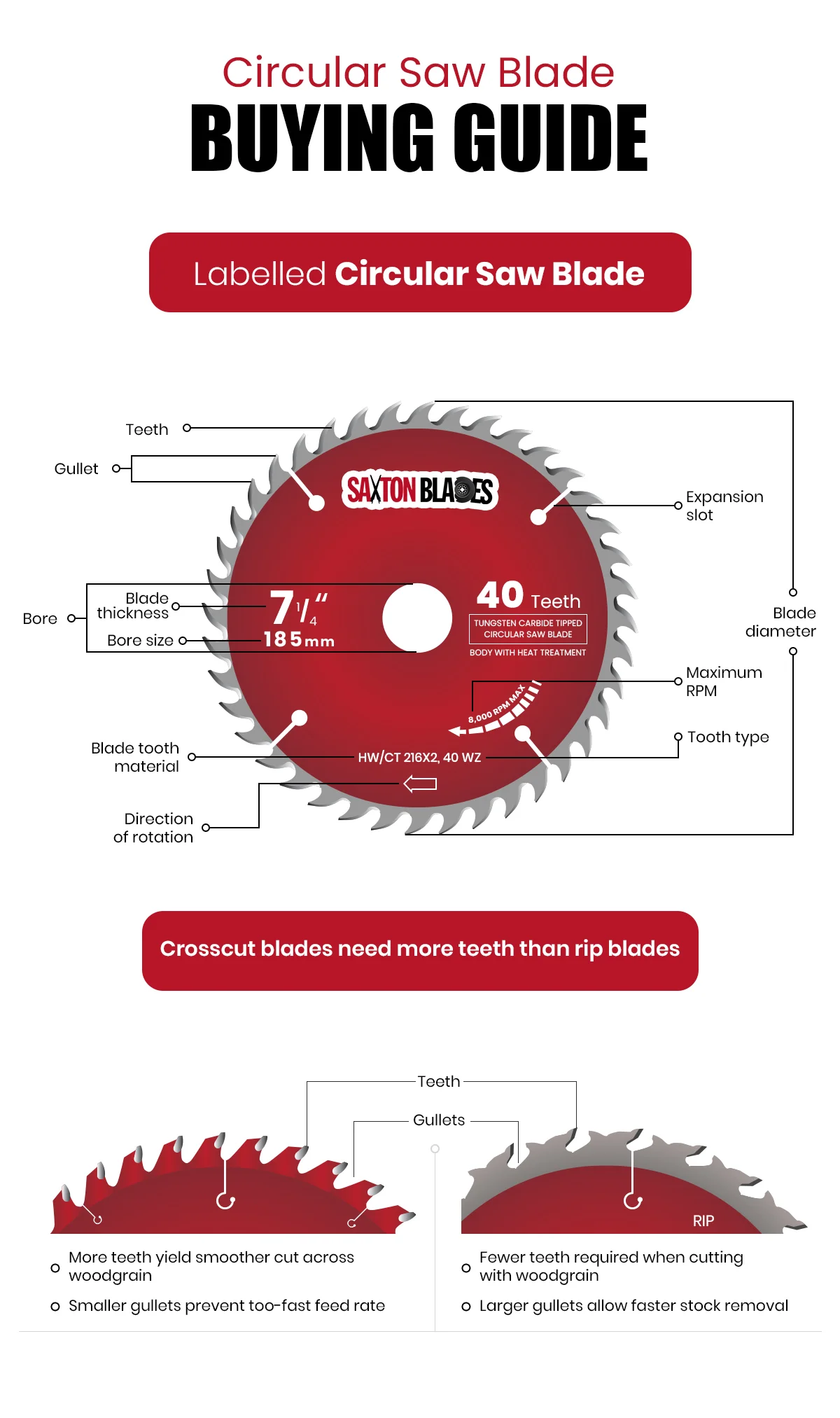
Credit: www.saxtonblades.co.uk
Tooth Count Basics
The tooth count on a circular saw blade is a key factor in the cutting performance. It affects the speed, smoothness, and type of cut you get. Choosing the right tooth count depends on the material and the cut style.
Understanding tooth count basics helps you pick the best blade for your project. This knowledge makes your cuts cleaner and safer.
What Does Tooth Count Mean?
Tooth count refers to the number of teeth on a saw blade. Blades can have as few as 18 teeth or more than 100. Each tooth removes a small piece of material during cutting.
More teeth mean the blade takes smaller bites of wood. Fewer teeth take bigger bites, cutting faster but rougher.
More Teeth For Smooth Cuts
Blades with many teeth deliver a fine, smooth finish. They reduce splintering and tear-out. These blades cut slower because they remove less material per tooth.
They are best for crosscutting hardwood, plywood, and veneered materials. These materials need careful handling to keep edges clean.
Fewer Teeth For Fast Cuts
Blades with fewer teeth cut faster but leave rougher edges. They remove more material with each tooth. This makes them ideal for ripping wood along the grain.
Fewer teeth blades work well for framing lumber and other rough cuts. Speed is important here, not a smooth finish.
Choosing Tooth Count By Material
The material you cut affects the ideal tooth count. Hardwoods and plywood usually need blades with more teeth. Softwoods and framing lumber cut well with fewer teeth.
Metal cutting demands blades with many teeth to prevent damage and ensure clean cuts.
Credit: handtoolessentials.com
Types Of Teeth
Circular saw blades come with different types of teeth. Each type suits a specific cutting task. Choosing the right teeth improves cutting quality and tool life.
Teeth vary in shape, size, and number. These features affect cut speed and smoothness. Understanding tooth types helps match the blade to your project.
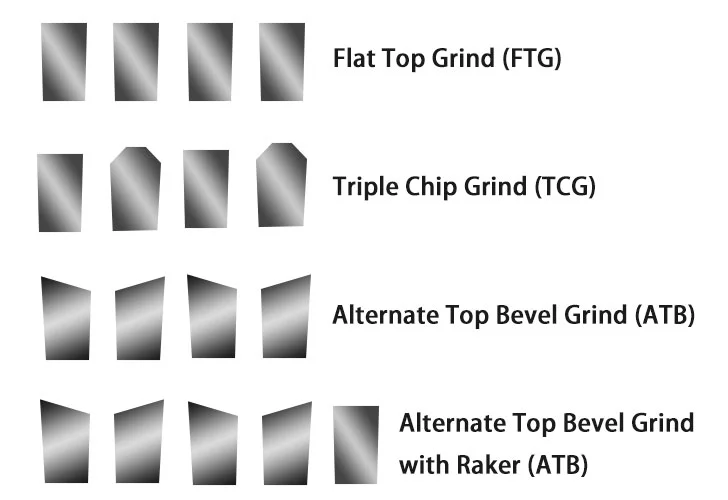
Alternate Top Bevel (atb) Teeth
ATB teeth have edges that alternate between left and right bevels. This design slices wood fibers cleanly. It reduces splintering and tear-out on plywood and hardwood.
These teeth work well for crosscutting and finishing tasks. They produce smooth, precise cuts on soft and hard woods.
Flat Top (ft) Teeth
FT teeth have flat, squared-off edges. They remove material quickly and efficiently. This type is great for ripping wood along the grain.
Flat top teeth create faster cuts but with rougher edges. Ideal for framing, construction, and general carpentry.
Combination (atbr) Teeth
Combination teeth mix ATB and raker teeth in a pattern. This blend allows both ripping and crosscutting with one blade. It offers versatility for various woodworking tasks.
These blades give balanced performance but may not be as smooth as pure ATB blades.
Triple Chip Grind (tcg) Teeth
TCG teeth alternate between a flat raker and two trapezoidal teeth. This design excels at cutting hard materials like metal and laminates. It reduces chipping and extends blade life.
TCG blades cut slower but produce clean, precise edges on tough surfaces.
Ripping Vs Crosscutting
Choosing the right circular saw blade teeth depends on the type of cut you want. Two main cuts are ripping and crosscutting. Each needs a different blade to work well and give clean results.
Ripping means cutting along the wood grain. It is faster but rougher. Crosscutting means cutting across the grain. It needs a smoother, cleaner cut.
Ripping Blades
Ripping blades have fewer teeth. This design removes wood chips quickly. The cut moves fast but looks rougher. These blades work best on soft or rough lumber. They help when you want to cut wood along the grain.
Crosscutting Blades
Crosscutting blades have more teeth. More teeth mean a slower cut but cleaner edges. They reduce splintering and tear-out on the wood surface. These blades are ideal for cutting plywood or finished wood. Use them when cutting across the grain for a smooth finish.
Choosing Teeth Based On Your Cut
Fewer teeth suit ripping cuts, speeding up work on thick wood. More teeth fit crosscutting, giving neat results on thin or finished wood. The tooth count affects cut quality and speed. Consider the material and cut type before selecting a blade.
Credit: www.konetool.com
Material Considerations
Choosing the right material for circular saw blade teeth is key to performance. The material affects durability, cutting speed, and finish quality. Different materials suit different tasks and wood types. Understanding these options helps pick the best blade for each job.
High-speed Steel (hss) Teeth
HSS teeth offer good toughness and resist heat well. They hold a sharp edge longer than standard steel. This material is affordable and works well for general wood cutting. However, HSS teeth dull faster than carbide teeth on hard materials.
Carbide-tipped Teeth
Carbide tips are harder and last much longer than steel. They cut through hardwood, plywood, and some metals smoothly. Carbide teeth resist heat and wear, keeping sharp edges for many cuts. These blades cost more but save time by needing fewer replacements.
Ceramic Teeth
Ceramic teeth are very hard and heat resistant. They stay sharp for a long time and reduce friction. Ceramic blades suit fine woodworking and cutting abrasive materials. They are brittle and can chip if used on rough or hard objects.
Diamond-coated Teeth
Diamond-coated teeth are extremely hard and cut through tough materials. They are ideal for cutting tiles, concrete, and metals. These blades are expensive and mostly used in specialized tasks. They provide smooth cuts and long blade life.
Blade Design Features
Circular saw blades come with various design features that affect their performance. Understanding these features helps in choosing the right blade for your task. The blade design influences cut quality, speed, and durability. Each feature plays a specific role in the blade’s overall function.
This section explains key blade design features to help you make informed decisions. Focus on these elements to match the blade with your cutting needs.
Tooth Shape
Tooth shape affects how the blade cuts through materials. Flat teeth provide smooth, clean cuts. Alternate top bevel teeth offer better control and are good for crosscutting. Triple chip grind teeth last longer and work well on hard materials.
Tooth Count
Tooth count determines cut speed and finish quality. Blades with many teeth cut slower but produce finer finishes. Fewer teeth mean faster cuts but rougher edges. High tooth count blades suit finish work. Low tooth count blades excel in ripping wood.
Gullet Size
The gullet is the space between teeth. Larger gullets clear more debris and allow faster cutting. Smaller gullets create smoother cuts but remove less material. Choose gullet size based on the type of cutting—fast or precise.
Hook Angle
Hook angle refers to the tilt of the tooth face. Positive hook angles pull the blade into the material for aggressive cuts. Negative hook angles slow the feed, improving control. A neutral angle balances speed and control for general use.
Blade Material And Coating
Blade materials impact durability and cutting ability. Carbide-tipped teeth stay sharp longer than steel teeth. Coatings reduce friction and heat build-up. They also protect against rust and wear, extending blade life.
Tips For Maintenance
Proper maintenance keeps your circular saw blade teeth sharp and effective. Regular care extends blade life and improves cutting quality. Simple steps prevent damage and ensure smooth operation.
Clean The Blade Teeth Regularly
Remove sawdust and resin buildup after each use. Use a soft brush or cloth with mild detergent. Avoid harsh chemicals that can damage the blade.
Check Teeth For Damage
Inspect the teeth before and after every job. Look for chipped, bent, or missing teeth. Replace or sharpen the blade if you find damage.
Sharpen The Teeth Properly
Use the right tools for sharpening. Follow the manufacturer’s angle and tooth design. Dull teeth cause rough cuts and put strain on the saw.
Store Blades Safely
Keep blades in a dry, clean place to prevent rust. Use blade cases or hang them on racks. Avoid stacking blades directly on each other.
Use The Blade For Its Intended Purpose
Match the blade to the material and cut type. Avoid cutting materials that can dull or damage the teeth quickly. Proper use reduces wear and tear.
Frequently Asked Questions
What Is The Best Tooth Count For Circular Saw Blades?
The best tooth count depends on the cut type. Fewer teeth (24-30) cut fast, ideal for ripping. More teeth (60-80) provide smoother cuts, perfect for crosscutting and finishing. Choose based on material and desired finish quality.
What Is A 140 Tooth Circular Saw Blade Used For?
A 140 tooth circular saw blade delivers smooth, precise cuts. It suits finishing carpentry, crosscutting hardwood, and cutting veneered plywood. The high tooth count reduces splintering and tear-out, ideal for detailed woodworking and clean edges.
Is It Better To Have More Or Less Teeth On A Circular Saw?
More teeth on a circular saw blade provide smoother, cleaner cuts but slower speed. Fewer teeth cut faster but rougher, ideal for ripping lumber. Choose tooth count based on material and cut type for best results.
How Many Teeth For A Circular Saw Blade?
Circular saw blades typically have 24 to 80 teeth. Fewer teeth (24-40) cut faster but rougher. More teeth (60-80) provide smoother, cleaner cuts. Choose based on material and type of cut—ripping needs fewer teeth, crosscutting and finishing require more teeth for precision.
What Is The Ideal Tooth Count For Circular Saw Blades?
Blades with more teeth cut smoother but slower, perfect for finishing. Fewer teeth cut faster but rougher, good for ripping wood.
How Do Blade Teeth Affect Cut Quality And Speed?
More teeth give clean, smooth cuts but slower speed. Fewer teeth cut fast with rougher edges.
Conclusion
Choosing the right circular saw blade teeth affects your cut quality and speed. Fewer teeth cut faster but leave rough edges. More teeth give smoother cuts but work slower. Match the tooth count to your material and cutting type. This simple choice improves results and tool life.
Keep your blades sharp and clean for best performance. Understanding these basics helps you work smarter and safer every time.
{
“@context”: “https://schema.org”,
“@type”: “Article”,
“headline”: “Circular Saw Blade Teeth Guide: Ultimate Tips for Precise Cuts”,
“description”: “A Circular Saw Blade Teeth Guide explains the types, shapes, and functions of teeth for optimal cutting performance and material suitability.”,
“url”: “https://www.powertoolstoday.com/circular-saw-blade-teeth-guide/”,
“datePublished”: “2026-02-28”,
“dateModified”: “2026-03-18”,
“author”: {
“@type”: “Organization”,
“name”: “Power Tools Today”,
“url”: “https://www.powertoolstoday.com”
},
“publisher”: {
“@type”: “Organization”,
“name”: “Power Tools Today”,
“url”: “https://www.powertoolstoday.com”
},
“mainEntityOfPage”: {
“@type”: “WebPage”,
“@id”: “https://www.powertoolstoday.com/circular-saw-blade-teeth-guide/”
},
“image”: {
“@type”: “ImageObject”,
“url”: “https://www.powertoolstoday.com/wp-content/uploads/2025/11/Circular-Saw-Blade-Teeth-1024×576.webp”
}
}
nn
Related Articles
- Who Makes the Best Drill Bits: Top Brands Reviewed for 2025
- What are Brad Point Drill Bits Used for: Ultimate Woodworking Guide
- How to Clean Saw Blades: Quick Tips for Sharp, Efficient Cuts
- Cobalt Vs Titanium Drill Bit: Ultimate Durability and Performance Showdown
nn