
Last Updated: March 21, 2026
If you’ve ever needed to replace or upgrade your chainsaw bar, you know how tricky it can be to get the measurement just right. Measuring a chainsaw bar isn’t as simple as grabbing a ruler and noting the length—it requires a few key steps to ensure accuracy.
Getting this measurement wrong could mean buying the wrong bar or chain, which wastes your time and money. But don’t worry—this guide will walk you through the easiest and most precise way to measure your chainsaw bar. By the end, you’ll have the confidence to find the perfect fit for your tool, keeping your cutting work smooth and safe.
Let’s get started!
Credit: www.youtube.com
Tools Needed
Measuring a chainsaw bar requires some basic tools. These tools ensure you get an accurate measurement. Accurate measurements help you find the right replacement bar or chain. Gather these tools before starting your measurement.
Measuring Tape
A flexible measuring tape is essential. It helps measure the bar length from tip to where it connects to the chainsaw. Use a tape with clear markings in inches or centimeters. Avoid using a ruler, as it may not be long enough.
Flat Surface
Place the chainsaw on a flat and stable surface. This keeps the chainsaw steady while measuring. A flat surface ensures accurate and consistent measurement.
Pencil And Paper
Use a pencil and paper to note down your measurements. Writing the measurement prevents mistakes. It also helps when you compare sizes later.
Safety Gloves
Wear safety gloves before handling the chainsaw. This protects your hands from sharp edges. Gloves provide a better grip and reduce injury risk.
Credit: www.wikihow.com
Safety Precautions
Safety is the first priority when measuring a chainsaw bar. Handling a chainsaw incorrectly can cause serious injuries. Taking simple precautions reduces risks and ensures a safe process. Always prepare the workspace and tools before starting.
Wear protective gear. Thick gloves protect your hands from sharp edges. Safety glasses shield your eyes from debris. Avoid loose clothing that can catch on the chainsaw.
Disconnect The Chainsaw Power Source
Unplug the spark plug wire before measuring. This prevents accidental starting. Even if the chainsaw is off, it can still start unexpectedly. Double-check the spark plug connection is loose and secure.
Place The Chainsaw On A Stable Surface
Put the chainsaw on a flat and steady surface. This stops it from moving during measurement. A stable base helps keep hands away from the sharp bar and chain. Do not hold the chainsaw in your hand while measuring.
Handle The Bar And Chain Carefully
The chainsaw bar and chain are sharp and dangerous. Avoid touching the cutting edges directly. Use gloves to hold the bar. Keep fingers clear of the chain teeth at all times.
Preparing The Chainsaw
Before measuring the chainsaw bar, prepare the chainsaw carefully. Safety comes first. Always work in a well-lit, clean area. Clear the workspace to avoid accidents.
Disconnect the spark plug wire. This stops the chainsaw from starting by mistake. Handling the chainsaw without power reduces risks.
Place the chainsaw on a flat, steady surface. Lay it down with the bar facing you. This position makes measuring easier and more accurate.
Disconnect The Spark Plug
Locate the spark plug on the engine. Gently pull off the spark plug wire. Keep the wire away from the plug to avoid contact. This step prevents the chainsaw from starting.
Position The Chainsaw
Find a flat surface like a workbench or table. Lay the chainsaw down so the bar points forward. Make sure the chainsaw is stable and won’t move.
Check The Bar And Chain
Inspect the bar for damage or wear. Look at the chain tension to ensure it is neither too loose nor too tight. Proper chain tension helps in accurate measurement.

Credit: www.parkerbrand.co.uk
Measuring Bar Length
Knowing the exact length of your chainsaw bar helps find the right replacement parts. Measure carefully to avoid buying the wrong size.
Chainsaw bars come in standard lengths, usually in even numbers. Measuring accurately ensures smooth cutting and safe operation.
Prepare The Chainsaw For Measurement
Start by turning off the chainsaw and disconnecting the spark plug wire. This step prevents accidental starts and keeps you safe.
Place the chainsaw on a flat, stable surface. Lay it with the bar facing toward you for easy measuring.
Measure From Tip To Bar Mount
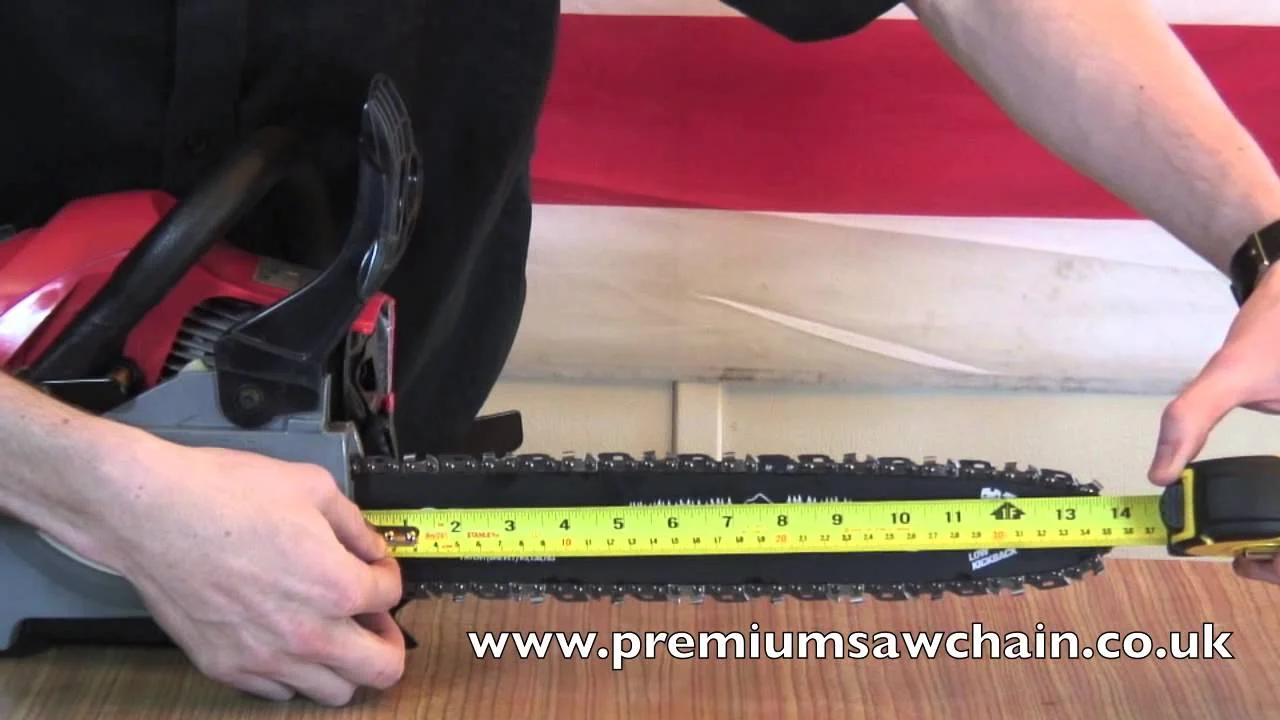
Use a tape measure to find the distance from the tip of the bar to where it connects to the chainsaw body. Do not include the chain in this measurement.
Measure along the flat side of the bar, not the rounded edges. This method gives the most accurate length.
Round Up To The Nearest Even Number
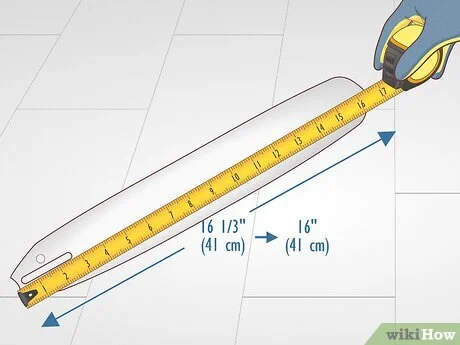
Chainsaw bars come in even-inch lengths. If your measurement is odd or in between, round up to the next even number.
For example, if you measure 17 inches, choose a 18-inch bar. This ensures proper fit and chain tension.
Identifying Bar Width And Gauge
Identifying the bar width and gauge is vital when measuring a chainsaw bar. These two factors affect the chain’s fit and cutting performance. Knowing them helps you choose the right chain and maintain your chainsaw properly.
The bar width is the distance across the flat part of the bar where the chain runs. The gauge refers to the thickness of the groove in the bar where the chain fits. Both measurements must match the chain to avoid problems during use.
What Is Bar Width?
Bar width measures the flat part of the chainsaw bar. It shows how wide the bar is from one side to the other. This width determines the size of the chain that fits the bar. If the chain is too wide or too narrow, it will not work well.
To find the bar width, use a caliper or ruler. Measure across the bar’s flat surface, not the edges. This number helps you match the chain and bar correctly.
Understanding Bar Gauge
The bar gauge is the thickness of the groove that holds the chain. It is usually measured in inches or millimeters. The gauge size must fit the chain’s drive links perfectly. A wrong gauge can cause the chain to slip or not run smoothly.
To check the gauge, look at the bar’s groove with a magnifier or caliper. Measure the groove’s thickness carefully. Write down this number to find a chain with the same gauge size.
Why Both Measurements Matter
Both bar width and gauge must match the chain for safe cutting. If the bar width is off, the chain may not sit properly. If the gauge is wrong, the chain can jump or wear out quickly.
Always record both measurements before buying a new chain or bar. This ensures your chainsaw works well and lasts longer.
Finding Chain Pitch And Drive Links
Finding the correct chain pitch and drive links is key for a perfect chainsaw fit. These two measurements help you choose the right chain for your bar. Without them, your chainsaw might not cut well or could even be unsafe to use.
Chain pitch refers to the distance between the drive links on the chain. Drive links are the small parts that fit into the guide bar and help the chain move smoothly. Knowing both helps keep your chainsaw working at its best.
What Is Chain Pitch?
Chain pitch is the space between three consecutive rivets divided by two. It usually comes in sizes like 1/4 inch, .325 inch, 3/8 inch, and .404 inch. To measure, use a ruler or caliper to check the distance carefully. This number must match the guide bar’s pitch for the chain to fit properly.
How To Count Drive Links
Drive links fit into the bar groove and drive the chain around the bar. To count them, lay the chain flat and count each small link that fits inside the bar. The total number of drive links helps you find the right chain length. A chain with too many or too few drive links will not fit correctly.
Tips For Accurate Measurement
Use a clear, flat surface and good lighting to see the links well. Measure the pitch first, then count the drive links slowly. Double-check your numbers before buying a new chain. Correct pitch and drive link count keep the chainsaw running smoothly and safely.
Rounding Measurements
Rounding measurements plays a key role in finding the correct chainsaw bar size. Chainsaw bars come in standard even lengths. Precise measurement is important, but exact decimals rarely match available bar sizes. Rounding helps choose the right replacement or upgrade bar.
Measure the bar length from the tip to the point where it joins the chainsaw body. This gives the exact length. Next, round this number up to the nearest even whole number. For example, if your measurement is 15.3 inches, round it up to 16 inches.
Rounding up avoids buying a bar that is too short. Bars that are too small can cause chain tension problems or damage. Bars that are slightly longer still work well and keep your chainsaw safe and efficient.
Why Round Up Your Measurement?
Chainsaw bars come in fixed lengths. These sizes are usually even numbers like 14, 16, or 18 inches. If your exact measurement falls between two sizes, always choose the next bigger one. This ensures your chainsaw chain fits properly and runs smoothly.
How To Round Your Measurement Correctly
After measuring, check the decimal part. If it is any number above zero, round the length up. For instance, a 13.1-inch bar rounds to 14 inches. Do not round down, as this could lead to a bar too small for your chainsaw.
Common Bar Length Sizes
Most chainsaw bars come in lengths like 12, 14, 16, 18, 20, and 24 inches. Knowing these standard sizes helps when you round your measurement. Pick the closest larger size from this list to match your rounded number.
Tips For Choosing The Right Bar
Choosing the right chainsaw bar is essential for effective cutting and safety. The bar size affects control and cutting power. Picking a bar that fits your chainsaw and meets your task needs makes work easier and safer.
Consider the type of wood and cutting style. Different bars suit different jobs. A proper bar helps avoid damage and improves performance.
Check The Bar Length
Measure the bar length from tip to where it attaches to the chainsaw. Use the even-numbered length closest to your measurement. A bar too long or short can reduce efficiency and safety.
Consider The Bar Width
The bar width matches the chain gauge. Check your chain’s thickness to select the right bar width. A mismatch can cause chain derailment or poor cutting.
Match The Bar To Your Chainsaw
Ensure the bar fits the chainsaw’s power and mounting system. Using an incompatible bar stresses the engine and chain. Follow the manufacturer’s recommendations for best results.
Choose The Right Bar Type
Bars come in different styles like low-profile or full-roller nose. Select one based on your cutting needs. Some bars reduce kickback, increasing safety during use.
Consider The Material And Quality
High-quality bars last longer and resist wear. Steel bars with good finishes reduce friction. Investing in quality saves money and effort over time.
Frequently Asked Questions
How Do I Measure The Length Of My Chainsaw Bar?
Place the chainsaw on a flat surface. Measure from the bar’s tip to where it attaches to the body. Round to the nearest even number.
How Do I Tell What Size Chainsaw Chain I Have?
Check the chain for stamped markings showing pitch, gauge, and drive links. Measure pitch between three rivets. Count drive links for size.
How Long Is A 14 Chainsaw Bar?
A 14-inch chainsaw bar measures 14 inches from the tip to the point it attaches to the chainsaw body.
Can I Put A 16 Inch Bar On An 18 Inch Chainsaw?
You can use a 16-inch bar on an 18-inch chainsaw if the mounting holes and chain pitch match. Ensure compatibility to avoid damage or poor performance.
How Do I Measure The Length Of A Chainsaw Bar?
Measure from the tip of the bar to where it attaches to the chainsaw body. Round up to the nearest even number.
Conclusion
Measuring a chainsaw bar is simple with the right steps. Always ensure safety by disconnecting the spark plug first. Use a tape measure from the bar’s tip to where it meets the saw body. Remember to round up to the nearest even number.
This helps you find the correct bar length for replacement or maintenance. Knowing how to measure your chainsaw bar saves time and avoids mistakes. Keep this guide handy whenever you need to check or change your chainsaw bar. Accurate measurements keep your saw working well and safe.
Related reading: what size chainsaw you need.
Related reading: Why Won’t My Chainsaw Start.
{ “@context”: “https://schema.org”, “@type”: “Article”, “headline”: “How to Measure a Chainsaw Bar: Easy Steps for Perfect Fit”, “description”: “Learn how to measure a chainsaw bar accurately by understanding its length and key points to ensure proper fit and optimal cutting performance.”, “url”: “https://www.powertoolstoday.com/how-to-measure-a-chainsaw-bar/”, “datePublished”: “2025-12-06”, “dateModified”: “2026-03-18”, “author”: { “@type”: “Organization”, “name”: “Power Tools Today”, “url”: “https://www.powertoolstoday.com” }, “publisher”: { “@type”: “Organization”, “name”: “Power Tools Today”, “url”: “https://www.powertoolstoday.com” }, “mainEntityOfPage”: { “@type”: “WebPage”, “@id”: “https://www.powertoolstoday.com/how-to-measure-a-chainsaw-bar/” }, “image”: { “@type”: “ImageObject”, “url”: “https://www.powertoolstoday.com/wp-content/uploads/2025/11/how-to-measure-a-chainsaw-bar.jpg” } }{ “@context”: “https://schema.org”, “@type”: “Article”, “headline”: “How to Measure a Chainsaw Bar: Easy Steps for Perfect Fit”, “description”: “Learn how to measure a chainsaw bar accurately by understanding its length and key points to ensure proper fit and optimal cutting performance.”, “url”: “https://www.powertoolstoday.com/how-to-measure-a-chainsaw-bar/”, “datePublished”: “2025-12-06”, “dateModified”: “2026-03-19”, “author”: { “@type”: “Organization”, “name”: “Power Tools Today”, “url”: “https://www.powertoolstoday.com” }, “publisher”: { “@type”: “Organization”, “name”: “Power Tools Today”, “url”: “https://www.powertoolstoday.com” }, “mainEntityOfPage”: { “@type”: “WebPage”, “@id”: “https://www.powertoolstoday.com/how-to-measure-a-chainsaw-bar/” }, “image”: { “@type”: “ImageObject”, “url”: “https://www.powertoolstoday.com/wp-content/uploads/2025/11/how-to-measure-a-chainsaw-bar.jpg” } }nnnn