
Last Updated: March 20, 2026
If you’ve ever wondered how to get perfect, straight cuts on wood or other materials, a table saw might be exactly what you need. Whether you’re building furniture, crafting DIY projects, or tackling home improvements, knowing what a table saw is used for can transform the way you work.
This powerful tool doesn’t just cut wood—it helps you make precise rip cuts, smooth crosscuts, angled bevels, and more, all with ease and accuracy. Stick with me as we explore how a table saw can improve your projects, save you time, and boost your confidence in the workshop.
Ready to unlock the full potential of this essential tool? Let’s dive in!
Main Cuts With Table Saws
The table saw is a versatile tool in woodworking. It makes different types of cuts that help shape wood precisely. Understanding the main cuts improves both safety and results. These cuts include rip cuts, crosscuts, and dado cuts.
Rip Cuts
Rip cuts run along the wood grain. The table saw blade moves parallel to the grain. This cut makes boards narrower or splits large panels. It is useful for resizing wood pieces quickly. Rip cuts require steady control to keep the cut straight and clean.
Crosscuts
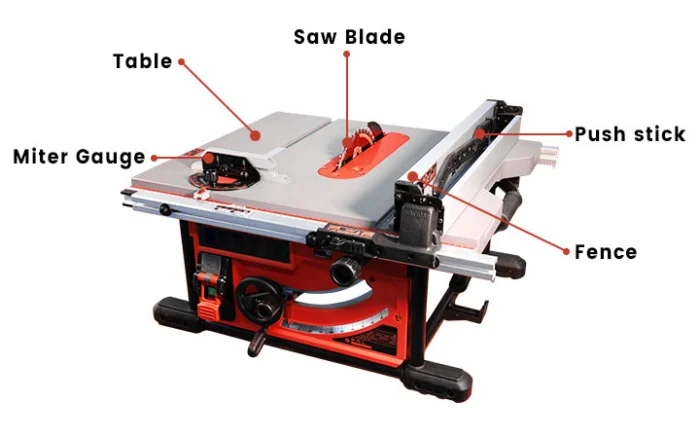
Crosscuts go across the wood grain. The blade moves perpendicular to the grain direction. This cut shortens the length of a board. It helps fit pieces together in projects like furniture. Using a fence or miter gauge guides the wood for accuracy.
Dado Cuts
Dado cuts create wide grooves in the wood. The blade cuts across the grain, removing a strip of material. These cuts join two pieces securely by fitting one inside the groove. Dado cuts are common in cabinet and shelf construction. Special dado blades make this cut easier and safer.
Bevel And Miter Cuts
Bevel and miter cuts allow you to shape wood at precise angles. These cuts expand the table saw’s versatility, letting you create frames, moldings, and angled joints. Understanding how to perform these cuts makes woodworking projects more accurate and professional.
Making Angled Cuts
Angled cuts change the edge of a board. To make these cuts, tilt the saw blade to the desired angle. This is called a bevel cut. Bevel cuts help join wood pieces at angles other than 90 degrees. You can adjust the blade angle easily on most table saws. This feature allows for clean, smooth cuts on trim and decorative pieces.
Compound Cuts Explained
Compound cuts combine bevel and miter cuts in one pass. The saw blade tilts while the fence or table rotates to an angle. This lets you cut two angles at the same time. Compound cuts are essential for creating complex joints, such as crown molding. Using compound cuts saves time and improves accuracy in detailed woodworking tasks.
Accuracy And Precision Benefits
Using a table saw offers strong benefits in accuracy and precision. These benefits help woodworkers create clean and exact cuts every time. Precision is key in woodworking projects to ensure parts fit well and the final product looks professional.
The design of a table saw allows users to control the blade and the wood piece carefully. This control leads to consistent results. The table surface keeps the wood steady, while the fence guides the wood for straight cuts. Such features make the table saw a reliable tool for precise work.
Repeatable Cuts
One major advantage of a table saw is making repeatable cuts. You can set the fence to a specific measurement and cut multiple pieces with the same length. This saves time and reduces errors. Repeatable cuts are important for projects needing many identical parts.
The accuracy of the fence and the stable table surface help maintain uniformity. Once set, the saw produces cuts with little variation. This consistency improves the quality of the work and reduces material waste.
Smooth Finish
A table saw also delivers a smooth finish on cut edges. The sharp blade spins fast, slicing through wood cleanly. This reduces splintering and rough edges. A smooth finish means less sanding is needed afterward.
The smooth cut surfaces help pieces fit together tightly. This is essential for fine woodworking and furniture making. With a table saw, the finished product looks neat and professional without extra effort.
Credit: www.findbuytool.com
Material Versatility
A table saw is a powerful tool that handles various materials with ease. Its versatility makes it essential for many projects. Users can cut through different types of materials with precision and control.
This flexibility saves time and effort. Whether working on home improvements or crafts, the table saw adapts well to diverse needs. Understanding its material versatility helps users maximize its potential safely and efficiently.
Wood And Plywood
Wood is the primary material for table saws. They cut hardwoods and softwoods cleanly. Plywood sheets also work well on a table saw. The blade slices through layers smoothly without splintering.
This makes table saws ideal for furniture making and carpentry. Users can make straight cuts, rip boards, or crosscut panels easily. With the right blade, detailed cuts in wood become accurate and safe.
Plastic And Sheet Metal
Table saws can cut some plastics like acrylic and PVC. Cutting plastic requires a fine-toothed blade to avoid chipping. Slow, steady feeding prevents melting or cracking during the cut.
Thin sheet metal can also be cut with special blades. Metal cutting blades have carbide tips for durability. Users must wear safety gear and keep the work steady to avoid accidents.
This ability expands the table saw’s use beyond woodwork. It suits DIY projects involving plastic or metal parts. Material versatility makes the table saw a practical tool for many tasks.
Safety Tips For Table Saw Use
Using a table saw can make woodworking faster and more precise. Safety is very important with this tool. Following safety tips helps avoid accidents and injuries. Always stay alert and focused while using the saw.
Cuts To Avoid
Never try to cut curves or round shapes on a table saw. The blade can bind and cause kickback. Avoid cutting small pieces that are hard to hold. Do not cut warped or twisted wood without proper support. These cuts increase the risk of accidents.
Proper Handling
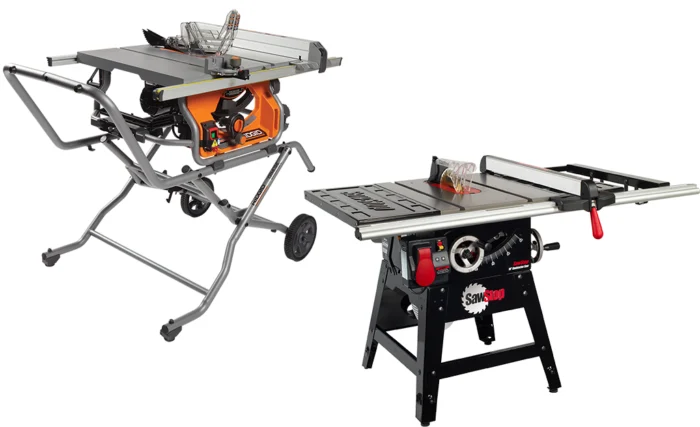
Always use push sticks or push blocks to guide the wood. Keep your hands away from the blade. Use a stable work surface and make sure the saw is secure. Adjust the blade height to just above the wood thickness. Turn off the saw and wait for the blade to stop before removing scraps.
Credit: www.homedepot.com
Table Saw Vs Circular Saw
Choosing between a table saw and a circular saw depends on the type of woodworking task. Both tools cut wood but work differently. Understanding their strengths helps pick the right tool for the job.
Cutting Capabilities
A table saw cuts wood by pushing it through a spinning blade on a flat surface. It makes precise, straight cuts. It can handle rip cuts, crosscuts, and bevel cuts easily. The blade size and fence help keep cuts consistent.
A circular saw is handheld and portable. It cuts by moving the blade across the wood. It works well for straight cuts but can be less precise than a table saw. It is good for cutting large sheets or making quick cuts.
Best Use Cases
Use a table saw for projects needing exact measurements and clean edges. It is ideal for cabinet making, furniture, and fine woodworking. It excels at cutting large boards into smaller, accurate pieces.
A circular saw suits job sites and outdoor work. It is great for cutting plywood, trimming lumber, or making rough cuts. Its portability allows cutting large materials that won’t fit on a table saw.
Credit: en.wikipedia.org
Frequently Asked Questions
What Is The Main Purpose Of A Table Saw?
A table saw primarily makes precise rip cuts, crosscuts, and bevel cuts on wood and similar materials. It ensures accuracy and repeatability for woodworking projects.
What Cuts Can You Not Do On A Table Saw?
You cannot safely make curved, plunge, or compound cuts on a table saw. Avoid cutting metal or concrete.
What Is The Best Use Of A Table Saw?
A table saw best cuts wood with precision. It excels in rip cuts, crosscuts, bevel cuts, dado cuts, and miter cuts for woodworking projects.
What’s Better, A Table Saw Or Circular Saw?
A table saw offers precise, straight cuts ideal for wood and repeated tasks. A circular saw provides versatility with compound and plunge cuts on various materials. Choose a table saw for accuracy and volume; pick a circular saw for flexibility and portability.
What Is The Main Purpose Of A Table Saw?
A table saw is used to make precise straight cuts in wood, like ripping and crosscutting.
Can A Table Saw Cut Curves Or Circles?
No, table saws are designed for straight cuts only, not curved or circular cuts.
Conclusion
A table saw is a key tool for many woodworking tasks. It cuts wood quickly and precisely. You can use it for ripping, crosscutting, and making dados. The saw helps create straight edges and smooth surfaces. Beginners and professionals find it useful for many projects.
Always use safety gear and follow instructions when operating the saw. This tool adds efficiency and accuracy to your work. Choosing the right blade and technique matters most. In short, a table saw is essential for clean, accurate wood cuts.
{ “@context”: “https://schema.org”, “@type”: “Article”, “headline”: “What is a Table Saw Used for: Essential Uses You Must Know”, “description”: “A table saw is used for making precise cuts in wood and other materials, essential for woodworking, carpentry, and construction projects.”, “url”: “https://www.powertoolstoday.com/what-is-a-table-saw-used-for/”, “datePublished”: “2025-11-13”, “dateModified”: “2026-03-18”, “author”: { “@type”: “Organization”, “name”: “Power Tools Today”, “url”: “https://www.powertoolstoday.com” }, “publisher”: { “@type”: “Organization”, “name”: “Power Tools Today”, “url”: “https://www.powertoolstoday.com” }, “mainEntityOfPage”: { “@type”: “WebPage”, “@id”: “https://www.powertoolstoday.com/what-is-a-table-saw-used-for/” }, “image”: { “@type”: “ImageObject”, “url”: “https://www.powertoolstoday.com/wp-content/uploads/2025/11/What-is-a-Table-Saw-Used-for-1024×576.webp” } }{ “@context”: “https://schema.org”, “@type”: “Article”, “headline”: “What is a Table Saw Used for: Essential Uses You Must Know”, “description”: “A table saw is used for making precise cuts in wood and other materials, essential for woodworking, carpentry, and construction projects.”, “url”: “https://www.powertoolstoday.com/what-is-a-table-saw-used-for/”, “datePublished”: “2025-11-13”, “dateModified”: “2026-03-19”, “author”: { “@type”: “Organization”, “name”: “Power Tools Today”, “url”: “https://www.powertoolstoday.com” }, “publisher”: { “@type”: “Organization”, “name”: “Power Tools Today”, “url”: “https://www.powertoolstoday.com” }, “mainEntityOfPage”: { “@type”: “WebPage”, “@id”: “https://www.powertoolstoday.com/what-is-a-table-saw-used-for/” }, “image”: { “@type”: “ImageObject”, “url”: “https://www.powertoolstoday.com/wp-content/uploads/2025/11/What-is-a-Table-Saw-Used-for-1024×576.webp” } }nn