
When you want a sharp knife for cooking or working, you hear a lot about whetstones and honing rods. Both tools look simple, but they do different things for your blades. If you’ve ever been confused about which one to use, you’re not alone. Many people—even chefs—mix up sharpening and honing. Understanding the difference helps you keep your knives sharp, safe, and long-lasting.
Choosing the right tool is important. A dull knife is not only frustrating but also dangerous. You need to know when to use a whetstone and when a honing rod is better. In this guide, you’ll discover how each tool works, their pros and cons, and common mistakes people make.
You’ll also see real examples, practical tips, and what happens if you choose the wrong tool. By the end, you’ll know how to keep your knives in top shape for years.
What Is A Whetstone?
A whetstone is a flat stone block used to sharpen blades. It’s sometimes called a sharpening stone or water stone. Whetstones come in different grits, from rough (coarse) to very smooth (fine). Using a whetstone means removing a small amount of metal from the blade to create a new, sharp edge.
How A Whetstone Works
A whetstone works by grinding away the worn or damaged edge of a knife. As you move the blade across the stone, it reshapes the metal to a fine point. The grit number tells you how rough or smooth the stone is.
Lower numbers (like 400) are rough and remove more metal. Higher numbers (like 6000) polish the edge and make it razor-sharp.
Most whetstones need water or oil on the surface before you start. This helps carry away metal shavings and prevents damage to the stone.
Types Of Whetstones
- Water stones: Use water for lubrication. They cut quickly but wear down faster.
- Oil stones: Use oil instead of water. They last longer but cut more slowly.
- Diamond stones: Have a surface of tiny diamonds. They are very hard, durable, and don’t need soaking.
When To Use A Whetstone
Use a whetstone when your knife is dull, chipped, or has lost its edge. If your knife cannot slice through a tomato easily or slips on an onion’s skin, it needs sharpening, not just honing.
Common Whetstone Grits
| Grit Number | Use | Result |
|---|---|---|
| 200-400 | Repair chips; very dull blades | Removes lots of metal, rough finish |
| 800-1000 | General sharpening | Restores edge, moderate smoothness |
| 3000-6000 | Polishing, finishing | Very sharp, smooth edge |
Key Advantages
- Restores a dull blade completely
- Suitable for all knife types, including very hard steel
- You control the angle and sharpness
Drawbacks
- Takes practice to use well
- Can remove too much metal if used incorrectly
- Slower than honing
What Is A Honing Rod?
A honing rod (sometimes called a honing steel or sharpening steel) is a long, narrow rod made of steel, ceramic, or diamond. It’s not really for sharpening—it’s for realigning the edge of the knife.
How A Honing Rod Works
When you cut with a knife, the edge bends and folds. It gets “rolled” to one side even if it’s still sharp. A honing rod straightens the blade’s edge without removing much metal. You run the knife along the rod at the correct angle, and the edge becomes aligned again.
Types Of Honing Rods
- Steel rods: The classic type. Good for most kitchen knives.
- Ceramic rods: Harder than steel, can lightly sharpen as well as hone.
- Diamond rods: Covered in diamond dust, remove a small amount of metal for more aggressive honing.
When To Use A Honing Rod
Use a honing rod often—every few uses or before each cooking session. If your knife can still cut but doesn’t feel as sharp, try honing first. It’s a quick fix for a blade that’s lost its perfect edge but isn’t dull.
Common Honing Rod Materials
| Material | Effectiveness | Best Use |
|---|---|---|
| Steel | Realigns, no sharpening | Standard kitchen knives |
| Ceramic | Realigns & polishes | Harder steel knives |
| Diamond | Realigns & lightly sharpens | Very dull or hard blades |
Key Advantages
- Fast and easy to use
- No major skill needed
- Keeps knives working longer between sharpenings
Drawbacks
- Does not fix a truly dull blade
- Can wear out softer knives if used too hard
- Not a substitute for sharpening
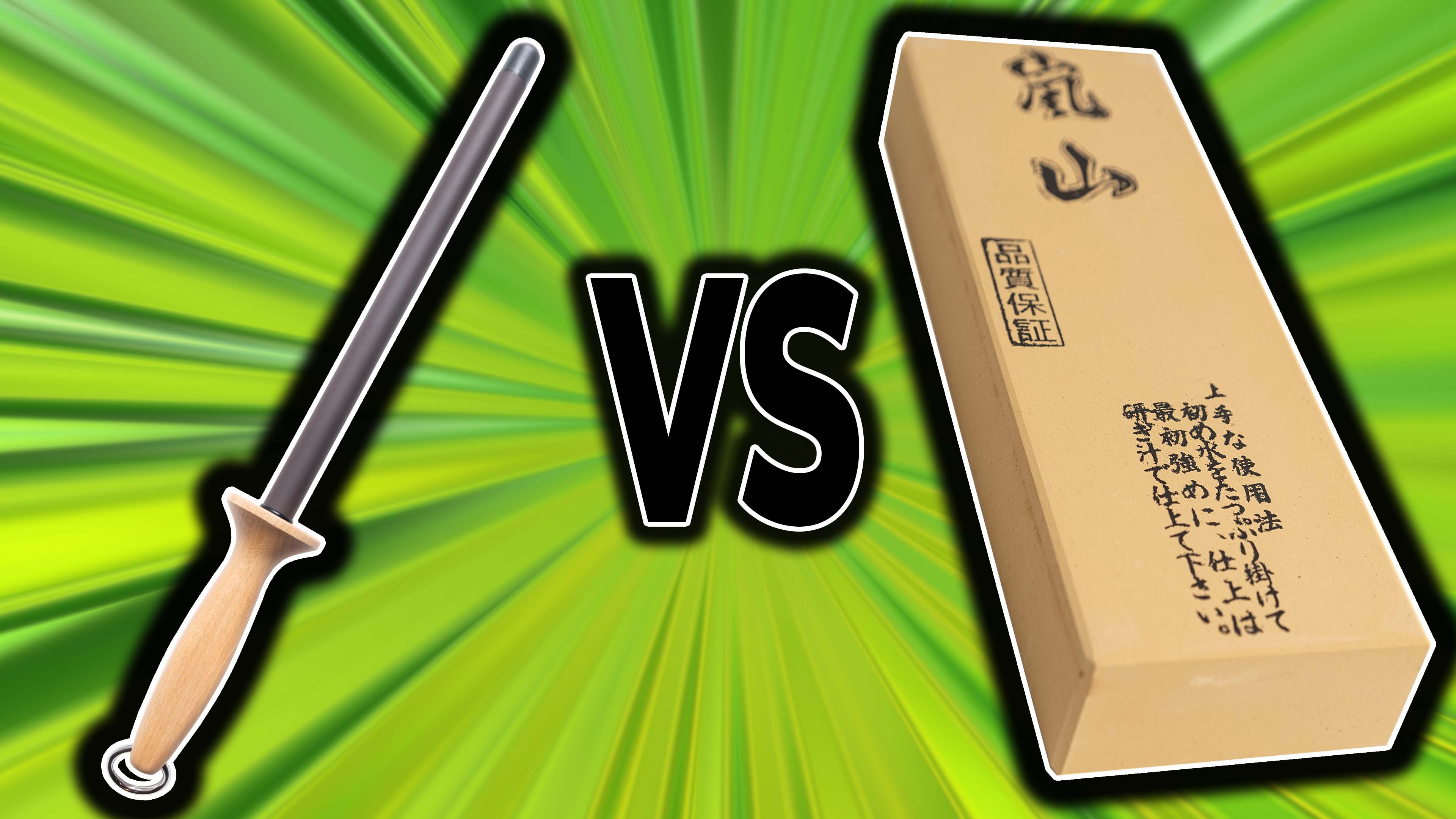
Credit: sharpknifeshop.com
Whetstone Vs Honing Rod: Key Differences
Understanding when to use a whetstone or honing rod is important. Here are the main differences:
| Feature | Whetstone | Honing Rod |
|---|---|---|
| Main Purpose | Sharpens by removing metal | Realigns edge, little/no metal removed |
| How Often | Every few months | Every few uses |
| Skill Needed | Moderate to high | Low to moderate |
| Knife Condition | Very dull or chipped | Edge rolled, still sharp |
| Time Required | 5–15 minutes | 1–2 minutes |
| Effect on Blade | Removes blade material | Preserves blade material |
When To Use Each Tool
Signs You Need A Whetstone
- Knife cannot cleanly cut paper or tomatoes
- The blade slips or tears food instead of slicing
- Honing rod no longer improves sharpness
- There are small chips or bends in the edge
Signs You Need A Honing Rod
- Knife was sharp last week but now feels “off”
- It cuts but not as smoothly
- You want to maintain the edge, not restore it
Real-life Example
A chef uses a honing rod before every shift to keep knives sharp. After a few months of use, even with regular honing, the knives feel dull. Only a whetstone brings back their sharpness.
Common Mistakes And How To Avoid Them
- Using a honing rod to fix a truly dull knife. Honing rods cannot repair a damaged or very dull blade. If your knife doesn’t improve after honing, use a whetstone.
- Sharpening too often with a whetstone. Removing too much metal shortens the life of your knife. Only sharpen when needed.
- Wrong angle. Both tools require the right angle (usually 15–20 degrees for most kitchen knives). Too steep or too flat makes the edge worse.
- Not cleaning the blade after sharpening or honing. Metal dust or filings can stick to food. Always wipe the blade clean.
- Ignoring the type of steel. Harder Japanese knives need different care than softer Western knives. For very hard steel, use a ceramic honing rod or fine-grit whetstone.
Practical Tips For Better Results
- Use light pressure. For both tools, pressing too hard can damage the blade.
- Practice the motion. Smooth, even strokes work best—especially with a whetstone.
- Check for a burr. After sharpening, feel for a tiny “lip” on the edge. This means you’ve sharpened correctly.
- Keep tools clean. Wash whetstones after use and wipe honing rods regularly.
- Store knives properly. A sharp knife needs safe storage—use a knife block or magnetic strip.
:max_bytes(150000):strip_icc()/winners-graphic-resized-sea-honing-steels-test-messermeister-12-1200-grit-ceramic-sharpening-rod-ashlee-redger-40-a6423424ed454c639fe82d0a40f2bacd.jpg)
Credit: www.seriouseats.com
Non-obvious Insights Beginners Miss
- Honing rods do not make knives sharper—they keep them sharp. Many people believe honing rods “sharpen” a knife. In reality, they maintain the edge but cannot restore it once it’s gone.
- Whetstones can over-sharpen. It’s possible to make a knife too thin, which causes the edge to chip or roll during use. Always match the grit to the knife’s steel and purpose.
- Some knives should not be honed. Very brittle Japanese knives can be damaged by a steel honing rod. Use ceramic or whetstone for these.
- Oil stones and water stones are not the same. Using oil on a water stone can ruin it permanently.
- Diamond rods are aggressive. They remove metal more than other rods, so use them carefully—especially on softer knives.
Which One Should You Buy First?
If you own only a few knives and cook for yourself or your family, start with a ceramic or steel honing rod. It’s easier to use and keeps your knives in good shape between real sharpenings. If your knives are already dull, a whetstone is necessary. For best results, own both—a honing rod for regular care and a whetstone for sharpening when needed.
How To Choose The Best Whetstone Or Honing Rod
Whetstone
- Choose the right grit: Start with a medium (1000) and a fine (3000–6000) stone.
- Pick the right size: A larger stone is easier for beginners.
- Avoid very cheap stones: Low-quality stones can wear unevenly and damage knives.
Honing Rod
- Length matters: A rod longer than your longest knife is best.
- Check for grooves: Some rods have grooves to catch metal shavings.
- Ceramic is good for hard knives, steel for softer ones.
How To Use A Whetstone (step-by-step)
- Soak the stone (if water stone) for 10–15 minutes.
- Place on a non-slip surface.
- Hold knife at 15–20 degrees against the stone.
- Draw the blade across the stone from heel to tip in smooth strokes.
- Repeat on both sides until sharp.
- Switch to finer grit for polishing.
- Rinse and dry both stone and knife.
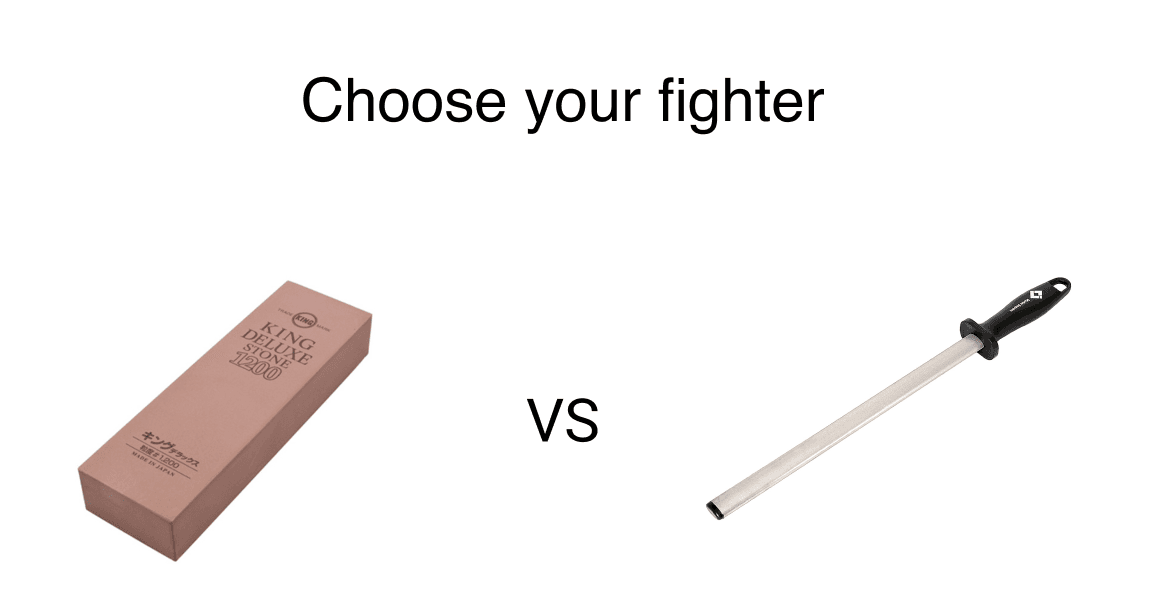
Credit: www.reddit.com
How To Use A Honing Rod (step-by-step)
- Hold rod vertically on a stable surface.
- Hold knife at 15–20 degrees to the rod.
- Swipe blade from heel to tip down the rod, alternating sides.
- Repeat 6–8 times on each side.
- Wipe blade clean before using.
Caring For Your Sharpening Tools
- Store whetstones dry to prevent cracks. If yours starts to dish, see how to flatten a whetstone.
- Avoid dropping honing rods—ceramic and diamond rods can break.
- Clean after use to remove metal particles and oil. The same care extends to other edges — for example, see how to sharpen drill bits by hand.
The Impact On Knife Lifespan
Using a whetstone too often can wear out your knife in a few years. Honing rods, used correctly, help knives last much longer by reducing the need for sharpening. Balancing both tools is the secret to a long-lasting, sharp kitchen knife. The same whetstone skills carry over to woodworking — see how to sharpen a hand plane blade.
Expert Recommendations
Professional chefs often use a honing rod daily and sharpen with a whetstone every few months. Home cooks may need to sharpen less often, depending on use. For high-end knives, avoid cheap rods and stones—invest in quality tools for better results.
For more details and science behind knife maintenance, see this Wikipedia guide.
Frequently Asked Questions
What Is The Main Difference Between A Whetstone And A Honing Rod?
A whetstone sharpens by removing metal and creating a new edge. A honing rod realigns the current edge but does not sharpen a dull blade.
How Often Should I Sharpen My Knives With A Whetstone?
For home use, sharpen every 3–6 months. If you cook daily or use knives heavily, you may need to sharpen every 1–2 months.
Can I Use A Honing Rod On Any Type Of Knife?
Most Western knives are safe to hone with a steel rod. For hard Japanese knives, use a ceramic rod or a whetstone to avoid chipping.
What Grit Whetstone Should A Beginner Start With?
A medium grit (1000) and a fine grit (3000–6000) are best for most kitchen knives. Avoid very coarse stones unless repairing damage.
Is It Possible To Over-sharpen A Knife?
Yes, too much sharpening removes too much metal, making the knife thin and weak. Only sharpen when honing no longer improves the edge.
Keeping your knives sharp is both an art and a science. Choose the right tool, use it well, and your kitchen work will be safer and more enjoyable.
