
Woodworking is a wonderful craft that blends creativity with skill. Whether you are building furniture, carving art, or making repairs, working with wood can be deeply satisfying. However, woodworking also brings real dangers. Power tools, sharp blades, dust, and noise can cause serious injuries if you are not careful.
Many accidents in workshops happen because simple safety rules are ignored or forgotten. Understanding and following basic safety practices is not just for professionals—it’s essential for everyone, from beginners to experts.
In this guide, you will learn the most important woodworking safety rules. These rules are not just about avoiding cuts and bruises. They cover everything from personal protection to equipment checks, and even how to keep your workspace safe. If you are new to woodworking, this article will help you start safely.
If you already have experience, you might find tips you have missed before. Let’s look at what you need to know to work with confidence and peace of mind.
Wear Personal Protective Equipment (ppe)
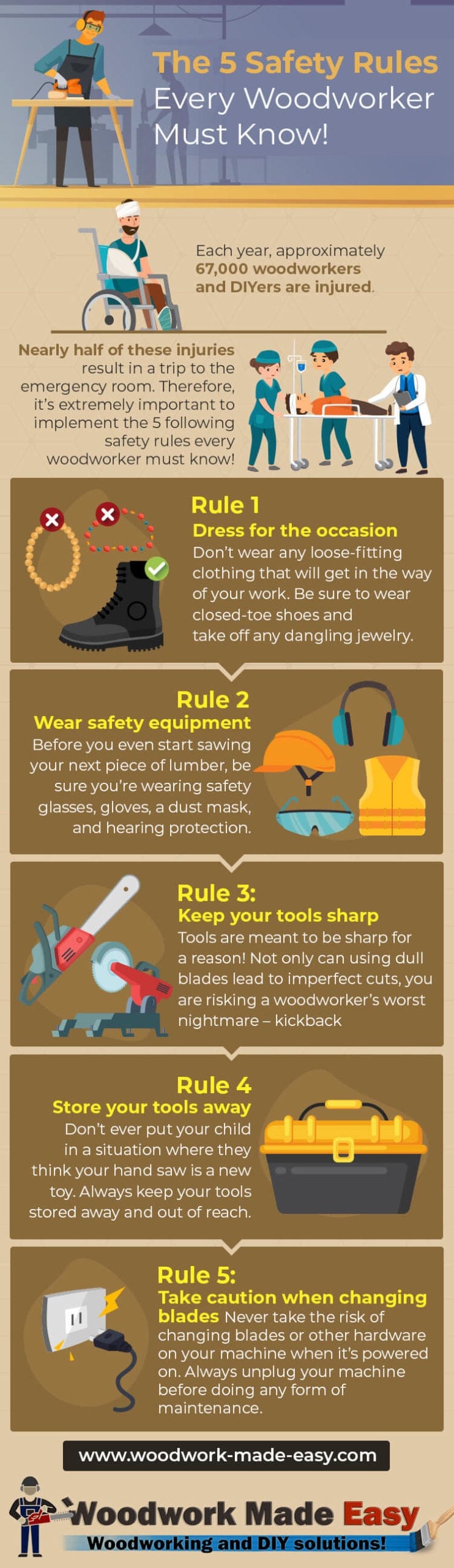
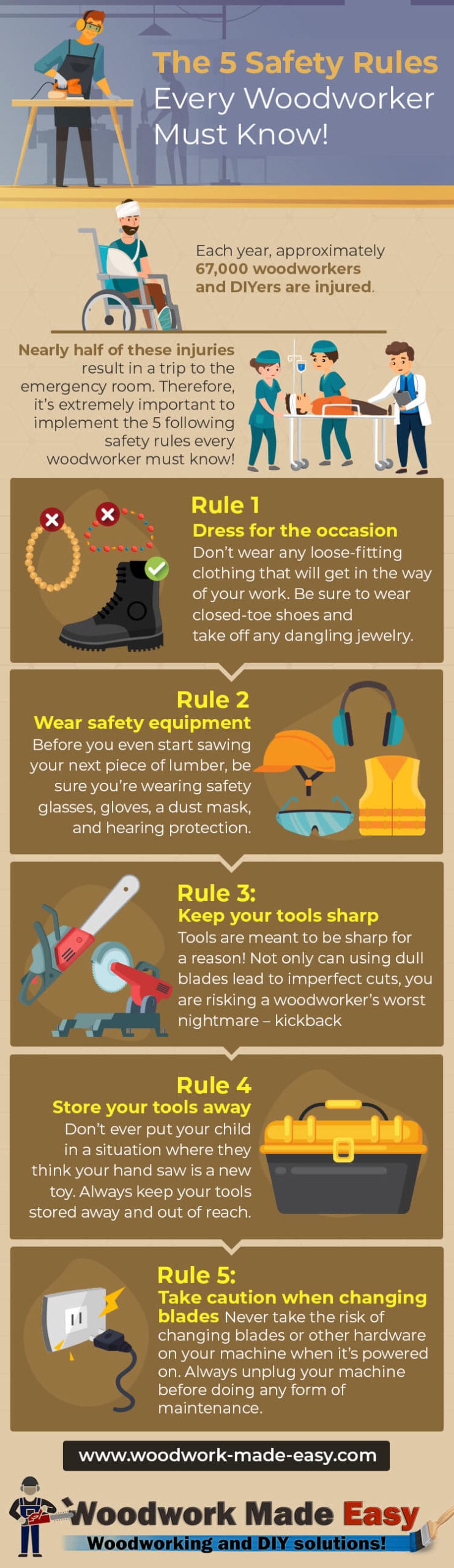
Before you pick up any tool or touch any wood, put on the right personal protective equipment. This is your first line of defense against injuries.
- Safety glasses: Wood chips can fly into your eyes when cutting or sanding. Always wear safety glasses or goggles rated for impact.
- Hearing protection: Power tools like saws and planers are loud. Continuous noise can damage your hearing. Use earplugs or earmuffs.
- Dust mask or respirator: Wood dust can cause breathing problems. Some woods are toxic. A dust mask or, for fine dust, a respirator is important.
- Work gloves: Use cut-resistant gloves when handling rough materials, but remove them when working near rotating tools where gloves can get caught.
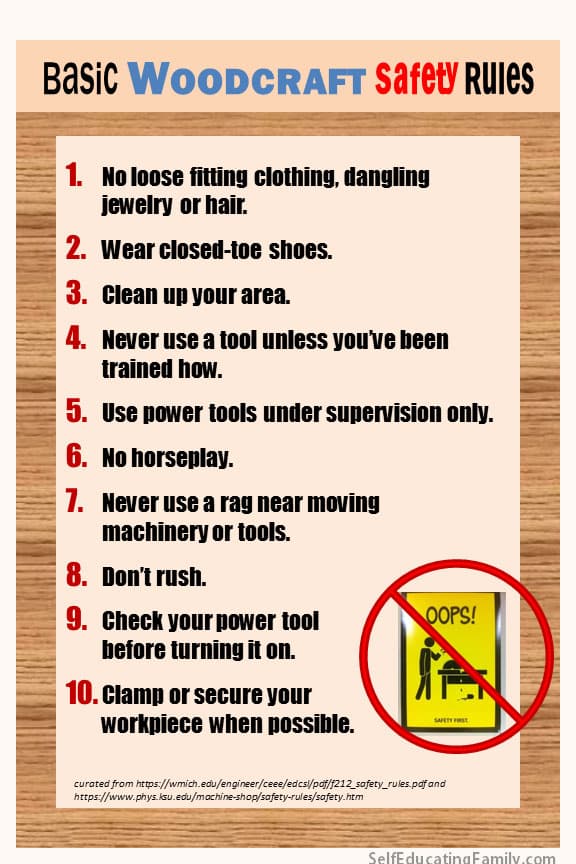
- Proper clothing: Avoid loose clothing, jewelry, or long hair that can get pulled into machines. Wear sturdy shoes with non-slip soles.
These items should become a habit. Many injuries happen because someone skips PPE “just for a quick cut. ”
Keep Your Workspace Clean And Organized
A messy workshop is an accident waiting to happen. Clutter can hide hazards and make you trip or slip.
- Sweep up sawdust and wood scraps after every session.
- Keep tools in their proper places—don’t leave them on benches or the floor.
- Use bins for off-cuts and waste.
- Make sure walkways are clear, and cords are not creating tripping hazards.
A clean space helps you focus on your project, not on what you might step on or knock over.
Understand Your Tools Before Use
Never use a tool if you do not know how it works. Every tool, from a hand plane to a table saw, has its own risks and safe methods.
- Read the manual for each power tool—even simple ones.
- Ask someone experienced to show you how to use a tool for the first time. For one of the most common workshop tools, see our cordless drill safety guide.
- Check online tutorials or official videos from manufacturers.
- Do a “dry run” without power to understand the movement and balance.
Knowing your tools reduces mistakes. For example, many table saw injuries happen because users do not understand kickback or proper hand placement.
Inspect Tools Regularly
Old or damaged tools are not just less effective—they can be dangerous.
- Check for cracks, dull blades, missing guards, or loose parts.
- Never use a saw with a cracked blade or missing teeth.
- Tighten all screws, bolts, and handles before starting.
- Unplug power tools before changing blades or bits.
A simple check before use can prevent injuries and expensive repairs.
Use Guards And Safety Features
Modern woodworking tools come with many safety features. These are not optional.
- Always use blade guards, riving knives, and anti-kickback devices on saws. If you’re unsure when to reach for one, see what is a miter saw used for.
- Make sure safety switches are working.
- For routers and sanders, use dust collection attachments. To choose the right cutter for the job, see how to use router bits.
- Never remove safety features to “make things easier.”
Disabling safety guards is a common mistake that leads to serious injuries.
Follow Proper Cutting Techniques
How you cut matters as much as what you cut. Poor technique can cause wood to catch, kick back, or splinter.
- Plan your cut: Mark lines clearly and secure your workpiece.
- Keep hands away from blades: Use push sticks or blocks for small pieces.
- Feed wood at a steady rate: Forcing it can cause tools to bind or kick.
- Stand to the side of the cut path: This protects you from flying wood.
Here’s a comparison of safe vs. unsafe hand positions for table saws:
| Hand Position | Risk Level | Outcome |
|---|---|---|
| Using push stick | Low | Fingers away from blade |
| Hand close to blade | High | Possible serious injury |
Credit: selfeducatingfamily.com
Secure The Workpiece
Never try to cut or sand a piece of wood that is not firmly held. Moving wood can shift or fly out, causing injuries.
- Use clamps, bench dogs, or vises to hold your material.
- Check that the wood is stable before starting the tool.
- For round or irregular shapes, use special jigs or holders.
Securing your work also leads to better results, as your cuts will be more accurate.
Mind The Power Cords And Electrical Safety
Electrical accidents are a real risk in workshops, especially where dust and moisture are present.
- Keep cords away from cutting paths.
- Check cords for cuts, frays, or exposed wires.
- Use outlets with ground fault circuit interrupters (GFCI), especially if your shop is in a garage or basement.
- Unplug tools when not in use or when changing accessories.
- Do not use extension cords as permanent wiring.
A simple cord check can prevent shocks and fires.
Handle Finishes And Chemicals Safely
Woodworking often involves stains, glues, and solvents. These chemicals can be flammable or toxic.
- Work in a well-ventilated area.
- Wear gloves and protective eyewear.
- Store chemicals in original containers, away from heat sources.
- Dispose of oily rags in a sealed metal can (they can self-ignite).
- Read warning labels before use.
Many beginners forget about chemical safety, but it is as important as tool safety.
Prevent Fire Hazards
Workshops have all the elements for a fire: dust, wood, and electricity.
- Keep a fire extinguisher rated for wood and electrical fires nearby.
- Do not smoke in the shop.
- Clean up sawdust—fine dust can explode under certain conditions.
- Do not overload electrical outlets.
- Store flammable materials away from heat and sparks.
Here’s a quick reference for fire risks:
| Hazard | Risk Level | Prevention |
|---|---|---|
| Sawdust buildup | High | Regular cleaning |
| Oily rags | High | Store in sealed can |
| Faulty wiring | Medium | Inspect and repair |
Know First Aid Basics
Even with the best safety practices, accidents can happen. Knowing basic first aid can make a big difference.
- Keep a stocked first aid kit in your shop.
- Learn how to treat cuts, splinters, and eye injuries.
- Know how to stop bleeding and when to seek medical help.
- Have emergency phone numbers visible.
- If you work alone, have a way to call for help.
Quick response can turn a serious accident into a minor inconvenience.
Stay Focused And Avoid Distractions
Many workshop injuries happen because people lose focus or get distracted.
- Do not use tools if you are tired, upset, or in a hurry.
- Avoid using your phone or listening to loud music that blocks out warning sounds.
- Do not work after drinking alcohol or taking medication that makes you drowsy.
- Take regular breaks to rest your mind and body.
Experienced woodworkers know that most mistakes happen when you are not paying attention.
Credit: www.reddit.com
Supervise Beginners And Young People
If you are teaching children or beginners, extra supervision is needed.
- Show them proper tool use and safety habits.
- Do not let them use power tools unsupervised.
- Set clear rules and explain why safety matters.
- Start with simple, low-risk projects.
Many accidents with young people come from inexperience and curiosity.
Maintain Good Lighting And Ventilation
A dark, stuffy shop is not just uncomfortable—it’s unsafe.
- Make sure work areas are well-lit, so you can see your hands and the tool clearly.
- Use task lighting for detailed work.
- Open windows or use fans to keep air moving and remove dust or fumes.
Good lighting helps prevent mistakes, and good air helps you stay healthy.
Plan Your Workflow
Before starting a project, think through each step.
- Lay out your tools and materials in order.
- Identify any risky steps and prepare safety gear.
- Make sure you have enough space to move safely.
- Do not rush—take your time to set up each stage properly.
Planning helps you avoid surprises that can lead to accidents.
Learn About Wood Properties
Not all woods are the same. Some are hard, some soft, some have knots, and some are even toxic.
- Research the type of wood you are using.
- Be aware of possible splinters, resin, or toxic dust (like from oak or walnut).
- Test small pieces first if you are unsure how the wood will react.
This is a detail many beginners miss. For example, some exotic woods can cause allergic reactions or skin irritation.
Use The Right Tool For The Job
Trying to cut a thick board with a small saw, or sand a large surface with a tiny pad, is not just frustrating—it can be dangerous.
- Choose tools that match the size and hardness of your material.
- Do not force tools to do something they were not designed for.
- Replace worn-out or inappropriate accessories.
Using the right tool makes your work safer and your results better.
Stay Updated On Safety Techniques
Woodworking is always evolving. New safety guidelines and tools are released often.
- Take classes or attend workshops if possible.
- Read magazines or online forums for the latest tips.
- Follow trusted experts and organizations.
For up-to-date safety information, the Occupational Safety and Health Administration (OSHA) is a reliable resource.
Credit: www.reddit.com
Woodworking Safety Myths And Realities
Many woodworkers believe myths that put them at risk. Let’s clarify a few:
| Myth | Reality |
|---|---|
| “I don’t need guards if I’m careful.” | Guards protect even experienced users from accidents. |
| “Only beginners get hurt.” | Most injuries happen to people with years of experience. |
| “Gloves are always safe.” | Gloves can get caught in rotating tools; use with care. |
Frequently Asked Questions
What Should I Do If I Get A Deep Cut While Woodworking?
If you get a deep cut, apply pressure to stop the bleeding, clean the wound with water, and bandage it. If bleeding does not stop after a few minutes or if the cut is large, seek medical help immediately.
Is It Safe To Work With Treated Or Painted Wood?
Treated or painted wood can release toxic fumes or dust when cut or sanded. Always wear a dust mask or respirator and work in a well-ventilated area. Avoid burning treated wood, as it can release dangerous chemicals.
How Often Should I Check My Tools For Safety?
Inspect your tools before every use. Look for damage, dull blades, loose parts, and missing safety features. Regular maintenance helps tools last longer and keeps you safe.
Can I Use Hand Tools Without Ppe?
Even with simple hand tools, PPE is important. Safety glasses protect you from flying chips, and gloves can prevent splinters. Accidents can happen with any tool, so always protect yourself.
What Are The Most Common Woodworking Injuries?
The most common injuries are cuts, eye injuries, hearing loss, and respiratory problems from dust. Most of these can be prevented with proper safety gear and careful work habits.
Woodworking is a rewarding hobby or career, but only if you respect the risks. By following these safety rules, you can focus on your creativity and skill without worrying about accidents. Stay safe, keep learning, and enjoy the art of woodworking.
