
A pocket hole screw might look like a simple fastener, but it can transform how you build furniture, cabinets, or DIY projects. This small tool makes it possible to join two pieces of wood quickly, neatly, and with surprising strength.
But to get the most from pocket holes, you need more than just the right screws—you need a full understanding of how pocket hole joinery works, the tools involved, and the details that make your work last. This guide covers everything you need to know about pocket hole screws, from the basics to advanced tips, giving you the confidence to tackle wood projects with professional results.
What Is A Pocket Hole Screw?
A pocket hole screw is a special wood screw designed for pocket hole joinery. In this technique, you drill an angled hole (the pocket) into one piece of wood, then drive a screw through this hole into another piece. The result is a strong, hidden joint that requires no glue or clamps. Pocket hole screws are self-tapping, meaning they cut their own threads as they are driven in, reducing the risk of splitting the wood.
Pocket hole joinery is popular because it saves time and creates clean, professional-looking joints. It’s especially useful for building frames, cabinets, bookshelves, and tables.
Essential Tools For Pocket Hole Joinery
To use pocket hole screws effectively, you need a few key tools:
- Pocket Hole Jig: This tool guides your drill at the correct angle (usually 15 degrees) to create the pocket. Jigs come in many sizes, from small single-hole versions to large bench-mounted systems.
- Special Drill Bit: A stepped drill bit is used to create the pocket hole and a flat-bottomed seat for the screw head.
- Screwdriver or Drill Driver: A power drill with a square drive bit is usually best for driving pocket hole screws.
- Clamps: These hold your wood pieces in place while you drill and screw, ensuring accurate alignment.
- Pocket Hole Screws: Not all screws are created equal. Pocket hole screws have flat-bottomed heads and self-tapping tips.
Quick Example
Imagine you want to build a simple bookshelf. You cut your boards, drill pocket holes into the shelf ends, and attach them to the sides with pocket hole screws. The screws are hidden underneath, the joint is strong, and there’s no waiting for glue to dry.
Types Of Pocket Hole Screws
Choosing the right screw is essential for a solid joint. Pocket hole screws differ in length, thread type, material, and coating. Here are the main types you’ll find:
By Thread Type
- Coarse Thread: Designed for softwoods like pine, cedar, or plywood. The wide threads grip soft fibers firmly and prevent splitting.
- Fine Thread: Best for hardwoods like oak, maple, or cherry. The finer threads reduce driving force and avoid cracks.
By Length
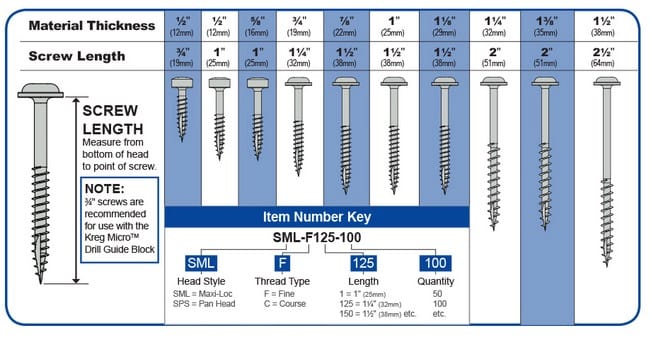
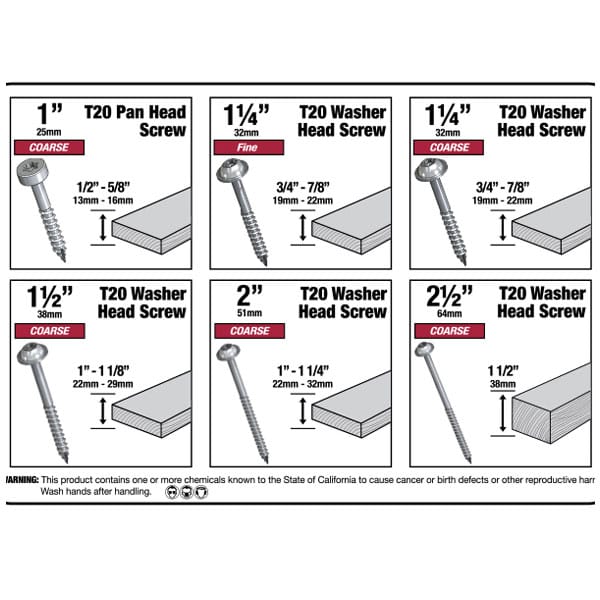
Pocket hole screws come in several lengths, usually from 1 inch to 2½ inches. The right length depends on the thickness of your boards.
By Material/coating
- Zinc-Coated: Good for indoor projects.
- Blue-Kote: Withstands moisture, ideal for outdoor or kitchen/bathroom use.
- Stainless Steel: Maximum rust resistance for outdoor or marine projects.
Head Shape
- Washer Head: The standard for pocket holes. The wide, flat head sits on the pocket’s shoulder, preventing pull-through.
- Pan Head: Used in special cases, but less common.
Here’s a quick overview of screw selection:
| Wood Type | Thread Type | Common Coating | Example Screw Length |
|---|---|---|---|
| Pine (softwood) | Coarse | Zinc | 1¼″ |
| Oak (hardwood) | Fine | Blue-Kote | 1¼″ |
| Outdoor cedar | Coarse | Stainless Steel | 2″ |
How To Select The Right Pocket Hole Screw
Choosing the right screw is more than matching length and thread. Here’s what you should consider:
- Board Thickness: Most pocket hole jigs come with a chart. For ¾″ thick boards (very common), use 1¼″ screws.
- Thread Type: Softwoods = coarse thread; Hardwoods = fine thread.
- Coating: For indoor, zinc is fine. For outdoor or damp places, choose Blue-Kote or stainless steel.
- Length: Too short, and the joint is weak; too long, and the screw will punch through.
Common Mistake
Beginners often use coarse thread screws in hardwoods, causing splits or cracks. Always check your wood type!
Example Screw Length Guide
| Material Thickness | Screw Length |
|---|---|
| ½″ | 1″ |
| ¾″ | 1¼″ |
| 1½″ | 2½″ |
Step-by-step Guide To Using Pocket Hole Screws
Let’s break down how to make a strong pocket hole joint.
1. Set Up Your Jig
- Adjust the jig height to match your board’s thickness.
- Set the drill bit collar to stop at the right depth.
2. Clamp Your Workpiece
- Use a strong clamp to hold your wood steady and prevent movement.
3. Drill The Pocket Hole
- Drill until the collar touches the jig.
- Make sure holes are clean and at the correct angle.
4. Position And Clamp The Joint
- Align the two pieces (for example, the edge of a shelf to the side of a bookcase).
- Clamp them tightly so they don’t shift.
5. Drive The Pocket Hole Screw
- Use a drill driver with a square drive bit.
- Drive the screw until the head is flush with the pocket, not deeper.
6. Check For Alignment
- Make sure the joint is square and tight.
Practical Tip
If you see the wood move or split, stop. Check your screw length and thread type.
Advanced Tips For Stronger Joints
Even experienced woodworkers miss some details when using pocket hole screws. Here are two advanced tips:
- Use Glue for Extra Strength: While pocket holes are strong, adding wood glue to the joint can make it even stronger—especially for furniture that takes a lot of stress.
- Stagger Your Pocket Holes: For wide boards, don’t put all pocket holes in a straight line. Stagger them for better hold and to avoid splitting.
Another detail: Always keep your drill bit sharp. A dull bit creates rough holes and weak joints.
Credit: diy.stackexchange.com
When To Use Pocket Hole Screws (and When Not To)
Pocket hole screws are perfect for:
- Face frames on cabinets
- Table aprons (the rails under a table)
- Bookshelves and cabinet carcasses
- Quick repairs
But there are times when pocket holes are not the best choice. Avoid them if:
- The joint will be highly visible (unless you plan to cover the hole).
- The wood is thinner than ½″—it can split.
- The joint will be exposed to constant heavy stress without glue.
Pocket Hole Screw Vs. Traditional Wood Joinery
Why choose pocket holes over more traditional joinery like dowels, mortise and tenon, or biscuits? Here’s a brief comparison:
| Joinery Type | Strength | Ease of Use | Speed | Tools Needed |
|---|---|---|---|---|
| Pocket Hole | High | Easy | Fast | Jig, Drill, Screws |
| Dowels | High | Medium | Slower | Dowel Jig |
| Mortise & Tenon | Very High | Hard | Slow | Chisel, Saw |
| Biscuits | Medium | Easy | Medium | Biscuit Joiner |
Pocket hole screws offer a great balance of speed and strength, which explains their popularity in both DIY and professional woodworking.
Common Mistakes And How To Avoid Them
- Using the Wrong Screw Type: Always match thread type to wood (coarse for softwoods, fine for hardwoods).
- Selecting Incorrect Length: Too long causes splits; too short creates weak joints.
- Overdriving Screws: Stop when the head is flush. Overdriving can crush the wood or strip the hole.
- Misaligned Holes: Check jig settings and board thickness before drilling.
- Skipping Clamps: Unclamped wood shifts, leading to poor joints.
Non-obvious insight: Even if you use the right screw, drilling into a knot or very dry wood can cause splits. Move your pocket hole location if you see knots or cracks.
Pocket Hole Screw Brands And Quality
Not all pocket hole screws are equal. Some popular and reliable brands include:
- Kreg: The most recognized name in pocket hole joinery. Their screws are consistent and widely available.
- SPAX: Known for quality and innovative coatings.
- Hillman: Offers a variety of sizes and coatings for all applications.
Quality screws have sharp threads, accurate heads, and good coatings. Cheap screws can break or strip, ruining your project.
:max_bytes(150000):strip_icc()/smChart-b31a2d7ba2d644e8a126056ebef0b5a3.jpg)
Credit: www.woodmagazine.com
Pocket Hole Maintenance And Repairs
With time, even well-made pocket hole joints can loosen—especially in furniture that gets moved or stressed. Here’s how to maintain and repair them:
- Tighten Screws: If a joint feels loose, remove the old screw and replace it with a slightly longer screw.
- Add Glue: If you missed glue the first time, you can carefully inject some into the joint before tightening.
- Fill Visible Holes: For a clean look, use pocket hole plugs, wood filler, or matching dowels.
When To Fill Or Hide Pocket Holes
Pocket holes are usually on the inside or bottom of a project. But sometimes, you want a seamless look. Here’s how:
- Pocket Hole Plugs: These are small, pre-cut wood pieces that fit perfectly into the hole. Glue and sand flush for a smooth finish.
- Wood Filler: For painted projects, fill the hole and sand smooth.
- Edge Banding or Trim: Cover the area with a thin strip of wood.
Credit: milescraft.com
Safety Tips For Using Pocket Hole Screws
- Wear eye protection when drilling and driving screws.
- Secure your workpiece with clamps.
- Keep hands clear of drill bit and screw path.
- Use a sharp drill bit for clean holes.
Non-obvious safety tip: After many uses, pocket hole jigs can develop worn bushings. Replace them as needed to keep your holes accurate.
Frequently Asked Questions
What Is The Best Screw Length For ¾″ Wood?
For ¾″ thick boards, use 1¼″ pocket hole screws. This length gives strong holding power without poking through the other side.
Can I Use Regular Wood Screws In Pocket Holes?
No, regular wood screws have different head shapes and may split the wood or not sit flush. Always use screws designed for pocket holes.
Do I Need Glue With Pocket Hole Screws?
Glue is not required, but adding glue increases strength—especially for furniture or high-stress joints.
Are Pocket Hole Joints Strong Enough For Tables And Chairs?
Yes, pocket hole joints are very strong for tables, cabinets, and frames. For chairs or heavy loads, use glue and correct screw type for maximum durability.
Where Can I Learn More About Pocket Hole Joinery?
You can find more detailed guides on pocket hole joinery at resources like Wikipedia.
Pocket hole screws offer a fast, reliable way to build strong, neat wood joints with simple tools. With the right screws, correct technique, and a little practice, you’ll be amazed at what you can create—whether you’re a beginner or an experienced woodworker.