
Sanding metal asks more of a belt sander than wood ever does — more heat, more wear on the abrasive, and a real risk of clogging or melting a dust outlet that wasn’t built for the job. We pulled the current Amazon lineup, checked real-time pricing and availability, and sorted the field into the 10 belt sanders and grinder combos that are actually built with metal fabrication in mind, from knife-making belt grinders to portable pneumatic and cordless options.
As an Amazon Associate, Power Tools Today earns from qualifying purchases. Prices and availability are accurate as of the date shown and are subject to change.
Quick Picks: Best Belt Sanders for Metal
- Best Overall: BUCKTOOL 2″x42″ Belt Sander & 6″ Bench Grinder Combo
- Best for Knife Making: VEVOR Variable-Speed Belt Grinder with VFD
- Best Heavy-Duty: BUCKTOOL Pro 1HP Bench Belt Sander (BD4801-M)
- Best for Precision Sharpening: BUCKTOOL Low-Speed Belt Grinder Combo
- Best Professional 2×72: VEVOR 1500W 2HP Belt Grinder with VFD
Quick Comparison: Key Specs
| Model | Price | Belt | Motor | Speed | Best For |
|---|---|---|---|---|---|
| 1. BUCKTOOL 2×42″ Combo | $199.99 | 2″x42″ | 1/3 HP, 3.5A | 4480 FPM | Overall |
| 2. VEVOR VFD Grinder | $209.90 | 1″x30″ | 550W | Variable, VFD | Knife making |
| 3. BUCKTOOL BD4801-M | $250.04 | 4″x36″ | 1 HP, direct-drive | Fixed | Heavy-duty |
| 4. BUCKTOOL Low-Speed | $144.29 | 1″x30″ | 1/3 HP, 2.1A | 1790 RPM | Precision sharpening |
| 5. VEVOR Budget Combo | $84.98 | 2″x28″ | 350W | Fixed | Budget |
| 6. VEVOR 4×36″+8″ Disc | $189.90 | 4″x36″ | 5A induction | Fixed | Wood + metal |
| 7. VEVOR 1500W 2×72 | $576.90 | 2″x72″ | 1500W, 2HP | Variable, VFD | Professional grinder |
| 8. WEN 6307 File Sander | — | 1/2″x18″ | Variable | 1080-1800 FPM | Detail/edge work |
| 9. NuoDunco Air Sander | $59.99 | 3/4″x20.5″ | Pneumatic | 18,000 RPM max | Pneumatic/portable |
| 10. SEESII Cordless | — | 1/2″x18″ | Brushless, 4.0Ah | Up to 2300 FPM | Cordless handheld |
Prices above are pulled live from Amazon and may have changed since — click a model name or the “Check Price on Amazon” button below for the current price.
1. Best Overall: BUCKTOOL 2″x42″ Belt Sander & 6″ Bench Grinder Combo
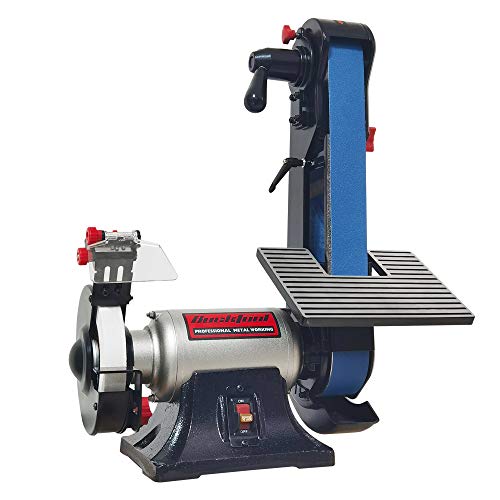
This is the machine most metalworking benches end up with because it covers the two operations you reach for constantly: a 2×42″ belt for shaping and finishing, and a 6″ grinding wheel for rougher stock removal, both on one CSA-rated base. The belt housing swivels from horizontal to vertical for long workpieces, and two separate worktables — cast iron on the belt side, cast aluminum on the wheel side — give metal work the sturdier surface it needs while keeping wood-friendly options available too. A tool-free tension and tracking mechanism means belt changes don’t turn into a maintenance project.
| ✅ Pros | ❌ Cons |
|---|---|
| • Belt and grinding wheel cover both shaping and stock removal • Separate cast iron worktable built for metal work • Tool-free tension and tracking adjustment | • Fixed speed — no variable control for delicate work • Grinding wheel side needs its own eye protection habits |
2. Best for Knife Making: VEVOR Variable-Speed Belt Grinder with VFD

Knife makers and bladesmiths need speed control more than raw power, and this VEVOR grinder is built around exactly that — a VFD (variable frequency drive) gives truly stepless speed adjustment rather than the two-or-three-speed switches common on cheaper machines. A 550-watt pure copper motor keeps the belt running quiet and cool even at extended use, and the kit includes three grit belts (100/180/240) plus two grinding modes so you can switch between fast stock removal and fine finishing without swapping machines.
| ✅ Pros | ❌ Cons |
|---|---|
| • True stepless variable speed via VFD • Pure copper motor runs cooler and quieter • Three grit belts and two grinding modes included | • Priced above the fixed-speed combo units • Narrower 1″ belt limits flat-surface work |
3. Best Heavy-Duty: BUCKTOOL Pro 1HP Bench Belt Sander (BD4801-M)

BUCKTOOL built this one specifically around metal’s problem areas: an aluminum sanding-belt dust outlet, which BUCKTOOL markets as resisting the melting that a plastic port can suffer from hot metal dust, and a 1 HP direct-drive motor that BUCKTOOL’s own product page states delivers “up to 25% more efficiency” than a belt-driven design on cheaper machines. A 4×36″ belt and 8″ disc give you real surface area for bigger parts, both tables tilt for angled work, and a knife-grinding jig is included with the machine for when you need it.
| ✅ Pros | ❌ Cons |
|---|---|
| • Aluminum dust outlet is marketed to resist melting from hot metal dust • 1 HP direct-drive motor, no cog-belt maintenance • Removable knife-grinding jig included | • One of the pricier picks on this list • Larger footprint than the compact combo units |
4. Best for Precision Sharpening: BUCKTOOL Low-Speed Belt Grinder Combo

Running slower isn’t a downside for every job — for sharpening edges and fine detail work, a controlled low speed helps avoid overheating the steel and risking a temper change. This BUCKTOOL combo runs its 1/3 HP motor at a deliberate 1790 RPM, well under the speed of most belt grinders, with a direct-drive design that BUCKTOOL’s listing describes as delivering 25% more efficiency than a belt-driven equivalent. One-button belt cover removal and a quick-release system make grit changes fast, and built-in wrench storage keeps the small parts from wandering off.
| ✅ Pros | ❌ Cons |
|---|---|
| • Controlled low speed reduces overheating risk on edges • Direct-drive motor design for consistent power • One-button belt cover and quick-release belt changes | • Low fixed speed limits fast stock removal • Smaller 1″x30″ belt than the heavier-duty picks |
5. Best Budget: VEVOR 8″ Bench Grinder & 2″x28″ Belt Sander Combo
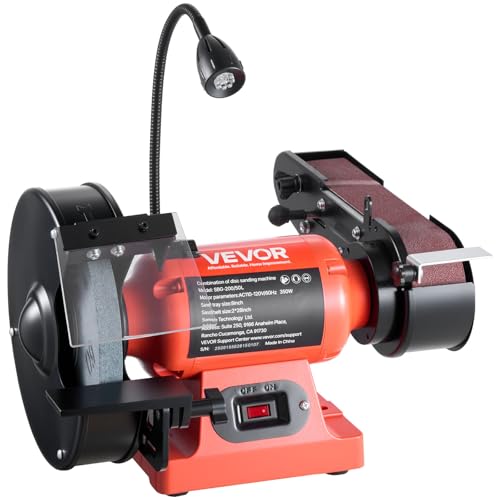
This is the entry point if you just need a grinder-and-belt setup for occasional metal work without a big budget. A 350-watt motor drives both the 8″ grinding wheel and the 2×28″ belt, and VEVOR includes the safety basics a lot of budget machines skip — a transparent eye shield and a built-in LED work light. The belt arm adjusts from 0 to 90 degrees for horizontal or vertical sanding, and a heavy-duty steel base with non-slip feet keeps it planted despite the low price.
| ✅ Pros | ❌ Cons |
|---|---|
| • Lowest price on this list • Eye shield and LED work light included as standard • Steel base with non-slip feet for stability | • Smaller belt and lower power than the other picks • Best suited to light, occasional metal work |
6. Best All-Purpose (Wood + Metal): VEVOR Professional 4″x36″ Belt Sander with 8″ Disc

If your bench needs to handle both wood and metal without owning two separate machines, this VEVOR combo splits the difference well. A 5-amp induction motor runs the 8″ disc at 3450 RPM, quick enough for real metal work on softer materials like aluminum and copper, while staying controllable enough for wood finishing. The cast aluminum disc table tilts to 45 degrees, and a dust collection port connects to a shop vac to keep both metal and wood dust under control.
| ✅ Pros | ❌ Cons |
|---|---|
| • Handles both wood and softer metals (aluminum, copper) • 5A induction motor with belt and disc sanding • Tilting cast aluminum table plus dust collection port | • Not rated for hardened steel or heavy-duty metal grinding • No variable speed control |
7. Best Professional 2×72: VEVOR 1500W 2HP Belt Grinder with VFD

Serious knife makers and metal fabricators generally end up wanting a 2×72″ belt — the industry-standard size for blade grinding — and this VEVOR is a genuine step up from the smaller 550W model earlier on this list. A 1500-watt pure copper motor and VFD deliver stepless speed control at real power, three grinding modes (circular, arc, flat) cover different contact-wheel setups, and a fully welded steel frame keeps the machine planted under heavy grinding pressure. It’s priced like the professional tool it is, but for anyone doing serious blade or fabrication work, the larger belt size and motor headroom matter.
| ✅ Pros | ❌ Cons |
|---|---|
| • Industry-standard 2×72″ belt for blade grinding • 1500W motor with stepless VFD speed control • Three grinding modes and a fully welded steel frame | • The most expensive pick on this list • Overkill for occasional or light metal work |
8. Best for Detail/Edge Work: WEN 6307 Variable Speed Detailing File Sander
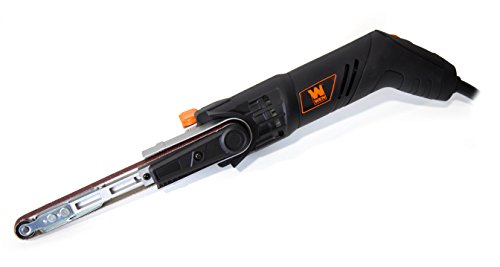
Sometimes the job isn’t a flat surface at all — it’s a tight corner, a weld seam, or an edge a benchtop machine simply can’t reach. The WEN 6307 is a handheld file sander with a narrow 1/2×18″ belt that pivots up to 55 degrees, a variable speed dial covering 1080–1800 feet per minute, and an auto-tracking belt system that skips the tensioning fuss of pricier machines. At well under $50, it’s a cheap second tool to keep around for exactly the spots your bench grinder can’t touch.
| ✅ Pros | ❌ Cons |
|---|---|
| • Reaches corners and edges benchtop machines can’t • Variable speed with auto-tracking belt • Very low price for a second, specialized tool | • Narrow belt limits it to detail work, not bulk removal • Not a replacement for a primary grinder or sander |
9. Best Pneumatic/Portable: NuoDunco 3/4″ Air Belt Sander

For shops already running an air compressor, a pneumatic belt sander skips motor heat and cord management entirely. This NuoDunco model spins up to 18,000 RPM off shop air, with an adjustable head that gets into narrow spaces and concave corners a benchtop machine can’t reach. It ships with 12 mixed-grit belts (40/60/80/120) ready to go, making it a lightweight option for extended handheld deburring and finishing sessions.
| ✅ Pros | ❌ Cons |
|---|---|
| • Lightweight and reaches narrow spaces and corners • 12 mixed-grit belts included out of the box • No motor heat buildup since it runs on shop air | • Requires an air compressor to operate • Needs regular pneumatic tool oil maintenance |
10. Best Cordless Handheld: SEESII 1/2″x18″ Mini Cordless Belt Sander

No compressor, no cord — this SEESII runs entirely on a 4.0Ah battery, with a brushless motor offering six speeds up to 2,300 feet per minute so you can dial in anything from careful deburring to aggressive rust removal. A pivoting arm reaches corners, pipes, and curved surfaces, and the kit includes 16 assorted belts, which covers most metalworking and detail jobs without a separate accessory order.
| ✅ Pros | ❌ Cons |
|---|---|
| • Fully cordless — no air compressor or outlet needed • Wide speed range up to 2,300 FPM on six speeds • Ships with 16 assorted belts included | • Battery life limits extended continuous use • Narrow belt suited to detail work, not bulk removal |
Things to Consider Before You Buy
Heat management: Metal sanding generates far more heat than wood. Look for machines with metal-appropriate dust outlets (aluminum rather than plastic) and consider a lower, controlled speed for edge work to reduce the risk of overheating and affecting the steel’s temper.
Belt vs. grinding wheel: A belt is better for flat shaping and finishing passes; a grinding wheel removes stock faster but is more aggressive. Combo machines that offer both give you more flexibility for fabrication work.
Variable speed vs. fixed speed: Fixed-speed machines are simpler and often cheaper, but variable speed — especially true stepless control via a VFD — matters a lot for knife making and precision sharpening where heat control is important.
Corded, pneumatic, or cordless: A benchtop combo suits a fixed workstation. A pneumatic or cordless handheld sander is worth adding for reaching corners, pipes, and welds a benchtop machine can’t get to.
Dust and debris: Metal sanding throws sparks and hot dust, not just fine particles. A transparent eye shield and a metal-safe dust port are worth prioritizing over cosmetic features.
FAQ
Can a regular woodworking belt sander be used on metal?
Not safely for regular use. Standard woodworking sanders often use plastic dust ports and components that manufacturers generally don’t rate for the heat metal sanding generates. Look for a machine specifically marketed for metalworking, or one with a metal-rated (aluminum) dust outlet.
What speed is best for sanding metal?
Lower, controlled speeds reduce the risk of overheating the metal and are generally preferred for sharpening and precision work. Higher speeds suit faster stock removal on tougher materials, which is why variable-speed machines are popular for serious metalworking.
Do I need a belt sander and a bench grinder, or does a combo cover it?
A combo machine that pairs a belt with a grinding wheel — like several picks on this list — covers most metal fabrication needs in one footprint: the wheel for fast material removal, the belt for shaping and finishing.
Prices and availability shown above are pulled live and may change — always confirm the current price on Amazon before buying.