Welding Weld Quality Guide
Weld quality is a crucial factor in any welding project. Whether you are building a bridge, repairing a car, or fabricating metal furniture, the strength and safety of the welds decide the success of your work. Poor weld quality can lead to failures, safety risks, and expensive repairs.
For beginners and professionals alike, understanding weld quality is key to producing reliable and long-lasting results.
This guide will help you understand what weld quality means, how to measure it, and what steps you can take to improve your welding. If you need a defect-by-defect reference, see our welding defects guide for causes, prevention, detection, and repair. You will learn about common defects, inspection methods, and the factors that affect weld quality. With practical tips and clear explanations, you will have a complete resource to help you weld better and safer.
What Is Weld Quality?
Weld quality refers to how well a weld meets the required standards for strength, appearance, and safety. Good weld quality means the joint is strong, free of defects, and meets the needs of the project. Poor weld quality can cause cracks, leaks, or even structural collapse.
Weld quality is not just about looks. Some welds may look neat but have hidden defects inside. That is why it is important to check both the outside and the inside of the weld.
Factors That Define Weld Quality
- Strength – Can the weld handle the expected load or pressure?
- Ductility – Can the weld bend without breaking?
- Appearance – Is the weld bead smooth, clean, and uniform?
- Soundness – Is the weld free from internal holes, cracks, or other flaws?
- Dimension – Does the weld have the correct size and shape?
Why Weld Quality Matters
High weld quality is essential for safety and performance. In construction, automotive, shipbuilding, and many industries, a bad weld can lead to:
- Accidents or injuries
- Product recalls
- Costly repairs or downtime
- Reputation loss for companies
For example, a bridge with poor welds can collapse under heavy traffic. In a car, a weak weld can cause parts to break during a crash. Ensuring weld quality is not just about following rules; it is about protecting lives and property.
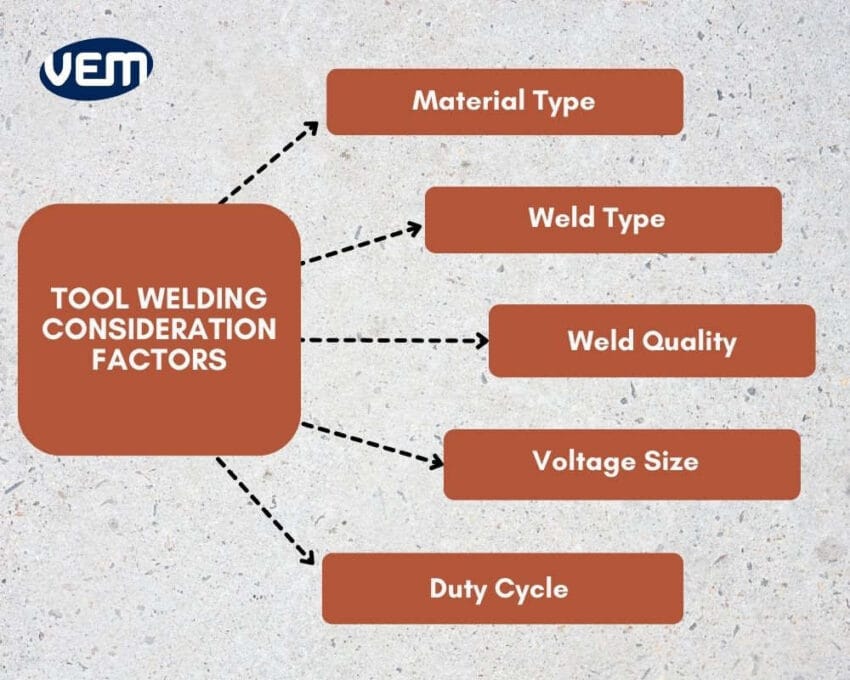
Credit: www.vem-tooling.com
Common Weld Defects
Even skilled welders can face defects. Knowing the most common problems helps you avoid them.
| Defect | Description | How to Spot |
|---|---|---|
| Porosity | Small holes or bubbles in the weld caused by trapped gas | Visible as small pits on the surface or found during X-ray inspection |
| Cracks | Fractures in the weld or base metal | May appear right after welding or later under stress |
| Undercut | A groove at the edge of the weld, making the joint weak | Visible as a notch along the weld toe |
| Lack of Fusion | Weld metal does not bond to base metal or previous weld layer | Detected by ultrasonic or destructive testing |
| Incomplete Penetration | Weld does not reach the full depth of the joint | Observed in cross-section or using X-ray |
| Slag Inclusion | Nonmetallic material trapped inside the weld | Found during X-ray or sectioning the weld |
| Spatter | Small droplets of metal stuck around the weld | Seen as rough spots near the weld bead |
Causes Of Poor Weld Quality
Weld defects often result from mistakes or poor conditions. Here are key causes:
- Wrong welding parameters: Using incorrect voltage, current, or speed leads to weak or defective welds.
- Contaminated base material: Dirt, oil, or rust on the metal can create porosity or weak bonds.
- Improper joint preparation: Not cleaning or aligning parts properly increases defect risks.
- Poor technique: Inconsistent travel speed, wrong angle, or lack of control causes uneven or weak welds.
- Wrong filler material: Using the wrong type or size of electrode or wire can result in weak joints or cracks.
- Environmental factors: Wind, humidity, or temperature changes affect weld quality, especially for outdoor welding.
An often-overlooked insight is that even small variations in technique or material preparation can make a big difference. For example, a slight angle change in the welding torch can increase undercut risk.
Credit: www.amazon.com
Standards For Weld Quality
Different industries and projects use specific standards to define weld quality. The most common are:
- American Welding Society (AWS) D1.1: Used in structural welding.
- ISO 5817: Covers quality levels for fusion-welded joints in steel.
- ASME Boiler and Pressure Vessel Code: Used for pressure vessels and piping.
- API 1104: For pipeline welding.
Each standard lists acceptable limits for defects, minimum strength, and test methods. Always check which standard applies before starting a project. This can prevent costly rework.
Weld Inspection Methods
Checking weld quality is just as important as making the weld itself. Inspection methods fall into two main types: visual and non-destructive testing (NDT).
Visual Inspection
This is the simplest and fastest method. You check for:
- Surface cracks
- Undercut
- Overlap
- Incomplete welds
- Appearance defects
A trained inspector looks for obvious problems. Visual inspection finds many issues, but cannot detect hidden flaws.
Non-destructive Testing (ndt)
NDT methods look inside the weld without damaging it. Common types include:
- Ultrasonic Testing (UT): Uses sound waves to find internal cracks or lack of fusion.
- Radiographic Testing (X-ray/Gamma Ray): Makes images of the weld’s interior to spot holes, cracks, or inclusions.
- Magnetic Particle Testing (MT): Finds surface or near-surface cracks in ferromagnetic metals.
- Dye Penetrant Testing (PT): Reveals surface cracks using a colored liquid.
Here is a comparison of NDT methods:
| Method | Detects | Main Advantage | Main Limitation |
|---|---|---|---|
| Ultrasonic (UT) | Internal flaws | Deep penetration | Needs skilled operator |
| Radiographic (RT) | Internal flaws | Detailed images | Radiation safety needed |
| Magnetic Particle (MT) | Surface cracks | Quick for large areas | Only for magnetic metals |
| Dye Penetrant (PT) | Surface cracks | Simple, low cost | Cannot find internal flaws |
Destructive Testing
For critical projects or research, welds may be cut and tested to destruction. This shows exact strength and failure points but is rarely used for production work due to cost.
How To Achieve High Weld Quality
Improving weld quality is not just about skill. It involves careful planning, preparation, and control. Here’s how you can ensure strong, defect-free welds:
- Prepare the Joint Properly
- Clean the base metal. Remove rust, oil, paint, or dirt.
- Align and fix parts securely to avoid movement during welding.
- Select the Right Welding Parameters
- Choose proper voltage, current, and travel speed for your process.
- Follow the manufacturer’s recommendations for electrode or wire.
- Use Suitable Filler Material
- Match the filler to the base metal type and thickness.
- Check expiry dates for flux-coated electrodes or wires.
- Control Environmental Conditions
- Avoid welding in wind, rain, or extreme cold if possible.
- For outdoor welding, use screens to block wind.
- Follow Correct Technique
- Maintain a steady travel speed and torch angle.
- Keep the arc length consistent.
- Use weaving or stringer techniques as needed for the joint type.
- Check Each Weld Layer
- Remove slag and inspect each pass before adding another.
- Repair defects immediately to avoid bigger problems later.
- Inspect the Final Weld
- Perform visual checks and, if needed, NDT.
- Do not ignore small defects; they can grow under stress.
A non-obvious tip: Record your settings and results for each job. This helps repeat good results and identify what caused problems.
Welding Processes And Their Quality Aspects
Different welding processes have unique advantages and risks for weld quality. Here’s a quick overview:
| Process | Typical Strength | Common Defects | Best Uses |
|---|---|---|---|
| SMAW (Stick) | High | Slag inclusion, porosity | Construction, repair |
| MIG (GMAW) | High | Lack of fusion, spatter | Automotive, fabrication |
| TIG (GTAW) | Very high | Tungsten inclusion, undercut | Precision, thin metals |
| Flux-Cored (FCAW) | High | Porosity, slag inclusion | Heavy fabrication |
The right process depends on the material, thickness, and quality needs. For example, TIG welding gives the cleanest, strongest welds but is slower and needs more skill.
Credit: www.weldingandwelder.com
Welding Codes And Documentation
Every professional welding project needs proper documentation. This includes:
- Welding Procedure Specification (WPS): Details the exact steps, settings, and materials for each weld.
- Procedure Qualification Record (PQR): Shows that the procedure produces acceptable welds through testing.
- Welder Qualification Test Record (WQTR): Proves a welder can produce quality welds using the procedure.
Following codes and keeping records is not just paperwork. It helps trace problems, train staff, and meet legal requirements.
Tips For Beginners To Improve Weld Quality
If you are new to welding, focusing on the basics will give you better quality and fewer defects:
- Practice on scrap metal before welding real parts.
- Watch the weld pool closely; it should be smooth and even.
- Keep your hands steady and rest your arms if needed for control.
- Learn to spot defects early, such as undercut or porosity.
- Ask for feedback from experienced welders or inspectors.
A common mistake for beginners is rushing or skipping joint preparation. Take time to clean and align your parts—this alone can prevent many problems.
Frequently Asked Questions
What Is The Most Important Factor In Weld Quality?
Proper joint preparation is often the most important. Even the best welding technique cannot overcome dirty or poorly fitted joints. Clean and align your work first.
How Can I Tell If A Weld Is Strong Enough?
You need to check both the appearance and, if possible, use NDT methods like ultrasonic or X-ray testing. For critical jobs, follow industry standards and get professional inspections.
What Should I Do If I Find A Defect In My Weld?
Small surface defects can sometimes be repaired by grinding and rewelding. Deep or internal defects may require cutting out and re-welding the joint. Always fix defects before moving on.
Do All Welds Need To Be Inspected With X-rays?
No. Visual inspection is enough for many jobs. X-ray or ultrasonic testing is used for high-risk or critical welds, such as in bridges, pipelines, or pressure vessels.
Where Can I Learn More About Weld Quality Standards?
A trusted source is the American Welding Society. You can find codes, training, and resources at AWS Standards.
Ensuring weld quality is a combination of skill, knowledge, and careful attention to every step. By following best practices and understanding what affects weld quality, you can produce welds that are not only strong but safe and reliable for years to come.