
Choose aluminum or steel rivets by the joint requirements, rivet design, base materials, environment, and manufacturer data—not by a blanket rule that one material is always better. Aluminum rivets are lighter and can offer good corrosion resistance in compatible assemblies; steel rivets generally provide higher strength for a comparable design but may require corrosion protection.
This article focuses on material selection. Rivet type, diameter, grip range, head style, mandrel, hole size, and installation tool are separate decisions.
Aluminum Rivets
Aluminum rivets are commonly used in sheet-metal, enclosure, automotive, marine, and general fabrication applications where low weight and material compatibility are useful. Their actual strength depends on the alloy and rivet design.
Do not assume every aluminum rivet is suitable for aerospace, structural, or marine service. Use the exact product’s load ratings and environmental guidance.
Steel Rivets
Steel rivets are commonly chosen when higher mechanical strength is needed. Coating, plating, rivet construction, and environment determine corrosion performance.
“Steel rusts and aluminum does not” is too simple. Aluminum can corrode, especially in galvanic couples or aggressive environments, while coated or stainless fasteners may perform very differently from plain carbon steel.
Strength Must Come From Product Data
Do not compare aluminum and steel rivets using generic shear-strength numbers. Shear and tensile ratings vary with diameter, body alloy, mandrel, rivet type, grip, and manufacturer.
For load-bearing work, select from the manufacturer’s published ratings or an engineered fastener schedule.
Galvanic Corrosion
Dissimilar metals can form a galvanic couple when an electrolyte such as water is present. Risk depends on the two metals, exposed-area ratio, coating condition, environment, and joint design.
Do not assume a washer alone solves every galvanic-corrosion problem. Isolation coatings, compatible materials, sealants, drainage, and project-specific corrosion control may be required.
Weight
Aluminum is substantially less dense than steel, so aluminum rivets can reduce fastener weight. Whether that difference matters depends on how many fasteners are used and the application.
Installation Force
Many aluminum blind rivets can be set with lighter tools than comparable steel rivets, but tool requirements depend on rivet diameter and design. Some steel blind rivets can still be installed with suitable manual tools; others need higher-capacity pneumatic, battery, or hydraulic equipment.
Base-Material Compatibility
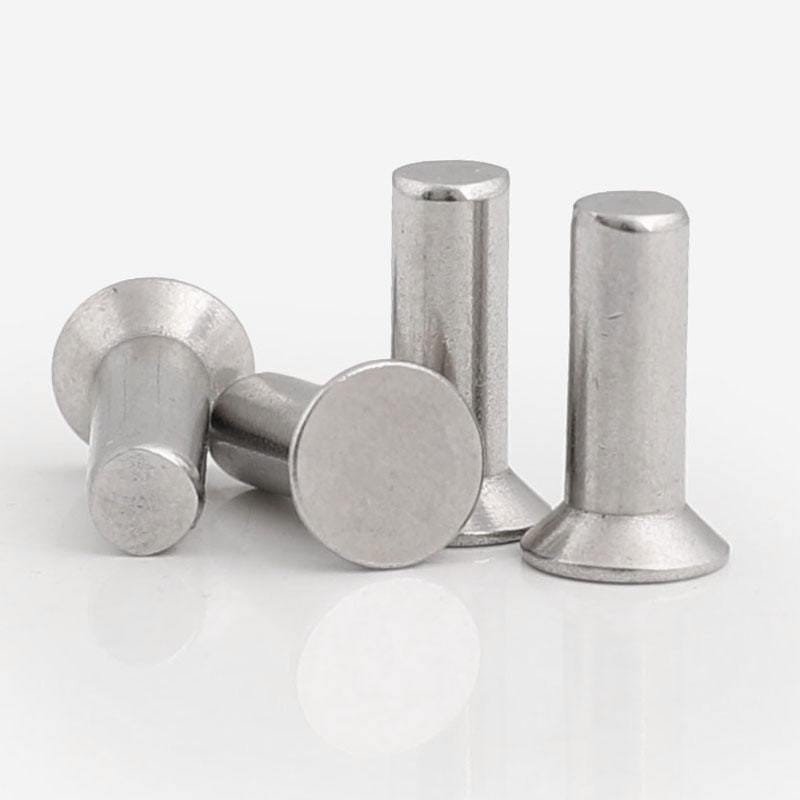
Consider the material being joined. Rivet material should not be selected in isolation from aluminum sheet, steel sheet, composite panels, coated surfaces, or other substrates.
For thin or soft material, head style and backside bearing area may matter as much as rivet strength.
Credit: www.kenenghardware.com
Outdoor and Marine Use
Choose by the complete corrosion system. Salt, moisture, coating damage, and dissimilar metals can change which rivet is appropriate. Stainless or specialty rivets may be a better choice than either plain aluminum or plain carbon steel in some environments.
Heat and Temperature
Do not select steel automatically for “high heat” without checking the exact alloy and service temperature. Rivet material properties and coatings can change with temperature, and the joint design may have separate limits.
Magnetism
Many aluminum alloys are nonmagnetic, while common carbon steels are magnetic. But magnetism should be treated as an application-specific requirement, not a general reason to select an aluminum rivet for electronics.
Common Selection Mistakes
- Using generic strength tables instead of the rivet datasheet.
- Assuming all aluminum rivets are corrosion-proof.
- Assuming all steel rivets require power installation tools.
- Ignoring galvanic interaction with the joined material.
- Choosing rivet material without checking grip range and hole size.
- Using “structural” applications as examples without an engineered specification.
Credit: www.goebelfasteners.com
Which Should You Choose?
| Priority | Likely direction |
|---|---|
| Lowest weight | Consider a suitable aluminum rivet |
| Higher mechanical rating | Compare suitable steel products |
| Wet or corrosive service | Compare the full material/coating system |
| Dissimilar metals | Evaluate galvanic compatibility and isolation |
| Critical load | Use specified/engineered rivet data |
Credit: www.kenenghardware.com
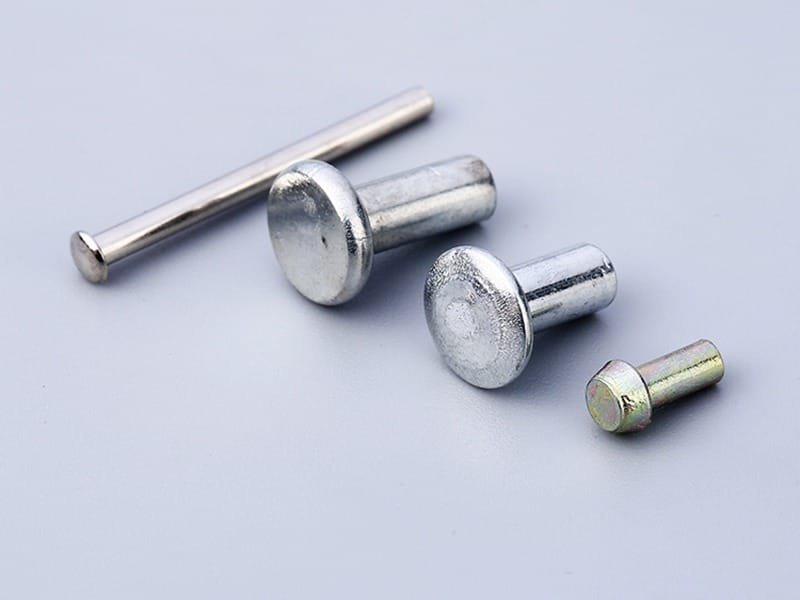
Compare Complete Rivet Specifications
Aluminum rivets are often easier to set and may be suitable for lightweight assemblies, while steel rivets can offer higher strength in some comparable designs. The rivet material alone does not determine joint capacity. Check diameter, grip range, head style, mandrel design for blind rivets, and the manufacturer’s shear and tensile ratings before comparing alternatives. A larger aluminum fastener may perform differently from a smaller steel one, and the surrounding sheet may fail before either rivet does.
Assess the materials being joined and their environment. Dissimilar metals can create galvanic corrosion when moisture and an electrical path are present, so use appropriate isolation, coatings, or a compatible fastening system where needed. Outdoor and marine service also require attention to sealing and water traps. For vibrating assemblies, fatigue resistance and joint design matter beyond a simple static strength number.
Drill holes to the specified diameter, remove burrs, and verify the total material stack fits the rivet’s grip range. Follow the installation tool’s instructions and inspect the formed joint. Structural or safety-critical connections require an engineered specification; do not substitute aluminum for steel or vice versa merely because the fastener fits the same hole.
Compare the Complete Rivet Assembly
Aluminum rivets are often attractive for low mass and corrosion behavior in suitable environments, while steel rivets may offer higher strength in some comparable product lines. However, the specific alloy, diameter, body style, mandrel, and manufacturer rating determine actual performance. A blind rivet with an aluminum body and steel mandrel is not the same material system as an all-aluminum rivet, so check the complete product specification.
Measure the joint’s total thickness and select a rivet with a grip range that covers it. Check hole diameter, edge distance, and spacing against the fastener maker’s guidance or applicable design specification. A strong rivet in an oversized hole or thin unsupported sheet can still fail through pull-through, bearing damage, or joint deformation.
Mixed metals can create galvanic-corrosion risks when moisture provides an electrolyte. Consider both the rivet and the materials being joined, and use approved isolation, coatings, or alternative materials where necessary. For outdoor or marine applications, do not assume that either aluminum or steel is universally corrosion-proof; evaluate the actual environment and coating system.
Installation quality also matters. Use the specified setting tool, ensure the head seats correctly, and inspect the finished joint for loose fit, cracking, or deformation. Structural, pressure-retaining, or safety-critical joints require approved fastener selection and engineering criteria rather than a generic material comparison.
Match Rivet Size to the Actual Joint
The grip range of a blind rivet is the combined thickness range for which that particular rivet is designed. Measure the total thickness of the sheets, including any approved coating or joining layer that contributes to the grip, and choose a product whose stated minimum and maximum grip include that measurement. Do not assume a long rivet is better: an excessively long or short rivet may form the blind-side head incorrectly and produce an unreliable connection.
Check the manufacturer’s recommended hole diameter and the exact fastener body diameter. An oversized or oval hole can reduce joint quality even when the rivet itself has a high shear rating. Burrs, uneven panel contact and damaged coatings can affect seating. Observe the specified edge distance and rivet spacing; placing a strong fastener too close to a thin sheet’s edge can cause tearing. Structural or safety-critical joints must use the fastener system and installation procedure approved for that application.
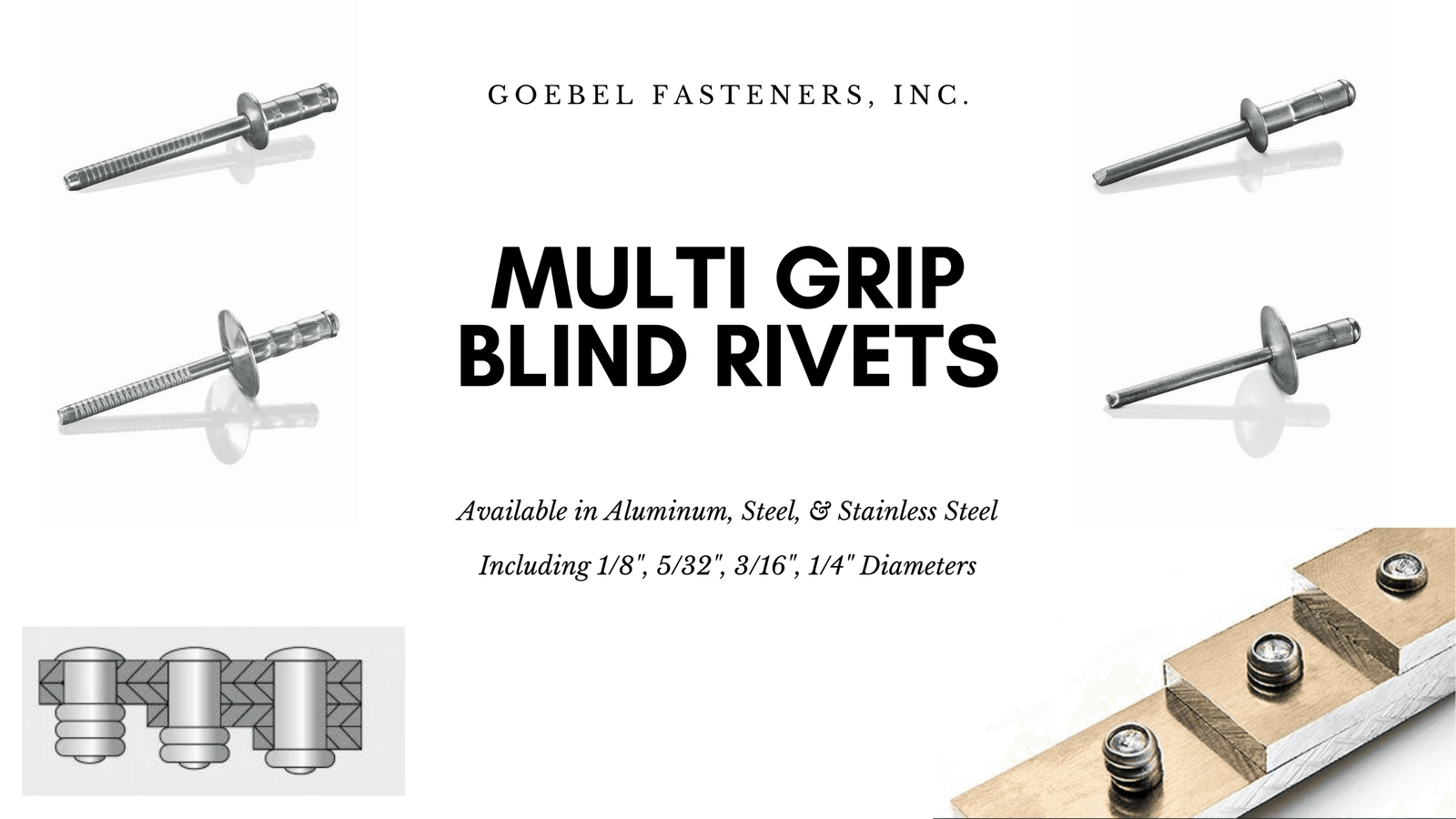
Aluminum Body With a Steel Mandrel Is Not an All-Aluminum Rivet
For a blind rivet, the outer rivet body and the pull mandrel can be made of different metals. An aluminum-body/steel-mandrel product is different from aluminum/aluminum, steel/steel and aluminum/stainless combinations. This matters for corrosion, installation behavior and product ratings. For example, GESIPA’s official standard blind-rivet catalog lists each model’s material combination, hole dimensions, head type and grip-range details. Compare the actual manufacturer part number, not just the words ‘aluminum rivet’ on a retailer listing.
In damp or salt-prone environments, check what metals will be electrically connected and whether water can bridge them. Coatings, sealants and material selection may reduce corrosion risk, but using one insulating washer does not automatically make a mixed-metal joint suitable for marine use. Avoid adding sealant that interferes with the rivet’s specified seating, backside expansion or hole tolerances.
Install and Inspect a Nonstructural Blind-Rivet Joint
For a simple enclosure or light fabrication project, make a trial joint in scrap of the same materials and thicknesses. Confirm that the tool nosepiece suits the mandrel diameter and that the riveter has capacity for the selected rivet material. Drill or otherwise prepare the hole according to the product data, remove dangerous burrs and clean loose chips. Support the pieces so their holes align without forcing the rivet at an angle.
Insert the rivet and seat its factory head flush against the surface unless the application instructions require otherwise. Keep the pulling tool aligned with the rivet axis and operate it as the toolmaker directs. After setting, inspect both accessible sides for gaps, damaged sheets, uneven head seating or abnormal mandrel retention. If the rivet spins, the head rocks or the sheets remain loose, do not simply set a second rivet through the damaged hole. Diagnose incorrect grip range, hole size, tool setup or material failure first.
The detailed operating sequence belongs in our separately published how-to-use-a-rivet-gun guide; this comparison concentrates on material and product selection. Always wear appropriate eye protection and contain spent mandrels or metal chips. Do not use a DIY trial joint to certify safety-critical loading.
When Rivet Material Alone Cannot Set the Strength
Imagine joining a thin aluminum panel to a steel support. A higher-rated steel rivet might still be the wrong choice if it damages the panel during setting, requires an incompatible tool or creates an unacceptable corrosion system. Conversely, an aluminum rivet selected only for weight saving may lack the manufacturer’s required tensile or shear capacity. If the joint sees repeated vibration, weather exposure or significant load, consider the complete fastener specification and the surrounding sheet or bracket failure mode.
Record the proposed rivet model, alloy combination, diameter, head shape, grip range, hole size, tool requirement and published strengths on a comparison sheet. If any required value is absent, look for the manufacturer’s data or obtain appropriate engineering advice. Do not extrapolate a published shear rating from another diameter or product line.
Frequently Asked Questions
Are Steel Rivets Always Stronger?
Not as a universal rule across every rivet design, but comparable steel products often have higher ratings. Check the exact manufacturer’s shear and tensile data.
Can I Use Aluminum Rivets in Steel?
Sometimes, but assess galvanic corrosion, coating, environment, load, and joint design first.
Which Is Better Outdoors?
There is no single answer. Environmental exposure and the full material/coating combination determine suitability.
Can Dissimilar Rivet and Sheet Metals Corrode Together?
Yes. Galvanic corrosion risk depends on the materials, electrolyte exposure, coatings and joint design. Check compatibility for the service environment.
Does Rivet Material Alone Determine Joint Strength?
No. Rivet construction, diameter, grip range, installation quality and the connected sheet materials affect load capacity.
Bottom Line
Aluminum vs steel rivets is a system decision. Compare exact rivet ratings, joined materials, corrosion exposure, installation capability, weight, and service requirements instead of selecting from generic material stereotypes.