
Last Updated: April 1, 2026
Are you wondering if your motor is working properly or if it needs repair? Knowing how to test a motor with a multimeter can save you time, money, and frustration.
Whether it’s a single-phase fan motor or a three-phase industrial motor, a multimeter helps you quickly check for electrical problems like shorts or open circuits. In this guide, you’ll learn simple, step-by-step methods to test your motor safely and accurately.
By the end, you’ll have the confidence to diagnose motor issues yourself and decide when to fix or replace it. Let’s get started and make your motor troubleshooting easy and effective!
As an Amazon Associate, I earn from qualifying purchases. This helps support the site at no extra cost to you.
Prepare The Motor And Multimeter
Preparing the motor and multimeter is the first step to test a motor correctly. If you do not have a reliable multimeter, we recommend the AstroAI Digital Multimeter for accurate resistance and continuity testing. This step ensures your safety and accuracy in readings. Proper preparation avoids damage to the motor and the multimeter. Follow each instruction carefully for the best results.

Disconnect Power Safely
Always turn off the motor’s power source before testing. Unplug the motor or switch off the circuit breaker. Confirm no electricity flows to the motor using a voltage tester. This prevents electric shocks and protects your multimeter from damage.
Remove any connected wires or cables from the motor terminals. Keep the motor isolated to get accurate resistance readings. Never test the motor while it is connected to power.
Set Multimeter To Ohms
Turn on your multimeter and set it to the resistance mode, often marked with the Greek letter omega (Ω). This mode measures electrical resistance inside the motor windings. Use the lowest ohm range for precise readings if your multimeter has manual settings.
Check the multimeter leads for damage before use. Connect the leads properly to the multimeter. The red lead goes to the positive terminal, and the black lead goes to the common terminal. For hands-free testing on motor terminals, consider using alligator clip test leads that attach securely to the terminals. Now, the multimeter is ready to test the motor.
Test Motor Windings For Continuity
Testing motor windings for continuity is crucial to find faults inside the motor. This test ensures the electrical paths within the motor coils are complete. It helps detect broken wires or shorts that stop the motor from working properly.
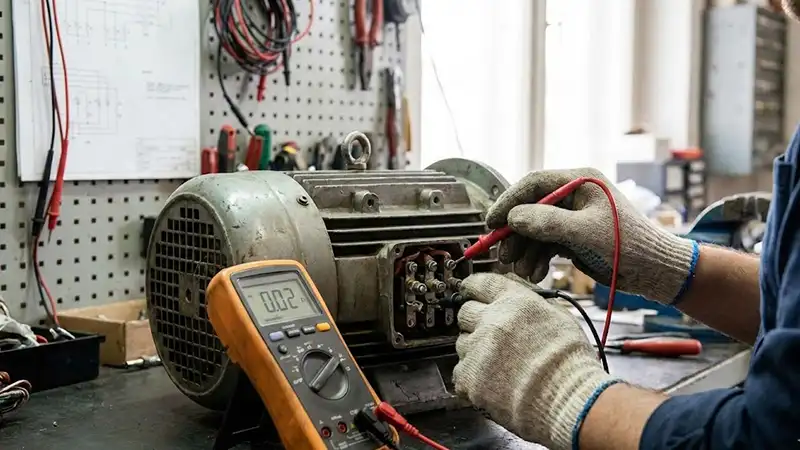
Using a multimeter to check continuity is simple and effective. It gives clear readings that show if the motor windings are healthy or damaged. Follow the steps carefully to get accurate results.
Check Resistance Between Terminals
Set your multimeter to the ohms (Ω) setting. Touch the probes to two motor winding terminals. The meter will show the resistance value between them. A healthy motor winding usually has a small, steady resistance.
If the meter shows “OL” or infinite resistance, it means the winding is open. Open windings have broken wires, so electricity cannot flow. If the resistance is zero or very close to zero, the winding is shorted. This indicates a direct connection that should not be there.
Test each pair of terminals this way. Note the readings for all windings to compare.
Identify Open And Short Circuits
An open circuit means the motor winding is broken inside. The multimeter shows no continuity, and the resistance reads very high or infinite. This fault prevents the motor from running.
A short circuit means two points in the winding connect wrongly. The resistance is very low or zero. Shorts cause the motor to overheat and fail quickly.
Also check for shorts to the motor frame by placing one probe on a terminal and the other on the metal housing. There should be no connection. Any reading means a short to ground, which is a serious problem.
Check For Shorts To Ground
Checking for shorts to ground is a critical step when testing a motor with a multimeter. This process ensures the motor windings do not have unintended contact with the motor frame or housing. Such shorts can cause motor failure or electrical hazards.
Using a multimeter, you measure the resistance between the motor terminals and the motor frame. A proper test helps identify if the motor insulation is intact or damaged. Detecting shorts early can save time and repair costs.
Test Resistance To Motor Frame
First, set your multimeter to the ohms (Ω) setting. Touch one probe to a motor terminal. Place the other probe on the metal frame of the motor.
Look for the resistance reading on the multimeter. A good motor shows a very high resistance or “OL” (overload) reading. This means no electrical connection exists between the winding and frame.
A low resistance reading indicates a short circuit. This means the motor winding is touching the frame. It signals motor damage or insulation failure. Repeat this test for each motor terminal to check all windings.
Interpret Ground Test Results
If the multimeter shows “OL” or no continuity, the motor is free from shorts to ground. The insulation is good, and the motor is safe to use.
If the meter shows any resistance value below infinity, the motor has a short to ground. This can cause electrical faults or motor overheating. The motor should not be used until repaired or replaced.
Testing for shorts to ground helps prevent costly motor failures. It also ensures safe motor operation. Always perform this test after disconnecting power to the motor for safety.
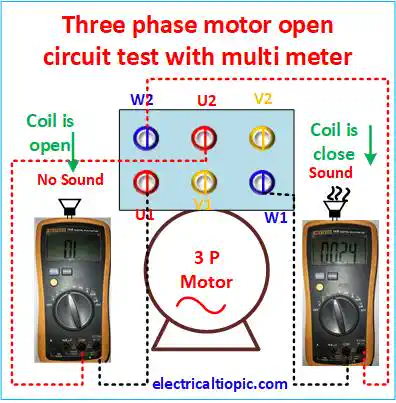
Credit: electricaltopic.com
Test Single-phase Motors
Testing single-phase motors with a multimeter helps find motor problems fast. These motors have two windings: start and run. Knowing which winding is which makes testing easier. Checking their resistance values shows if the motor is good or damaged. Follow clear steps for accurate results.
Identify Start And Run Windings
Single-phase motors have two main windings. The start winding creates extra torque to start the motor. The run winding keeps the motor running smoothly. These windings have different wire sizes and resistance levels. Usually, the start winding has thinner wire and higher resistance. The run winding uses thicker wire with lower resistance. You can find winding labels on the motor or in its manual. If no labels exist, use a multimeter to measure resistance and identify each winding.
Measure Resistance Values
Set your multimeter to the ohms (Ω) setting. Disconnect power and wires from the motor. Measure resistance between winding terminals. The start winding resistance is higher, often several ohms. The run winding resistance is lower, usually less than one ohm. If the resistance reads infinite (OL), that winding is open or broken. A zero or near zero reading means a short circuit. Also, test for shorts to the motor frame. Touch one probe to a winding terminal and the other to the metal frame. A good motor shows no continuity to ground (infinite reading).
Test Three-phase Motors
Testing three-phase motors with a multimeter helps find electrical problems fast. These motors have three windings, each connected to a phase. Checking each winding ensures the motor works properly and safely.
Follow simple steps to measure resistance and spot issues like shorts or open circuits. Use your multimeter to compare readings and confirm the motor’s condition. This process helps avoid costly repairs or replacements.
Check Each Winding Pair
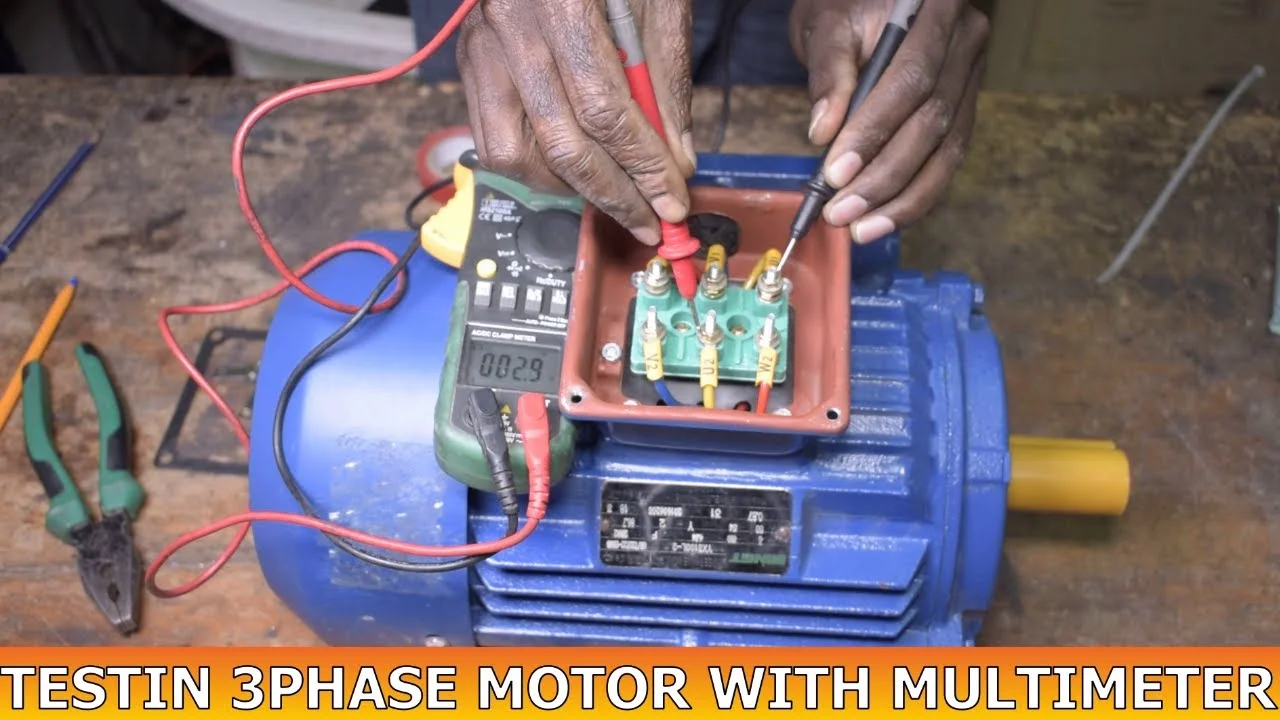
Set your multimeter to the ohms (Ω) setting. Test resistance between each pair of motor terminals. These pairs are usually labeled U, V, and W. Measure U to V, V to W, and W to U.
Write down each resistance value. Each winding should show some resistance, not zero or infinite. Zero means a short circuit. Infinite means an open circuit. Either indicates a problem with the motor winding.
Compare Resistance Readings
Compare the three resistance readings from the winding pairs. They should be close to each other. Small differences are normal due to manufacturing variations. Large differences mean one winding may be damaged.
A healthy motor has nearly equal resistance on all three windings. If one reading is much higher or lower, it signals an issue. Use this data to decide if the motor needs repair or replacement.
Credit: www.youtube.com
Interpret Multimeter Readings
Interpreting multimeter readings is crucial for testing motors accurately. Understanding these readings helps identify motor health and issues quickly. This section explains how to read resistance values and spot common faults.
Recognize Normal Resistance Ranges
Motors usually have specific resistance ranges for their windings. For small motors, resistance often falls between 1 and 100 ohms. Larger motors may show lower resistance values.
Check your motor’s manual for exact numbers. Consistent readings across all winding pairs indicate normal condition. Slight differences are normal but should not be very large.
Using the ohms (Ω) setting, measure between each pair of terminals. Good readings show finite resistance values, not zero or infinite.
Detect Fault Indicators
Infinite or “OL” readings suggest an open circuit in the winding. This means a broken wire or connection. Zero or near-zero readings point to a short circuit, where wires touch improperly.
Test for shorts to ground by placing one probe on a terminal and the other on the motor frame. Any measurable resistance here signals a ground fault.
Uneven resistance across windings or unexpected values warn of internal damage. Identifying these signs early prevents motor failure and saves repair costs.
[yallow]
Troubleshoot Common Motor Issues
Troubleshooting common motor problems starts with identifying the exact issue. Motors often face electrical faults that stop them from working correctly. Using a multimeter helps find these problems quickly. Two frequent issues are open circuits and short circuits. Both affect motor performance and safety.
Address Open Circuits
Open circuits occur when the electrical path inside the motor breaks. The multimeter set to the ohms (Ω) mode checks this easily. Touch the probes to the motor winding terminals. A reading of “OL” or infinite resistance means the circuit is open. This means no current flows through the winding. Open circuits stop the motor from running.
Check each winding separately. Open circuits can happen from broken wires or bad connections. Repair or replace damaged parts to fix the issue. Always disconnect power before testing to avoid shocks.
Handle Short Circuits
Short circuits happen when wires inside the motor touch where they shouldn’t. This causes very low resistance or zero on the multimeter. Test the windings by placing the probes on each terminal pair. A near-zero reading means a short circuit exists. Shorts cause overheating and motor failure.
Also check for shorts to the motor’s metal frame. Place one probe on a terminal and the other on the frame. A reading other than “OL” shows a short to ground. Fix shorts by inspecting insulation and wiring carefully.
[/yallow]
Next Steps After Testing
After testing a motor with a multimeter, it is important to know what to do next. This step determines the motor’s future use and ensures safety. The test results guide whether the motor needs repair or replacement. Proper handling after testing also protects you and the motor from harm.
Decide On Repair Or Replacement
Check the test readings carefully. If the motor shows an open circuit or short circuit, it may be faulty. Minor issues like dirty contacts or loose wires can be repaired. Severe damage such as burnt windings or broken parts often means replacement is needed. Consider the motor’s age and cost of repair. Sometimes buying a new motor is more cost-effective.
Consult a professional if unsure about the motor’s condition. Proper diagnosis saves time and money. Keep your motor’s manual handy for specific guidelines. Use the test results to explain the problem clearly.
Safety Tips For Motor Handling
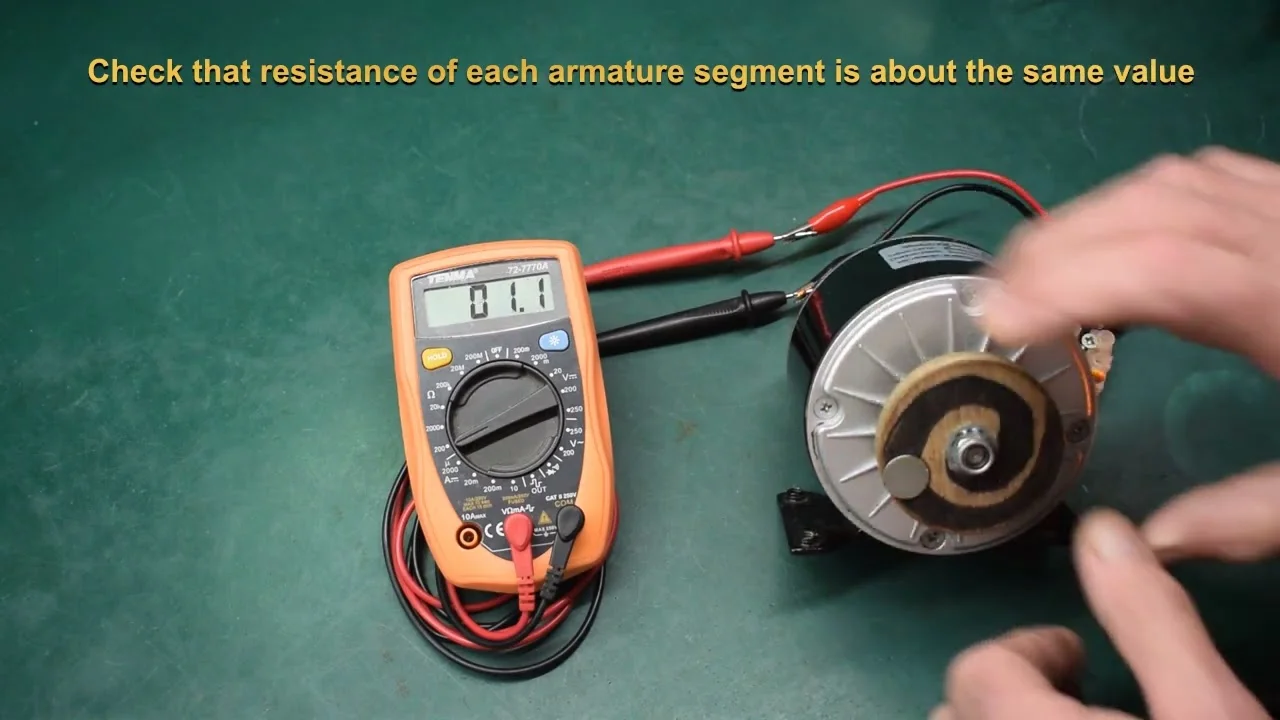
Always disconnect power before touching the motor. Use insulated tools to avoid electric shock. Wear insulated electrician gloves and safety eyewear during handling. Avoid working on the motor in wet or damp places. Keep the workspace clean to prevent accidents.
Store the motor in a dry, cool area if not in use. Follow manufacturer instructions for safe handling. Dispose of damaged motors properly to protect the environment. Safety is key to prevent injury and damage.
Credit: www.youtube.com
[yallow]
Authoritative External References
For further verification and technical guidance, review these authoritative external resources:
Frequently Asked Questions
How To Test If A Motor Is Bad With A Multimeter?
Disconnect power, set multimeter to ohms (Ω), and measure winding resistance. An infinite (OL) or zero reading shows a bad motor. Test for shorts to ground by checking resistance between terminals and motor frame; any reading means a short.
How To Test A 3 Phase Motor With A Multimeter?
Disconnect power, set multimeter to ohms, and measure resistance between each phase. Infinite reading means open circuit; zero means short. Check each terminal to motor frame; infinite resistance indicates no ground fault. Any continuity to ground or abnormal readings suggest motor issues.
How Many Ohms Should An Electric Motor Have?
An electric motor’s winding resistance typically ranges from 0. 5 to 20 ohms. Exact values depend on motor type and size. Test windings with a multimeter set to ohms. Infinite (OL) or zero reading indicates a faulty motor. Always disconnect power before testing.
How To Tell If A Motor Has Bad Windings?
Test motor windings with a multimeter set to ohms. An infinite (OL) reading shows an open circuit; zero reading indicates a short. Check for shorts to ground by measuring resistance between terminals and frame; any reading means bad windings.
How Do I Test Motor Windings With A Multimeter?
Set your multimeter to ohms (Ω) and check resistance between winding terminals. Infinite or zero reading means a problem.
What Does A Zero Resistance Reading Mean On A Motor?
Zero resistance shows a short circuit in the motor winding, indicating a bad motor.
[/yallow]
Conclusion
Testing a motor with a multimeter helps find electrical problems fast. Always turn off power before starting any test. Check each winding for resistance to spot opens or shorts. Test for shorts to the motor’s metal frame too. A good motor shows no continuity to ground and proper resistance readings.
Faulty motors may need repair or replacement. Using a multimeter correctly saves time and prevents damage. Follow these steps carefully to keep your motor running well. Simple testing keeps your equipment safe and working.
Read also: How to Test a Capacitor With a Multimeter
