
If you have ever tried to pick the right nails for your nail gun, you already know: the options can be confusing. Nail guns use different sizes, shapes, and strengths of nails, and choosing the wrong one can mess up your project—or even damage your tool. That is why understanding the nail gauge is so important. The gauge is not just a number. It affects the strength, look, and safety of your work. This guide will break down everything you need to know about nail gun nail gauges, so you can pick the right nail for any job with confidence, whether you are a beginner or just looking to upgrade your skills.
What Is Nail Gauge?
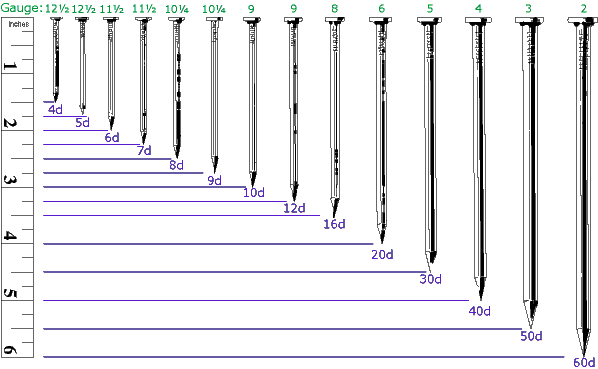
Let’s start with the basics: the gauge is a number that shows how thick a nail is. The system is a bit backward—the bigger the gauge number, the thinner the nail. For example, a 23 gauge nail is actually much thinner than a 15 gauge nail. Gauge is important because it affects how much holding power a nail has, how visible the hole will be, and what materials it can handle.
Many people new to carpentry think any nail will work in any nail gun. But most nail guns are designed to shoot specific gauges. Using the wrong gauge can jam your gun or break your materials. Knowing the right gauge also means your work will look cleaner and last longer.
Common Nail Gun Nail Gauges
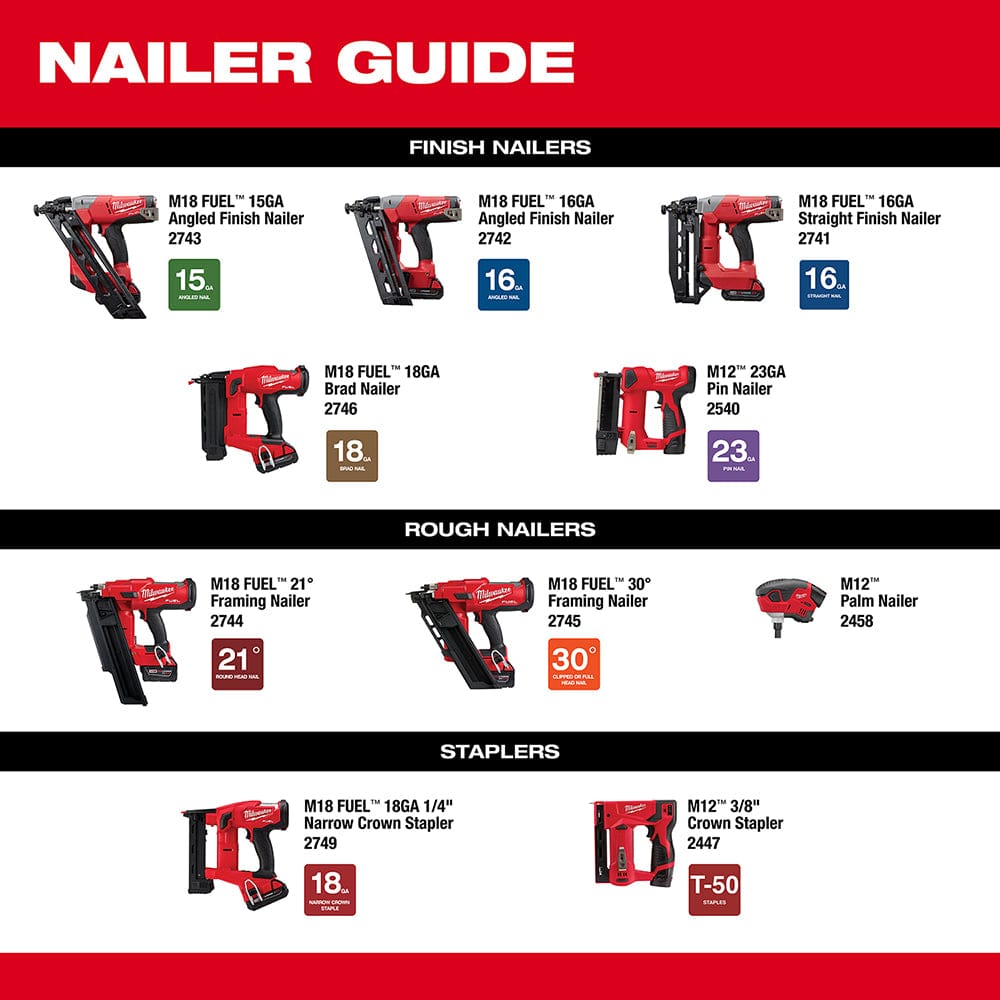
Most nail guns use nails in these gauges: 15, 16, 18, 21, and 23. Each gauge has its own best uses. Here’s a closer look at the most common ones:
15 Gauge
- Diameter: About 0.072 inches
- Common length: 1 to 2.5 inches
- Nail type: Angled finish nails
These are strong nails, used mostly for heavy trim, baseboards, crown molding, and sometimes even door frames. Because the nails are thick, they offer a lot of holding power. The hole they leave is bigger, so you may need to fill it if you want a smooth finish.
16 Gauge
- Diameter: About 0.062 inches
- Common length: 1 to 2.5 inches
- Nail type: Straight or angled finish nails
16 gauge nails are a good balance between strength and size. They are used for baseboards, cabinets, and general trim. Many professionals use both 15 and 16 gauge nailers because each has its own advantages. The 16 gauge is a bit slimmer, so the hole is smaller and easier to hide.
18 Gauge
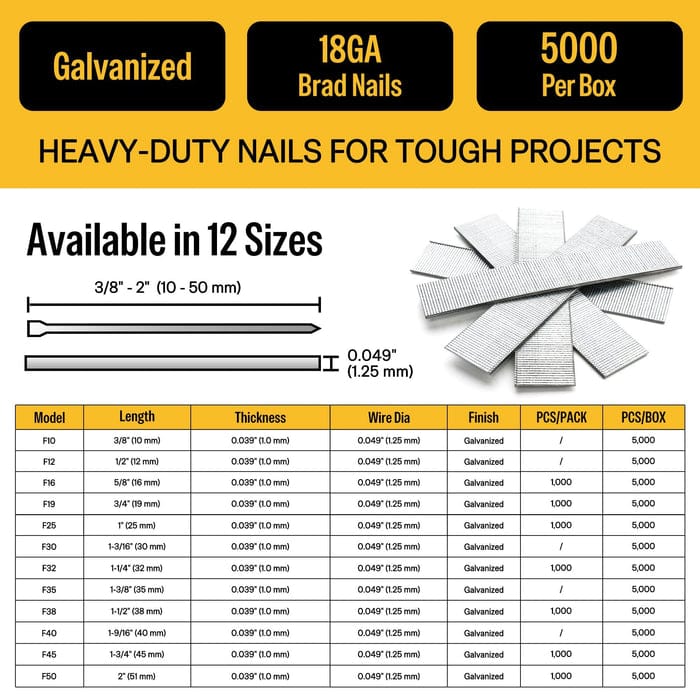
- Diameter: About 0.0475 inches
- Common length: 5/8 to 2 inches
- Nail type: Brad nails
These are called brad nails. They are great for delicate trim, small moldings, and light furniture work. The hole is very small, so you often do not need to fill it. 18 gauge brad nailers are popular for DIY because they are versatile and easy to use.
21 Gauge
- Diameter: About 0.028 inches
- Common length: 5/8 to 2 inches
- Nail type: Pin nails
These are less common but growing in popularity, especially for fine finish work. 21 gauge pins are almost invisible in wood and perfect for tiny moldings or keeping parts in place while glue dries.
23 Gauge
- Diameter: About 0.025 inches
- Common length: 1/2 to 2 inches
- Nail type: Micro pin nails
23 gauge nails are the thinnest. You can barely see the holes they leave. They are used for attaching very thin pieces, like decorative trim or delicate frames. They do not have much holding power, so do not use them for heavy work.
Nail Gauge Vs. Nail Length
Some people confuse gauge with length. Gauge is the thickness, while length is how long the nail is. Most nail guns are designed to handle a range of lengths in a specific gauge. For example, an 18 gauge brad nailer might shoot nails from 5/8 inch up to 2 inches, but all in 18 gauge thickness.
The right length depends on what you are joining. A common rule: the nail should be at least twice as long as the thickness of the material you are nailing through. For example, if your trim is 1/2 inch thick, a 1 to 1.25 inch nail is usually safe.
Types Of Nails And Their Uses
Here is a quick overview of different nail types you will find for nail guns, and what they are best for:
| Nail Type | Gauge | Best Use |
|---|---|---|
| Finish Nail | 15, 16 | Baseboards, crown molding, doors |
| Brad Nail | 18 | Small trim, furniture, crafts |
| Pin Nail | 21, 23 | Thin moldings, picture frames, delicate work |
Not every nail gun can use every type. Always check your tool’s manual before buying nails.
How To Choose The Right Nail Gauge
Picking the right gauge is not just about what fits your nail gun. Here are the main things to consider:
- Material thickness: Thicker, harder materials need lower gauge (thicker) nails for strength.
- Type of project: For furniture or trim that will be seen, a higher gauge (thinner nail) leaves a smaller hole.
- Holding power: Heavy items need thick nails. For light work, thin nails are enough.
- Visibility: If you want a seamless look, choose a higher gauge (18, 21, 23).
A common beginner mistake is using a thick nail on thin trim. This can split the wood or leave an ugly hole. On the other hand, using a very thin nail on a heavy board may not hold up over time.
Here’s a quick comparison of gauges and their typical jobs:
| Gauge | Strength | Best For |
|---|---|---|
| 15 | Very strong | Heavy trim, doors, baseboards |
| 16 | Strong | Cabinets, general trim |
| 18 | Medium | Small trim, crafts, furniture |
| 21/23 | Low | Delicate trim, finish work |
Matching Nail Gauge To Nail Gun
Not all nail guns are created equal. Most are built for a specific gauge. For example, a 16 gauge finish nailer cannot shoot 18 gauge brads. Trying to use the wrong size can jam or break your tool.
Some brands make multi-gauge nailers that can use more than one gauge, but even these have limits. Before buying nails, check:
- The gauge your nail gun accepts
- The length range it supports
- The type of nail magazine (straight or angled)
A mistake many new users make is thinking “close enough” is good enough. If a nail is even slightly the wrong size, it can jam inside the gun.
Nail Gauge And Wood Splitting
A non-obvious but common problem: using thick nails on thin wood can cause the wood to split. This is especially true with hardwoods and thin moldings. If you are working with delicate trim, always use the highest gauge (thinnest) nail that will hold the piece.
Pro tip: If you must use a lower gauge (thicker) nail, angle it slightly, or drill a tiny pilot hole. This reduces the chance of splitting.
Nail Gauge And Finish Quality
If you care about how your finished work looks, gauge matters. Thicker nails leave bigger holes that you need to fill and sand. For cabinets, furniture, or decorative pieces, higher gauge nails (18, 21, 23) are better. You can often skip filling the holes, saving time and keeping the wood looking clean.
Some people forget that paint and stain can make nail holes more visible. Always test on a scrap piece before finishing your project.
Credit: www.maxtool.com
Nail Gauge And Holding Power
Lower gauge (thicker) nails hold better, but they also risk splitting wood and leaving large holes. For heavy work, like installing door frames or large baseboards, 15 or 16 gauge is best. For lightweight jobs, 18 or 23 gauge is usually strong enough.
If you need maximum holding power but want a clean look, use construction glue along with thinner nails. This trick is popular in high-end finish carpentry.
Cost Differences By Gauge
Thinner nails (higher gauge) are often more expensive per nail, but you use fewer of them for light jobs. Thicker nails (lower gauge) are cheaper, but you may use more putty to fill the holes. If you are on a budget, buy nails in bulk, but never buy the wrong gauge just because it is on sale.
Credit: www.engineersedge.com
Safety Tips For Using Nail Guns And Gauges
Nail guns are powerful and can be dangerous if used wrong. Here are some safety tips:
- Always use the right gauge and length for your gun.
- Wear safety glasses. Nails can bounce or fly out.
- Keep fingers away from the nail exit area.
- Disconnect the air supply before loading or fixing jams.
- Never point the nail gun at anyone, even if it looks empty.
Many accidents happen because people try to force the wrong nail into the gun. If you are not sure, check the manual or ask an expert.
Nail Gauge Myths And Misconceptions
Some myths keep beginners from getting the best results:
- Myth: Thicker nails are always better.
Reality: Sometimes, thin nails are stronger because they avoid splitting and allow for more nails in a tight area.
- Myth: Any nail that fits in the gun will work.
Reality: Even small differences in gauge can jam or damage your nail gun.
- Myth: Nail holes do not matter.
Reality: For visible trim, smaller holes can save hours of filling and sanding.
Advanced Tips: Professional-quality Results
- Mix gauges for complex jobs. For example, use 15 gauge for strong joints, but 18 or 23 gauge for finishing touches.
- Test on scrap wood first. This will show you if the wood splits or the nail is visible.
- Store nails properly. Humidity can rust nails, which can cause jams or stains in finished wood.
- Keep your nailer clean. A dirty nailer is more likely to jam, especially with smaller gauges.
Many professionals keep at least two nail guns: one for heavy work (15 or 16 gauge) and one for finish work (18 or 23 gauge).
Environmental And Material Considerations
Some nails are designed for outdoor use and are coated to resist rust. These can come in any gauge, but not all are available in every finish. For exterior projects, always choose galvanized or stainless steel nails in the correct gauge.
If you are using soft woods like pine, you can get away with higher gauge nails. For hardwoods like oak or maple, go with lower gauge, but be careful not to split the wood.
How Nail Gauge Has Evolved
Nail gauges have changed as tools and materials have improved. Modern nail guns are more precise, and manufacturers now make a wider range of gauges to suit different jobs. Some new tools can switch between gauges with a quick adjustment, but these are still rare.
For more technical details and history on nail gauges, you can check Wikipedia’s nail fastener page.
Frequently Asked Questions
What Does “gauge” Mean In Nail Guns?
Gauge is the measure of a nail’s thickness. The higher the number, the thinner the nail. This affects how strong the nail is and how big a hole it leaves.
Can I Use Different Gauge Nails In The Same Nail Gun?
No. Most nail guns are designed for a specific gauge. Using the wrong gauge can jam or break the gun.
Which Nail Gauge Is Best For Baseboards?
For baseboards, 15 or 16 gauge nails are best because they are strong and hold heavy trim securely.
Why Do My Nails Keep Bending Or Splitting The Wood?
You might be using a nail that is too thick (low gauge) for the material, or the wood is too hard or thin. Try a higher gauge (thinner) nail, or drill a small pilot hole first.
Do Nail Gauges Affect How The Finished Work Looks?
Yes. Higher gauge (thinner) nails leave smaller holes, which are less visible and often do not need filling, giving a cleaner look.
Choosing the right nail gauge can make your work easier, safer, and more professional. By understanding these details, you will avoid costly mistakes and get the results you want every time.
Credit: www.sanatix.ir