
Welding is a skill that builds bridges, cars, pipelines, and even art. Among all welding methods, two stand out for both hobbyists and professionals: MIG welding and Stick welding. If you’re new to welding or looking to choose the right process for your project, understanding the differences is essential. Both offer unique strengths, but each also comes with limitations. This guide will help you see where each process shines, where they struggle, and how to choose between them. Let’s explore the world of MIG vs Stick welding in clear, simple terms.
What Is Mig Welding?
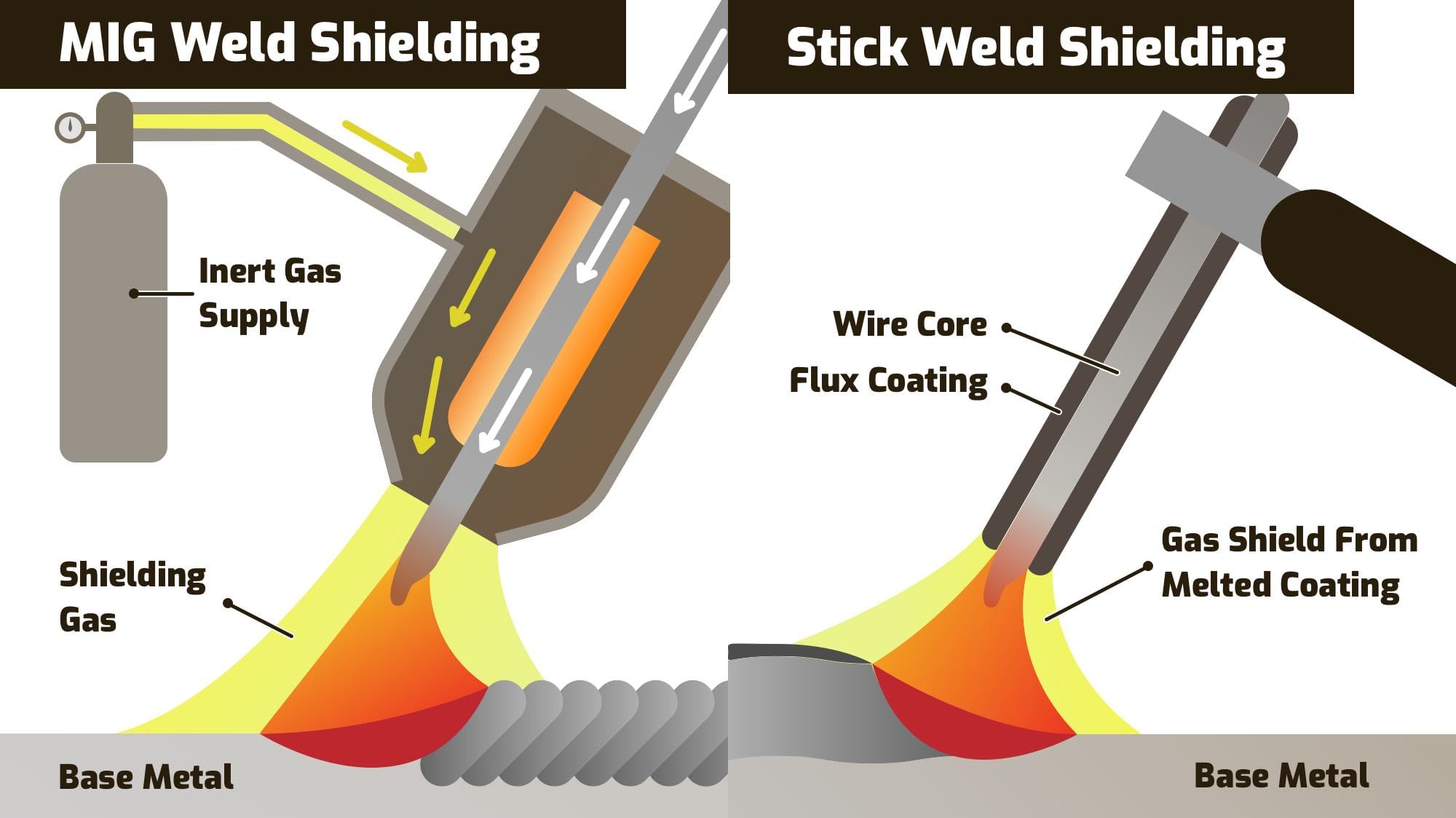
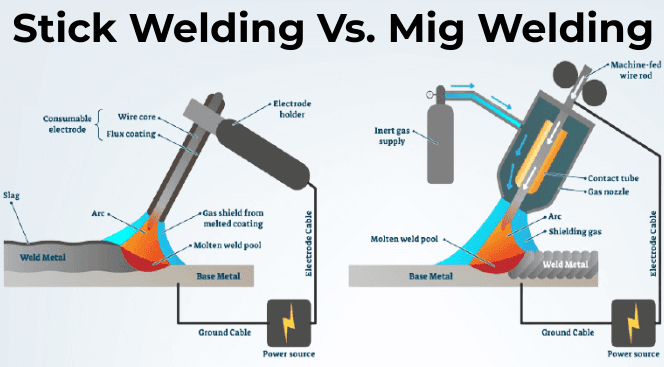
MIG welding stands for Metal Inert Gas welding, sometimes called Gas Metal Arc Welding (GMAW). In this process, a spool of wire acts as the electrode and filler metal. The wire feeds automatically through the welding gun, while a shielding gas protects the weld from air.
MIG welding is popular for several reasons:
- It’s easy to learn, even for beginners.
- The process is clean, with little spatter.
- It works fast, making it ideal for production.
Most people use MIG welding for car repairs, fabrication, thin metals, and home projects. For example, auto body shops often prefer MIG because it gives smooth welds on thin steel panels. However, MIG welding does require a steady supply of gas and electricity.
What Is Stick Welding?
Stick welding, also called Shielded Metal Arc Welding (SMAW), is one of the oldest and most widely used methods. Instead of a wire, this process uses a solid metal rod covered with a flux coating, called a stick electrode.
The stick electrode melts and joins the metal pieces. The flux coating creates a protective gas cloud and leaves a layer of slag, which you chip off after welding. Stick welding is known for:
- Working well in outdoor conditions
- Being reliable, even on dirty or rusty metal
- Requiring simple, portable equipment
Stick welding is the go-to method for pipeline repairs, structural work, and heavy construction. Farmers, field workers, and welders in remote areas often rely on stick welding for its simplicity and toughness.
How Mig And Stick Welding Work
To really understand these two methods, it helps to look at how they actually operate.
| Feature | MIG Welding | Stick Welding |
|---|---|---|
| Electrode Type | Wire (on spool) | Rod (stick electrode) |
| Shielding Method | External gas (CO2, Argon) | Flux coating on rod |
| Process Type | Semi-automatic | Manual |
| Slag Cleanup | Minimal | Required (chip and brush) |
In short, MIG welding uses a spool-fed wire and a separate gas cylinder. The wire melts to fill the joint, and the gas keeps air away. Stick welding uses a coated rod that melts as you work, with the coating providing protection.
Advantages Of Mig Welding
MIG welding has become the favorite for workshops and home garages. Its strengths include:
- Speed and Efficiency: The wire feeds automatically, so you can weld long seams without stopping. This makes MIG much faster than stick welding.
- Clean Welds: There’s very little spatter or slag to clean. The shielding gas keeps the weld puddle clean, producing a nice finish.
- Easy to Learn: Many beginners find MIG welding more forgiving. The steady arc and automatic feeding make it less tiring.
- Great for Thin Metal: MIG is perfect for car panels, sheet metal, and anything under 1/4 inch (6 mm) thick. Stick welding can easily burn through thin metal.
- Continuous Welding: You can weld non-stop as long as your wire spool lasts, which is handy for long projects.
Non-obvious insight: MIG welding’s adjustable voltage and wire speed let you fine-tune the process for different metals, something stick welding can’t do as easily.
Credit: weldguru.com
Disadvantages Of Mig Welding
While MIG welding is popular, it’s not perfect for every job.
- Sensitive to Wind: The shielding gas can blow away outdoors, causing weak, porous welds. MIG is best used indoors or in a protected area.
- Needs Clean Metal: Rust, paint, or oil can cause problems. The process works best on clean, shiny metal.
- Equipment Costs: You need a wire feeder, gas cylinder, and regular maintenance. The equipment is heavier and less portable than a stick welder.
- Limited for Thick Metal: MIG machines under 200 amps struggle with thick steel. For large structural jobs, stick welding often works better.
Another often-missed detail: If you run out of gas during a weld, you can ruin the entire joint and have to start over.
Advantages Of Stick Welding
Stick welding has stood the test of time for good reasons:
- Works Outdoors: The flux coating protects the weld even in wind, rain, or dust. This is why stick welding is the choice for outdoor pipelines and repairs.
- Handles Dirty Metal: Stick welding can burn through rust, paint, and dirt. Perfect for repairs on old equipment or farm machinery.
- Simple, Portable Gear: A basic stick welder and a box of rods are all you need. There’s no need for gas tanks or wire feeders.
- Good for Thick Metal: Stick welding can easily handle steel plates over 1/4 inch (6 mm). Many structural welds use this method.
- Low Cost: Stick welders are affordable, and you don’t need to buy gas. Maintenance is simple.
A surprising advantage: Stick electrodes come in many types, letting you weld steel, stainless, cast iron, or even hard-facing layers. Changing rods is fast and easy.
Credit: joneswelding.com
Disadvantages Of Stick Welding
Stick welding isn’t always the best choice. Here’s why:
- Slower Process: Each rod only lasts a few inches, so you stop often to change rods and chip slag.
- More Spatter and Cleanup: The flux leaves a slag layer you must chip away. There’s also more smoke and spatter.
- Harder to Learn: Keeping a steady arc length and correct angle takes practice. Beginners often “stick” the rod to the metal.
- Not for Thin Metal: Stick welding can burn through thin panels, leaving holes or warping.
- Less Control for Fine Work: It’s hard to do delicate or artistic welds with a thick stick electrode.
Safety Considerations
Welding always involves risks: heat, sparks, fumes, and electric shock. Both MIG and Stick welding need:
- Proper clothing: Always wear flame-resistant gloves, long sleeves, and closed shoes.
- Eye protection: Use a welding helmet with the correct shade filter for your process.
- Ventilation: Both processes create fumes, but stick welding produces more smoke and stronger fumes. Always weld in a well-ventilated space or use exhaust fans.
- Equipment checks: Damaged cables or loose connections can cause shocks.
A less-known safety tip: Stick welding’s open electrodes can be more dangerous if used in wet or damp areas. Always check for water or condensation before starting.
Cost Comparison: Mig Vs Stick Welding
The cost of welding depends on many factors: machine price, consumables, and time.
| Item | MIG Welding | Stick Welding |
|---|---|---|
| Machine Price | $300–$1200 (home/hobby) | $150–$700 (home/hobby) |
| Consumables | Wire, gas | Rods only |
| Maintenance | Medium (wire feed, gas) | Low (simple parts) |
| Operating Cost | Higher (gas refills add up) | Lower (rods are cheap) |
The biggest hidden cost with MIG is the need for shielding gas. If you weld often, gas refills can add up. With stick, you only need to buy more rods.
Applications: Where Each Method Excels
The right process depends on the job. Here’s where each shines:
MIG welding is best for:
- Auto body repair
- Thin sheet metal
- Furniture and art
- Home fabrication
Stick welding is ideal for:
- Outdoor repairs (farm, construction)
- Heavy machinery
- Structural steel
- Pipeline and fieldwork
A common mistake is trying to use MIG outdoors without wind protection. Even a slight breeze can ruin your weld.
Which One Should You Choose?
Choosing between MIG and Stick welding comes down to your needs, skills, and environment.
- If you want clean welds, fast work, and plan to weld indoors (like a garage or workshop), MIG welding is the best choice.
- If you need tough, reliable welds outdoors or on dirty steel, and don’t mind more cleanup, stick welding is better.
For beginners, MIG is often easier. But learning stick welding builds skills that transfer to many other processes.
Common Mistakes And How To Avoid Them
Both methods have learning curves. Some mistakes beginners make:
- Wrong settings: For MIG, using the wrong voltage or wire speed causes poor welds. For stick, the wrong amperage or rod type can lead to sticking or poor penetration.
- Bad preparation: Welding over grease or paint can cause defects, even with stick welding. Always clean the joint area as much as possible.
- Wrong rod or wire: Always match the electrode to the metal type. Using a mild steel rod on stainless will cause weak joints.
- Welding too fast: Rushing causes weak, narrow welds. Go slow enough to see the weld pool form properly.
- Ignoring safety: Never weld near flammable materials or without proper protection.
A practical tip: Always practice on scrap metal before working on your final piece. This helps you dial in the settings and build confidence.
Credit: www.youtube.com
Real-world Examples
Imagine you’re repairing a rusty farm gate outside. Stick welding lets you work directly on the spot, even if the steel isn’t perfectly clean. Now, picture restoring a classic car in your garage. MIG welding gives you smooth, neat welds on thin panels, with little risk of burn-through.
Professional welders often use both methods. For example, they might use stick welding for the structural frame of a trailer and switch to MIG for the fenders and details.
Data And Statistics
According to the American Welding Society, MIG welding accounts for about 50% of industrial welding, especially in automotive and manufacturing. Stick welding is still used for over 40% of repair and field jobs, especially in construction and pipelines.
A study found that the average learning time for basic MIG welding is about 8–12 hours, compared to 15–20 hours for stick welding. This shows why MIG is popular for beginners and hobbyists.
For more in-depth technical details, visit the Welding Wikipedia page.
Frequently Asked Questions
What Metals Can Mig And Stick Welding Handle?
MIG welding works on steel, stainless steel, and aluminum (with special wire and gas). Stick welding works mainly on steel, stainless, and cast iron. Stick is less common for aluminum because it’s hard to control.
Is Mig Welding Stronger Than Stick Welding?
For most steels, both can make strong welds if done right. On thick, structural steel, stick welding often gives deeper penetration and more strength. On thin metal, MIG’s lower heat input avoids burn-through.
Can I Use Mig Welding Outside?
You can, but only if you shield the weld from wind. The gas can easily blow away, causing weak welds. Some use flux-cored wire (a type of MIG wire with built-in flux) for outdoor work, but it’s not as clean as true MIG.
Which Process Is Cheaper For Home Use?
Stick welding is usually cheaper for small jobs. The equipment is less expensive, and you don’t need to buy gas. For frequent or large projects, MIG’s speed can save time, but the cost of gas adds up.
Do I Need Special Training For Mig Or Stick Welding?
Both require some training, but MIG is usually easier to start. Stick welding needs more practice to master arc control and avoid sticking the rod. Local trade schools and online videos offer good beginner guides.
—
Choosing between MIG welding and Stick welding isn’t just about equipment—it’s about the work you need to do, where you’ll do it, and how much you want to spend. Each method has its own place in the welding world. By understanding their strengths and limits, you can pick the right tool for your next project and weld with confidence.
