
Aluminum oxide and silicon carbide are both useful abrasives, but neither is universally “better.” Aluminum oxide is a tough general-purpose abrasive widely used on wood and many metals, while silicon carbide is a sharper, more friable abrasive often chosen for hard materials, finishing, and many wet-sanding applications.
The correct choice also depends on backing, coating, grit standard, open- or closed-coat construction, lubricant, machine speed, pressure, and the material being sanded.
Aluminum Oxide vs Silicon Carbide: Quick Difference
| Factor | Aluminum oxide | Silicon carbide |
|---|---|---|
| Grain behavior | Tough, durable, broad general use | Sharper and more friable |
| Common strengths | Wood, many metals, general dry sanding | Hard materials, finishes, many wet-sanding jobs |
| Surface finish | Depends on grit and product | Often selected where a sharp cutting action is useful |
| Wet use | Only if the abrasive product/backing is rated for it | Commonly available in waterproof wet/dry products |
What Aluminum Oxide Does Well
Aluminum oxide is available in many grades and product constructions. It is commonly used for sanding solid wood, plywood, fillers, painted surfaces, and ferrous metals. Its toughness makes it useful in belts, discs, sheets, and power-sanding products.
Do not assume every aluminum-oxide product behaves the same. Grain treatment, backing, bond, coating density, and product design can change cut rate and life substantially.
What Silicon Carbide Does Well
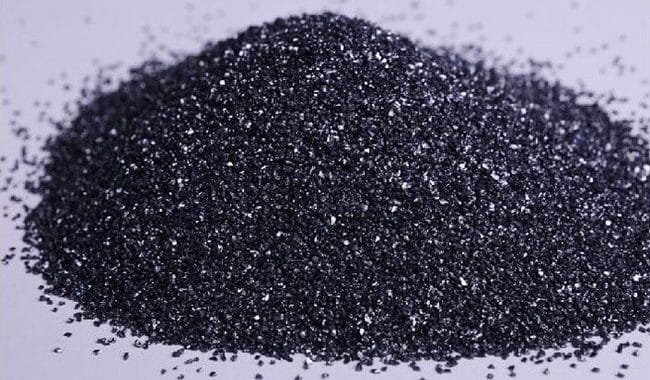
Silicon carbide has a sharp cutting action and is often used for automotive finishes, nonferrous metals, glass, stone, plastics, and other hard or brittle surfaces when the specific abrasive product is designed for that use.
It is also common in waterproof abrasive sheets used with water, but the fact that the grain is silicon carbide does not by itself make every sheet safe for wet sanding. The backing and adhesive must also be rated for wet use.
Credit: www.sandpaper.com
Wood Sanding
Aluminum oxide is a strong default for many woodworking tasks because it is widely available and durable. Silicon carbide can be useful in some finishing applications, but there is no rule that it should always be used for the final pass.
Choose the abrasive based on the finish manufacturer’s preparation requirement and the actual surface condition rather than an automatic grit schedule.
Metal Sanding
Both abrasive families can appear in metalworking products. Ferrous and nonferrous metals behave differently, and abrasive selection can also be affected by loading, heat, surface contamination, and whether the next step is coating, welding, polishing, or leaving a brushed finish.
Do not use a blanket rule that aluminum oxide is always for removal and silicon carbide always for polishing.
Glass, Stone, and Ceramics
Silicon carbide is commonly used for many hard mineral and brittle materials, but tool and abrasive manufacturers should define the appropriate product. Some operations use diamond or other abrasives instead.
Wet Sanding
Use only abrasive products marked for wet use. Water can reduce dust and loading in some processes, but it can also create slurry, corrosion, electrical hazards with unsuitable tools, or compatibility problems with the workpiece.
There is no universal need to soak abrasive paper for a fixed 10–15 minutes. Follow the abrasive manufacturer’s instructions.
Do Not Choose by Color
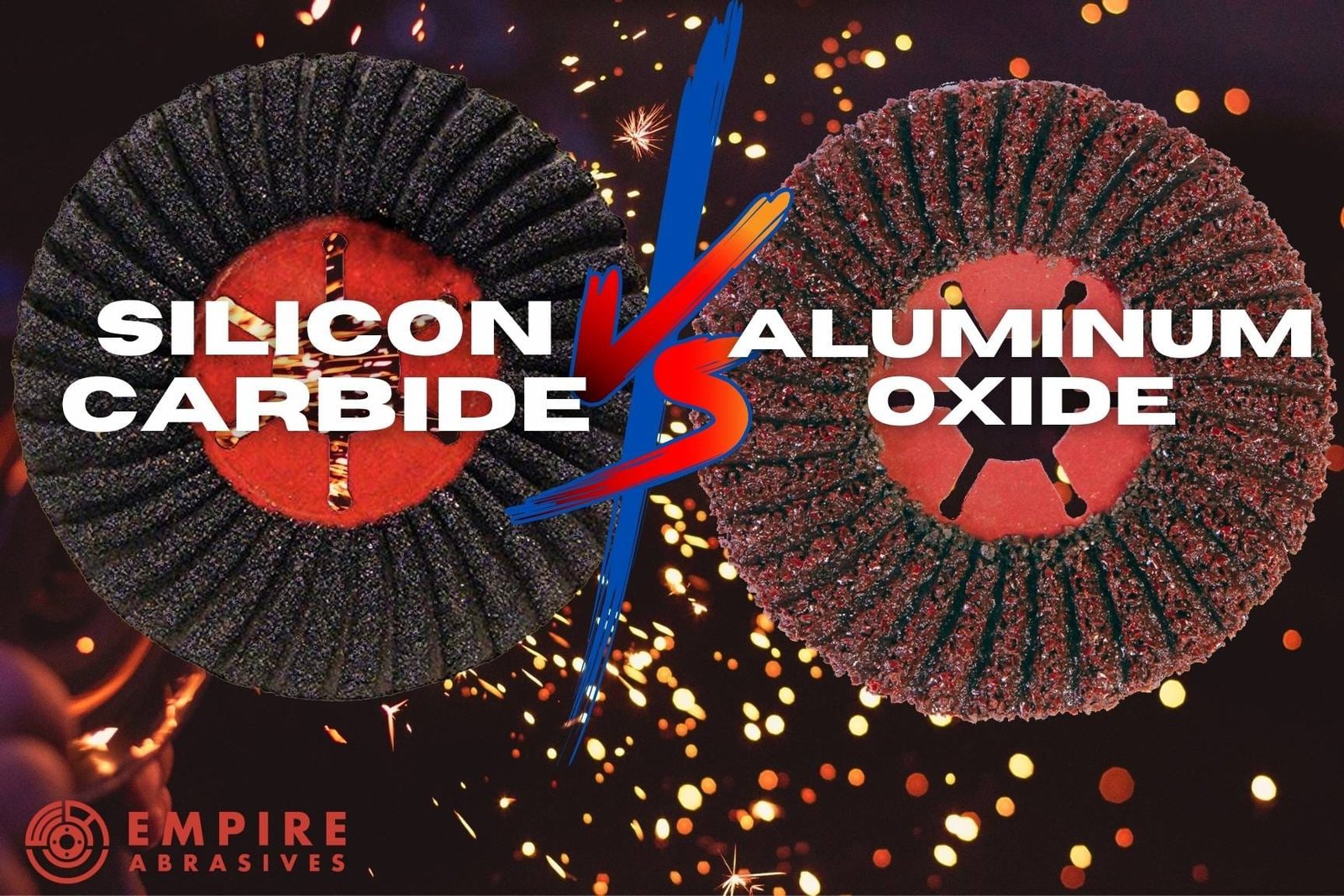
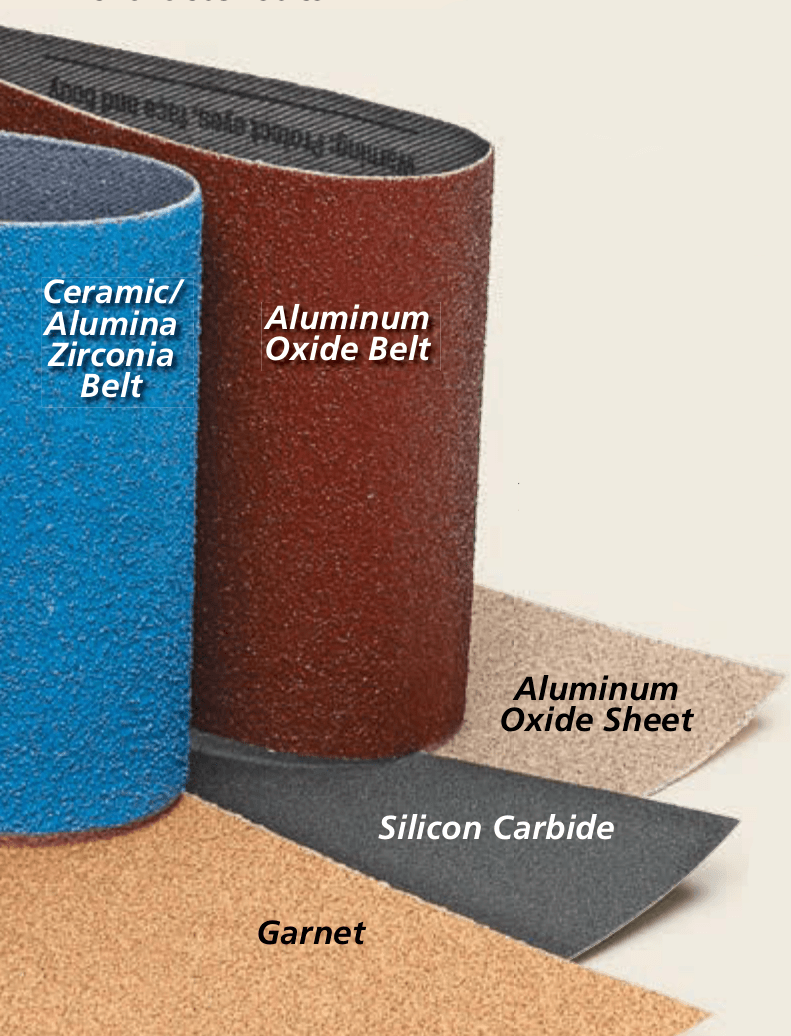
Abrasive color is not a reliable identification method. Coatings, fillers, treatments, and manufacturing choices can change appearance. Read the product specification instead.
Credit: www.empireabrasives.com
Grit Numbers Need Context
Grit number describes abrasive size within a grading system, but different standards and abrasive constructions do not always produce identical scratch patterns. Avoid treating every “P400,” “400,” or other label as interchangeable unless the grading system is known.
Power Sanders
Use only abrasives compatible with the tool, pad, speed, and dust-extraction setup. Aluminum oxide is common on power-sanding discs and belts, but silicon-carbide products can also be designed for machine use. The abrasive manufacturer’s speed and application limits control.
Common Mistakes
- Choosing by abrasive name without checking backing and coating.
- Assuming all silicon-carbide paper is waterproof.
- Choosing by color alone.
- Following a fixed grit sequence regardless of surface condition.
- Using a product outside its machine-speed or material rating.
- Assuming one abrasive family always leaves a better finish.
Safety
The workpiece dust often matters more than the abrasive grain. Sanding lead paint, stainless steel, composites, treated wood, stone, or unknown coatings can require specific controls. Use extraction and PPE appropriate to the actual material and exposure.
Compare Abrasives by Backing and Application
Aluminum oxide is widely used for sanding wood and many metals, while silicon carbide is often chosen for certain hard or brittle materials and wet-finishing applications. Neither mineral guarantees a particular finish by itself. Coating density, grain size, backing flexibility, bond, and whether the sheet is designed for wet use can change the result substantially.
For a painted panel or clear finish, start with the finish manufacturer’s recommended grit and abrasive type, and test a small inconspicuous area. For wood, sand with the grain where practical and move through an appropriate grit progression rather than jumping straight to an ultra-fine paper that may not remove deeper scratches. For metal, check whether the abrasive and backing are compatible with the alloy and any contamination controls required for the job.
Use wet sanding only when both the abrasive product and workpiece finish allow it, and keep water away from electrical tools unless specifically designed for wet use. With powered sanders, verify disc or sheet attachment, extraction holes, and the machine’s operating limits. Replace loaded or torn abrasive rather than compensating with excess pressure.
Frequently Asked Questions
Which Is Better for Wood?
Aluminum oxide is a common general-purpose choice, but select the actual product and grit from the wood condition and finish requirements.
Which Is Better for Wet Sanding?
Silicon carbide is common in wet/dry papers, but use only a product whose backing and adhesive are explicitly rated for wet use.
Can Silicon Carbide Be Used on Metal?
Yes, on many metal-finishing applications when the abrasive product is specified for that material.
Is Aluminum Oxide Always Cheaper?
No. Price varies by brand, backing, coating, grit, size, and product grade, so static per-sheet price claims age quickly.
Credit: www.woodsmith.com
Can I Substitute Silicon Carbide for Aluminum Oxide at the Same Printed Grit?
Not automatically. Cutting behavior depends on abrasive mineral, backing, grade standard and substrate. Test a compatible product before switching.
How to Compare Actual Aluminum Oxide and Silicon Carbide Products
Start with the intended job and the exact abrasive product. The grain family alone does not tell you whether a sheet is waterproof, whether a machine can safely use it, or how long it will cut. Check the abrasive’s application label for the workpiece material, grit grading system, backing type, bond, coating density and wet/dry instructions. Aluminum oxide is common in versatile woodworking sheets and powered sanding discs, while silicon carbide is frequently found in wet/dry hand-sanding papers and some hard-material finishing products. There are exceptions in both directions.
For a wood tabletop, test a compatible abrasive on a small area and judge how quickly it removes the previous scratch pattern without unnecessary stock removal. For an automotive finish, follow the paint or refinishing system’s approved grit progression and approved wet/dry process. For steel or aluminum sheet, check whether the desired result is coating adhesion, removal of scale, or cosmetic finishing. The correct products and safety precautions differ. Our metal sanding procedure guide covers the broader process and contamination control separately.
Wet/Dry Sanding: Grain Type Is Not the Safety Rating
Some silicon carbide papers are made with waterproof backing and adhesives so they can be used with a compatible liquid. Other silicon carbide papers are intended for dry use. Likewise, some non-silicon-carbide abrasive products are suitable for wet operations. Read the complete abrasive label and the tool instructions rather than choosing by mineral name or paper color. Avoid bringing liquid near a power tool that is not specifically approved for wet use; electrocution, corrosion or equipment damage can result.
When wet sanding is permitted, consider whether the liquid will damage the workpiece, swell wood, affect primer, attack a coating or contaminate the next finish. Collect and dispose of slurry according to the material and local requirements. Wet sanding does not automatically remove every inhalation or chemical hazard, especially when old paint, contaminated surfaces or metal compounds are involved.
Decision Table: Sandpaper Choice by Application
| Project | Reasonable starting point | Check before use |
|---|---|---|
| General wood smoothing | Appropriately graded aluminum oxide sheet or disc | Wood species, finish requirement, sander compatibility |
| Clear-coat defect refinement | Finish-system-approved fine abrasive | Coating cure, grit standard, wet/dry rating |
| Metal preparation | Material-rated aluminum oxide, silicon carbide or specialty product | Alloy, loading, heat and contamination |
| Glass or mineral surface | Product explicitly rated for that material | Dust/silica controls, tool speed and finished geometry |
| Wet hand-finishing | Waterproof-backed abrasive rated for the process | Substrate and lubricant compatibility |
Why Two Papers With the Same Grit Can Perform Differently
Two discs marked with a similar grit may differ in coating density, backing stiffness, abrasive treatment and bond. Open coats can resist clogging on some materials, while closed coats may provide a different cutting behavior. A flexible backing follows gentle curves but can round a crisp edge; a stiffer backing helps preserve flatness. The choice of hook-and-loop or pressure-sensitive attachment is separate again from the abrasive grain. See our published hook-and-loop sanding disc guide for attachment-system distinctions.
Inspect abrasives regularly. Replace torn or clogged products, keep backing pads clean, avoid cross-contamination between coarse and fine stages, and keep hands clear of spinning equipment. On lead-painted, stone or other hazardous surfaces, evaluate dust and respiratory controls before sanding. The safest abrasive is the one designed for the specific machine and material, operated within its instructions—not whichever grain has the more aggressive reputation.
Choose the Abrasive as a Complete Product
Grain type is only one variable. Match abrasive, grit, backing, coating, wet/dry rating, tool, and material to the specific job instead of reducing the decision to “silicon carbide vs aluminum oxide” alone.