
Choosing the right saw can make a big difference in your woodworking projects. Many beginners wonder about the differences between a band saw and a scroll saw. Both tools look similar at first, but they serve very different needs. If you’re thinking about buying your first saw or upgrading your workshop, it’s important to know what each tool does best—and where they fall short. This guide will break down the details, give real examples, and help you make a confident choice.
What Is A Band Saw?
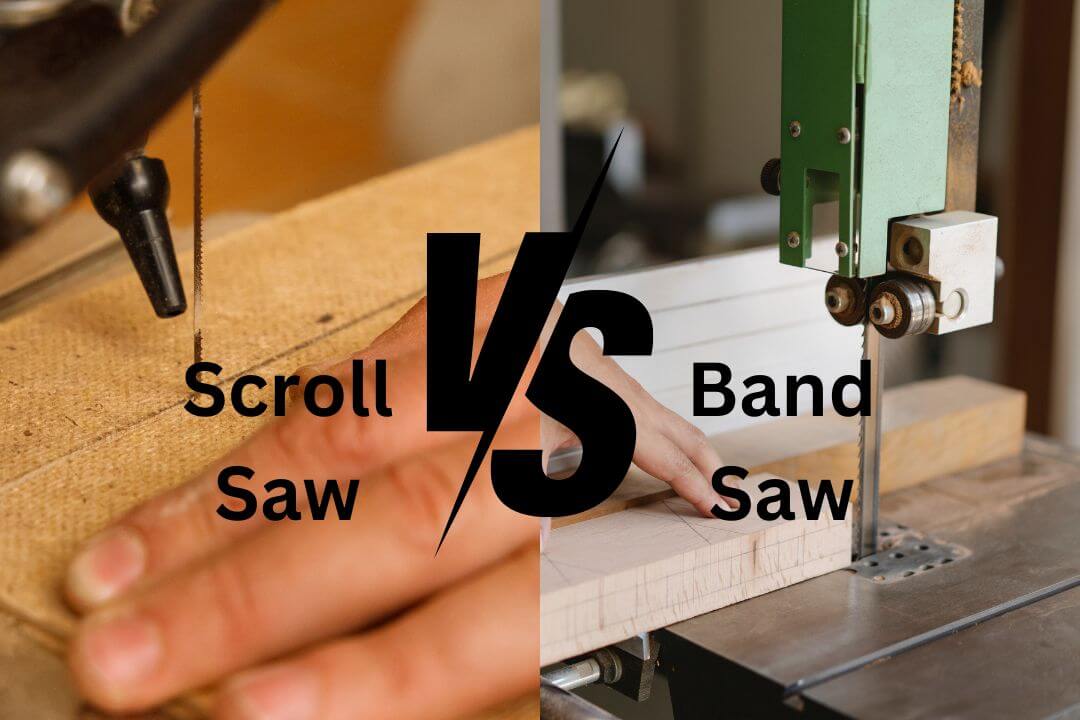
A band saw is a powerful cutting tool with a long, continuous blade that moves between two wheels. The blade is a flexible steel band with teeth on one edge. Band saws are often used for woodworking, metalworking, and even cutting meat in butcher shops. The blade moves downwards, creating smooth, straight, or curved cuts in thick materials.
Key features:
- Blade width: 1/8″ to 1″
- Cutting depth: Up to 12 inches (depending on model)
- Table size: 14″–18″ common for hobby models
- Motor power: 1/2 HP to 2 HP
Common uses: Resawing thick wood, cutting curves, making straight cuts, creating irregular shapes, and even ripping lumber.
Example: If you need to cut a 6-inch-thick hardwood slab for a table leg, a band saw can handle the job easily.
What Is A Scroll Saw?
A scroll saw uses a small, thin blade that moves up and down very quickly. The blade is fixed at both ends, attached to a saw arm that creates a reciprocating (up-and-down) motion. Scroll saws are known for their ability to make very tight, detailed cuts—often used for intricate designs, inlays, and fretwork.
Key features:
- Blade width: 1/32″ to 1/8″
- Throat size: 16″–20″ common for hobby models
- Cutting depth: Usually up to 2 inches
- Motor power: 1/8 HP to 1/4 HP
Common uses: Cutting puzzles, making decorative wooden signs, intricate scrollwork, and inside cuts (cutting shapes inside a board without entering from the edge).
Example: If you want to make a delicate wooden nameplate with script letters and inside cutouts, a scroll saw is the perfect tool.
Core Differences: Band Saw Vs Scroll Saw
It’s easy to confuse these two saws, but their differences matter a lot in real projects. Here’s a side-by-side look at the main contrasts:
| Feature | Band Saw | Scroll Saw |
|---|---|---|
| Blade Movement | Continuous loop (downward motion) | Up-and-down (reciprocating) |
| Cutting Thickness | Up to 12 inches | Up to 2 inches |
| Detail Level | Medium—good for curves, not fine detail | High—excellent for intricate shapes |
| Material Types | Wood, metal, plastics, bone | Mainly wood, thin plastics, soft metals |
| Typical Uses | Resawing, curved cuts, ripping | Inlays, puzzles, fretwork |
When To Use A Band Saw
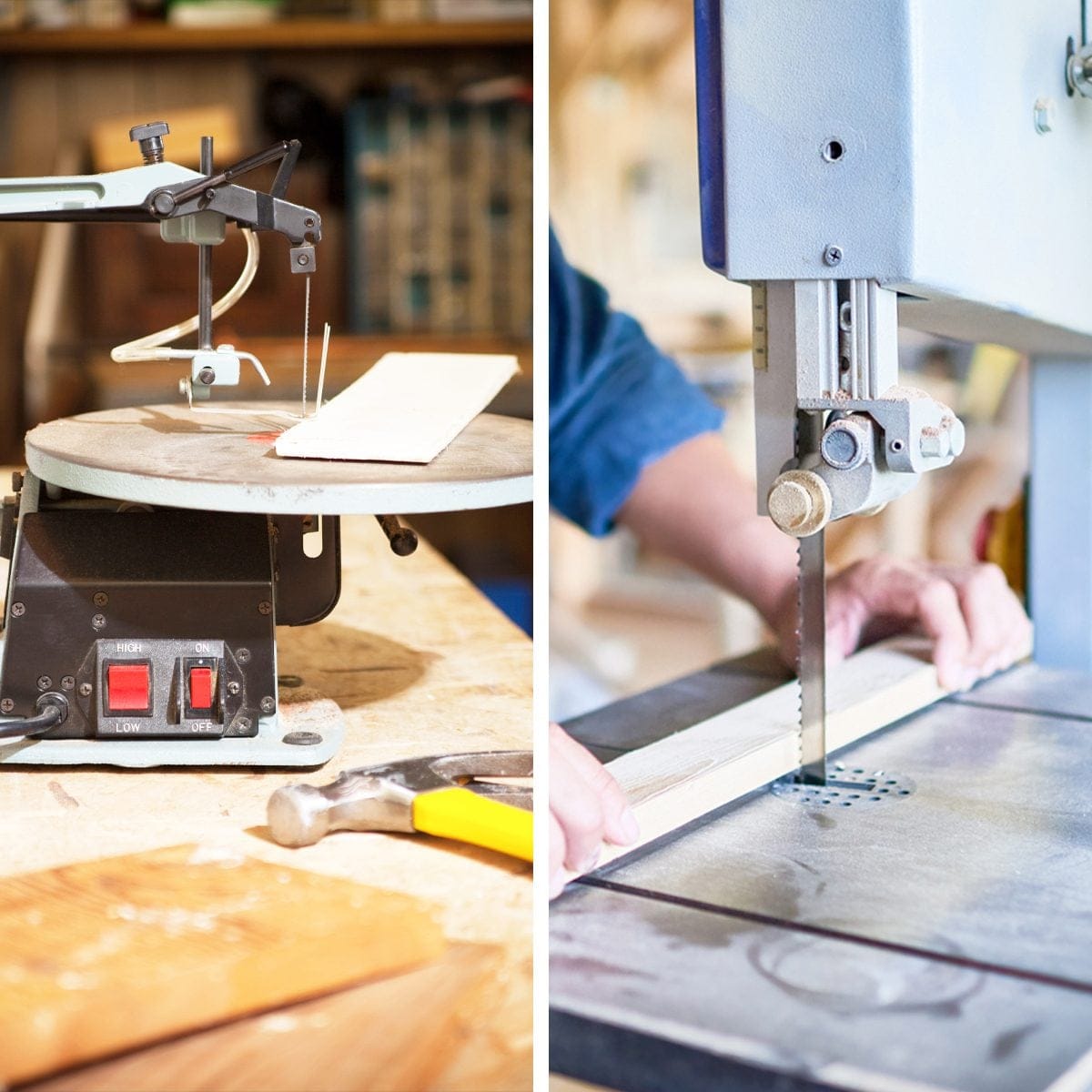
A band saw shines when you need to cut thicker materials or make long, straight cuts. It’s also great for gentle curves. If you build furniture, make boxes, or need to cut large, awkwardly shaped pieces, the band saw is likely your best choice.
Best scenarios for a band saw:
- Resawing thick boards—turning a thick board into two thinner boards.
- Cutting curves in thick wood—making table legs, chair parts, or curved cabinet pieces.
- Making repetitive straight cuts—quickly slicing many pieces to the same width.
- Working with hard materials—metal, plastic, or even bone with the right blade.
Practical insight: Many beginners don’t realize that band saws are not just for curves—they’re also excellent for ripping wood to width when a table saw isn’t available.
Credit: www.familyhandyman.com
When To Use A Scroll Saw
A scroll saw is the tool of choice for projects that demand precision and creativity. If your work involves detailed patterns, tiny turns, or inside cuts, nothing beats the scroll saw.
Best scenarios for a scroll saw:
- Intricate fretwork and scroll patterns—delicate, lacy designs that can’t be cut with other saws.
- Puzzle making—cutting tight, interlocking shapes with ease.
- Inlays and marquetry—fitting pieces together with almost no gap.
- Personalized signs and decorative art—script letters and artistic edges.
Practical insight: Scroll saws let you drill a hole in the middle of a board, thread the blade through, and start cutting from the inside. This “inside cut” is almost impossible with a band saw.
Performance: Speed, Accuracy, And Versatility
How Do These Saws Compare In Real-world Performance?
Band Saw Performance
- Speed: Band saws cut much faster, especially through thick stock.
- Accuracy: Very good for straight cuts and gentle curves, but not for fine detail.
- Versatility: Can handle a wide range of materials with the right blade.
Non-obvious tip: The quality of the blade has more impact on a band saw’s cut than most beginners think. Cheap blades tend to wander, while premium blades stay on course.
Scroll Saw Performance
- Speed: Slower, but allows more control for tiny details.
- Accuracy: Outstanding for tight turns and intricate shapes.
- Versatility: Limited to thinner materials and mostly woodworking.
Non-obvious tip: Scroll saw blades wear out quickly—having a variety of blade types (skip-tooth, double-tooth, spiral) can help solve specific cutting challenges.
Credit: glamorwood.com
Setup, Safety, And Maintenance
Band Saw Setup And Safety
- Setup: Requires careful blade alignment and tension adjustment.
- Safety: Safer than a table saw, but the exposed blade means you must keep hands away.
- Maintenance: Clean wheels and guides, check blade tracking, replace blades when dull.
Additional insight: Beginners often forget to adjust the blade guard close to the workpiece. Leaving it high makes the saw less safe and less accurate.
Scroll Saw Setup And Safety
- Setup: Easier—just install the blade and set the tension.
- Safety: One of the safest power saws; the thin blade is not likely to cause severe injury.
- Maintenance: Change blades often, keep the table clean, and check the arm pivots.
Expert tip: Some scroll saws have a quick-release tension lever, which makes blade changes much faster—a real time-saver for complex patterns.
Price And Value For Money
Cost is an important factor for most hobbyists and small shops. Here’s a realistic look:
| Type | Entry Price | Mid-Range | High-End |
|---|---|---|---|
| Band Saw | $200–$400 | $500–$900 | $1,200+ |
| Scroll Saw | $120–$250 | $300–$600 | $800+ |
Additional costs: Band saw blades can cost $15–$40 each. Scroll saw blades are much cheaper but need replacing often.
Value tip: Don’t buy the cheapest saw you can find. For both types, a solid mid-range model usually gives the best mix of power, accuracy, and lifespan.
Common Buyer Mistakes
It’s easy to pick the wrong saw or buy features you don’t need. Here are some common pitfalls:
- Confusing the two saws: Many buy a band saw hoping to do scrollwork, but the cuts are too rough. Others get a scroll saw for thick stock and struggle with underpowered cuts.
- Ignoring blade quality: Both saws need sharp, high-quality blades for best results.
- Overestimating throat size: For scroll saws, the throat size limits your project width. For band saws, it affects resaw height.
- Skipping dust collection: Both saws create a lot of dust. Plan for a dust port or shop vacuum.
- Buying based on price alone: Cheap saws can vibrate, cut poorly, or break down quickly.
Which Saw Is Right For You?
This depends on your main projects:
- Choose a band saw if you want to cut thick wood, make furniture parts, or handle a variety of materials.
- Pick a scroll saw if you love intricate designs, puzzles, or detailed art.
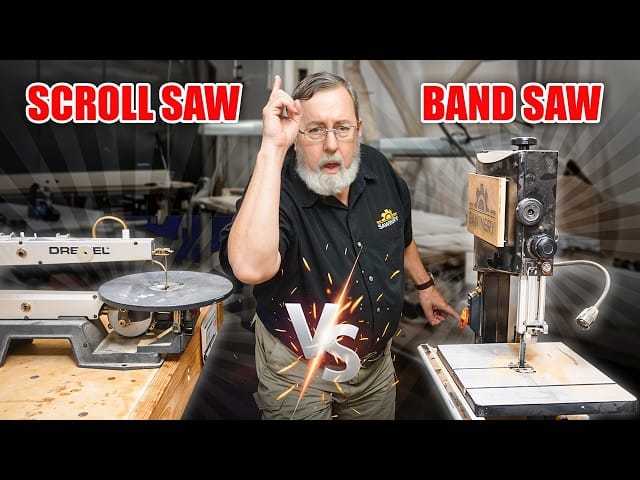
Some woodworkers end up buying both. If your budget allows, start with the tool that matches your main interests, then add the other as your skills grow.
Credit: www.youtube.com
Real-world Examples
Example 1: Making Wooden Toys
If you want to make toy cars or animals, a scroll saw is great for the detailed shapes, but a band saw helps cut the basic forms from thick stock.
Example 2: Building a Jewelry Box
A band saw is ideal for cutting the outer shape and resawing sides, while a scroll saw can cut decorative inlays or script lettering.
Example 3: Home Workshop
A band saw is more versatile for general woodworking, but if you want to sell custom name signs or puzzles, the scroll saw is the better investment.
Band Saw Vs Scroll Saw: Feature Comparison Table
For a quick overview, here’s how the two saws compare by feature:
| Feature | Band Saw | Scroll Saw |
|---|---|---|
| Best for | Thick stock, curves, resawing | Intricate designs, thin material |
| Minimum curve radius | ~1/2 inch (depends on blade width) | Almost zero (very tight turns) |
| Noise level | Moderate | Low |
| Workspace needed | Medium to large | Small |
| Ease of use | Medium—takes practice | Easy for beginners |
Final Thoughts
Choosing between a band saw and a scroll saw is easier when you focus on the kind of work you want to do. Both tools are valuable, but they serve different needs. A band saw offers power and versatility for larger, thicker pieces, while a scroll saw shines in delicate, creative detail work. Invest in good blades, match the tool to your project, and remember: sometimes the best workshop has both.
If you want more background on how saws work, check out the Wikipedia saw article for deeper reading.
Frequently Asked Questions
What Is The Main Difference Between A Band Saw And A Scroll Saw?
The main difference is in the blade and cutting style. A band saw uses a continuous loop blade for cutting thick and hard materials, while a scroll saw uses a thin, short blade for detailed, intricate cuts in thin materials.
Can A Band Saw Do Everything A Scroll Saw Can?
No. While a band saw can cut curves, it cannot make the tight, detailed turns or inside cuts that a scroll saw can. Scroll saws are made for patterns and fine details, which a band saw cannot match.
Which Saw Is Safer For Beginners?
A scroll saw is generally safer. The blade is thin and moves up and down, making serious injuries less likely. Band saws are also safe with proper use, but the continuous motion and exposed blade require more caution.
What Types Of Materials Can Each Saw Cut?
A band saw can cut wood, metal, plastics, and even bone (with the right blade). A scroll saw is best for thin wood, soft metals (like brass or copper), and thin plastics.
How Do I Choose The Right Saw For My Home Workshop?
Think about your main projects. Choose a band saw for general woodworking, furniture, or thick materials. Pick a scroll saw for art, puzzles, and intricate designs. If you want both, start with the saw you’ll use most often, then expand your workshop as your skills grow.