
A plasma cutter that lives in a truck bed or gets carried between job sites needs to earn its keep on weight and setup speed, not just cutting power. The good news is that most of today’s inverter-based plasma cutters have gotten genuinely light — many hover in the 13-20 lb range with a shoulder strap included — without giving up the dual-voltage flexibility that lets you run off a home outlet or a job-site generator. We picked the models that balance true portability with enough cutting capacity to actually be useful once you get there.
All pricing below comes live from Amazon through our product widgets, so you always see today’s number rather than a static price we typed in once.
As an Amazon Associate, Power Tools Today earns from qualifying purchases. Prices and availability are accurate as of the date shown and are subject to change.
Quick Picks
- Best Overall Portable Pick: ARCCAPTAIN 50A — 13 lbs with a shoulder strap, built for carrying anywhere
- Best Lightweight Value: FEIFANKE 60A — drag-cutting design that’s easy for beginners to carry and use
- Best for Quick Setup on the Go: Reboot 60A Large LED — auto-optimized air pressure, running in 30 seconds
- Best Higher-Duty-Cycle Portable: ARCCAPTAIN 55A Non-Touch — more staying power without much added weight
- Best Compact All-Rounder: Bestarc 50A Non-Touch Pilot Arc — 15 lbs, easy to move between job sites
Quick Comparison: Key Specs
| Model | Weight | Amperage | Max Cut | Best For |
|---|---|---|---|---|
| ARCCAPTAIN 50A | 13 lbs | 50A | 2/3″ max | Lightest carry with a shoulder strap |
| FEIFANKE 60A | Compact/light | 60A | 5/8″ max | Beginner drag-cutting |
| Reboot 60A LED | Compact | 60A | 3/4″ max | 30-second job-site setup |
| ARCCAPTAIN 55A Non-Touch | 19.8 lbs | 55A | 3/4″ max | 60% duty cycle on the move |
| Bestarc 50A Non-Touch | 15 lbs | 50A | 3/4″ max | Compact all-around use |
Specs above are manufacturer-published ratings for reference. Pricing in the product boxes below is live and may differ from the table at the time you’re reading this.
1. ARCCAPTAIN 50A Plasma Cutter — Best Overall Portable Pick
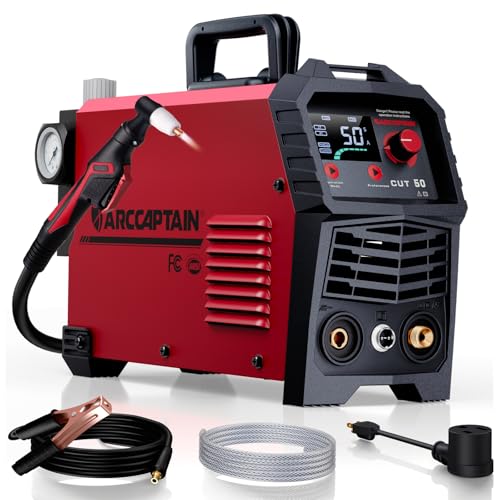
At just 13 lbs with an included shoulder strap, this is one of the easiest full-featured plasma cutters to sling over a shoulder and carry into a job site. ARCCAPTAIN didn’t strip down capability to hit that weight — you still get dual 110V/220V input, a digital LED display, and adjustable post-flow cooling. The smart cooling fan is also noticeably quieter than bare-bones competitors, which matters more than you’d think when you’re working in a shared shop or near a house.
| Pros | Cons |
|---|---|
| 13 lbs is genuinely easy to carry all day | 2/3″ max cut is enough for most jobs, not the biggest capacity here |
| Included shoulder strap makes transport simple | Standard pilot arc, not non-touch |
| Quiet smart-fan cooling system | Torch cable length is on the shorter side |
2. FEIFANKE 60A Plasma Cutter — Best Lightweight Value

FEIFANKE built this one around drag-cutting, meaning you simply rest the torch nozzle on the metal and guide it along instead of holding a precise standoff distance. That’s a genuinely useful feature for a portable machine, since you’re often cutting in awkward positions or without a steady work surface. The blow-back ignition also skips high-frequency arc starting entirely, so it won’t interfere with nearby electronics — handy on a job site with sensitive equipment around.
| Pros | Cons |
|---|---|
| Drag-cutting is easy and forgiving for beginners | Newer brand with a shorter track record |
| Blow-back ignition avoids HF electronic interference | Digital display is basic compared to premium units |
| Auto dual-voltage detection, no manual switching | Limited accessory bundle out of the box |
3. Reboot 60A Plasma Cutter (Large LED) — Best for Quick Setup on the Go

When you’re setting up on an unfamiliar job site, the last thing you want is to fumble with manual air pressure adjustments before you can even start cutting. This Reboot unit auto-optimizes air pressure and claims a 30-second setup — plug in, connect air, and go. The non-contact pilot arc starts from a short standoff distance too, which helps protect the nozzle if you’re working on uneven or rough scrap metal that’s common on mobile jobs.
| Pros | Cons |
|---|---|
| Auto air pressure optimization speeds up setup | Still needs a compressed air source you carry separately |
| Non-contact pilot arc protects the nozzle on rough metal | Pricier than the entry-level options here |
| Large LED display is easy to read outdoors | Dual voltage requires knowing your job-site power source |
4. ARCCAPTAIN 55A Non-Touch Pilot Arc — Best Higher-Duty-Cycle Portable

If your portable work involves more than a few quick cuts per stop, the 60% duty cycle on this ARCCAPTAIN unit gives you meaningfully more run time before it needs to cool down. At 19.8 lbs with a shoulder strap it’s a bit heavier than the lightest options here, but that’s a small tradeoff for the extra staying power and non-touch pilot arc, which starts cleanly through rust and paint without any prep work — useful when you’re cutting whatever material shows up on site.
| Pros | Cons |
|---|---|
| 60% duty cycle beats most portables at this weight | Heavier than the lightest picks on this list |
| Non-touch pilot arc handles rusty or painted metal | Air pressure is set manually via regulator |
| Shoulder strap included for job-site carrying | Needs a dedicated 240V circuit for max output |
5. Bestarc 50A Non-Touch Pilot Arc — Best Compact All-Rounder
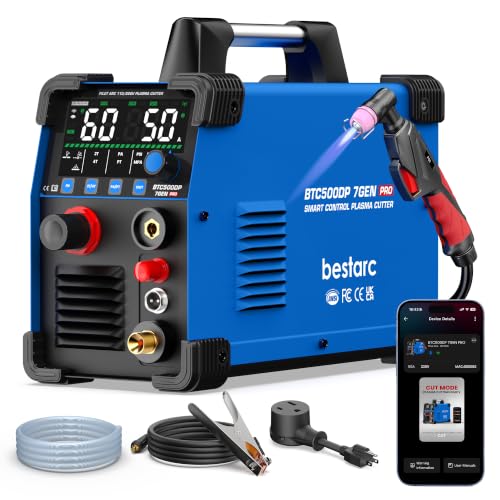
At 15 lbs, Bestarc’s non-touch unit sits right in the sweet spot between the lightest carry-anywhere options and the higher-capacity machines that trade weight for duty cycle. It’s specifically built with portability in mind — the company markets it explicitly around moving “between job sites” — while still including a non-touch pilot arc and a built-in air pressure sensor that most budget-focused competitors skip.
| Pros | Cons |
|---|---|
| 15 lbs strikes a good balance of weight and capability | Stock can run low during deal pricing windows |
| Non-touch pilot arc starts cleanly on dirty metal | 3/4″ max cut needs a slow, careful pass |
| Built-in air pressure sensor with front panel readout | No carrying case included, just the strap |
Things to Consider Before You Buy
Weight is only part of the portability equation — setup time and power flexibility matter just as much once you’re actually on site. Dual 110V/220V input is close to a must-have for a portable machine, since you rarely know in advance what outlet you’ll be plugging into. A non-touch pilot arc is also worth prioritizing for mobile work: you’re more likely to be cutting scrap, reclaimed material, or whatever shows up on the job rather than clean shop stock, and not having to grind a starting point first saves real time.
Don’t forget that “portable” only covers the cutter itself — you’ll still need a way to bring compressed air with you, whether that’s a small portable compressor or access to one on site. Factor that into your total setup weight and cost before committing to a machine based on its spec sheet alone.
Related Guides
FAQ
How much do portable plasma cutters typically weigh?
Most inverter-based portable units in this category run between 13 and 20 lbs, with the lightest options built specifically around a shoulder strap for one-handed carrying.
Can I run a portable plasma cutter off a standard household outlet?
Yes, at reduced amperage. Most dual-voltage units can run on 110V for lighter cutting, but you’ll need a 220-240V circuit to access their full rated amperage and cutting thickness.
Do I still need an air compressor if the cutter is portable?
Most portable plasma cutters in this roundup require an external compressed-air source, so plan on bringing a suitable compressor unless the specific model includes a built-in air compressor or pump. Always check the exact model’s air requirements before buying.
Prices and availability shown above are pulled live from Amazon and can change at any time. Always confirm the current price and specs on the product page before purchasing.
