
Keeping batteries at the right temperature is more important than many people realize. From smartphones to electric cars, the power and life of a battery depend on how and where you store it. If you have ever wondered why your battery dies faster in summer or refuses to charge in winter, temperature is often the reason. This guide explains everything you need to know about battery storage temperature—what works, what to avoid, and how to get the most from your batteries.
Why Battery Storage Temperature Matters
Batteries are sensitive to heat and cold. High or low temperatures can cause permanent damage. When you store a battery at the wrong temperature, you risk reducing its lifespan, lowering its capacity, or even creating safety hazards. This is true for all types: lithium-ion, nickel-metal hydride (NiMH), lead-acid, and even common alkaline batteries.
Temperature affects chemical reactions inside the battery. Too much heat speeds up reactions, causing swelling or leaks. Cold slows everything down, making batteries weaker or unable to deliver power. Many people don’t realize that storing a battery fully charged or empty at the wrong temperature can cause capacity loss that cannot be reversed.
Ideal Storage Temperatures For Different Battery Types
Every battery type has a different “sweet spot” for storage. Let’s break down the most common types and their recommended temperatures.
| Battery Type | Recommended Storage Temperature | Relative Humidity | State of Charge |
|---|---|---|---|
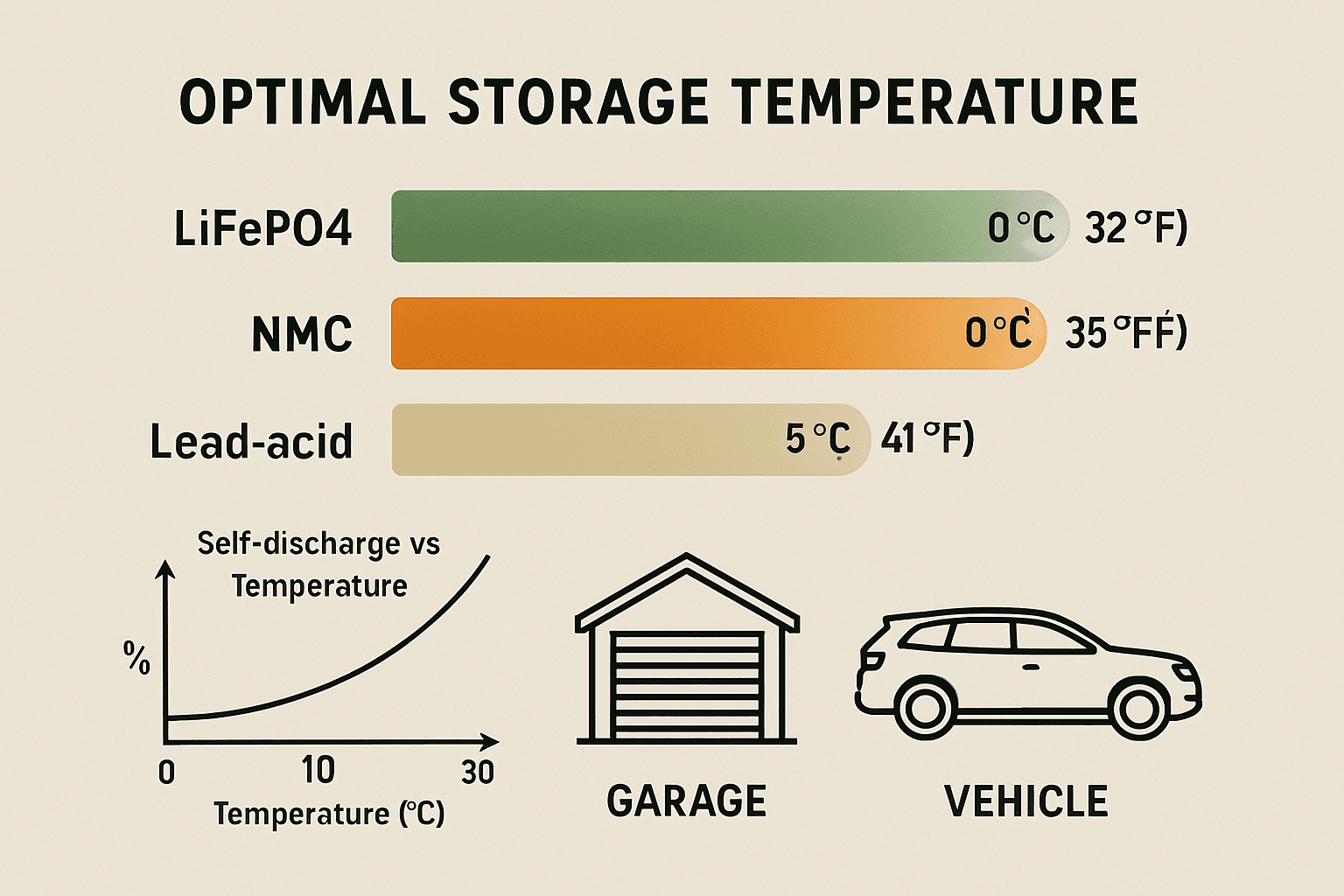
| Lithium-ion | 15°C–25°C (59°F–77°F) | ~50% | 40%–60% |
| Nickel-Metal Hydride (NiMH) | 0°C–25°C (32°F–77°F) | ~50% | 40%–60% |
| Lead-acid | 10°C–20°C (50°F–68°F) | ~50% | Fully charged |
| Alkaline | 10°C–25°C (50°F–77°F) | ~35–65% | Any |
Lithium-ion Batteries
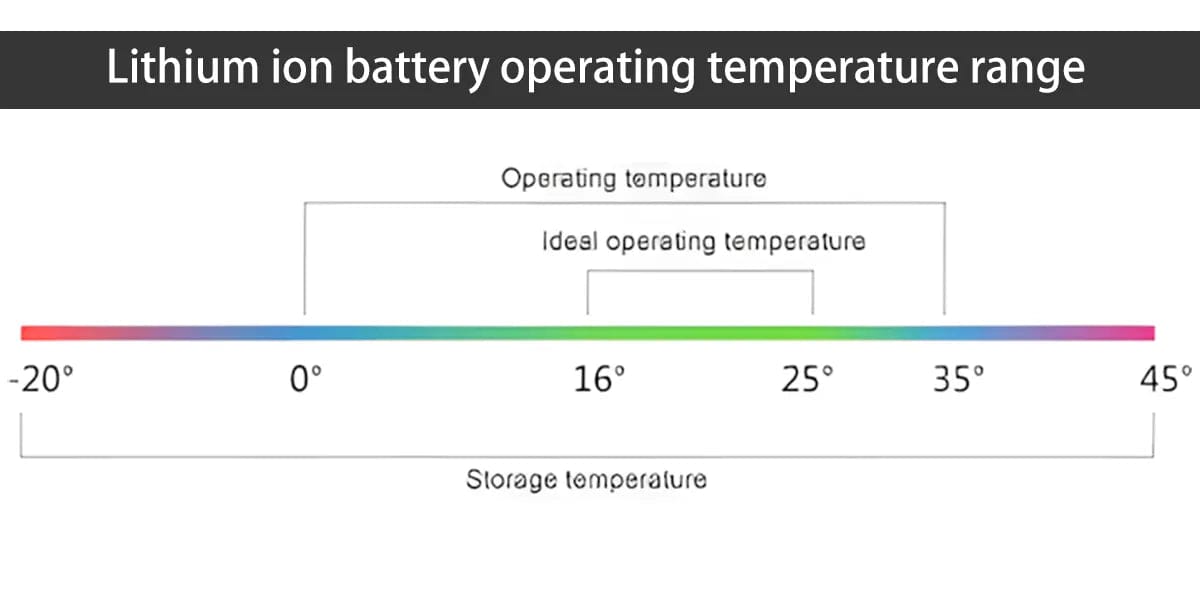
Lithium-ion batteries are used in most modern devices, from laptops to electric vehicles. Their chemistry is powerful but sensitive. The best storage temperature is 15°C to 25°C (59°F to 77°F). Going above 30°C (86°F) for long periods can cause capacity loss. Below 0°C (32°F), the battery can freeze internally.
For long-term storage, charge lithium-ion batteries to 40-60% and check every 3-6 months. Never store them fully charged or fully empty, as both extremes can damage them. Many people forget to check the charge level during storage, only to find their battery dead and unusable months later.
Nickel-metal Hydride (nimh) Batteries
NiMH batteries are found in cameras, toys, and hybrid cars. They are less sensitive to cold but can degrade in heat. Store at 0°C to 25°C (32°F to 77°F) with 40-60% charge. Extreme heat can cause permanent capacity loss. Unlike lithium-ion, NiMH can sometimes be revived after deep discharge, but the best practice is to avoid full depletion.
Lead-acid Batteries
Lead-acid batteries are used in cars, backup systems, and large-scale storage. These batteries should be stored at 10°C to 20°C (50°F to 68°F) and always fully charged. If stored empty, lead-acid batteries sulfate, which quickly destroys their ability to hold charge. Cold storage slows self-discharge, but freezing a discharged lead-acid battery can crack it.
Alkaline Batteries
Alkaline batteries are used in remotes, clocks, and flashlights. They tolerate a wider range: 10°C to 25°C (50°F to 77°F). They can be stored at room temperature, and there’s no need to maintain a certain charge level. Storing them in the fridge is not recommended due to condensation risk.
Credit: www.tycorun.com
How Heat And Cold Affect Batteries
Storing a battery in the wrong temperature does more than just reduce its charge. It can make the battery unsafe or unusable. Let’s explore what happens inside your battery:
Effects Of Heat
- Faster Chemical Reactions: Heat speeds up internal reactions, causing batteries to age faster.
- Swelling: Excessive heat can make lithium-ion batteries swell, which is dangerous.
- Electrolyte Loss: In lead-acid and NiMH batteries, heat evaporates the liquid inside.
- Permanent Capacity Loss: For every 10°C (18°F) increase above room temperature, lithium-ion batteries may lose up to 20% more capacity per year.
Effects Of Cold
- Slower Reaction Rates: Cold makes batteries deliver less power.
- Freezing Damage: Lead-acid and lithium-ion batteries can be damaged if stored below freezing while discharged.
- Temporary Loss: Most cold damage is reversible—let the battery warm up before use.
Many people keep batteries in their car or garage, not realizing these places can get extremely hot or cold. This mistake is a common reason for early battery failure.
Short-term Vs Long-term Storage
How you store a battery for a few days is different from storing it for months or years. This is a detail beginners often overlook.
Short-term Storage
If you’re storing batteries for a week or less, room temperature is usually fine. Make sure they’re not exposed to direct sunlight, heaters, or freezing temperatures. For devices, remove batteries if you won’t use them for more than a week to avoid leakage.
Long-term Storage
For periods longer than a month, extra care is needed:
- Store in a cool, dry place.
- Use the recommended state of charge for your battery type.
- Check and recharge (if needed) every 3–6 months.
- Avoid storage areas with high humidity, as moisture can cause corrosion.
Credit: www.anernstore.com
Common Mistakes In Battery Storage
Many battery problems start with a simple mistake during storage. Here are errors to avoid:
- Storing in the fridge/freezer: Moisture can enter and cause rust or short circuits.
- Leaving batteries in devices: Devices can slowly drain batteries, leading to leaks.
- Stacking batteries incorrectly: Mixing old and new batteries can cause leaks.
- Ignoring humidity: High humidity can cause corrosion, especially on the contacts.
- Storing fully charged lithium-ion batteries: This can speed up capacity loss.
Practical Tips For Safe Battery Storage
Getting the most from your batteries is about careful storage. Here’s how to do it right:
- Label batteries with the date you store them.
- Store in original packaging or a plastic case to prevent short circuits.
- Keep away from metal objects (like keys or coins).
- Store in a dedicated drawer or box, away from direct sunlight.
- For rechargeable batteries, recharge every few months.
- If you notice swelling, leakage, or a strange smell, dispose of batteries safely.
Battery Storage For Special Situations
Some people need to store large numbers of batteries, or batteries for special uses (like in solar systems or emergency kits). These situations require extra attention.
Electric Vehicle And Solar Batteries
For electric vehicle (EV) and solar storage systems, temperature control is critical. Many modern battery packs have built-in thermal management. Still, if you won’t use your EV for months, store it at a partial charge (40-60%) and in a cool garage. For solar backup batteries, follow manufacturer advice and check charge levels regularly.
Emergency Kits
Batteries for emergency use should be stored at room temperature and checked yearly. Consider using lithium primary (non-rechargeable) batteries, as they have a much longer shelf life and handle temperature changes better.
Comparing Battery Performance By Storage Temperature
To understand how temperature affects battery lifespan, see this comparison:
| Storage Temperature | Lithium-ion (after 1 year) | NiMH (after 1 year) | Lead-acid (after 1 year) |
|---|---|---|---|
| 0°C (32°F) | ~98% capacity left | ~95% capacity left | ~90% capacity left |
| 20°C (68°F) | ~96% capacity left | ~90% capacity left | ~85% capacity left |
| 40°C (104°F) | ~80% capacity left | ~70% capacity left | ~60% capacity left |
This shows why you should avoid hot places like attics, sheds, or car interiors for long-term battery storage.
Credit: www.anernstore.com
How To Recognize Battery Damage From Poor Storage
Not all battery damage is visible, but these signs mean your battery suffered from poor storage:
- Swelling or bulging
- Leaking fluid or corroded contacts
- Cannot hold charge
- Battery feels unusually hot or cold
If you see or smell anything unusual, do not use the battery—dispose of it following local recycling guidelines.
Recycling And Safe Disposal
When batteries reach the end of their life, proper disposal is important. Never throw batteries in regular trash. Most cities have recycling programs for lithium-ion, NiMH, and lead-acid batteries. Alkaline batteries can often go in regular trash, but recycling is still better for the environment.
Recycling reduces pollution and recovers valuable materials. For more information, check your local government’s recycling website or visit EPA Battery Recycling Guide.
Frequently Asked Questions
What Happens If I Store My Batteries In A Hot Car?
High temperatures can cause batteries to leak, swell, or lose capacity quickly. Lithium-ion batteries are especially sensitive and may even become dangerous. Always store batteries in a cool, dry place.
Is It Safe To Keep Batteries In The Refrigerator?
No, it is not recommended. The fridge is humid, which can cause corrosion and condensation. Modern batteries do not need to be stored cold. Room temperature is best.
How Often Should I Check Batteries In Storage?
For rechargeable batteries, check every 3–6 months. Recharge to 40–60% if needed. For non-rechargeable batteries, inspect for leaks or corrosion once a year.
Can Cold Weather Ruin My Batteries?
Extreme cold can temporarily reduce capacity. For rechargeable batteries, avoid charging them below 0°C (32°F). Most cold-related problems reverse when the battery returns to room temperature, but freezing a discharged lead-acid or lithium-ion battery can cause permanent damage.
How Do I Know When A Battery Should Be Recycled?
Recycle if you see swelling, leaks, corrosion, or if the battery cannot hold a charge. Always follow local recycling rules for safe disposal.
Battery storage temperature is one of the most important factors for battery health. By keeping batteries at the right temperature and charge, you extend their life, improve safety, and reduce costs. Treat your batteries well, and they will serve you much longer—saving you frustration and money.