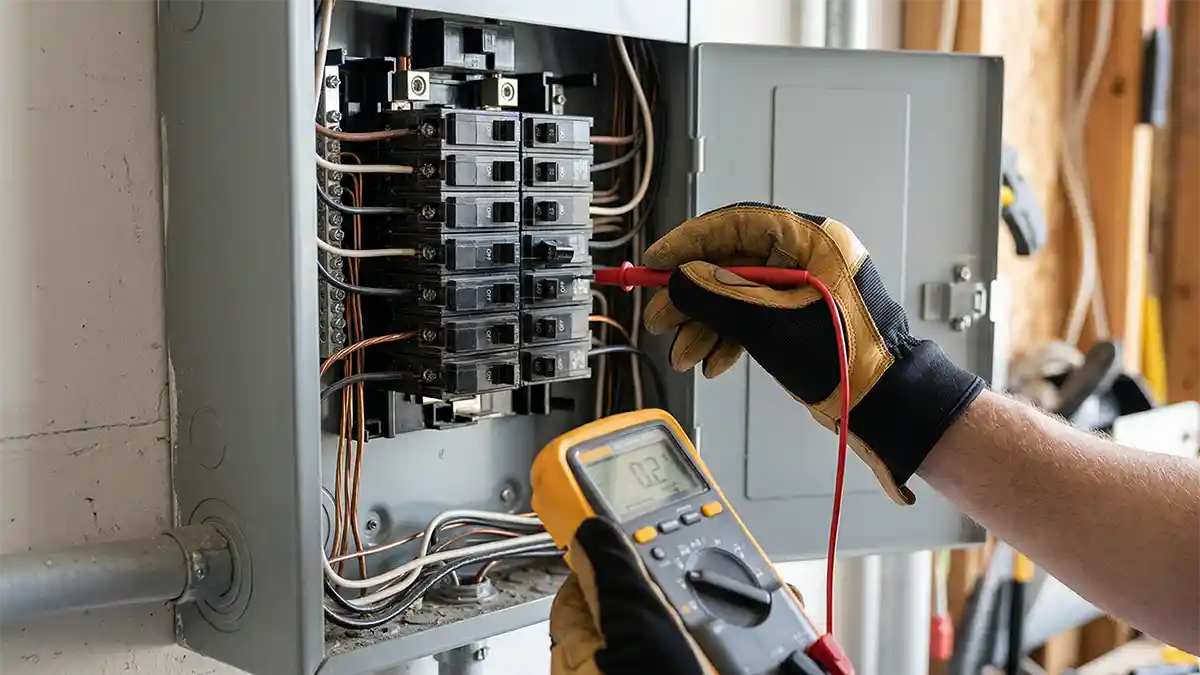
Multimeter Category Rating Cat III Explained: Safety & Usage Guide
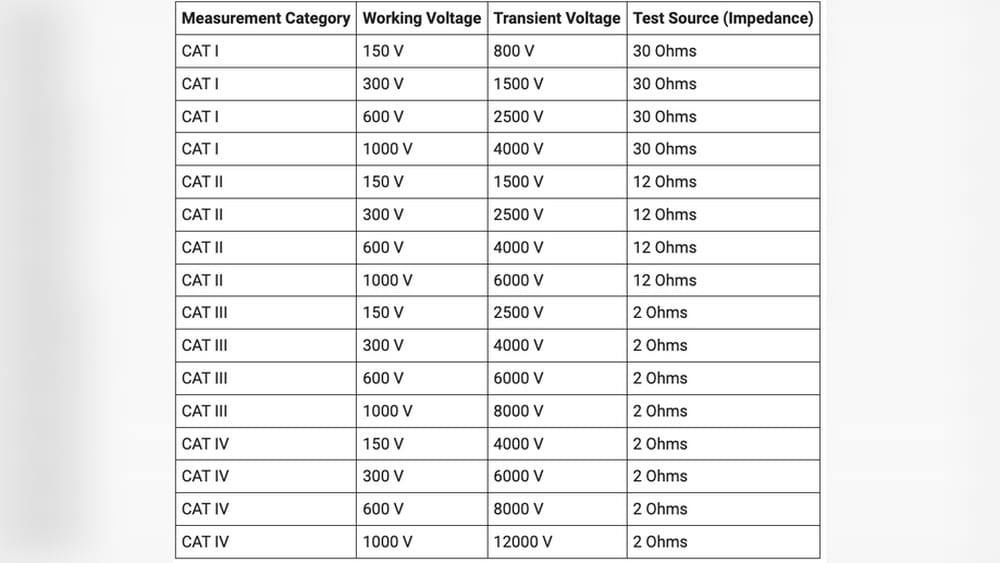
CAT III on a multimeter means it is designed for higher-energy electrical environments than CAT II. Learn what that rating really covers and how to choose safely.
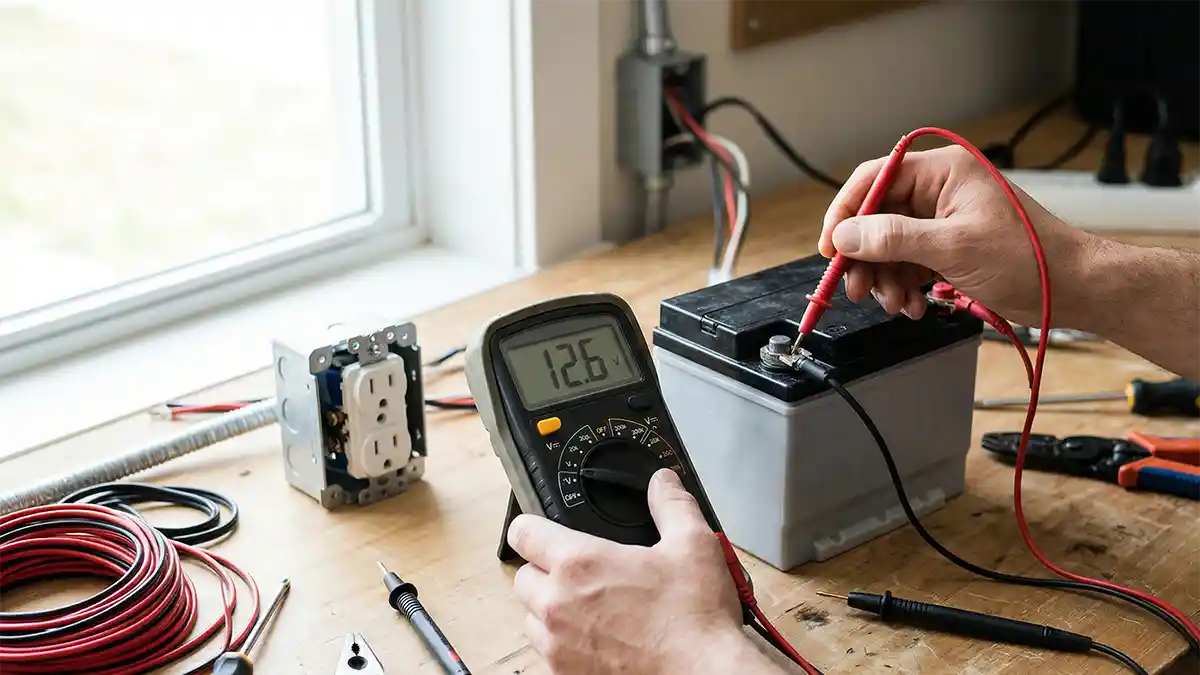
Use the AC voltage setting (V~) for household outlets, light switches, and anything powered from the wall. Use the DC voltage setting (V=) for batteries, car circuits, solar panels, and any circuit powered by a battery or DC power supply. Using the wrong setting gives you a zero reading or an incorrect value — it …
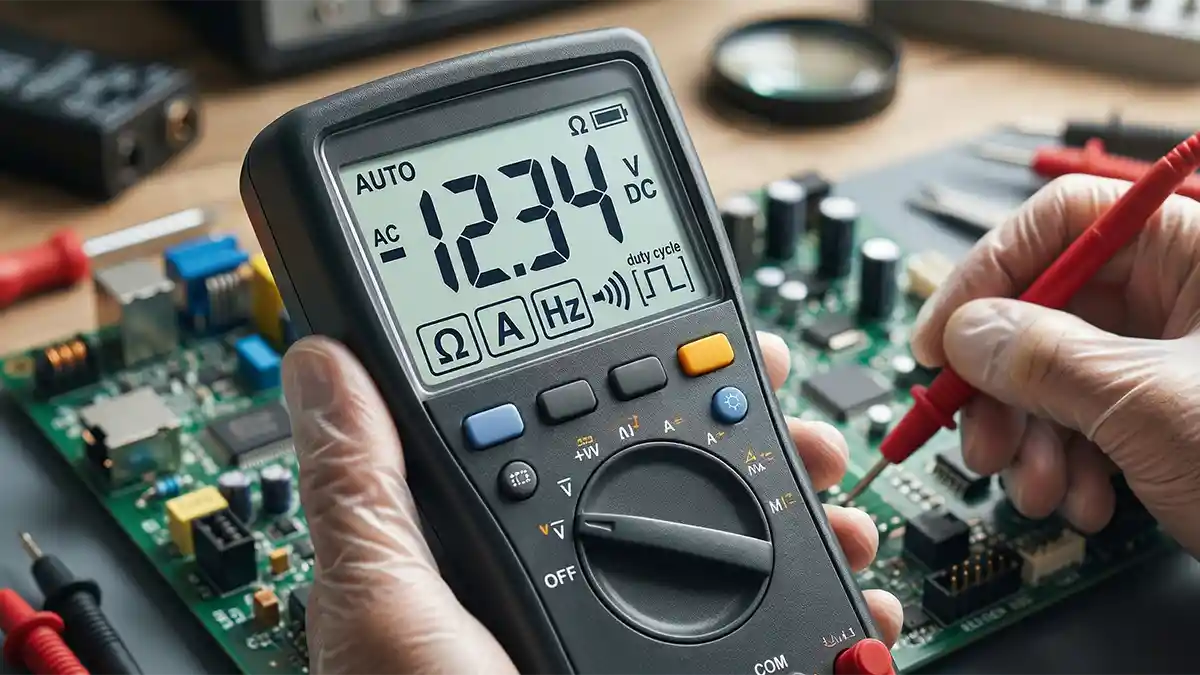
Reading a multimeter display correctly means understanding the numbers, units, decimal points, and mode symbols on screen. The large number is your measurement. The unit shown (V, mV, A, mA, Ω, kΩ, MΩ) tells you what you’re measuring. The mode indicator (V~, V=, Ω, A~, A=) confirms your selected function. This guide explains every element …
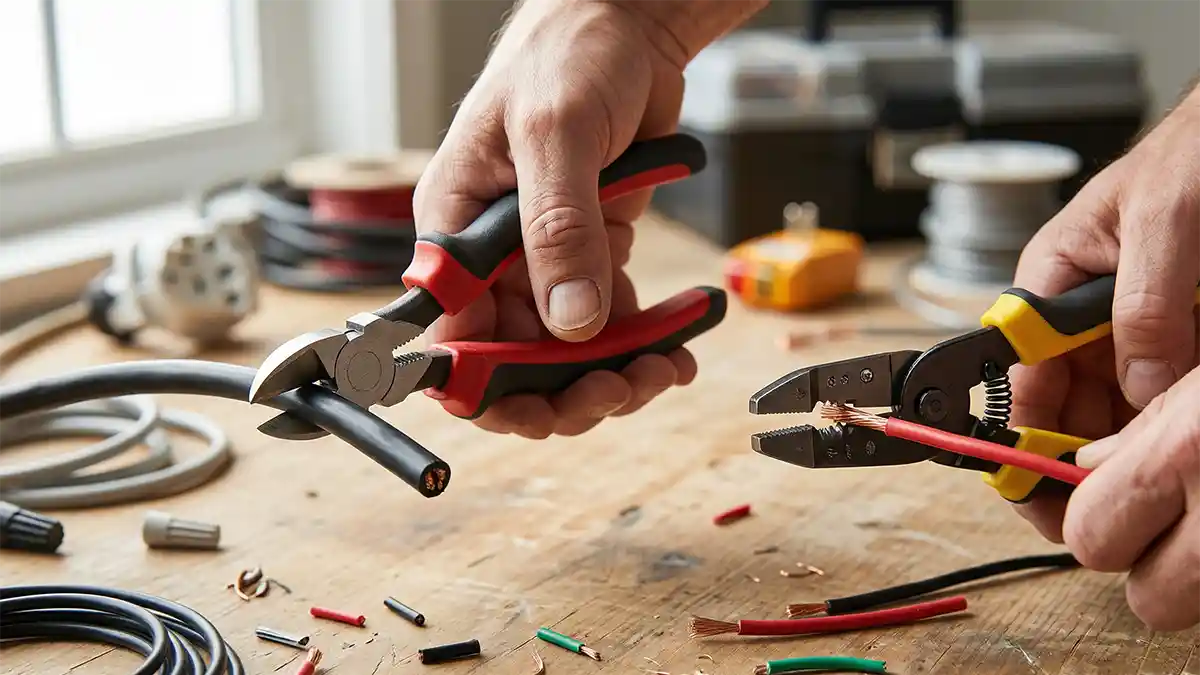
A wire cutter cuts through wire — it severs the conductor and insulation entirely. A wire stripper removes the insulation from the end of a wire without cutting the conductor underneath. You need both tools for most electrical wiring work. Use the cutter to cut wire to length; use the stripper to prepare the ends …
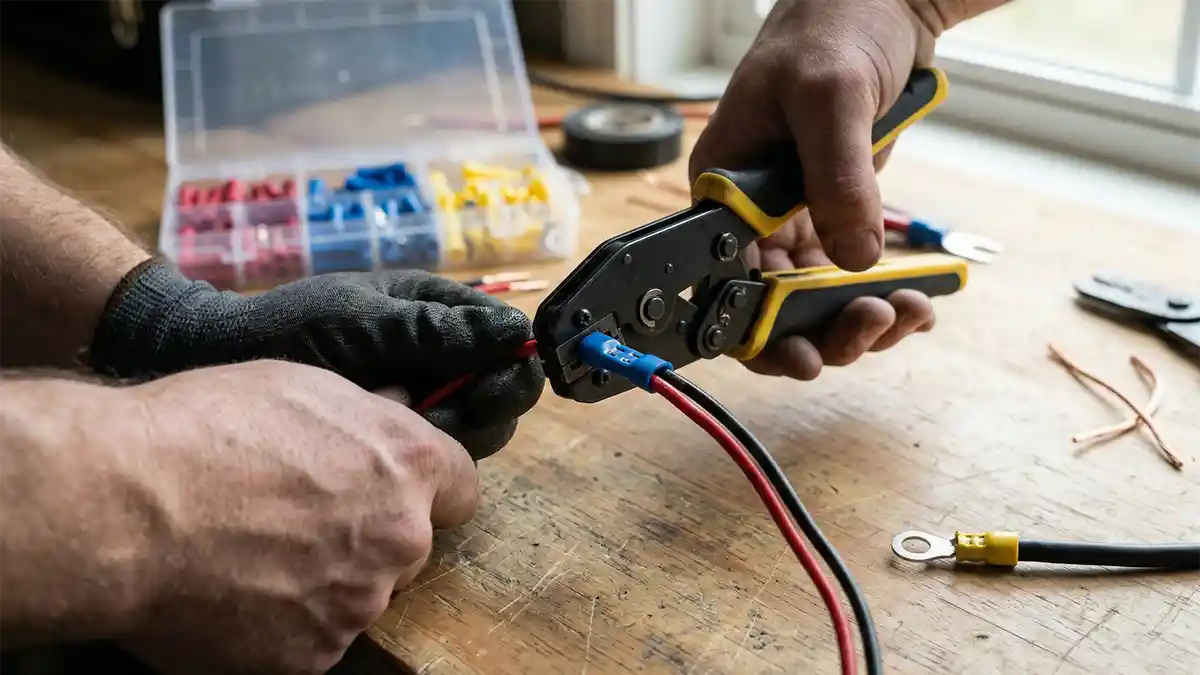
Crimping wire connectors creates a gas-tight mechanical and electrical connection between a wire and a terminal without soldering. Done correctly, a crimp is as reliable as a solder joint — often more so in high-vibration environments. The key is using the right connector for the wire gauge, the right crimping tool, and applying full crimping …
A conduit bender shapes rigid or EMT conduit into precise angles so wire runs can navigate walls, ceilings, and obstacles without kinking. The key skills are reading the bender’s built-in markings correctly, applying consistent foot pressure, and measuring from the correct reference point. This guide covers the three most common bends: the 90-degree stub-up, the …
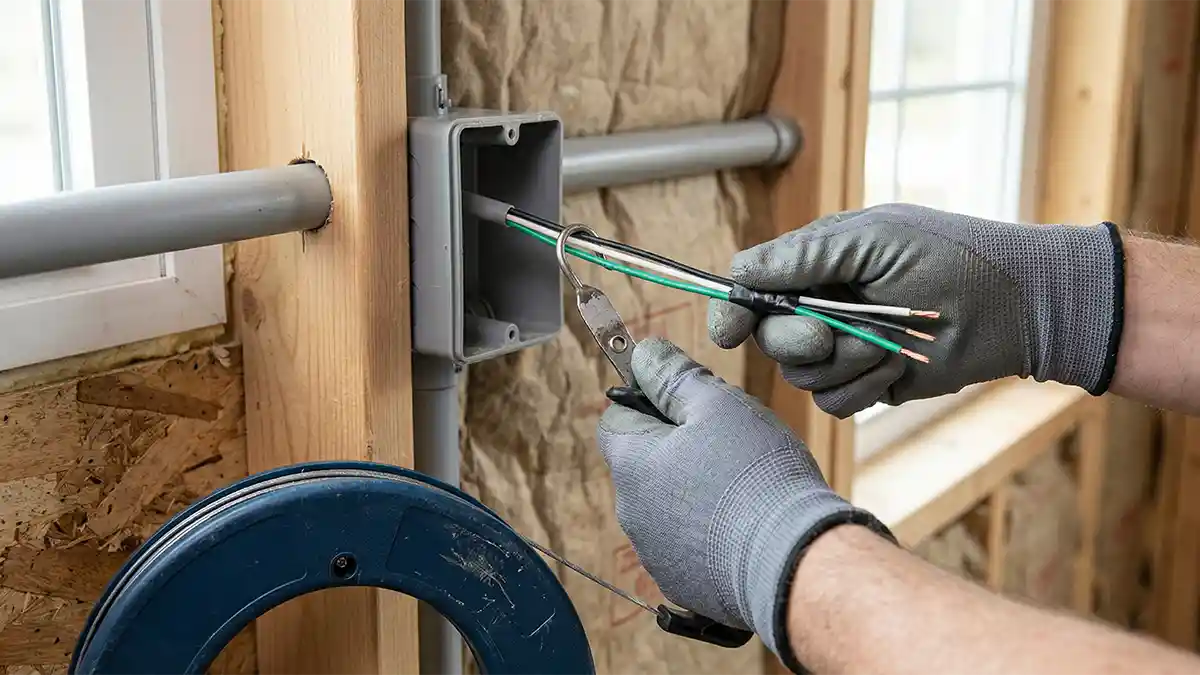
Fish tape is a long, flexible steel or fiberglass ribbon coiled in a reel that’s pushed through conduit or wall cavities to pull wire from one end to the other. You thread the tape through the conduit, attach the wire to the tape’s hook at the far end, then reel the tape back to pull …
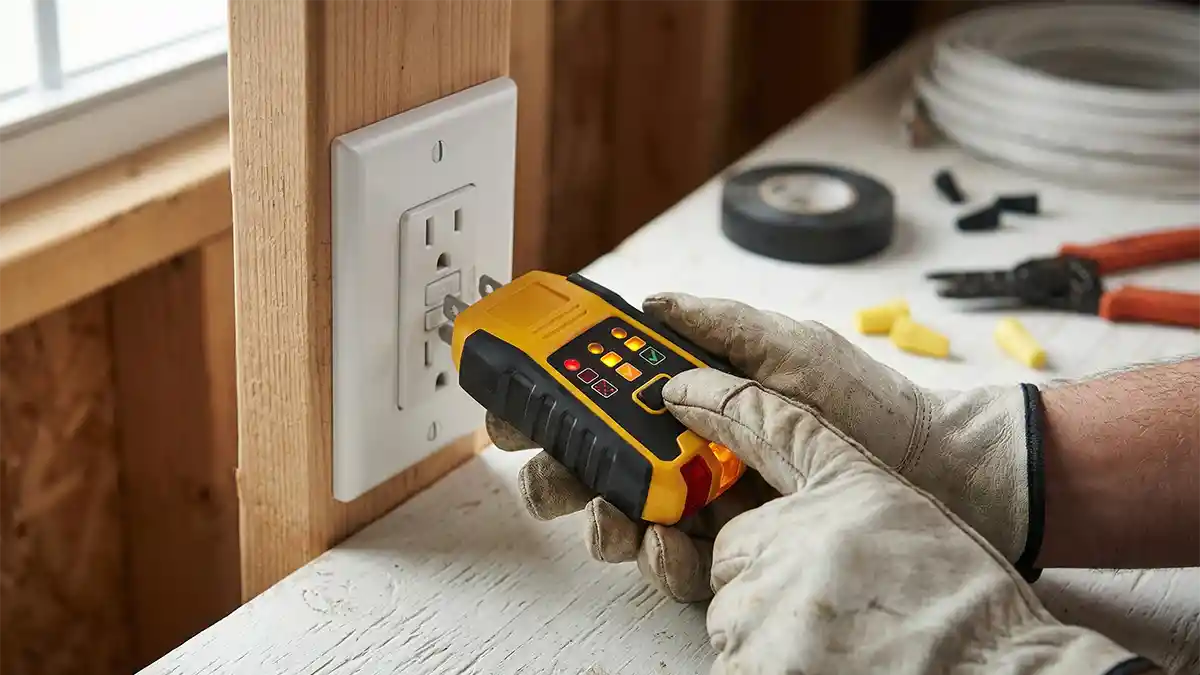
A GFCI outlet tester is a plug-in device that checks three things simultaneously: whether the outlet is correctly wired, whether polarity is correct, and whether GFCI protection works. It’s one of the fastest electrical safety checks a homeowner can do — plug it in, read the lights, press the test button. This guide explains every …
An electrical short occurs when current takes an unintended low-resistance path — usually hot-to-ground or hot-to-neutral directly without passing through the intended load. The result is a breaker that trips immediately when reset, or a fuse that blows as soon as power is restored. Finding a short requires systematically isolating the circuit section by section …
Continuity testing checks whether a complete electrical path exists between two points. If the path is unbroken, the multimeter beeps. If the path is broken (open circuit), it’s silent and shows OL. It’s one of the most useful tests for diagnosing broken wires, failed fuses, faulty switches, and bad connections — and it takes about …