
If you are starting with woodworking or want to improve your home projects, you might wonder which saw to choose: the circular saw or the miter saw. Both are powerful tools that help you cut wood and other materials, but they serve different purposes. Picking the right one can make your work easier, faster, and safer. Many beginners get confused because these saws look similar at first, but they have key differences that matter a lot in real projects.
Let’s break down what each saw does, how they compare, and which one is best for your needs. By the end, you’ll know exactly what to choose for your workbench.
What Is A Circular Saw?
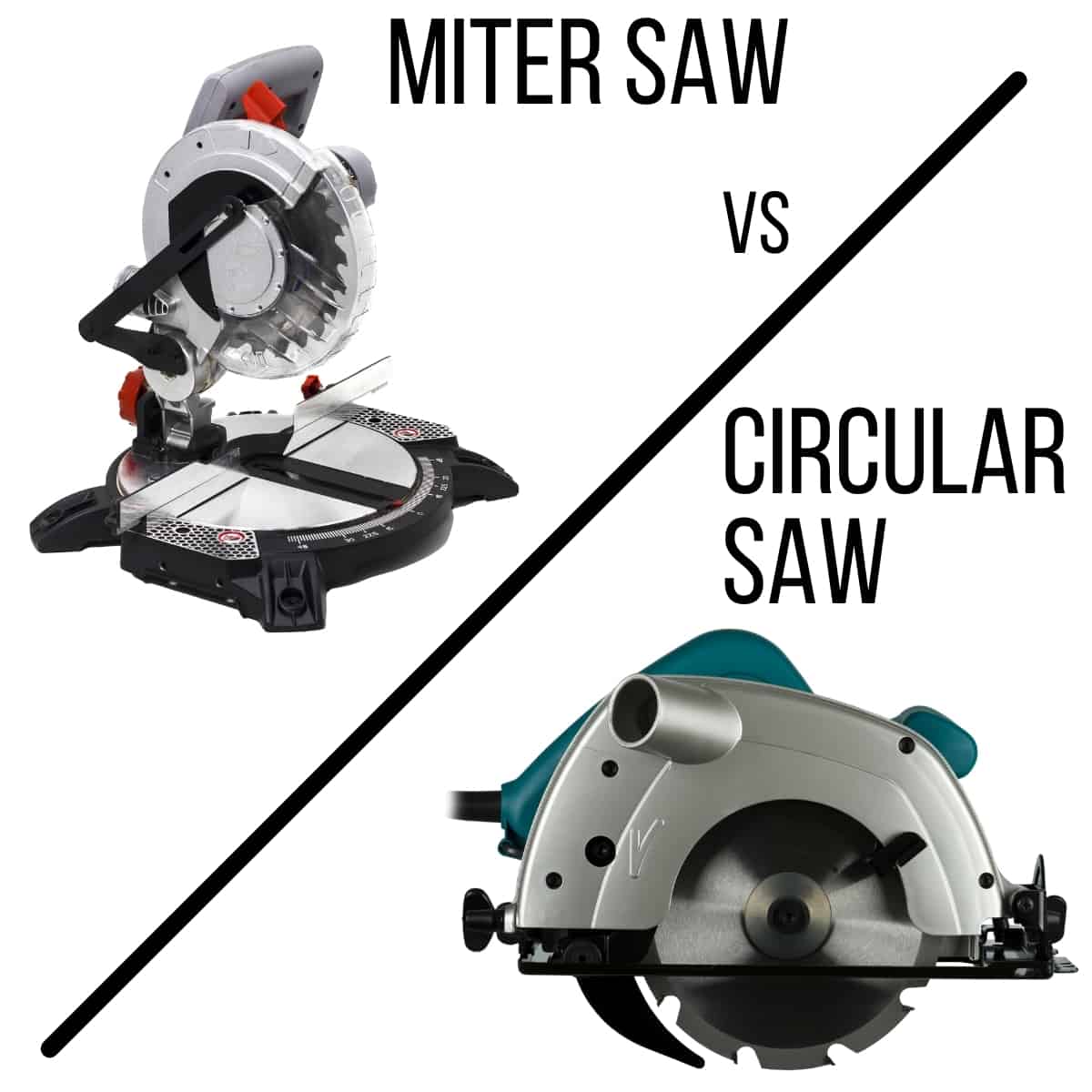
A circular saw is a handheld power tool with a round spinning blade. You guide it along the material you want to cut. This saw is famous for being versatile and portable. You can use it to cut wood, plywood, MDF, some plastics, or even thin metal (with the right blade).
One big advantage is that you can take the circular saw to the material, not the other way around. This makes it great for working on large sheets or when you don’t have a dedicated workshop. Circular saws are popular among DIYers and professionals because they are simple to use and not too expensive.
Circular saws are best for:
- Straight cuts (rip and crosscuts)
- Bevel cuts (by tilting the base plate)
- Cutting sheet goods and lumber
But, they are not ideal for making precise angled cuts or repeated cuts of the same size.
What Is A Miter Saw?
A miter saw is a stationary power tool. The blade is mounted on a swing arm that moves down onto the material. To use it, you place your wood on the base, hold it steady, then bring the blade down to cut.
Miter saws are excellent for precision cuts. You can set exact angles, usually from 0° to 45° or more, and cut boards with perfect accuracy. Some miter saws also let you tilt the blade for bevel cuts, so you can make complex angles.
Miter saws are best for:
- Crosscuts (cutting across the grain)
- Miter cuts (angled cuts for frames, trim, etc.)
- Bevel cuts (angled cuts vertically)
- Compound cuts (angled both ways, used in crown molding)
A miter saw is not designed for cutting large sheets or ripping boards lengthwise.
Circular Saw Vs Miter Saw: Key Differences
To understand which saw is right for you, it helps to look at the main differences side by side.
| Feature | Circular Saw | Miter Saw |
|---|---|---|
| Type | Handheld | Stationary |
| Best For | Rip, Cross, Bevel Cuts | Miter, Bevel, Compound Cuts |
| Portability | Very Portable | Less Portable |
| Precision | Moderate | High |
| Material Size | Large Sheets, Lumber | Boards (Width Limited) |
| Cost | Lower | Higher |
Circular saws are better for general use and moving around. Miter saws are for accurate, repeatable angle cuts.
Which Saw Should You Buy First?
Choosing between a circular saw and a miter saw depends on what you want to build.
- If you need to cut large sheets, do home repairs, or want just one tool to start with, a circular saw is usually the best choice. It can handle many jobs and is easy to carry.
- If your projects involve picture frames, trim, molding, or furniture where angles matter, a miter saw will save you time and give cleaner results.
Many experienced woodworkers suggest starting with a circular saw, then adding a miter saw later as your projects become more advanced.
Pros And Cons Of Circular Saws
Let’s look at the main advantages and disadvantages of a circular saw.
Pros
- Versatility: Cuts many types of material and shapes.
- Portability: Easy to move and use anywhere.
- Affordable: Good entry-level models start around $50-$100.
- No size limits: Can cut large sheets or long boards.
- Simple to maintain: Fewer moving parts mean less can go wrong.
Cons
- Less precision: Harder to make perfect angles or repeated cuts.
- Safety risk: Blade is exposed, so you must be careful.
- Requires skill: Straight cuts need a steady hand or a guide.
- Messier cuts: Edges may need sanding or cleaning up.
Pros And Cons Of Miter Saws
Now, here are the strengths and weaknesses of a miter saw.
Pros
- High precision: Cuts are clean, square, and repeatable.
- Perfect for angles: Quickly set miter or bevel cuts.
- Fast operation: Set the angle, cut, and repeat.
- Safer design: Blade is covered except during the cut.
Cons
- Limited to board width: Cannot cut wide sheets.
- Less portable: Heavier and needs a stable surface.
- More expensive: Basic models start at $150-$200.
- Takes up space: Not ideal for small workshops.
Real-world Examples: When To Use Each Saw
Imagine you want to build a bookshelf. A circular saw lets you cut the plywood for the sides and shelves. For the straight cuts and big pieces, it’s the right choice. If you want to add angled trim to the bookshelf, a miter saw will help you cut perfect corners.
Another example: Installing baseboards or window trim. You’ll need to make precise 45-degree cuts for corners. A miter saw makes this fast, neat, and accurate. Trying to do this with a circular saw is slow and can be uneven.
Cutting Power And Blade Sizes
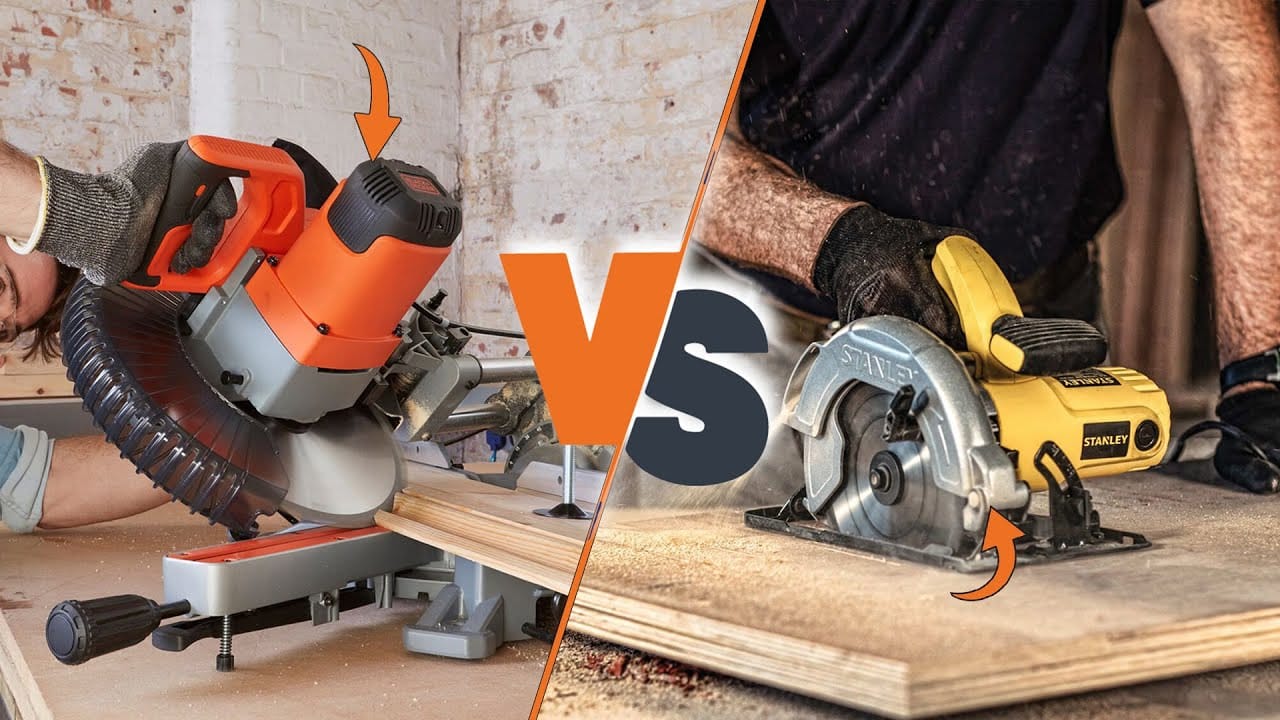
Blade size affects what your saw can cut. Most circular saws use 7¼-inch blades, which can cut about 2¼ inches deep. Some smaller models use 6½-inch blades.
Miter saws come in a few common sizes:
- 8-inch: For small trim work
- 10-inch: Most common, cuts boards up to 6 inches wide
- 12-inch: Cuts wider boards (up to 8 inches)
Sliding miter saws can cut even wider boards by moving the blade forward as you cut.
Credit: www.youtube.com
Safety: What Every Beginner Should Know
Both saws can be dangerous if not used correctly. Always follow safety rules:
- Wear eye protection and hearing protection.
- Keep hands away from the blade.
- Wait for the blade to stop spinning before moving the saw or your material.
- Use clamps or a guide when possible.
Circular saws are riskier for beginners because the blade is more exposed and there is no fence to keep your hands away. Always check the depth setting and never cut with one hand.
Miter saws are safer for angle and repeat cuts, but you must still keep hands clear of the cutting path and hold your workpiece firmly.
Price Comparison
Let’s compare average costs for each tool.
| Saw Type | Entry Level | Mid Range | High End |
|---|---|---|---|
| Circular Saw | $50-$80 | $100-$150 | $200+ |
| Miter Saw | $120-$180 | $200-$350 | $400+ |
A basic circular saw is cheaper and covers more general needs. A miter saw costs more, but adds precision for special tasks.
Common Beginner Mistakes
Many new woodworkers make similar mistakes when choosing or using these saws:
- Expecting one saw to do everything: No single saw covers all tasks perfectly. Each tool has its strengths.
- Buying the cheapest tool: Ultra-cheap saws may be underpowered and less safe.
- Not using guides or fences: This leads to wavy, unsafe cuts.
- Ignoring blade quality: A dull or wrong blade can ruin your project and be dangerous.
- Skipping practice: Take time to make test cuts on scrap wood before starting your main project.
How To Choose The Right Saw For Your Project
Ask yourself these questions:
- What material will I cut most? If it’s big sheets or rough lumber, go for a circular saw. If it’s trim or frames, choose a miter saw.
- Do I need to make lots of angle cuts? Miter saws are unbeatable for this.
- Is space a problem? Circular saws need less room.
- Will I move the tool to job sites? Circular saws are lighter and easier to carry.
- What is my budget? Circular saws are more affordable for beginners.
If you plan to do a little of everything, start with a circular saw and save for a miter saw as your skills grow.
Credit: www.thehandymansdaughter.com
Non-obvious Insights Most Beginners Miss
Many new users don’t realize:
- Circular saws can be made more accurate with the use of a straight-edge guide or a homemade track. This can help you get nearly straight cuts similar to a table saw.
- Miter saw blades matter a lot: A high-tooth-count blade (like 60 teeth) gives much smoother cuts for trim and finish work than the coarse blades that come with most saws.
- Sliding miter saws offer much greater cutting width than standard models, which makes them much more flexible for furniture and framing.
Maintenance And Longevity
Both saw types need some care:
- Keep blades clean and sharp: Dull blades burn wood and are dangerous.
- Check power cords and batteries: Replace damaged cords right away.
- Clean sawdust out: Use a shop vacuum to keep moving parts working well.
A well-maintained saw lasts many years and stays safer to use.
When To Own Both
Many serious woodworkers eventually buy both tools. They use the circular saw for rough cuts and breaking down large pieces, and the miter saw for finishing cuts and angles. If you do home projects often, owning both makes your work much faster and more enjoyable.
For more in-depth tool comparisons, you can check resources like Wikipedia.
Frequently Asked Questions
What’s The Main Difference Between A Circular Saw And A Miter Saw?
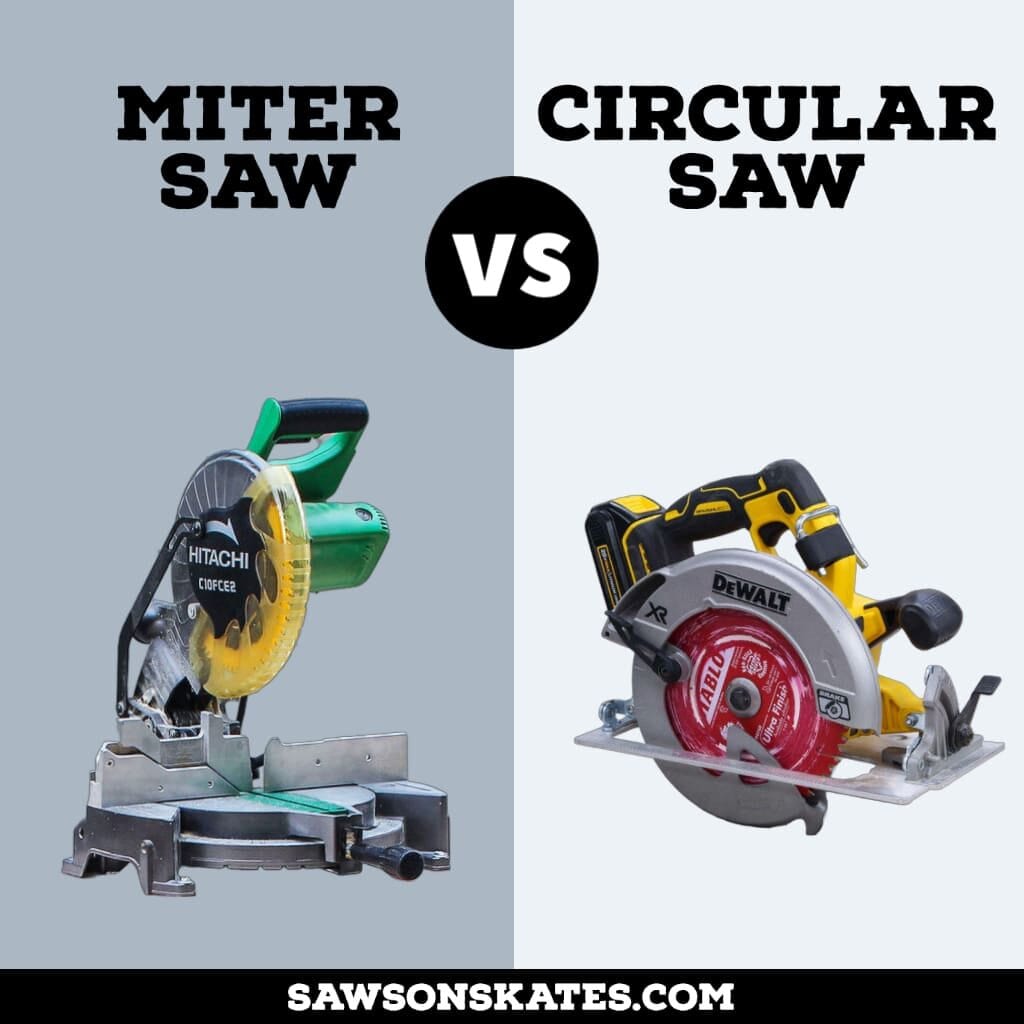
A circular saw is handheld and more portable, making it great for general cuts and big sheets. A miter saw is stationary and built for precise, repeatable angle cuts.
Can I Cut Angles With A Circular Saw?
Yes, but it’s harder. You can tilt the base for bevel cuts, but true mitered angles are tricky and less precise without a jig or guide.
Which Saw Is Safer For Beginners?
A miter saw is generally safer because the blade is covered except during the cut and your hands are further away from the blade.
Can A Miter Saw Cut Large Sheets Of Plywood?
No, most miter saws cannot handle large sheets. They are designed for boards, trim, and molding up to about 12 inches wide.
Do I Need Both A Circular Saw And A Miter Saw?
Not at first. Start with the one that fits your main projects. Many people add the other tool later as their needs grow.
Choosing between a circular saw and a miter saw is about matching the tool to your project, space, and skill. Start small, learn how to use your saw safely, and you’ll get much better results in all your woodworking tasks.
Credit: sawsonskates.com