Welding is a skill that brings together metal parts to build strong, lasting connections. Every welder, from hobbyist to professional, needs to choose the right welding rod for the job. But with so many types and numbers—like 6010, 7018, 6013—the options can feel confusing. Using the wrong rod can lead to weak joints, cracks, or wasted time. If you want to get strong welds and avoid common mistakes, understanding welding rod types is essential.
This guide will explain the main types of welding rods, their uses, and how to select the best one for your project. You’ll also discover tips that many beginners miss, and see clear tables to compare rods side by side.
By the end, you’ll feel confident picking the right rod for any welding task.
What Is A Welding Rod?
A welding rod is a thin metal stick, sometimes coated in a special material, that melts to join two metal pieces. The rod can either become part of the weld (consumable) or simply conduct electricity (non-consumable). Most rods for stick welding (SMAW) are consumable, adding metal to the joint as they melt.
Welding rods are labeled with numbers and letters, such as E6011. These codes give useful information about the rod’s strength, position, and coating.
Main Types Of Welding Rods
Welding rods come in several main categories, each with their own strengths and best uses. Let’s look at the most common types you’ll find in shops and on job sites.
1. E6010
The E6010 rod is known for deep penetration and a fast-freeze coating. It works well for welding dirty or rusty metal, making it popular in pipeline, maintenance, and repair work. E6010 rods produce a narrow, forceful arc that can cut through surface contaminants.
- Best for: Pipe welding, root passes, outdoor work
- Polarity: DC only
- Strength: 60,000 psi tensile strength
One hidden insight: E6010 is great for welding through paint or rust, but can be hard for beginners because it requires steady technique and has a “digging” arc.
2. E6011
The E6011 rod is similar to E6010 but works with both AC and DC currents. This makes it more flexible for use with smaller, cheaper machines. It’s also good for welding through dirty metal and offers deep penetration.
- Best for: General repair, farm equipment, AC welders
- Polarity: AC or DC
- Strength: 60,000 psi tensile strength
Many welders use E6011 when working with older or lightweight welders that don’t offer DC output.
3. E6012
The E6012 rod is less common but useful for joining thin sheets of metal. It produces a soft arc and medium penetration, making it good for bridging gaps and welding in all positions.
- Best for: Thin metals, sheet metal fabrication
- Polarity: AC or DC
- Strength: 60,000 psi tensile strength
E6012 is often chosen for speed welding where high deposition rates are needed.
4. E6013
The E6013 rod is easy to use and makes a smooth, clean weld with minimal spatter. It’s a favorite for beginners and home hobbyists. E6013 rods work well with small, low-power machines.
- Best for: Light fabrication, auto body repair, learning to weld
- Polarity: AC or DC
- Strength: 60,000 psi tensile strength
A common mistake is using E6013 on heavy steel—it’s not designed for deep penetration.
5. E7014
The E7014 rod has a thick iron powder coating. This gives a stable arc, high deposition, and strong welds. It’s good for production work and heavy fabrication, but not as easy as E6013 for vertical or overhead welding.
- Best for: Structural steel, heavy frames, horizontal welding
- Polarity: AC or DC
- Strength: 70,000 psi tensile strength
E7014 is often used in shops where speed and clean welds are important.
6. E7018
The E7018 rod is famous for making strong, low-hydrogen welds. It’s used in critical applications like bridges and pressure vessels. The rod creates a strong, smooth bead and resists cracking.
- Best for: Structural welding, critical repairs, thick steel
- Polarity: AC or DC
- Strength: 70,000 psi tensile strength
One insight: E7018 rods must be kept dry, as moisture can cause weld defects. Many shops use rod ovens for this reason.
7. Stainless Steel Rods (e308, E309, E316)
Stainless steel rods are used for welding stainless steel parts. The numbers (308, 309, 316) match the types of stainless steel they join.
- Best for: Food equipment, chemical tanks, marine work
- Polarity: AC or DC
Each rod type matches a different grade of stainless steel. For example, E308 is for 304-grade stainless, while E316 offers higher corrosion resistance.
8. Cast Iron Rods (ni-fe, Ni)
Cast iron rods are special electrodes designed to weld cast iron, which is brittle and cracks easily. There are nickel-iron (Ni-Fe) and pure nickel (Ni) rods for different situations.
- Best for: Engine blocks, cast iron pipes, machinery repair
- Polarity: AC or DC
Pure nickel rods are softer and produce a machinable weld, while nickel-iron rods give a stronger but less machinable bead.
9. Hardfacing Rods
Hardfacing rods are used to build up surfaces that face heavy wear, such as bulldozer blades or crusher hammers. They add a tough, wear-resistant layer.
- Best for: Farm tools, mining equipment, industrial repairs
These rods are not for joining parts, but for protecting surfaces from abrasion.
10. Aluminum Rods (er4043, Er5356)
Aluminum rods are used for welding aluminum and its alloys. The most common types are ER4043 and ER5356.
- Best for: Boat repair, automotive parts, aluminum structures
ER4043 is popular for general welding, while ER5356 is chosen for higher strength and better color match.
Credit: primeweld.com
Understanding Welding Rod Numbers
Welding rods are labeled with codes like E6011 or E7018. These numbers aren’t random—they tell you key facts about the rod.
For example, E7018:
- E: Electrode
- 70: Tensile strength (70,000 psi)
- 1: Welding position (1 = all positions)
- 8: Coating type and current
Knowing how to read these numbers helps you choose the right rod. For instance, a rod ending in “1” works in all positions (flat, vertical, overhead), but a rod ending in “2” is for flat and horizontal only.
Consumable Vs. Non-consumable Rods
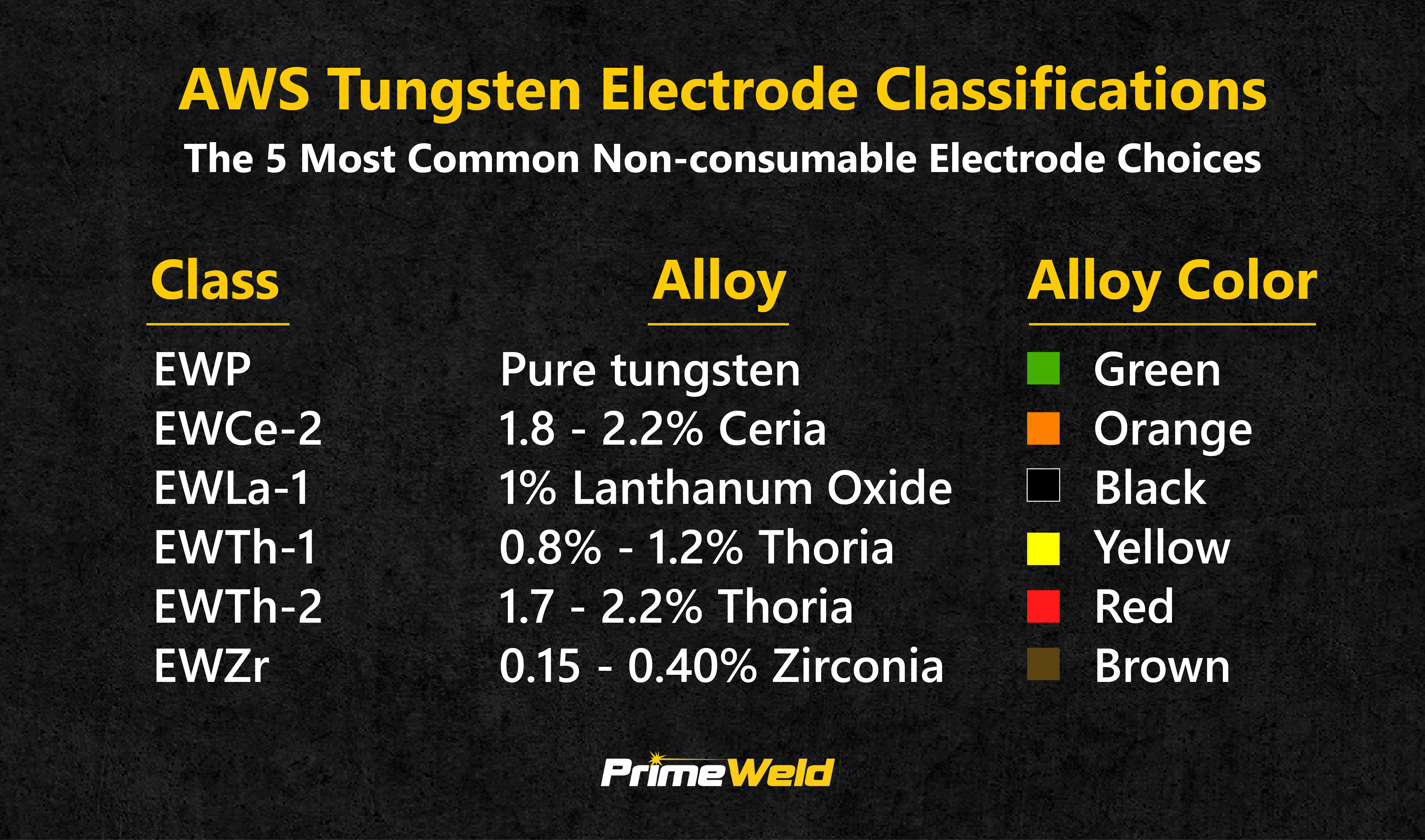
Most rods for stick welding are consumable—they melt into the weld pool. But in TIG welding, non-consumable rods (usually made of tungsten) conduct electricity but do not melt.
Consumable rods are more common for general welding, while non-consumable rods are for specialized, precise work.
Credit: www.perfectwelders.com
Coating Types And Their Functions
The coating on a welding rod is not just for show. It serves several important purposes:
- Shields the weld from air (reduces contamination)
- Stabilizes the arc
- Adds elements to improve weld quality
Common coatings include cellulosic (for deep penetration), rutile (for smooth welds), and low-hydrogen (to prevent cracks).
How To Choose The Right Welding Rod
Choosing the best welding rod depends on several factors. Here’s what you should consider:
1. Base Metal Type
Match the rod to your base metal (steel, stainless, cast iron, aluminum).
2. Welding Position
Some rods work in all positions, while others are limited to flat or horizontal.
3. Welding Machine Type
Check if your machine provides AC, DC, or both.
4. Joint Thickness
Use deep-penetration rods for thick steel and low-penetration rods for thin sheet.
5. Required Strength
Projects like bridges or pressure vessels need high-strength rods.
6. Surface Condition
Dirty or rusty metal needs rods like E6010 or E6011.
7. Appearance
For smooth, clean welds, choose E6013 or E7018.
A common beginner mistake is using a rod that’s too thick for thin metal—this can burn holes and ruin the work.
Common Welding Rod Types Compared
To help you compare, here’s a quick side-by-side look at some popular rods:
| Rod Type | Polarity | Welding Positions | Best For |
|---|---|---|---|
| E6010 | DC | All | Pipe, dirty metal |
| E6011 | AC/DC | All | Repairs, farm work |
| E6013 | AC/DC | All | Hobby, thin metal |
| E7018 | AC/DC | All | Critical structures |
Welding Rod Size And Amperage
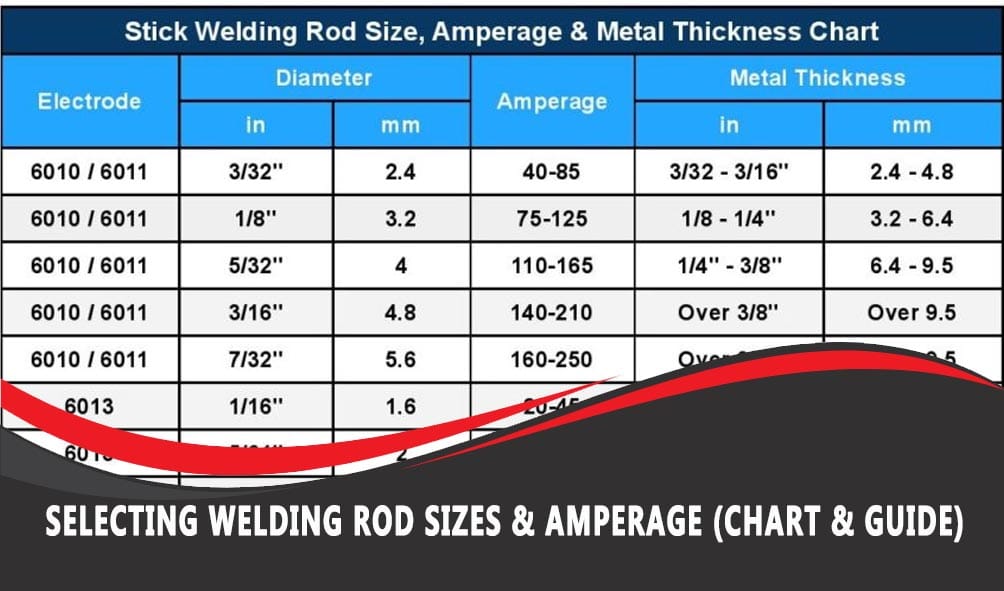
Welding rods come in different diameters, from 1/16” to 1/4” or more. The right size depends on the thickness of your workpiece and the available amperage.
For example:
| Rod Diameter | Suggested Amps | Material Thickness |
|---|---|---|
| 1/16” (1.6mm) | 20-40A | Up to 1/8” (3.2mm) |
| 3/32” (2.4mm) | 40-90A | 1/8” to 1/4” (3.2-6.4mm) |
| 1/8” (3.2mm) | 90-150A | Over 1/4” (6.4mm) |
A practical tip: Start with lower amperage and increase slowly to avoid burning through your metal.
Storage And Handling Tips
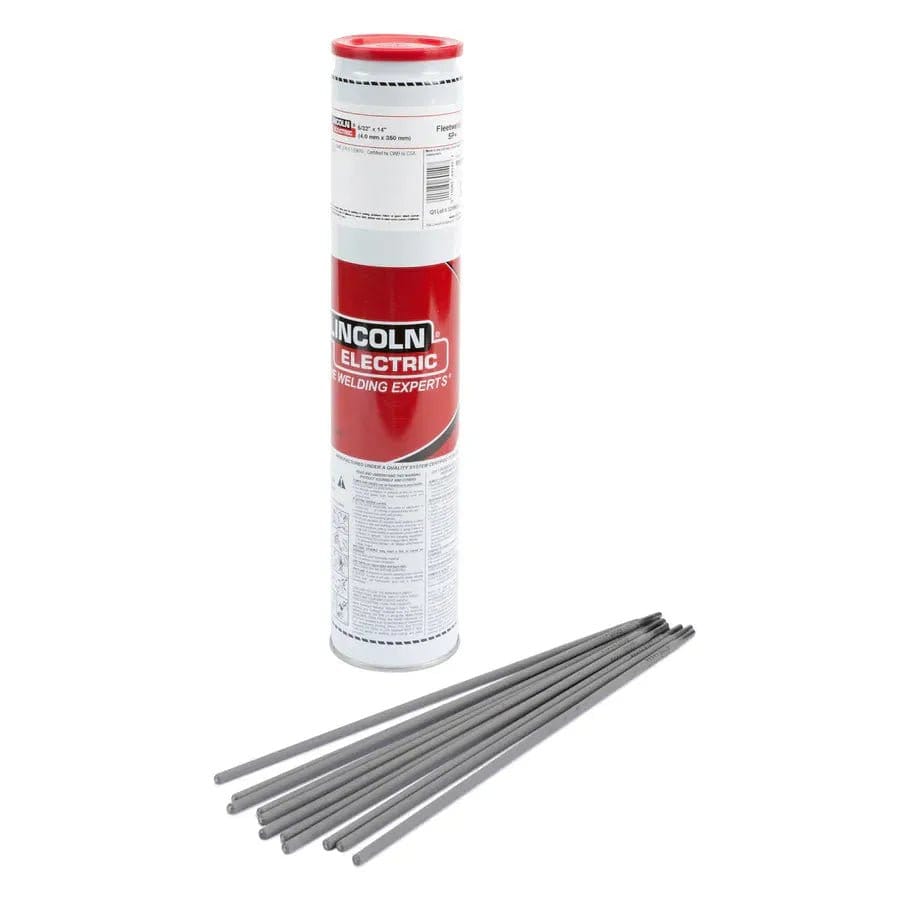
Proper storage of welding rods is often overlooked. Moisture is the enemy of many rods, especially low-hydrogen types like E7018.
- Keep rods in sealed containers or rod ovens.
- Avoid exposing rods to humidity.
- Throw away any rod that shows rust or swelling.
Using wet rods can cause porosity and weak welds—a mistake even experienced welders sometimes make.
When To Use Specialty Rods
Not all jobs need standard rods. Specialty rods like hardfacing, cast iron, and aluminum rods are for unique situations.
- Use hardfacing rods to repair worn parts and add a protective layer.
- Use cast iron rods for engine blocks and heavy machinery.
- Choose stainless or aluminum rods for matching those metals.
Trying to weld these metals with a standard steel rod will lead to cracking or poor results.
Welding Rod Safety
Welding creates intense heat, sparks, and fumes. Always use:
- Good ventilation
- Proper gloves and clothing
- Eye protection (auto-darkening helmet preferred)
The rod coating can produce harmful fumes, so avoid breathing smoke. Store rods out of reach of children and in dry places.
Advanced Tips For Better Welding
- Always check the rod’s expiration date—old rods can lose their coating quality.
- For critical welds, use fresh, dry rods and test on scrap metal first.
- Don’t mix rod types in the same weld unless you know the results.
Many beginners don’t realize that changing rod types mid-weld can cause weak spots.
Further Learning
To go deeper into welding rod types, check out the Shielded Metal Arc Welding article on Wikipedia for in-depth technical data and history.
Frequently Asked Questions
What Does The Number On A Welding Rod Mean?
The number (like E7018) tells you the rod’s strength, welding position, and coating type. For example, “70” means 70,000 psi tensile strength, “1” means all positions, and “8” is the coating/current code.
Can I Use The Same Rod For All Types Of Metal?
No, you need to match the rod to the metal. For example, use stainless rods for stainless steel and aluminum rods for aluminum. Using the wrong rod can cause weak welds or cracks.
How Do I Store Welding Rods Properly?
Keep rods dry in sealed containers or rod ovens. Especially for low-hydrogen rods like E7018, moisture can ruin the coating and cause weld defects.
What Is The Difference Between E6011 And E6013?
E6011 gives deep penetration and works on dirty metal. E6013 produces a smoother, cleaner weld but with less penetration. E6011 can be used with AC and DC, while E6013 is better for new, clean steel.
Why Is My Weld Full Of Holes Or Cracks?
This can happen if you use the wrong rod, set the amperage too high, or use wet rods. Make sure to match rod size to metal thickness, keep rods dry, and adjust your welder settings carefully.
Choosing the right welding rod is key to strong, safe welds. With this guide, you’re ready to pick the best type for your next project, avoid common mistakes, and improve your welding results. The more you practice, the more these choices will become second nature.
Credit: weldingmart.com
