
Dewalt Battery Cross Compatibility Guide
When you invest in power tools, one of the biggest questions is: Are the batteries interchangeable? For professionals and DIYers using Dewalt tools, battery cross compatibility can save money, reduce clutter, and increase productivity. But the Dewalt battery system is not as simple as it looks. With several voltages, generations, and adapter options, it’s easy to get confused. This guide will give you a clear, honest explanation of Dewalt battery cross compatibility, so you can make smart decisions and avoid costly mistakes.
Understanding Dewalt Battery Systems
Dewalt has released multiple battery lines over the years. The three main systems are:
- Dewalt 18V (NiCd and NiMH)
- Dewalt 20V MAX (Lithium-Ion)
- Dewalt FLEXVOLT (20V/60V MAX, Lithium-Ion)
Each system has its own design and technology. Knowing which battery fits which tool is the first step toward cross compatibility.
Dewalt 18v System
The original Dewalt 18V system used Nickel-Cadmium (NiCd) and later Nickel-Metal Hydride (NiMH) batteries. These were rectangular, heavy, and are now considered old technology. Most new Dewalt tools do not use these batteries. However, some professionals still have classic 18V tools.
Dewalt 20v Max System
Launched in 2011, the Dewalt 20V MAX platform uses Lithium-Ion batteries. These are lighter, last longer, and are now the standard for Dewalt’s cordless tools in North America. The 20V MAX name is a marketing label; the actual voltage is 18V nominal, but Dewalt uses the “20V MAX” name in the U.S. for competitive reasons.
Dewalt Flexvolt System
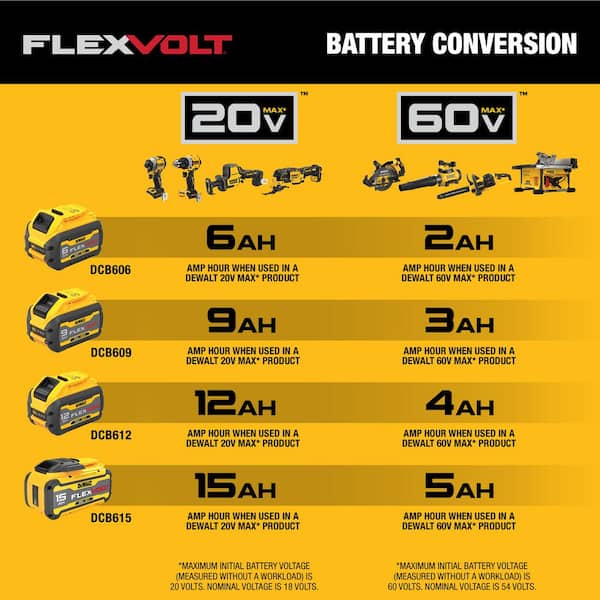
The FLEXVOLT battery is a unique innovation. It can switch between 20V MAX and 60V MAX output, depending on the tool. This means it can power both standard 20V tools and the heavy-duty 60V tools. FLEXVOLT batteries are backward-compatible with most 20V MAX tools but not with older 18V tools.
Dewalt Battery Cross Compatibility Explained
Here’s where things get interesting. Not all Dewalt batteries fit all Dewalt tools. The main points of compatibility are:
- Dewalt 18V batteries do not fit 20V MAX or FLEXVOLT tools directly.
- Dewalt 20V MAX batteries do not fit 18V tools, but adapters are available.
- FLEXVOLT batteries fit 20V MAX tools but not vice versa.
- 12V MAX batteries (for smaller tools) are a separate platform and not compatible with 18V, 20V, or FLEXVOLT tools.
Let’s break down the compatibility in detail.
18v And 20v Max: Not Directly Interchangeable
The physical design of the battery packs is different. 18V NiCd/NiMH batteries are wider and have a different contact arrangement than 20V MAX batteries. As a result, you cannot plug a 20V MAX battery into an 18V tool, or vice versa, without an adapter.
20v Max And Flexvolt: One-way Compatibility
FLEXVOLT batteries are designed to work in both 20V MAX and 60V MAX tools. When inserted into a 20V MAX tool, the FLEXVOLT battery automatically adjusts to 20V output. However, a regular 20V MAX battery will not power a 60V MAX tool because it does not have the voltage or power required.
The Role Of Adapters
Dewalt offers an 18V to 20V MAX battery adapter. This adapter allows you to use modern 20V MAX lithium-ion batteries with most older Dewalt 18V tools. However, there are some limitations:
- The adapter does not work with all 18V tools (some specialty tools may not be supported).
- The adapter cannot be used with FLEXVOLT batteries.
- The adapter adds some bulk, so the tool may feel heavier or less balanced.
Here’s a simple comparison:
| Battery Type | Compatible Tools | Adapter Needed? |
|---|---|---|
| 18V NiCd/NiMH | 18V Tools | No |
| 20V MAX | 20V MAX Tools | No |
| 20V MAX (with Adapter) | 18V Tools | Yes |
| FLEXVOLT | 20V MAX & 60V MAX Tools | No (for 20V/60V) |
Detailed Dewalt Battery Compatibility Scenarios
Let’s look at the most common compatibility questions users face.
Can I Use A 20v Max Battery In My Old 18v Tool?
Not directly. The battery will not fit. However, with the official Dewalt 18V to 20V MAX Adapter, you can use 20V MAX batteries in most 18V tools. This is a great way to upgrade older tools without buying new ones. But there are a few exceptions—some tools with high current demands may not work well, and the adapter is not intended for use with FLEXVOLT batteries.
Will A Flexvolt Battery Work In My 20v Max Tool?
Yes, and this is one of the best features of the FLEXVOLT system. A FLEXVOLT battery will automatically deliver 20V MAX power when inserted into a 20V MAX tool. However, the tool will only use the voltage it was designed for—it won’t run any faster or stronger.
The benefit is longer runtime, as FLEXVOLT batteries have higher capacity.
Are All Dewalt 20v Max Batteries The Same?
No. Dewalt makes 20V MAX batteries in different sizes and capacities, such as 1.5Ah, 2.0Ah, 4.0Ah, 5.0Ah, and more. The Ah (amp-hour) rating refers to how much energy the battery can store. All 20V MAX batteries will fit all 20V MAX tools, but a higher Ah battery will run longer between charges.
Here’s a look at some common 20V MAX battery sizes:
| Battery Model | Capacity (Ah) | Typical Runtime |
|---|---|---|
| DCB201 | 1.5 Ah | Short (light tasks) |
| DCB203 | 2.0 Ah | Medium |
| DCB204 | 4.0 Ah | Long |
| DCB205 | 5.0 Ah | Longest |
Can I Charge Flexvolt And 20v Max Batteries On The Same Charger?
Most Dewalt chargers labeled as 20V MAX or FLEXVOLT will charge both types of batteries. However, older 18V chargers will not charge 20V MAX or FLEXVOLT batteries.
Non-obvious Insights For Dewalt Users
- Tool Warranty Concerns: Using an adapter or third-party batteries may void your tool’s warranty. Always check Dewalt’s official policy before modifying your battery setup.
- Charger Speeds Matter: Dewalt offers standard and fast chargers. A fast charger can reduce downtime, especially with high-capacity batteries like FLEXVOLT. But charging too fast can reduce battery lifespan if done constantly.
Key Things To Consider Before Mixing Dewalt Batteries
Not every Dewalt battery solution is ideal for every user. Here are some important points to keep in mind:
- Weight and Balance: Larger batteries, especially FLEXVOLT, can make compact tools feel heavy and unbalanced. For tasks requiring precision, stick to smaller batteries.
- Cost: FLEXVOLT batteries are significantly more expensive than standard 20V MAX batteries. Only buy them if you need the extra power or runtime.
- Adapter Limitations: The 18V to 20V MAX adapter is a lifesaver for old tools, but it’s not a long-term solution for high-demand applications. For heavy-duty work, consider upgrading your tools.
- Battery Maintenance: Lithium-ion batteries last longer when stored partially charged and kept out of extreme heat or cold.
Dewalt Battery Compatibility With Other Brands
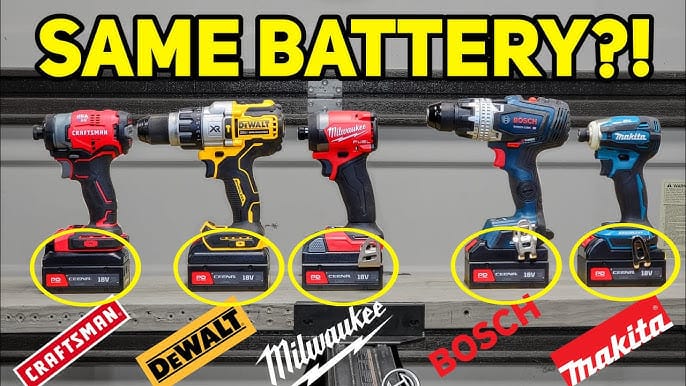
Dewalt batteries are designed for Dewalt tools only. They do not fit other brands like Makita, Milwaukee, or Bosch. Some third-party adapters claim to allow cross-brand compatibility, but these can be unreliable and may damage your tools or batteries. Dewalt’s official stance is to avoid these adapters.
Credit: www.youtube.com
Flexvolt Advantage: When Is It Worth It?
For professionals who use both 20V and 60V tools, FLEXVOLT batteries are a game-changer. You can buy one set of high-capacity batteries and use them across almost all Dewalt cordless tools, including heavy-duty saws and grinders. The main advantage is fewer battery types to manage, but the initial cost is higher.
Dewalt Battery Comparison
A side-by-side comparison of Dewalt’s main battery lines can help clarify which is right for you:
| Feature | 18V NiCd/NiMH | 20V MAX | FLEXVOLT |
|---|---|---|---|
| Release Year | 1996 | 2011 | 2016 |
| Voltage | 18V | 20V MAX (18V nominal) | 20V/60V MAX |
| Chemistry | NiCd/NiMH | Lithium-Ion | Lithium-Ion |
| Cross Compatibility | With Adapter (to 20V MAX) | With Adapter (to 18V tools) | Backward (to 20V MAX) |
| Weight | Heavy | Light | Medium-Heavy |
| Typical Use | Legacy Tools | Most Dewalt Tools | High-Power Tools |
Tips For Getting The Most Out Of Dewalt Battery Compatibility
- Label your batteries with the purchase date. Lithium-ion batteries lose performance over time; knowing the age helps with rotation.
- Avoid deep discharges. Try to recharge batteries before they are completely dead to extend life.
- Store in a cool, dry place. Excess heat is the enemy of battery life.
- Buy genuine Dewalt chargers for best compatibility and safety.
Common Mistakes To Avoid
- Mixing 12V and 20V Batteries: These are totally different. Never try to force them into the wrong tool.
- Using Non-Dewalt Adapters: Cheap adapters may fit, but they often have poor electrical contacts and can damage batteries or tools.
- Ignoring Charger Compatibility: Not all Dewalt chargers support all battery types. Check your charger model before purchasing new batteries.

Credit: www.authorizedtooloutlet.com
Where To Find Official Compatibility Information
For the latest details, always check Dewalt’s official website or product manuals. Dewalt updates its compatibility lists as new tools and batteries are released. You can find more technical details at Dewalt Official FAQ.
Frequently Asked Questions
Can I Use Dewalt 20v Max Batteries In My 18v Tools Without An Adapter?
No, you need the Dewalt 18V to 20V MAX adapter. Without it, the batteries will not fit or function.
Will Using An Adapter Affect My Tool’s Performance?
Performance is usually the same as with 18V NiCd batteries, but heavy-duty tools may have shorter runtime. The adapter adds a little weight, which may affect balance.
Are Flexvolt Batteries Worth The Higher Price?
If you use both 20V and 60V tools, FLEXVOLT batteries are a good investment. They offer longer runtime and reduce the number of battery types you need.
Can I Charge All Dewalt Batteries On My Old Charger?
No. Only 18V NiCd/NiMH batteries work with old chargers. For 20V MAX and FLEXVOLT, use a compatible Dewalt charger.
Is It Safe To Use Third-party Batteries With Dewalt Tools?
It’s safer to use genuine Dewalt batteries. Third-party batteries can be cheaper but may not deliver the same performance or safety, and could void your warranty.
Dewalt has created a flexible battery system, but understanding the details is key to getting the most value. With the right knowledge, you can mix and match batteries across many tools and keep your work moving without interruption.
Credit: www.homedepot.com
