
If you use power tools, you’ve probably noticed the different batteries that keep them running. For many, the Dewalt 20V and Dewalt 60V batteries are two popular choices. Picking the right one is not just about power—it’s about cost, compatibility, safety, and what you really need for your projects. Let’s break down the differences, clear up some confusion, and help you choose the right battery for your tools and your work.
Understanding Dewalt’s Battery System
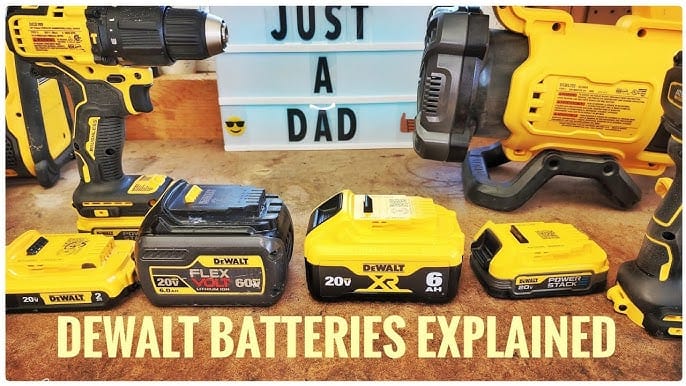
Dewalt is famous for the FLEXVOLT battery system. This system lets some batteries change voltage depending on the tool you use. The main two lines are:
- 20V MAX: Standard for most Dewalt cordless tools.
- 60V MAX (FLEXVOLT): Used for heavy-duty tools, but can also work with 20V tools.
So, the question is not just which is “better”—it’s which is better for you.
What Does 20v And 60v Really Mean?
The numbers refer to the maximum voltage the battery can deliver. Here’s what that means for you:
- 20V MAX batteries are actually 18V batteries (measured in typical use, not peak). The “MAX” is marketing, showing the highest possible voltage.
- 60V MAX batteries are really 54V in normal use.
This is standard in the industry, but it’s important to know so you understand the real power you’re getting.
Comparing Dewalt 20v And 60v Batteries
Let’s look at the most important differences side by side.
| Feature | 20V MAX | 60V MAX (FLEXVOLT) |
|---|---|---|
| Nominal Voltage | 18V | 54V (switches to 18V in 20V tools) |
| Common Tool Types | Drills, impact drivers, lights | Miter saws, table saws, large grinders |
| Compatibility | Only 20V tools | Both 20V and 60V tools |
| Weight | Lighter | Heavier |
| Cost | Lower | Higher |
Battery Capacity And Runtime
Capacity is measured in amp hours (Ah). A higher Ah means the battery stores more energy and lasts longer between charges.
- 20V batteries come in 1.5Ah, 2.0Ah, 4.0Ah, 5.0Ah, and up to 8.0Ah.
- 60V batteries usually start at 6.0Ah and go up (9.0Ah, 12.0Ah).
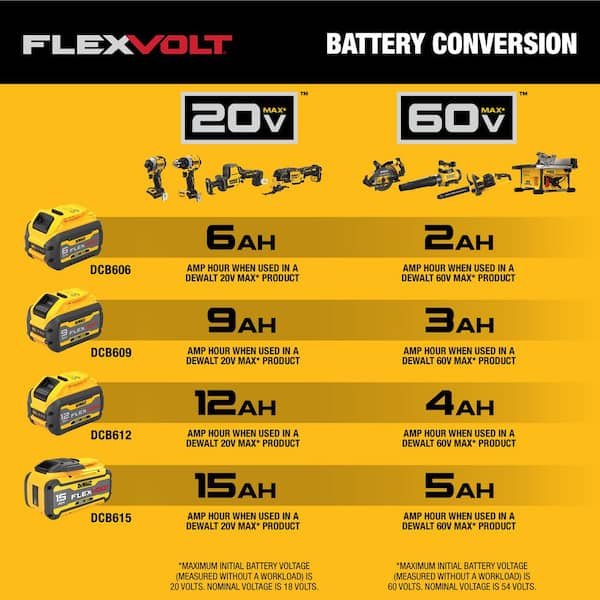
But here’s a detail people often miss: A 60V battery used in a 20V tool delivers more amp hours at 20V. For example, a 9Ah 60V battery becomes a 3Ah battery at 60V, but a 9Ah battery at 20V. This is because the battery “splits” its power to match the tool’s needs.
Tool Compatibility
This is where FLEXVOLT batteries shine. 60V FLEXVOLT batteries will work in both 20V and 60V tools. But 20V batteries will not work in 60V tools.
Why does this matter?
- If you have only 20V tools, you can use either battery, but the 60V FLEXVOLT will give longer runtime and is heavier.
- If you plan to buy large 60V tools (like a cordless table saw), you must use a 60V FLEXVOLT battery.
Here’s a quick compatibility guide:
| Battery | Works in 20V Tool? | Works in 60V Tool? |
|---|---|---|
| 20V MAX | Yes | No |
| 60V MAX (FLEXVOLT) | Yes | Yes |
Power Output
60V tools are much more powerful. They are meant for serious jobs—think of cutting thick wood, mixing concrete, or grinding metal. The higher voltage means the tool can do more work faster and with less strain.
20V tools are lighter and easier to handle. They are perfect for drilling, driving screws, and all-day tasks that don’t need a ton of force.
Credit: www.youtube.com
Charging Speed And Chargers
Both batteries use lithium-ion cells, but 60V batteries are larger and take longer to charge. Dewalt makes special fast chargers for FLEXVOLT, but even then, a 12.0Ah battery can take over an hour to fully charge.
A mistake many users make: Using a slow charger for a FLEXVOLT battery. This wastes time and can lead to frustration on the job. Always check if your charger is rated for FLEXVOLT and higher capacities.
Cost Differences
20V batteries are less expensive. You can find a 4.0Ah 20V battery for under $80, while a 9.0Ah FLEXVOLT can cost $200 or more.
If you only use small tools, buying 60V FLEXVOLT batteries “just in case” is not cost-effective. Spend your money where you need the power.
Weight And Ergonomics
A FLEXVOLT battery is much heavier. For example, a 12. 0Ah 60V battery weighs over 3 pounds. A 2. 0Ah 20V battery is less than 1 pound.
Why does this matter?
- Drilling overhead with a heavy battery gets tiring fast.
- For long jobs, a lighter battery can make your work more comfortable.
Practical Scenarios: Which Battery Should You Use?
Let’s look at some real-world examples:
- DIYer or homeowner: You mostly hang shelves, fix cabinets, or assemble furniture. Stick with 20V batteries. They’re lighter, cheaper, and give you all the power you need.
- Remodeler or contractor: You sometimes cut studs, run a miter saw, or use a grinder. Invest in one or two FLEXVOLT batteries. You’ll need them for big tools, and they’ll run your 20V tools even longer.
- Heavy construction or woodworker: You own several 60V tools (table saw, miter saw, rotary hammer). FLEXVOLT is a must. You’ll want at least two, so you always have a backup charging.
Common Mistakes When Choosing Dewalt Batteries
Many users make avoidable mistakes. Here are a few to watch out for:
- Buying FLEXVOLT batteries for only 20V tools: Heavier, more expensive, and you rarely need the extra runtime.
- Using a slow charger for big batteries: This leads to long wait times, slowing down your work.
- Assuming all Dewalt batteries fit all Dewalt tools: FLEXVOLT is flexible, but 20V batteries can’t power 60V tools.
- Ignoring weight: For jobs where you hold the tool overhead, every ounce matters.
Battery Life And Maintenance
Both 20V and 60V batteries are built to last several years. However, a few simple habits will help them live longer:
- Avoid extreme heat or cold: Store batteries inside when not in use.
- Don’t fully drain: Recharge when you hit about 20% capacity.
- Use the correct charger: This prevents overheating and damage.
Non-obvious tip: If you use FLEXVOLT in 20V tools, label it. Some users forget, leave it in the tool, and end up missing it when they need to run a 60V saw.
Credit: www.homedepot.com
The Flexvolt Advantage
The real innovation is in FLEXVOLT technology. Here’s why it’s special:
- Automatic voltage switching: The battery detects the tool and delivers the right voltage.
- Backward compatibility: You don’t need to buy all new batteries if you upgrade to 60V tools.
- Flexible investment: You can grow your tool collection without wasting old batteries.
Real-world Performance
Let’s see how these batteries perform in actual use:
- A 20V 4.0Ah battery will run a drill for several hours of normal use.
- A 60V 9.0Ah FLEXVOLT can power a cordless table saw for 300+ cuts through 2×4 lumber on a single charge.
For high-draw tools, FLEXVOLT makes a huge difference.
Credit: news.ohiopowertool.com
Environmental Impact
Both battery types use lithium-ion cells. Dewalt encourages recycling old batteries—never throw them in the trash. Check with local recycling programs or use Dewalt’s battery recycling partners.
Pro tip: Dispose of batteries safely to avoid fires and protect the environment.
Which Battery Is Right For You?
Ask yourself:
- What tools do I use most?
- Do I plan to buy larger 60V tools soon?
- Is weight important for my tasks?
- What’s my budget for batteries?
If you need flexibility, go with FLEXVOLT. If you want the best value for simple jobs, stick with 20V.
Key Data At A Glance
Here’s a quick look at runtime and weight for common Dewalt batteries:
| Battery Model | Voltage | Amp Hours | Approx. Runtime (Drill) | Weight |
|---|---|---|---|---|
| 20V 2.0Ah | 20V | 2.0Ah | 1-2 hours | 0.8 lbs |
| 20V 5.0Ah | 20V | 5.0Ah | 3-5 hours | 1.5 lbs |
| 60V 9.0Ah FLEXVOLT | 60V/20V | 9.0Ah (at 20V) | 6-8 hours | 2.7 lbs |
Dewalt 20v Vs 60v: My Experience-based Guidance
After years of using Dewalt tools on job sites, I’ve learned a few things:
- 20V batteries are my daily workhorses. They’re simple, light, and get the job done for most tasks.
- When I bring out the miter saw or table saw, FLEXVOLT is the only real option. The power and runtime are far better.
- For most people, a mix of both is best. Start with 20V, add FLEXVOLT when you get heavy-duty tools.
Don’t buy more than you need. Batteries are expensive, and having too many of the wrong type is a waste.
If you want even more technical detail, Dewalt’s official site offers in-depth specs and comparisons. You can find more here: Dewalt Batteries and Chargers.
Frequently Asked Questions
What Is Flexvolt, And How Does It Work?
FLEXVOLT is Dewalt’s smart battery that can automatically change voltage. It works as a 20V battery in 20V tools and as a 60V battery in 60V tools. The battery senses the tool and switches power output for safe, efficient use.
Can I Use A 60v Flexvolt Battery In A 20v Dewalt Tool?
Yes, you can. The FLEXVOLT battery will run as a 20V battery when placed in a 20V tool. You may notice longer runtime, but the tool’s power output will not increase.
Will A 20v Battery Work In A 60v Dewalt Tool?
No. 20V batteries do not fit or power 60V tools. If you want to use high-powered 60V tools, you must buy FLEXVOLT batteries.
Are Flexvolt Batteries Heavier Than 20v Batteries?
Yes. FLEXVOLT batteries are larger and heavier. This can be tiring for all-day use in smaller tools. For lighter tasks, 20V batteries are more comfortable.
How Do I Make My Dewalt Batteries Last Longer?
Store batteries in a cool, dry place. Recharge before they fully die. Use the correct charger. Avoid dropping or exposing batteries to water. Recycling old batteries helps protect the environment.
Choosing between Dewalt 20V and 60V batteries is about more than just power. Consider your tools, your work style, and your budget. With the right battery, your Dewalt tools will deliver the performance you need, job after job.
