
A battery that won’t start your car, a device that keeps shutting down, or a solar setup that just doesn’t work—many people face these problems. Often, the real cause is a weak or faulty battery. But how do you know if your battery is healthy, half-dead, or completely gone? That’s where a battery voltage tester comes in. Knowing how to check battery voltage can save you money, prevent stress, and help you make smart decisions. In this guide, you’ll learn everything you need to choose, use, and understand battery voltage testers—even if you’re not an electronics expert.
What Is A Battery Voltage Tester?
A battery voltage tester is a device that checks the electrical potential (voltage) of a battery. This tells you if a battery is fully charged, partially charged, or dead. Most testers are small, handheld tools. Some have a digital display; others use a simple needle gauge.
Testing voltage gives you a quick way to measure battery health. For example, a healthy 12V car battery should show about 12.6V when fully charged. If you see 11.8V, your battery is likely weak. Voltage testers work for all types: car batteries, AA/AAA cells, deep-cycle batteries, and more.
Why Battery Voltage Testing Matters
Batteries power almost everything: cars, phones, flashlights, alarms, solar systems, and more. Over time, all batteries lose power. If you never check voltage, you risk sudden failures and wasted money on new batteries you don’t need. With a voltage tester, you can:
- Spot weak batteries before they fail
- Avoid getting stranded with a dead car battery
- Check if “dead” batteries are really dead
- Save money by using batteries longer
Many people buy new batteries too soon. A good voltage tester gives you facts—so you don’t guess.
Main Types Of Battery Voltage Testers
Choosing the right tester depends on the battery type, your experience, and your budget. Here are the most common types:
1. Digital Battery Voltage Testers
These have an LCD screen that shows the exact voltage. They’re accurate and easy to use, even for beginners.
2. Analog (needle) Testers
These show voltage with a moving needle on a scale. They’re simple but can be harder to read for small voltage changes.
3. Multimeters
A multimeter can measure voltage, current, and resistance. It’s more advanced but also useful for many electrical jobs.
4. Battery Load Testers
These not only test voltage but also apply a real load to the battery. This shows how the battery works under stress—great for car and deep-cycle batteries.
5. Specialty Testers
Some testers are made for specific batteries, like button cells, lithium-ion packs, or hearing aid batteries. These often have slots or adapters for small batteries.
Key Features To Look For
Not all voltage testers are equal. Here’s what really matters when choosing one:
- Voltage Range: Make sure the tester covers the voltage of your batteries. For example, AA/AAA are 1.5V, car batteries are 12V, and solar batteries can be 24V or higher.
- Accuracy: Look for testers with high accuracy (±0.01V or better for small batteries).
- Display Type: Digital displays are easier for most people. Analog can be fine for rough checks.
- Battery Compatibility: Check if the tester works with the battery types you use most.
- Safety: Features like overload protection, insulated probes, and auto-shutoff reduce risk.
- Ease of Use: Simple controls, clear markings, and a comfortable grip make testing faster and safer.
- Extra Functions: Some testers have features like battery capacity, load testing, or even USB charging ports.

Credit: kindle-tech.com
How To Use A Battery Voltage Tester
Using a battery voltage tester is not hard, but it pays to follow the right steps. Here’s a safe and simple process:
- Turn off all devices connected to the battery.
- Set the tester to the correct voltage range (if it’s not auto-ranging).
- Connect the probes: Red probe to the battery’s positive (+) terminal, black to negative (-).
- Read the display: Wait for the number (digital) or needle (analog) to settle.
- Compare to normal values: For example, a 12V car battery should show 12.6V when fully charged.
If you want to compare different testers, see the table below:
| Tester Type | Best For | Accuracy | Ease of Use |
|---|---|---|---|
| Digital Tester | General use, beginners | High | Very easy |
| Analog Tester | Quick checks, older batteries | Medium | Moderate |
| Multimeter | Advanced users, electronics | Very high | Medium |
| Load Tester | Car/Deep-cycle batteries | High | Moderate |
Interpreting Battery Voltage Readings
A voltage number by itself doesn’t help unless you know what it means. Here’s a quick guide for common battery types:
| Battery Type | Fully Charged | Needs Charging | Replace Soon |
|---|---|---|---|
| AA/AAA (Alkaline) | 1.5V | 1.2V | <1.0V |
| 9V (Alkaline) | 9.0V | 7.5V | <6.5V |
| Car Battery (12V Lead Acid) | 12.6V | 12.2V | <12.0V |
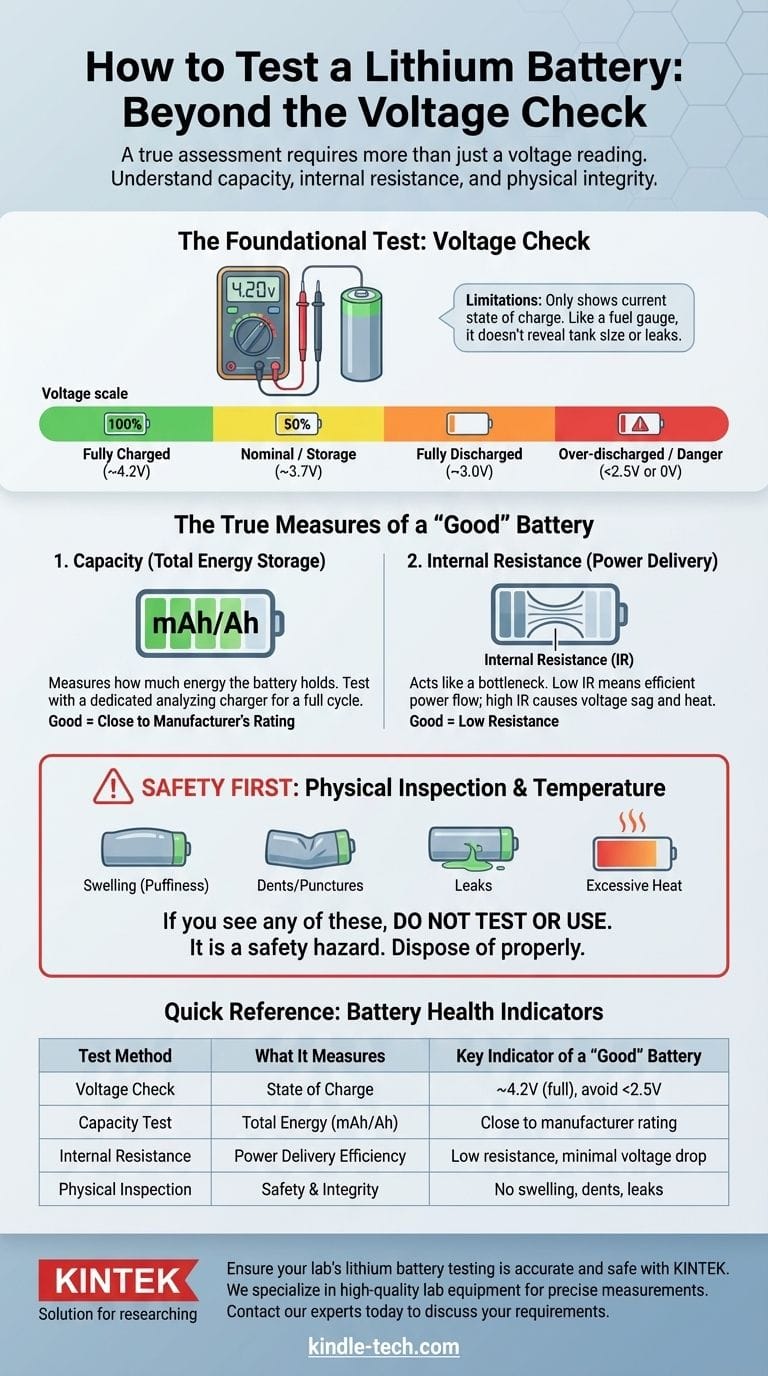
| Lithium-ion Cell | 4.2V | 3.7V | <3.2V |
Non-obvious insight: Voltage drops under load. If a battery shows good voltage with no load but drops fast when powering a device, it’s nearing the end of life. Always test under the same conditions for accurate tracking.

Credit: www.youtube.com
Common Mistakes When Testing Batteries
Even with a good tester, people often make errors that lead to wrong results or even damage.
- Testing right after charging or using: Batteries need to “rest” for 30 minutes after charging or heavy use before testing. Freshly charged or just-used batteries can show false readings.
- Mixing up the probes: Connecting the red and black probes to the wrong terminals won’t always damage the tester, but it can give negative readings or confuse you.
- Ignoring temperature: Battery voltage can change with temperature. For example, lead-acid batteries show lower voltage in cold weather.
- Not testing under load: For large batteries, voltage without load doesn’t tell the full story. Use a load tester to see real performance.
- Trusting only voltage: Some batteries can show good voltage but still have low capacity. If a battery dies quickly even though it tests “good,” it might be time to replace.
Safety Tips For Using Battery Voltage Testers
Testing small batteries is usually safe, but higher voltage or car batteries need extra care.
- Wear gloves and eye protection when testing car or solar batteries.
- Never touch both terminals with your hands or metal objects.
- Check your tester for damaged wires or cracks before use.
- For rechargeable or lithium batteries, avoid short circuits—they can catch fire or explode.
Practical Examples: Real-world Battery Testing
Let’s look at a few practical cases where voltage testing is essential:
Checking Car Battery Health
If your car turns over slowly or dashboard lights are dim, test the battery. If you see below 12. 4V after the car sits overnight, the battery may be failing. Testing after a drive can show a higher voltage, but that’s just a surface charge.
Testing Aa/aaa Batteries
Don’t throw out “dead” batteries without testing. Sometimes remote controls or toys stop working even though the battery has useful life left. A tester can show if the battery is truly empty (below 1. 0V) or just weak.
Solar System Batteries
Off-grid solar setups use large batteries. Regular voltage checks can prevent unexpected blackouts. Always measure after sunset for a true reading.
How To Choose The Right Battery Voltage Tester For Your Needs
With so many options, choosing the right tester can be confusing. Here’s a simple guide:
- For home use (AA/AAA, 9V, small electronics): A digital tester or a basic multimeter is ideal.
- For cars, motorcycles, or RVs: Get a load tester for lead-acid batteries. These provide more realistic health info.
- For solar or large batteries: Use a multimeter with a high voltage range and good safety features.
- For hearing aids or button cells: Buy a specialty tester designed for small batteries.
Non-obvious insight: Cheap testers often have poor accuracy or break quickly. Spending a little more can save batteries and frustration over time.
Credit: kindle-tech.com
Battery Voltage Tester Maintenance
A voltage tester is a long-lasting tool if you care for it:
- Keep it dry and away from dust.
- Store it in a case to protect the screen and probes.
- Replace the tester’s own batteries regularly.
- Clean the probes with alcohol to ensure good contact.
If your tester shows strange readings, check the internal battery first—many testers need their own power to operate.
When To Replace Your Battery Voltage Tester
Even good testers wear out. Replace your tester if:
- The display is dim or unreadable.
- Readings jump around or seem wrong.
- The probes are loose or frayed.
- The tester fails safety checks.
A reliable tester is key for all your battery-powered gear.
Where To Buy Battery Voltage Testers
You can find testers at electronics stores, auto parts shops, hardware stores, or online. Make sure to buy from reputable brands. For more technical details, check the Wikipedia: Battery Tester page.
Frequently Asked Questions
What Is The Difference Between A Voltage Tester And A Load Tester?
A voltage tester measures only the electrical potential of a battery without drawing power. A load tester puts a real load on the battery and checks how voltage drops under stress. This gives a better idea of battery health, especially for car and large batteries.
Can I Use A Multimeter As A Battery Voltage Tester?
Yes, a multimeter is a versatile tool for measuring voltage, current, and resistance. Set it to the correct voltage range, and connect the probes as you would with a basic tester. Multimeters are more accurate and useful for advanced tasks.
How Often Should I Test My Batteries?
Test car or solar batteries every 1-2 months, or before long trips. Test household batteries when devices act strangely or before storing them for a long time. Regular testing extends battery life and prevents surprises.
Is It Safe To Test Lithium-ion Batteries?
Testing lithium-ion batteries is safe if you avoid short circuits and use a proper tester. Never puncture, crush, or expose lithium batteries to heat. If the battery looks swollen or leaks, do not test—replace it safely.
What Does A Negative Voltage Reading Mean?
A negative voltage reading usually means you connected the probes in reverse—red to negative and black to positive. Just swap the probes. If you still see negative voltage, the battery may be installed backward in the device.
A good battery voltage tester is a simple tool that saves time, money, and stress. With the right tester and the tips in this guide, you’ll know exactly when to keep, charge, or replace your batteries—and avoid surprises.
