
A right angle grinder and a straight grinder might look similar at first glance, but they are designed for very different jobs. If you have ever walked into a hardware store or looked for tools online, you have probably seen both types on display.
Choosing between them is not just about picking a shape you like. The right choice depends on your project, safety needs, and even your comfort during long work hours. Understanding the differences and knowing which one to use can make your work faster, safer, and more precise.
Many new users think these grinders are interchangeable. But using the wrong grinder can mean more effort, lower quality, and sometimes even safety risks. In this guide, you will learn the strengths and weaknesses of each type. You will discover where each tool shines, what jobs to avoid, and how they compare in real-world tasks.
Whether you are a hobbyist or a professional, this knowledge will help you make smarter decisions and get better results.
What Is A Right Angle Grinder?
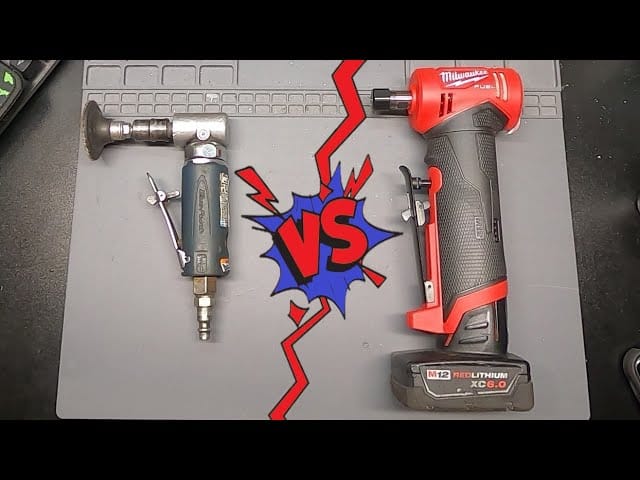
A right angle grinder, also known as a disc grinder or side grinder, has a motor that drives a disc at a 90-degree angle to the body of the tool. This L-shaped design makes it easy to handle for a wide range of tasks.
The disc can be swapped for different attachments, like cutting wheels, grinding discs, or wire brushes.
Most right angle grinders are powered by electricity, though some use batteries or even compressed air. They come in different sizes, but 4. 5-inch and 7-inch models are the most common. These tools are known for being strong and versatile, able to cut, grind, polish, and clean metal, stone, and other materials.
Key features:
- Disc positioned at a right angle to the handle
- Can be used with a wide range of discs and wheels
- Often includes a side handle for better control
- Usually has safety features, like a guard over the disc
A right angle grinder is a staple in metal workshops, construction sites, and automotive repair shops. Its design makes it easy to apply pressure on flat surfaces, which is ideal for grinding welds or cutting rebar. However, the size and speed can make it tricky for precise or detailed work.
What Is A Straight Grinder?
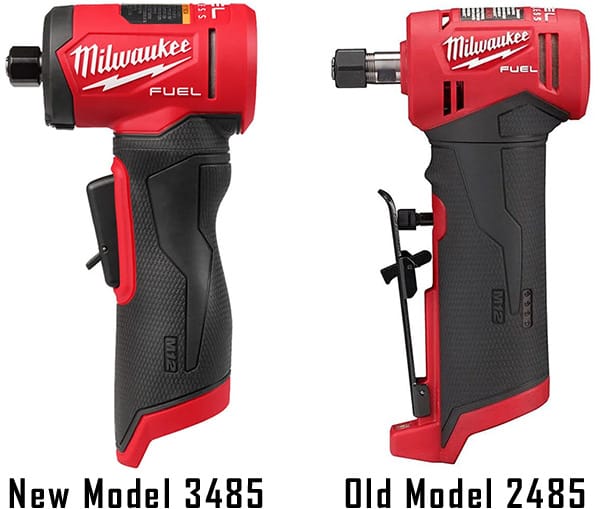
A straight grinder, sometimes called a die grinder, has a long, straight body. The motor turns a spindle in line with the tool, so the attachment spins straight out from the handle. This design is perfect for working in tight spaces, detailed polishing, or shaping materials in hard-to-reach spots.
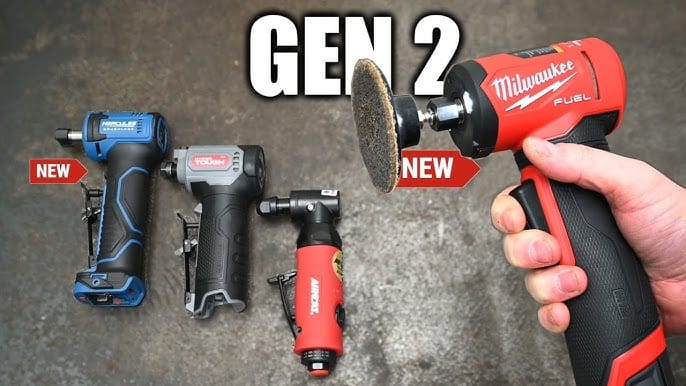
Straight grinders are usually lighter and smaller than angle grinders. They often use smaller attachments, like burrs, stones, or small cutoff wheels. Many models are powered by compressed air, especially in professional settings, but electric versions are also common.
Key features:
- Long, straight body with spindle in line with the tool
- Designed for detailed work and access to tight spaces
- Uses smaller, more precise attachments
- Often used for deburring, polishing, and shaping
Straight grinders are the go-to tool for machinists, metalworkers, and anyone who needs to smooth, shape, or polish small parts. Their compact size and shape give users more control, but they are not made for heavy cutting or grinding on large surfaces.
Core Differences: Design And Ergonomics
Understanding how each tool feels and functions is key to choosing the right one. Here are the main differences in design and ergonomics:
| Feature | Right Angle Grinder | Straight Grinder |
|---|---|---|
| Body Shape | L-shaped, disc at 90° | Straight, spindle in line |
| Handle Position | Often has an extra side handle | Usually single-handed, elongated body |
| Weight | Heavier | Lighter |
| Control | Better for applying pressure on surfaces | Better for precise, detailed work |
| Attachment Size | Larger discs (4.5–9 inches) | Smaller burrs/discs (1/4–1 inch) |
A right angle grinder is easier to use for big, open surfaces. Its weight and handle make it steady, even during heavy grinding. In contrast, a straight grinder is more comfortable for long, detailed work or when you need to reach inside holes or corners.
Main Uses: Where Each Grinder Excels
The right tool can make all the difference in speed and quality. Here’s where each grinder really shines:
Right Angle Grinder
- Cutting metal bars, pipes, or rods: With a cutting disc, you can slice through thick steel quickly.
- Grinding welds: Its power and disc size help smooth out welds on large metal sheets or frames.
- Removing rust and paint: A wire brush attachment cleans large surfaces fast.
- Cutting masonry or tiles: Special discs can handle bricks, tiles, and concrete.
- Polishing stone and metal: Swap to a polishing pad for a smooth finish.
Angle grinders are made for tough, high-speed jobs. If you need to remove a lot of material or cut through thick surfaces, this is the tool to pick.
Straight Grinder
- Deburring edges and holes: Perfect for cleaning up drilled holes or sharp edges.
- Engraving or carving: Small burrs let you shape, carve, or engrave metal, wood, or plastic.
- Polishing inside tubes: The long, thin shape reaches deep into pipes or narrow spaces.
- Precision grinding: Great for sharpening tools or making small adjustments.
- Mold and die work: Common in tool-and-die shops for shaping molds.
Straight grinders are all about finesse. If your work is detailed, or you need to reach spots an angle grinder can’t, this is the better choice.
Credit: toolguyd.com
Performance: Power, Speed, And Efficiency
When comparing the two, there are some big differences in raw performance.
| Aspect | Right Angle Grinder | Straight Grinder |
|---|---|---|
| Motor Power | 700–2500+ Watts | 200–800 Watts |
| No-Load Speed | 6,500–12,000 RPM | 20,000–35,000 RPM |
| Cutting/Grinding Capacity | High | Low to moderate |
| Precision | Moderate | High |
Angle grinders have more torque and can cut through thick materials. However, straight grinders spin faster (in RPM) but with less torque, making them better for fine work but not for heavy cutting.
Non-obvious insight: Many beginners think higher RPM always means more power. In reality, torque (turning force) is more important for heavy grinding or cutting, which is why angle grinders handle tougher jobs even at lower RPM.
Safety And Ease Of Use
Safety is critical with any power tool. Both grinders can be dangerous if used incorrectly, but each has its own risks and safety features.
Right angle grinders often have:
- Large guards to protect from flying debris
- Side handles for two-handed use
- Trigger locks to prevent accidental starts
Straight grinders usually offer:
- Smaller guards or nose cones
- Slim bodies for better grip
- Easier maneuvering in tight spots
Common safety tips for both:
- Always wear eye and ear protection
- Use the right disc for the job and tool
- Check attachments for cracks or damage before use
- Keep your hands clear of the spinning disc or burr
Non-obvious insight: Straight grinders often lack the large guards of angle grinders. While this helps you see your work, it also means less protection, especially from small particles. Always use extra caution and consider a face shield for detailed work.
Credit: www.youtube.com
Cost And Maintenance
Cost is often a deciding factor. Here is a quick comparison:
- Right angle grinders: $40 to $250 for quality models, plus $3–$10 per disc.
- Straight grinders: $30 to $200, with most attachments costing $2–$15 each.
Maintenance is similar for both:
- Clean dust and debris after use
- Check cords and hoses for wear
- Replace worn discs or burrs as needed
- Lubricate moving parts if recommended by the manufacturer
Angle grinders may wear out discs faster, especially if used on hard materials. Straight grinders’ burrs last longer, but they are smaller and can be more expensive per use if you do a lot of fine work.
Practical tip: Many users forget to check the collet (the clamp that holds the attachment) on straight grinders. A loose collet can let the burr fly out at high speed, which is a serious hazard. Always tighten the collet fully before starting.
Pros And Cons: Quick Overview
Below is a summary to help you quickly compare the main strengths and weaknesses:
| Right Angle Grinder | Straight Grinder | |
|---|---|---|
| Pros | – High power – Versatile for cutting, grinding, polishing – Handles large surfaces – Good for heavy-duty tasks | – Excellent for detailed work – Reaches tight spots – Lightweight and easy to control – Ideal for precision and engraving |
| Cons | – Heavy, can cause fatigue – Not for small or delicate work – Harder to use in tight spaces | – Limited to light tasks – Smaller attachments wear quickly – Less protection from flying debris |
How To Choose: Key Factors
If you are still unsure which tool to buy, consider these factors:
- Type of projects: Heavy-duty tasks (cutting steel, grinding welds) favor a right angle grinder. Small, detailed jobs (deburring, engraving) are better with a straight grinder.
- Work environment: Tight spaces or inside objects? Straight grinder. Open surfaces? Angle grinder.
- Your experience level: Beginners often find angle grinders easier for big jobs, but straight grinders are safer for learning fine control.
- Budget: Both tools are affordable, but attachments and discs can add up over time.
- Tool availability: If you already have one, see if you can get the right attachments before buying another tool.
Common mistake: Some users try to use a straight grinder for heavy cutting, which can overheat the tool and even cause injuries. Always match the tool to the task.
Real-world Examples
Let’s look at two common scenarios to show the difference:
- Scenario 1: Car body repair
- Removing rust from a wide panel is much faster with a right angle grinder and a wire brush.
- Cleaning up welds inside a wheel arch (a tight space) is easier with a straight grinder and a small burr.
- Scenario 2: Metal fabrication shop
- Cutting thick steel bars for a frame is best with a right angle grinder.
- Creating smooth, rounded edges inside drilled holes is a job for a straight grinder.
These examples show why many professionals own both types. They are not rivals, but partners for different jobs.
Credit: fincapontania.com
Frequently Asked Questions
What Is The Main Difference Between A Right Angle Grinder And A Straight Grinder?
The main difference is the body shape and the direction of the spindle. A right angle grinder has a disc at 90 degrees to the handle, making it ideal for large, flat surfaces and heavy work. A straight grinder has a spindle in line with the tool, making it better for detail work and reaching into tight spaces.
Can I Use The Same Attachments On Both Grinders?
No, most attachments are not interchangeable. Right angle grinders use larger discs with different mounting holes. Straight grinders use small burrs, stones, or wheels with a collet. Always check the tool and attachment sizes before use.
Which Grinder Is Safer For Beginners?
Both tools can be safe if used correctly, but a right angle grinder usually offers more protection with its larger guard. However, it is more powerful and can be harder to control. Beginners should start with small projects, use all safety gear, and read the manual carefully.
Are There Cordless Versions Of These Grinders?
Yes, both types come in cordless models. Cordless angle grinders are popular for outdoor or on-site work. Cordless straight grinders are useful for detail work away from power outlets. Battery life and power may be less than corded models, so choose based on your needs.
Where Can I Find More Information About Grinder Safety?
A good resource is the OSHA Personal Protective Equipment page. It offers guidelines on safe tool use, personal protection, and best practices for all types of grinders.
Choosing between a right angle grinder and a straight grinder is not just about preference. It is about matching the tool to the job for better results and safer work. By understanding their differences, strengths, and best uses, you will be able to make a smarter purchase and achieve professional results, even if you are just starting out.
