
Sanding is a key part of woodworking, metalworking, and many DIY projects. Whether you’re preparing a surface for paint, smoothing out rough edges, or restoring an old piece of furniture, choosing the right sander can make your job much easier and faster.
But with so many sander types available, picking the right one can be confusing. Each sander has its own strengths, weaknesses, and best uses. Understanding these differences can help you achieve better results and avoid common mistakes.
In this guide, you’ll discover the most popular types of sanders, how each works, when to use them, and what to watch out for. We’ll also compare the main features and provide practical advice to help you choose the best sander for your project.
What Is A Sander?
A sander is a power tool designed to smooth, shape, or remove material from surfaces. Sanding can be done by hand, but power sanders save time and energy, giving more consistent results. Sanders use an abrasive material, usually sandpaper, that moves in different ways depending on the tool type.
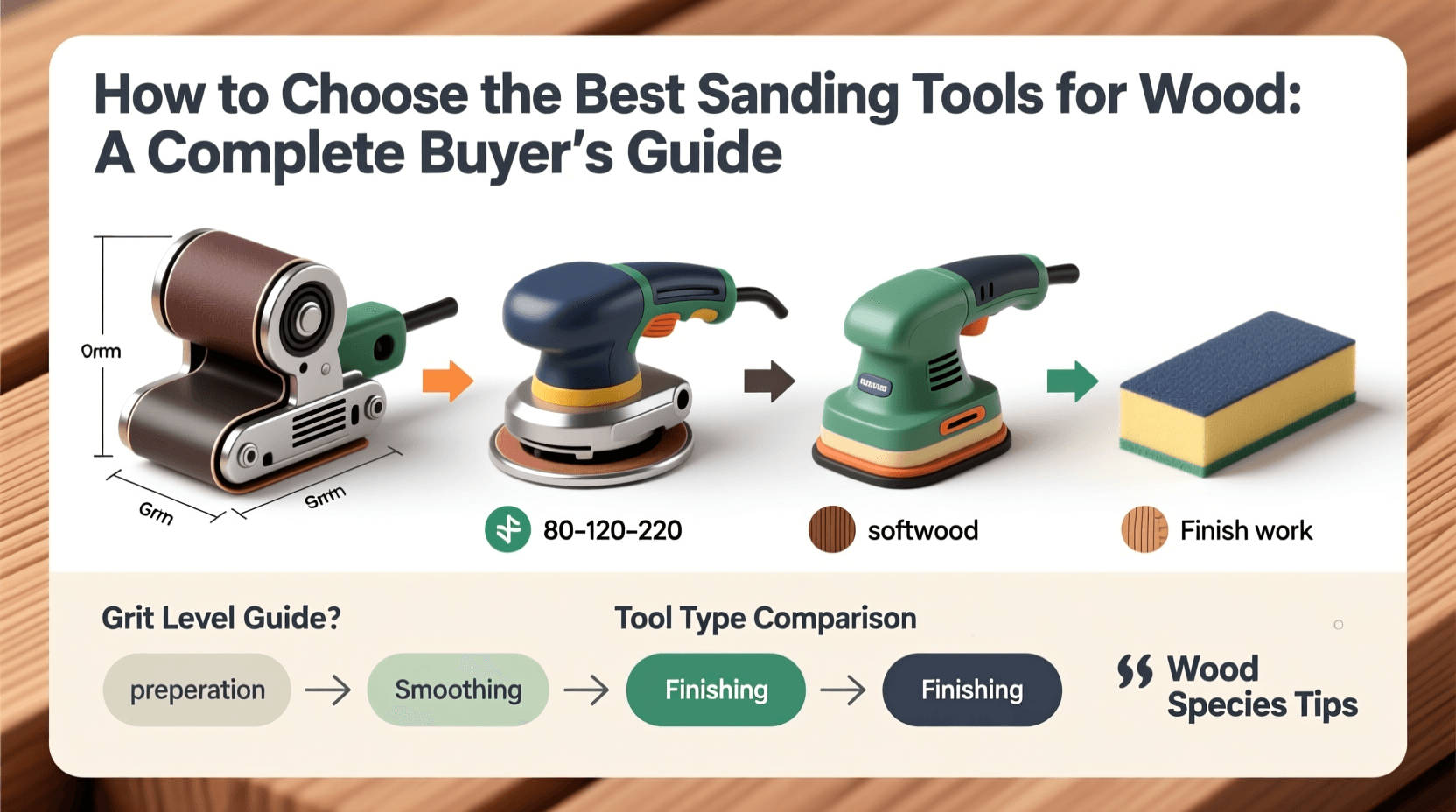
Main Types Of Sanders Compared
There are many sander types, but the most commonly used are:
- Belt Sander
- Orbital (Finishing) Sander
- Random Orbital Sander
- Detail Sander
- Disc Sander
- Drum Sander
- Sheet Sander
- Spindle Sander
- Oscillating Spindle Sander
- File Sander
- Drywall Sander
- Floor Sander
- Palm Sander
- Edge Sander
- Bench Sander
Let’s look at each type in detail.
1. Belt Sander
A belt sander uses a continuous loop of sandpaper that moves over two drums. This design makes it powerful and aggressive, perfect for quickly removing large amounts of material. Woodworkers use belt sanders for flattening boards, smoothing rough surfaces, and removing old paint. They come in both handheld and stationary models.
Key Features:
- Fast material removal
- Good for large, flat surfaces
- Can be hard to control for fine detail
Common Mistake: Many beginners press down too hard, causing gouges. Let the sander’s weight do the work.
2. Orbital (finishing) Sander
The orbital sander is lighter and less aggressive than a belt sander. It moves the sandpaper in small circles (orbits), which reduces the risk of damaging the workpiece. It’s perfect for final smoothing or sanding between coats of finish.
Key Features:
- Leaves a smooth, even finish
- Suitable for soft woods and painted surfaces
- Can leave swirl marks if misused
Best Use: Light sanding and finishing tasks.
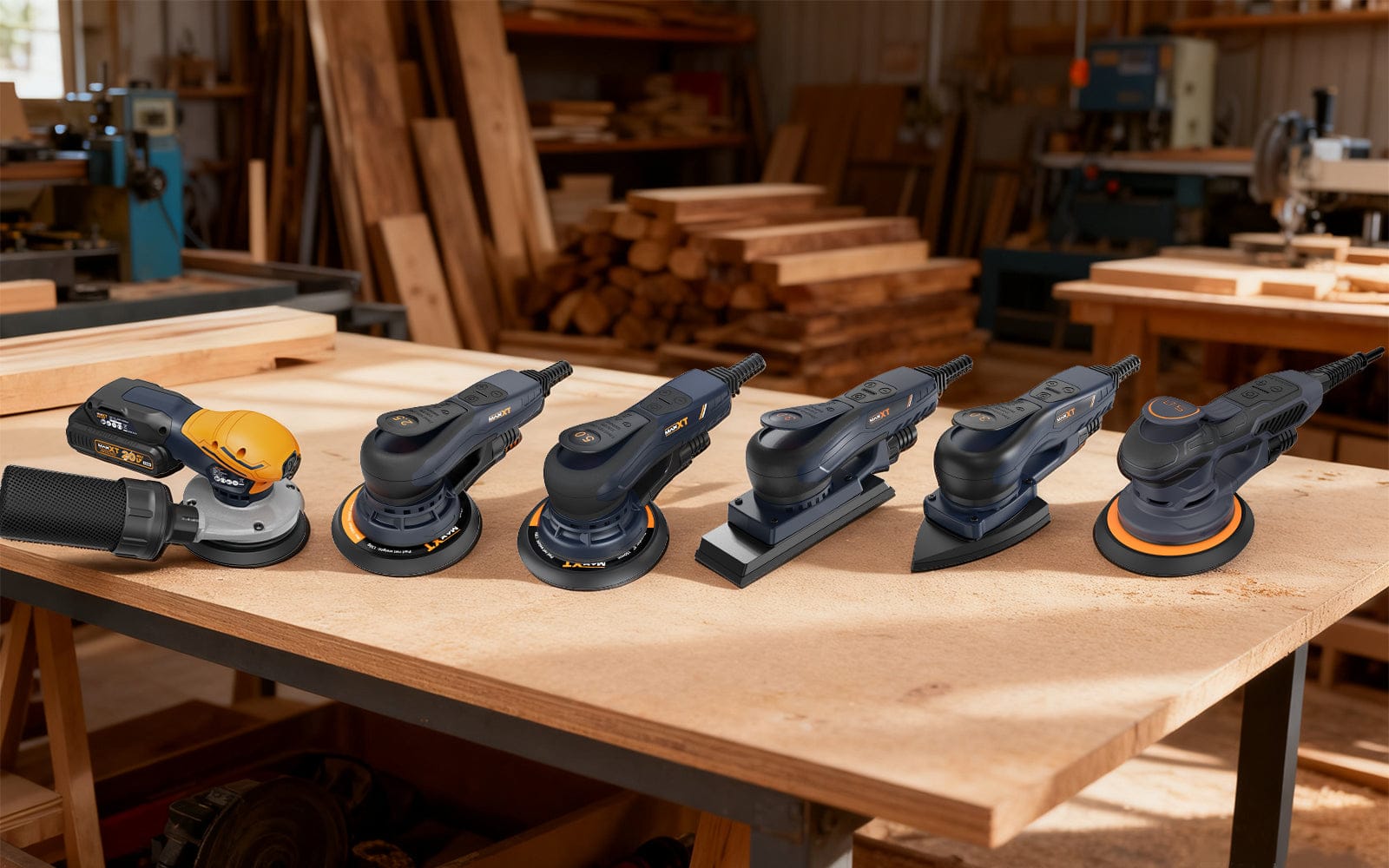
3. Random Orbital Sander
A random orbital sander combines orbital movement with random rotation. This means the sanding pad spins while also moving in small circles. The result is a very smooth finish without swirl marks.
Key Features:
- Very versatile
- Works on wood, plastic, and metal
- Removes material faster than a regular orbital sander
Non-Obvious Insight: Use the right grit sandpaper—too coarse can leave scratches, too fine can clog quickly.
4. Detail Sander
A detail sander (sometimes called a mouse sander) has a pointed tip and a small sanding pad. It’s made for getting into tight corners, edges, and intricate shapes.
Key Features:
- Perfect for small, hard-to-reach areas
- Usually lightweight and easy to handle
- Not good for large surfaces
5. Disc Sander
A disc sander uses a round, spinning disc of sandpaper. These are usually mounted on a bench or worktable. They’re great for shaping wood, smoothing end grain, and sanding curves.
Key Features:
- Powerful and fast
- Good for precise shaping
- Not portable
6. Drum Sander
A drum sander has a rotating cylinder covered with sandpaper. It’s often used for flattening wide boards or panels. Floor drum sanders are used for sanding hardwood floors.
Key Features:
- Excellent for large, flat surfaces
- Removes material very quickly
- Machines can be heavy and expensive
7. Sheet Sander
A sheet sander uses rectangular pieces of sandpaper (usually a quarter or half of a standard sheet). The pad moves in a simple, back-and-forth motion.
Key Features:
- Good for finishing flat surfaces
- Easy to change sandpaper
- Not as fast as belt or random orbital sanders
Tip: Sheet sanders are more affordable, making them popular for home use.
8. Spindle Sander
A spindle sander is designed for sanding curves, holes, and inside edges. The sanding drum moves up and down while it spins, which reduces marks and extends sandpaper life.
Key Features:
- Excellent for curved work
- Mainly used in woodworking
- Not suitable for flat surfaces
9. Oscillating Spindle Sander
This is an improved version of the spindle sander. The oscillating action (moving up and down) helps prevent burns and creates a smoother finish.
Key Features:
- Reduces heat and marks
- Better for heavy use
- Takes up more space
10. File Sander
A file sander is a narrow, belt-driven sander for reaching tight spots, like inside corners or metal welds. It’s popular in metalworking and auto body repair.
Key Features:
- Very narrow sanding area
- Flexible for detailed jobs
- Not for large surfaces
11. Drywall Sander
The drywall sander is built for sanding walls and ceilings. Many models have long handles and a vacuum attachment to collect dust.
Key Features:
- Large sanding pad
- Designed to minimize dust
- Not meant for wood or metal
12. Floor Sander
A floor sander is a heavy-duty tool for sanding and refinishing wood floors. There are drum and orbital versions, each with different sanding patterns.
Key Features:
- Very powerful
- Essential for floor refinishing
- Requires practice to avoid gouges
13. Palm Sander
A palm sander is a compact, lightweight tool that fits in your hand. It’s ideal for small projects and finishing work.
Key Features:
- Easy to control
- Good for fine detail
- Slower than bigger sanders
14. Edge Sander
An edge sander is designed for smoothing the edges of boards or panels. It’s usually bench-mounted.
Key Features:
- Great for straight edges
- Fast and consistent results
- Not for curved surfaces
15. Bench Sander
A bench sander combines a belt and a disc sander in one machine. It’s stationary and used for shaping, smoothing, and sharpening tools.
Key Features:
- Versatile in the workshop
- Handles many tasks
- Takes up bench space
Credit: www.hyperfit-tools.ca
Quick Comparison: Sander Type, Power, And Best Use
Here’s a side-by-side look at the most popular sanders:
| Sander Type | Power | Best For |
|---|---|---|
| Belt Sander | High | Heavy stock removal, leveling |
| Random Orbital Sander | Medium | Finishing, versatile jobs |
| Orbital Sander | Low-Medium | Fine finishing |
| Detail Sander | Low | Corners, intricate areas |
| Drum Sander | Very High | Large panels, floors |
When To Use Each Sander Type
Choosing the right sander depends on the task:
- Remove a lot of wood quickly: Belt sander or drum sander
- Smooth flat surfaces: Sheet sander, random orbital sander
- Finish and polish: Orbital sander, palm sander
- Work on curves or edges: Spindle sander, edge sander, detail sander
- Sand drywall: Drywall sander
- Refinish floors: Floor sander
Practical Example: If you’re restoring an old table, start with a belt sander to remove the old finish, switch to a random orbital sander for smoothing, and finish with a palm sander for fine detail.
Credit: cumiabrasive.in
Key Features To Compare
Before buying a sander, look at these factors:
- Power (Amps or Watts): Higher power means faster sanding but can be harder to control.
- Speed Control: Variable speed lets you adjust for different materials.
- Dust Collection: A built-in vacuum or dust bag keeps your work area cleaner.
- Size and Weight: Lighter sanders are easier to control for detail work.
- Sandpaper Size and Type: Some sanders use standard sheets, others need special pads or belts.
Here’s a feature comparison of three popular sander types:
| Sander | Speed Control | Dust Collection | Sandpaper Type |
|---|---|---|---|
| Belt Sander | Often Yes | Bag/Port | Belt |
| Random Orbital Sander | Usually Yes | Bag/Port | Hook-and-loop disc |
| Sheet Sander | Sometimes | Bag/Port | 1/4 or 1/2 Sheet |
Pros And Cons Of Common Sander Types
Understanding the strengths and weaknesses of each type helps you avoid surprises.
| Sander Type | Pros | Cons |
|---|---|---|
| Belt Sander | Fast, powerful, good for large areas | Can be hard to control, risk of gouging |
| Random Orbital Sander | Versatile, smooth finish, few marks | Not as fast for heavy removal |
| Detail Sander | Great for corners, easy to handle | Slow for large surfaces, less power |
Non-obvious Insights When Choosing A Sander
- Dust can damage your health and finish. Always look for a sander with good dust collection, or connect it to a shop vacuum.
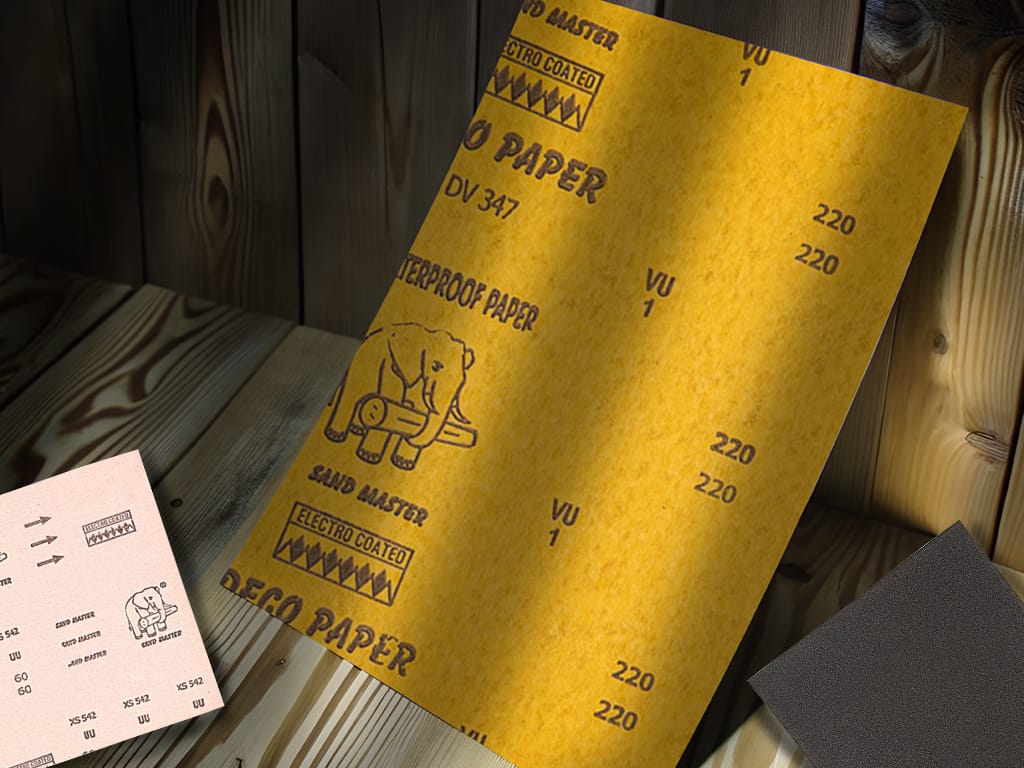
- Wrong sandpaper grit wastes time. Start with a coarser grit for rough surfaces, then move to finer grits for finishing. Skipping grits can make your work take longer and leave scratches.
- Comfort matters. Test the grip and vibration of the sander before buying. A tool that’s uncomfortable will slow you down.
- Buy quality sandpaper. Cheap sandpaper wears out quickly, clogs, or scratches surfaces.
Common Mistakes Beginners Make
- Using too much pressure: Let the sander do the work.
- Skipping grits: Jumping from a very rough grit to a fine grit leaves marks.
- Not cleaning dust: Dust left on the surface can scratch or ruin finishes.
- Choosing the wrong sander: A belt sander is overkill for fine work; a detail sander is too slow for big jobs.
How To Decide: Which Sander Is Best For You?
Think about your main projects. For most DIY users, a random orbital sander covers the widest range of jobs, from rough sanding to finishing. If you do a lot of furniture or detail work, a palm or detail sander is also helpful.
For large surfaces or floors, look for a belt sander or floor sander.
If you’re serious about woodworking, having two or three different types will give you the best results.
For more technical details, see the Wikipedia page on sanders.
Frequently Asked Questions
What Is The Difference Between An Orbital Sander And A Random Orbital Sander?
An orbital sander moves the pad in small circles (orbits). A random orbital sander not only orbits but also spins, making the sanding pattern random. This prevents swirl marks and gives a smoother finish.
Can I Use A Belt Sander For Fine Finishing?
No, a belt sander is too aggressive for fine finishing. It’s best for removing lots of material quickly. For a smooth finish, use a random orbital or sheet sander.
What Is The Best Sander For Beginners?
A random orbital sander is a good choice for beginners. It’s versatile, easy to control, and gives great results on many materials.
How Important Is Dust Collection In A Sander?
Dust collection is very important. It keeps your work area clean, helps you see your progress, and protects your health by reducing airborne dust.
Can I Use One Sander For All Types Of Projects?
No, each sander type is made for specific jobs. While a random orbital sander is versatile, some tasks (like sanding corners or floors) need specialized tools.
Sanders are powerful tools that can transform your projects, but choosing the right one saves time, effort, and money. Take time to match the sander type to your needs, use good sandpaper, and follow safety practices for the best results.
Credit: smartbuy.alibaba.com
