
A table saw and a miter saw are both powerful tools that make woodworking faster, more accurate, and safer. But while their names sound similar, the ways they cut, their best uses, and their strengths are very different. If you’re thinking about buying your first saw, or want to add a new tool to your workshop, understanding these differences will help you make the right choice.
Let’s look closely at what sets a table saw apart from a miter saw, how each one works, what they do best, and what to think about before you decide. This guide will help you avoid beginner mistakes, save money, and get better results from your projects.
What Is A Table Saw?
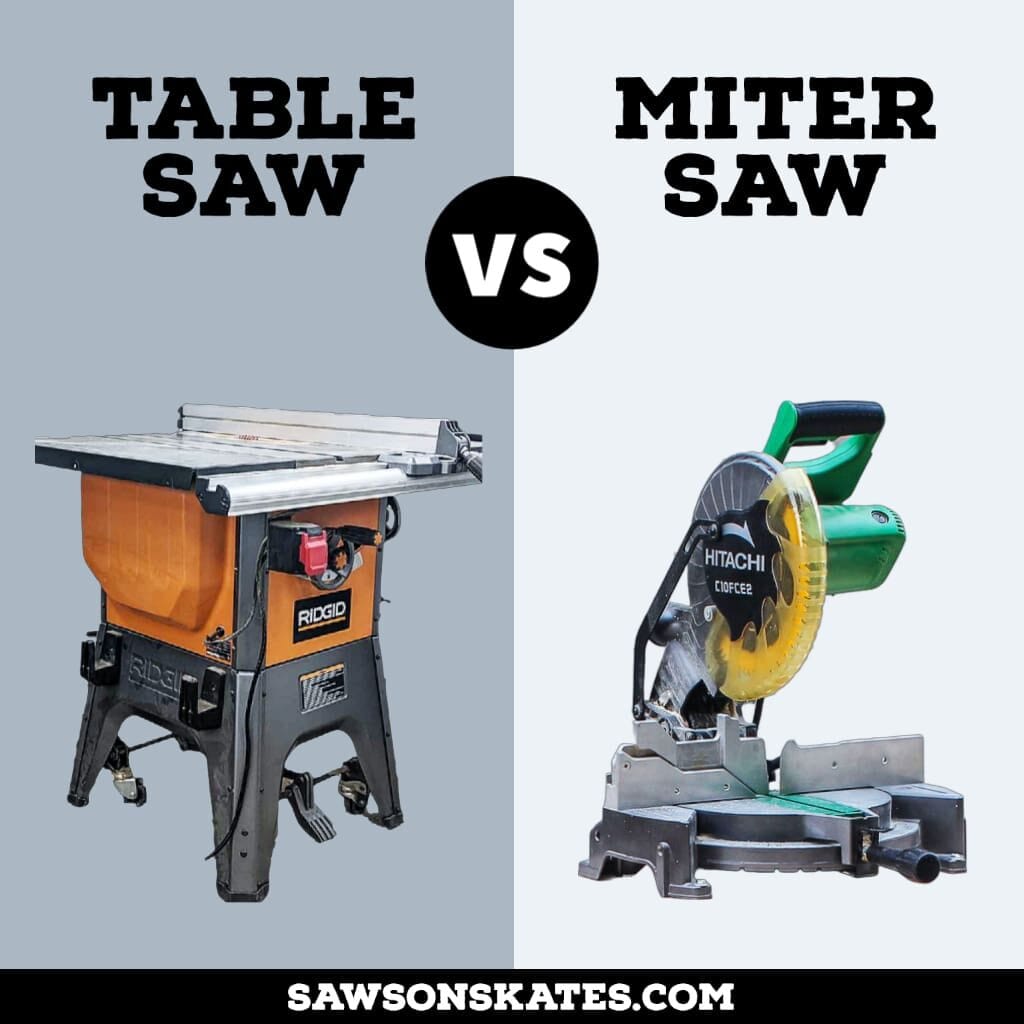
A table saw is a stationary tool with a circular blade that sticks up through a flat table surface. The blade spins fast, letting you push wood (or other material) through it for straight cuts. Most table saws let you adjust the blade up and down, and tilt it for angled cuts.
Table saws are often the heart of a woodworking shop because they handle so many types of cuts. You use both hands to guide the material, keeping it flat against the fence for accuracy. Table saws come in different sizes: from small, portable models to heavy cabinet saws for serious woodworking.
Common Table Saw Cuts
- Rip cuts (cutting wood lengthwise, with the grain)
- Crosscuts (cutting wood across the grain)
- Bevel cuts (angled cuts along the edge)
- Dadoes and grooves (wide slots in wood)
A table saw is great for big pieces of wood, like plywood sheets or long boards. It’s the tool of choice for building furniture, cabinets, and frames.
What Is A Miter Saw?
A miter saw is a power tool with a blade mounted on a swing arm. You lower the blade down onto the wood, which rests on a flat base. The base has a fence to keep the piece in position. The main advantage? You can quickly set the saw to cut at a variety of angles.
Miter saws are sometimes called “chop saws” (for basic models) or “compound miter saws” (for models that can cut angles and bevels at the same time). They are more portable than table saws, and they don’t need as much setup.
Common Miter Saw Cuts
- Miter cuts (angled cuts across the face of the wood)
- Crosscuts (straight cuts across the wood)
- Bevel cuts (angled cuts through the thickness)
- Compound cuts (miter and bevel together)
Miter saws are perfect for making picture frames, door trim, crown molding, and other projects where you need precise angles.
Credit: sawsonskates.com
Table Saw Vs. Miter Saw: Side-by-side Comparison
The main question is: When should you use a table saw, and when should you use a miter saw? Here’s a direct comparison.
| Feature | Table Saw | Miter Saw |
|---|---|---|
| Main Use | Rip cuts, large sheet cutting, general-purpose | Crosscuts, angle cuts, trim work |
| Best For | Cabinets, furniture, panels | Frames, molding, finish carpentry |
| Cutting Capacity | Large boards and sheets | Limited by blade size (usually up to 12” width) |
| Portability | Usually stationary, heavy | Portable, some models lightweight |
| Safety | Higher risk (exposed blade, kickback) | Lower risk (controlled movement) |
What Projects Need A Table Saw?
If you plan to work with full sheets of plywood, cut long boards, or build large furniture, a table saw is almost essential. It lets you break down big pieces quickly and cut them to size. For example:
- Making cabinets or bookshelves: You’ll need to cut panels and shelves with straight, accurate rip cuts.
- Building tables or benches: Table saws handle long boards better than miter saws.
- Cutting dadoes and rabbets: These joinery cuts are easy on a table saw with the right blade.
A table saw is the main workhorse for any project that needs straight, repeatable cuts.
:max_bytes(150000):strip_icc()/SPR-miter-saw-vs-table-saw-8628214-hero-ec319f55ad644508aec341c001e6e4fd.jpg)
Credit: www.thespruce.com
What Projects Need A Miter Saw?
A miter saw shines when you need clean, accurate angles and shorter pieces. For example:
- Picture frames and door trim: Perfect 45-degree corners are simple with a miter saw.
- Crown molding and baseboards: Angled cuts (sometimes complex compound angles) are quick and repeatable.
- Wood flooring: A miter saw makes it easy to cut planks to length.
For any project that needs fast, repeatable angle cuts, a miter saw is the best tool.
Strengths And Weaknesses
Let’s look at what each tool does best—and where they fall short.
Table Saw Strengths
- Versatility: Handles many cut types with one tool.
- Accuracy: Fence and miter gauge allow precise, repeatable cuts.
- Speed: Cuts large panels and boards quickly.
Table Saw Weaknesses
- Safety Risks: Kickback and exposed blade can cause injury.
- Takes Space: Needs a flat, stable surface and room for large materials.
- Less Portable: Not ideal for jobs outside the workshop.
Miter Saw Strengths
- Precision Angles: Easy, fast setup for accurate miter and bevel cuts.
- Portability: Can move to the job site or different rooms easily.
- Safer: Blade moves down into material, hands stay clear.
Miter Saw Weaknesses
- Limited Rip Capacity: Can’t cut long or wide boards.
- Not for Sheet Goods: Struggles with plywood or large panels.
- Fewer Cut Types: Not as versatile as a table saw.
Real-world Examples
Imagine you’re building a dining table. You need to cut the large top from a sheet of wood—this is a job for a table saw. But if you want to add a decorative frame around the edge, you’ll need a miter saw for perfect corners.
Or, think about installing crown molding. Every piece needs a precise angle, sometimes both horizontally and vertically. A miter saw makes this easy and repeatable, while a table saw would be slow and awkward for these cuts.
Key Features To Compare Before Buying
Not all table saws or miter saws are created equal. Here are the main things to compare before you choose:
| Feature | Why It Matters | Table Saw | Miter Saw |
|---|---|---|---|
| Blade Size | Bigger blades cut thicker/wider materials | 10-12 inches common | 7.25-12 inches common |
| Motor Power | Higher amps or horsepower for tougher cuts | 1-5 HP typical | 10-15 amps typical |
| Fence & Miter Gauge | Essential for accuracy and repeatability | Very important | Not used (uses detents instead) |
| Dust Collection | Keeps workspace clean and healthy | Usually built-in port | Often has dust bag/port |
| Cutting Angles | For making bevels and miters | Blade tilts, fence stays | Saw pivots and tilts |
| Portability | Important for job sites or small spaces | Usually stationary | Often designed to be portable |
What Most Beginners Get Wrong
Many beginners think they can get by with just one saw. In reality, the table saw and miter saw are designed for different jobs. Trying to cut long boards on a miter saw, or make perfect angle cuts on a table saw, leads to frustration and mistakes.
Another common mistake: choosing a saw by price alone. A cheap table saw with a flimsy fence will ruin your accuracy, while a basic miter saw may not tilt for bevels. Always check the fence quality, angle adjustments, and safety features before you buy.
Pro tip: If you’re not sure which to buy first, think about your next 3-5 projects. If they involve big sheets or straight cuts, start with a table saw. If you need angles and shorter cuts, start with a miter saw.
Safety Tips For Both Saws
Both tools can cause serious injury if used the wrong way. Here are key safety rules:
- Always use safety glasses and hearing protection.
- Never reach over a spinning blade.
- Keep hands at least 6 inches from the blade.
- Use push sticks and clamps to keep hands safe.
- Check for nails or metal in wood before cutting.
- Disconnect power before changing blades or making adjustments.
- Read the manual for your specific saw model.
Even with built-in safety features, mistakes happen fast. Take your time and double-check your setup every time you use the saw.
When To Own Both Saws
Many experienced woodworkers have both a table saw and a miter saw. Why? Each one makes different cuts easier and safer. For example, you might use a table saw to cut plywood into panels, then move to the miter saw for fast, perfect angle cuts on trim.
If you work on a mix of projects—furniture, home improvement, finish carpentry—owning both tools can save hours and give you better results.
Cost Comparison
Prices can vary a lot depending on brand, size, and features.
- Entry-level table saws: $200 – $400 (portable models)
- High-end table saws: $1000+ (cabinet or contractor style)
- Basic miter saws: $100 – $200
- Compound sliding miter saws: $250 – $600
A good rule: Invest in the best fence and blade quality you can afford. Poor blades and wobbly fences lead to bad cuts, wasted material, and more risk.
Credit: www.findbuytool.com
Maintenance And Longevity
Table saws and miter saws both last for years with proper care. Clean the saw after every use, keep the blade sharp, and check for loose bolts or worn parts. For table saws, wax the tabletop to reduce friction and prevent rust.
For miter saws, check the fence and angle stops for accuracy.
A well-maintained saw is safer and gives better results—don’t skip basic care.
Environmental And Space Needs
A table saw needs a larger, stable workspace. You’ll need room on both sides for long boards. Miter saws are easier to set up in a garage, spare room, or even on a job site.
If space is tight, a miter saw might be more practical as a first tool. Many DIYers start with a miter saw for small projects, then add a table saw as their skills and needs grow.
Frequently Asked Questions
What Is The Main Difference Between A Table Saw And A Miter Saw?
A table saw is designed for straight, long cuts (like ripping boards or cutting sheet goods). A miter saw is made for short, accurate angle cuts, such as those needed for frames or molding.
Can A Miter Saw Replace A Table Saw?
No. A miter saw can’t make long rip cuts or handle large sheets of wood. Each tool has its own strengths, and serious woodworkers often need both.
Which Saw Is Safer For Beginners?
A miter saw is usually safer because your hands stay away from the blade and the cutting action is controlled. Table saws have higher risks, especially kickback.
What Size Blade Should I Choose?
Most table saws use 10-inch or 12-inch blades. Miter saws use 7.25-inch to 12-inch blades. Larger blades cut thicker material, but make sure to match the blade to your saw’s specs.
Where Can I Learn More About Using These Saws Safely?
The OSHA Woodworking Safety page has excellent, up-to-date tips and guides for safe woodworking.
A table saw and a miter saw each bring unique strengths to your shop. Knowing what each tool does best lets you work faster, safer, and with better results. Whether you’re a beginner or an experienced woodworker, understanding these differences can help you build smarter, waste less wood, and enjoy your projects more.
