
A welder’s job is only as good as the tools they use, and one of the most overlooked essentials in any welding setup is the welder extension cord. Many people don’t realize that using the wrong extension cord can cause poor performance, damage expensive equipment, or even create serious safety risks. Whether you’re a professional fabricator, a hobbyist, or someone who just needs to power a welding machine farther from an outlet, choosing the right extension cord is critical. This guide will help you understand everything you need to know about welder extension cords—from how they work, to what specifications matter, to practical tips for safe and efficient use.
What Is A Welder Extension Cord?
A welder extension cord is a heavy-duty electrical cable designed to supply power from a wall outlet or generator to your welding machine. Unlike standard home extension cords, these are built to handle the high current that welders require. They are usually thicker, have special connectors, and use materials that can tolerate both heavy loads and challenging jobsite conditions. Using a standard or undersized extension cord with a welder can be dangerous and may void your welder’s warranty.
Key Specifications To Consider
When choosing a welder extension cord, a few technical details make all the difference. Here’s what you should pay attention to:
Amperage Rating
The amperage (or amp) rating tells you how much current the cord can safely carry. Most welders will need cords rated for either 30 amps or 50 amps. Always match the cord’s amp rating to your welder’s requirements. Using a cord with a lower amp rating than your welder can cause overheating, voltage drop, or even fire.
Voltage Rating
Welders typically run on either 120V or 240V. Make sure your extension cord matches your welder’s voltage. Cords designed for 240V will have different plugs and connectors than 120V cords.
Gauge (wire Thickness)
Wire gauge refers to the thickness of the copper wires inside the cord. Lower numbers mean thicker wire, which can carry more current with less resistance. Most welder cords are 8-gauge (for 30 amps) or 6-gauge (for 50 amps). Thicker wire is better for longer distances and higher currents.
Cord Length
Longer cords add resistance, which can lead to voltage drop. This means your welder may not work as well, or could even be damaged. For most jobs, try to use the shortest cord possible. If you need extra length, make sure to use a thicker gauge.
Plug And Connector Types
Welders use special connectors like NEMA 6-50, NEMA 10-50, or NEMA 14-50. Check your welder’s plug type, and make sure both ends of the extension cord match. Some cords come with adapters, but it’s safest to use a direct match.
Insulation And Jacket Material
Look for cords with tough, weather-resistant jackets. Materials like STW or SJTW are designed for workshop and outdoor use. A good jacket resists oil, sunlight, moisture, and abrasion.
Credit: www.arccaptain.com
Common Welder Extension Cord Sizes Compared
Different jobs require different cord specs. Here’s a quick look at common welder extension cord sizes:
| Cord Gauge | Amp Rating | Typical Length | Best For |
|---|---|---|---|
| 10-gauge | 20-30A | Up to 25 ft | Small 120V welders |
| 8-gauge | 40A | Up to 50 ft | Medium 240V welders |
| 6-gauge | 50A | Up to 100 ft | Large 240V welders |
Notice that as the cord gets longer, you need thicker wire to prevent voltage drop. Never use a thinner cord than recommended, even if it seems to work.
Choosing The Right Extension Cord For Your Welder
Finding the right cord isn’t just about matching numbers. Here’s how to make the right choice:
- Check your welder’s manual. It will list the required amperage, voltage, and plug type.
- Measure your distance. Only buy as much length as you need. If you need to go over 50 feet, step up to a thicker gauge.
- Inspect your outlet and welder plug. Make sure the connectors match.
- Consider the work environment. If you’ll use the cord outdoors, choose a jacket rated for outdoor use.
- Stick to trusted brands. Cheap cords can have poor-quality copper and insulation, which can be dangerous.
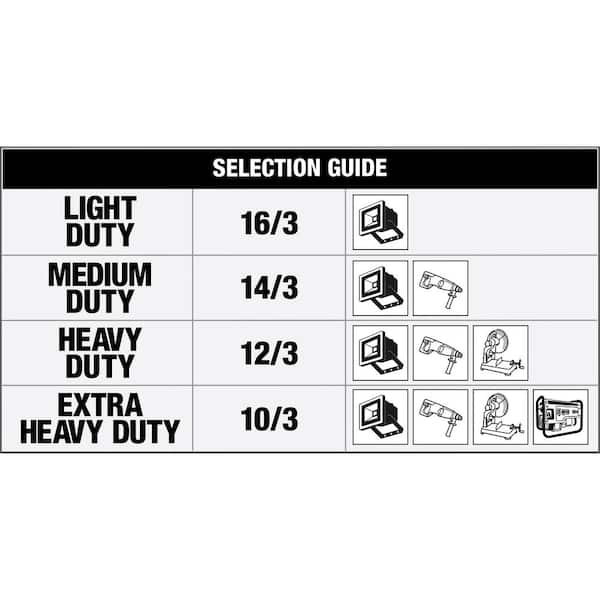
One mistake beginners make is using a “heavy-duty” home extension cord, thinking it’s strong enough. These are not made for welders, and can overheat or melt. Always use a cord specifically designed for welding.
Credit: www.homedepot.com
Voltage Drop: What It Is And Why It Matters
Voltage drop happens when electricity loses pressure as it travels through a long or thin wire. For welders, this means the machine may not get enough power, leading to weak welds, overheating, or even damage to the electronics. Here’s how voltage drop can affect your work:
- Inconsistent arc. The arc may sputter or cut out.
- Overheating cords. The cord may get hot and become a fire risk.
- Damaged welder. Sensitive electronics can fail from low voltage.
For example, if you use a 50-foot 10-gauge cord on a 50-amp welder, you could lose up to 10 volts or more. This is enough to cause problems. Always check the recommended gauge for your cord’s length.
Safety Tips When Using Welder Extension Cords
Welding creates heat, sparks, and sometimes unpredictable situations. Here are some key safety tips:
- Inspect the cord before each use. Look for cuts, exposed wires, or melted spots.
- Lay cords flat. Avoid running them through puddles, doorways, or tight bends.
- Don’t overload. Never plug more than one heavy tool into the same cord.
- Unplug when not in use. This protects against accidental shocks or fires.
- Keep away from hot surfaces. Welding creates sparks and metal slag—don’t let these land on your cord.
A non-obvious safety tip: If you ever feel the extension cord getting warm to the touch, stop using it immediately. Heat means the cord is overloaded or damaged.
How To Store And Care For Your Welder Extension Cord
A good welder extension cord can last for years if you care for it properly:
- Coil loosely. Don’t wrap it too tightly or kink the wire.
- Hang, don’t pile. Store the cord on a wall hook or reel to prevent crushing.
- Keep clean and dry. Wipe off oil, grease, and moisture after each use.
- Protect connectors. Use covers or caps to keep dirt and metal dust out of the plugs.
- Check before storing. If you spot any damage, repair or replace the cord right away.
People often overlook the need to keep cord connectors clean—dirty or corroded connectors can cause poor connections and even arcing.
Comparing Popular Welder Extension Cord Brands
To help you choose, here’s a look at how three well-known brands stack up:
| Brand | Gauge | Max Amps | Connector Type | Jacket Material |
|---|---|---|---|---|
| Southwire | 6-gauge | 50A | NEMA 6-50 | STW |
| Iron Forge | 8-gauge | 40A | NEMA 14-50 | SJTW |
| Parkworld | 10-gauge | 30A | NEMA 10-30 | STW |
All three use tough jackets, but notice that the gauge and connectors are different. Always match the cord to your welder and outlet.
Practical Examples
Let’s look at two everyday situations:
Example 1: You have a 120V stick welder with a 20-amp plug. You need to run it 30 feet to your garage.
- Best choice: 10-gauge, 20-amp cord with the correct plug, outdoor rated if used outside.
Example 2: You own a 240V MIG welder (requires 50 amps). The outlet is 60 feet away.
- Best choice: 6-gauge, 50-amp cord, NEMA 6-50 connectors, STW jacket for durability.
Trying to use a thinner or shorter-rated cord in either case risks your safety and your equipment.
Mistakes To Avoid
Even experienced welders make these mistakes:
- Using a standard household extension cord (“heavy-duty” does not mean “welder-rated”).
- Not checking the amp rating of the cord.
- Using an adapter to force a plug to fit (dangerous and can void warranties).
- Running cords through water or oily areas.
- Ignoring a warm or hot cord during use.
A good rule: If you’re not sure, always choose a thicker cord with a higher rating.
When To Replace A Welder Extension Cord
Don’t wait for a failure. Replace your cord if:
- You see cuts, nicks, or exposed wires.
- The insulation is cracked or melted.
- Plugs are loose or damaged.
- The cord feels warm or smells burnt during use.
- Connectors are corroded or bent.
A damaged cord is a fire and shock hazard. Never try to repair a cord with tape or glue—buy a new one or have it professionally repaired.
Frequently Asked Questions
What Gauge Extension Cord Do I Need For My Welder?
The required gauge depends on your welder’s amperage and the cord length. For most 50-amp welders and up to 50 feet, use a 6-gauge cord. For 30-amp welders, 10-gauge is usually enough for shorter runs. Always check your welder’s manual.
Can I Use A Regular Extension Cord With A Welder?
No, regular extension cords are not designed for the high current welders require. Using them can cause overheating, poor welder performance, or fire. Only use welder-rated extension cords.
How Long Can A Welder Extension Cord Be?
Most experts recommend staying under 100 feet for any welder extension cord. The longer the cord, the thicker the wire you need. Over 50 feet, always use at least 6-gauge for 50-amp welders.
What Is The Difference Between Nema 6-50 And Nema 14-50 Plugs?
NEMA 6-50 is a common plug for 240V welders and has two straight blades and a ground. NEMA 14-50 is often used for RVs and some welders and has four prongs (including neutral). Match the plug to your welder’s requirement.
Where Can I Find More Information On Electrical Safety For Welders?
For detailed safety standards and guidelines, visit the National Electrical Code (NEC).
A welder extension cord is more than just a cable—it’s a key safety and performance part of your welding setup. By choosing the right cord, using it safely, and taking good care of it, you ensure your welding projects are safe, efficient, and reliable.
Take the time to pick the right extension cord and your tools (and your work) will thank you.
Credit: www.weldclass.com.au
