
A chainsaw is a powerful tool, but its performance depends on details that are easy to overlook. One of the most important, yet often misunderstood, factors is the chainsaw file size. If you use the wrong file, your chain won’t cut properly, and you might even damage it. Many beginners think any round file will do, but that’s not true. Each chain pitch and type needs a specific file diameter for best results.
Whether you’re sharpening your chain for the first time or you’ve done it many times but still get uneven cuts, understanding file sizes is essential. A chainsaw file size chart is more than just a list—it’s a guide for safe, effective cutting. In this article, you’ll discover how to use the right file, why the wrong size causes trouble, and practical steps for keeping your chain sharp and safe.
Why File Size Matters For Chainsaws
A chainsaw chain has tiny, sharp teeth. These need to be filed at the correct angle and depth. When you use the right file size, you keep the tooth’s cutting edge and shape. If the file is too small, it dips into the tooth, making it weak and likely to break.
If it’s too large, you miss the sharp edge, and your chain stays dull.
Even a small mismatch in file size can reduce cutting speed by 30% or more. A dull or poorly-shaped chain also increases the risk of kickback, which can be very dangerous. For professionals, using the right file size means less downtime and lower fuel use, because a sharp chain cuts wood smoothly.
Understanding Chain Pitch And File Diameter
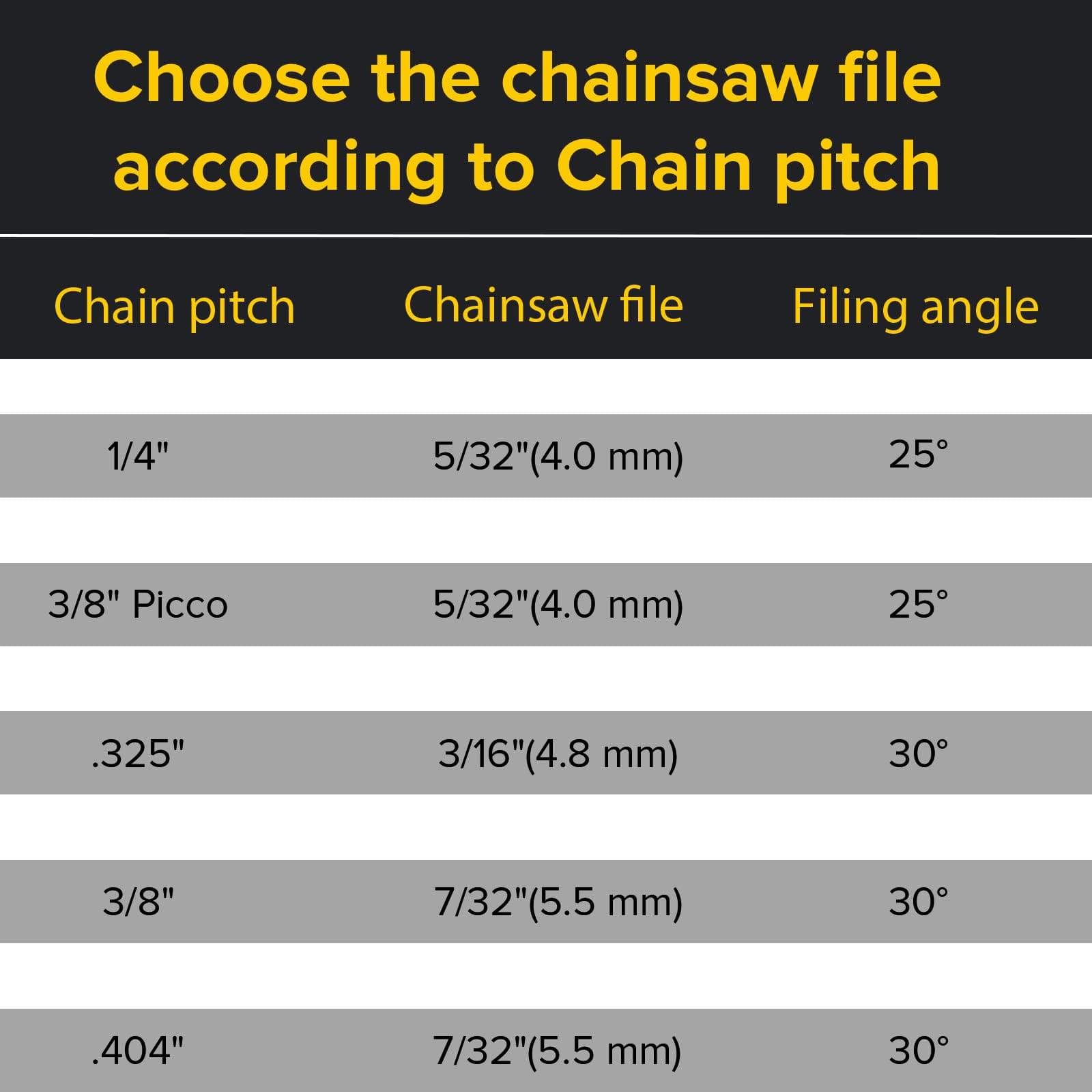
Every chainsaw chain has a pitch—the distance between any three rivets, divided by two. This pitch helps you pick the right file diameter. Common pitches include 1/4″, .325″, 3/8″, and .404″. Each one matches with a specific file size.
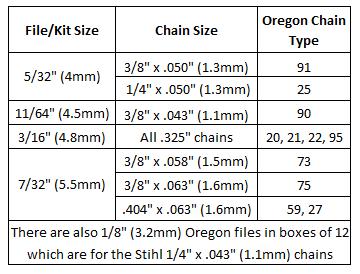
For example, a. 325″ pitch chain usually needs a 3/16″ (4. 8mm) round file. But a 3/8″ pitch chain might need a 7/32″ (5. 5mm) file. Some chains are “low profile,” which means they are thinner and need a smaller file.
Always check your chain’s pitch before choosing a file. This information is usually found on the package or stamped into the chain’s drive link.
Credit: www.amazon.com
Chainsaw File Size Chart
Choosing the right file can be confusing with so many chain types. Here’s a simple chart to match chain pitch and file diameter:
| Chain Pitch | Chain Type | File Diameter (mm) | File Diameter (inch) |
|---|---|---|---|
| 1/4″ | Standard | 4.0 | 5/32″ |
| .325″ | Standard | 4.8 | 3/16″ |
| .325″ | Low Profile | 4.0 | 5/32″ |
| 3/8″ Low Profile | Low Profile | 4.0 | 5/32″ |
| 3/8″ | Standard | 5.2 | 13/64″ |
| 3/8″ | Standard (some brands) | 5.5 | 7/32″ |
| .404″ | Standard | 5.5 | 7/32″ |
This chart covers the most common sizes. Always check your chain’s manual or the manufacturer’s website if you’re unsure.
How To Identify Your Chain Type
Not all chains are marked clearly. Here are some tips to find the right information:
- Check the chainsaw bar: Some bars have the pitch, gauge, and chain model stamped near the tip.
- Look at the chain drive links: Many chains have numbers or letters on the links that match with the brand’s chart.
- Read the manual: Your chainsaw’s user manual often includes details about the correct file and chain type.
- Search by brand: If you know the brand (like Stihl, Oregon, or Husqvarna), search their official chain guide using your chain’s number.
File Sizes By Popular Chainsaw Brands
Different brands may use their own codes for chain types. Here’s a quick comparison for the most popular chains:
| Brand | Popular Chain Code | Pitch | Recommended File Size |
|---|---|---|---|
| Stihl | 63 PM3 | 3/8″ Low Profile | 4.0mm (5/32″) |
| Stihl | 26 RM | .325″ | 4.8mm (3/16″) |
| Oregon | 91PX | 3/8″ Low Profile | 4.0mm (5/32″) |
| Husqvarna | H30 | .325″ | 4.8mm (3/16″) |
| Oregon | 72 | 3/8″ | 5.5mm (7/32″) |
| Stihl | 36 RS | 3/8″ | 5.2mm (13/64″) |
These codes are usually printed on the packaging or the chain itself. If you see these numbers, match them to the file size for best results.
Step-by-step: How To Use A Chainsaw File
Sharpening a chainsaw is easy if you follow the right steps. Here’s a simple process for beginners:
- Secure the chainsaw: Place your chainsaw on a stable surface. Engage the chain brake.
- Mark your starting tooth: Use a marker to mark the first tooth you sharpen.
- Choose the correct file: Use the chart above to pick the right diameter file.
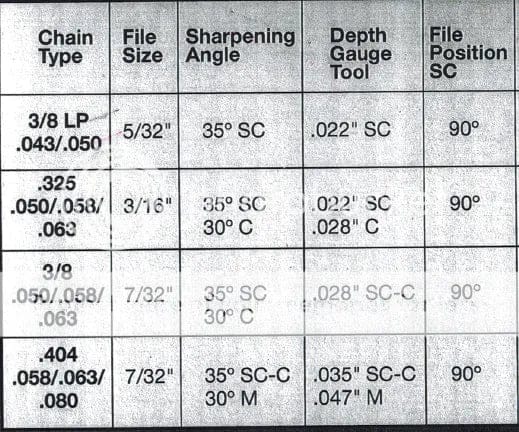
- Hold the file at the correct angle: Most chains need a 25-35 degree angle. Check your manual for the exact angle.
- File with smooth strokes: Push the file through the tooth, away from your body. Use even, gentle pressure—don’t force it.
- Count your strokes: Usually, 2-4 strokes are enough per tooth if the chain is not very dull.
- Repeat on every other tooth: Chainsaw teeth alternate sides. File all teeth on one side, then turn the saw and do the other side.
- Check depth gauges (rakers): After sharpening the teeth, check the rakers with a gauge. File them down if they are too high.
Practical Tips
- Always use a file guide if you are new. It helps keep the file at the right angle and depth.
- Replace your file when it feels smooth or stops removing metal.
- Clean sawdust and oil from your chain before sharpening.
Common Mistakes When Choosing Chainsaw File Size
Even experienced users make errors with files. Here are mistakes to avoid:
- Using “close enough” sizes: A file that’s only slightly too small or large will slowly change your chain’s shape.
- Ignoring file wear: As files wear down, they get smaller. Always use a new file for best results.
- Skipping the depth gauge: If you sharpen teeth but never check the raker height, the chain won’t cut well.
- Assuming all 3/8″ chains are the same: Low profile and standard 3/8″ chains use different files.
- Mixing metric and imperial sizes: If your chain calls for 4.8mm, don’t use a 5/32″ file—they are not the same.
Advanced Insights: What Most Beginners Miss
Many people don’t realize that file hardness matters. Cheap files wear out quickly and stop sharpening well. Investing in a quality Swiss-made or German-made file will save time and keep your chain sharper.
Another overlooked point: the round file should always stick out about 20% above the tooth when you’re sharpening. This keeps the right cutting angle. If your file sits too low, you are using the wrong size.
Credit: jaattya705.amebaownd.com
When To Replace Your Chainsaw File
A file can last for several sharpenings, but not forever. If it feels smooth, doesn’t bite into metal, or leaves shiny spots on the chain, it’s time to replace it. Using a dull file is a waste of energy and can ruin your chain’s edge.
Chainsaw File Kits Vs. Single Files
You can buy single files, but file kits are a better choice for most users. Kits usually include:
- Several round files (different sizes)
- A flat file (for depth gauges)
- A file guide
- A depth gauge tool
These kits cost a bit more but make it easier to handle all sharpening tasks. For professionals or those with multiple saws, buying a kit saves money in the long run.
Maintenance Tips For Chains And Files
To get the most out of your chain and files:
- Store files in a dry place. Moisture causes rust, which ruins the cutting surface.
- Clean your chain after each use. Dirt and sap dull the teeth faster.
- Keep a spare file in your toolbox, so you’re always ready.
Chainsaw File Size And Cutting Performance
The right file size doesn’t just keep your chain sharp—it makes your work easier. Studies show that a properly sharpened chain can cut up to 50% faster and use up to 20% less fuel compared to a dull chain. This means less effort, lower costs, and more safety for you.
Recommended Chainsaw File Brands
Not all files are created equal. Here are some brands with excellent reputations:
- Pferd: Known for long-lasting, sharp files.
- Oregon: Offers complete kits and high-quality files.
- Bahco: Trusted by professionals for durability.
- Stihl: Makes files to match their own chains perfectly.
You can find more details and reviews on the Wikipedia Chainsaw page.
Frequently Asked Questions
What Happens If I Use The Wrong File Size?
Using the wrong file size changes the tooth’s cutting angle and shape. This can make your chain dull, cause uneven cuts, and increase the risk of kickback. It can also wear out your chain much faster.
How Do I Know When My Chain Needs Sharpening?
If your chainsaw makes fine sawdust instead of wood chips, cuts crooked, or you need to push hard to cut, it’s time to sharpen the chain. You may also hear a high-pitched sound or see smoke, even when the chain is oiled.
Can I Use A File Without A Guide?
It’s possible, but not recommended for beginners. A file guide keeps the file at the right angle and depth, making sharpening faster and more accurate. Even professionals use guides for consistency.
How Often Should I Replace My Chainsaw File?
Replace your file when it becomes smooth, stops cutting metal, or if you see rust. For most users, a file lasts 5–10 sharpenings, but this depends on chain size and how dirty the chain gets.
Is A Chainsaw File Size Chart Universal For All Brands?
Most file size charts cover standard sizes, but some brands have special chains that need unique files. Always check your chain’s manual or the manufacturer’s website for the most accurate match.
Choosing the right chainsaw file size is a key part of safe, effective chainsaw use. With the right chart, a bit of practice, and quality tools, you can keep your chain sharp and your work smooth every time.
Credit: sawagain.com
