
Cutting Aluminum With A Circular Saw: A Complete Guide
Aluminum is a lightweight, strong, and versatile metal used in many projects, from home renovations to automotive work. If you ever need to cut aluminum sheets, extrusions, or profiles, you might wonder: can I use a circular saw? The answer is yes—with the right tools, knowledge, and safety measures, cutting aluminum with a circular saw is not just possible, but often the most efficient way for straight cuts. However, this task is very different from cutting wood. The wrong blade, incorrect speed, or poor technique can ruin your material and even cause injury. This guide explains everything you need to know, from choosing the right blade to making clean, safe cuts.
Why Use A Circular Saw For Aluminum?
Circular saws are popular because they’re fast and can cut straight lines with ease. Many people already own one for woodworking. But aluminum is not wood—it’s harder and can damage saw blades or send sharp chips flying. Still, with the right setup, a circular saw cuts aluminum faster and straighter than many other hand tools.
It’s especially useful for long, straight sections, such as angle bars or sheet stock.
Unlike jigsaws or reciprocating saws, circular saws don’t vibrate as much, which means smoother edges and less work to finish the cut. They also let you clamp material in place, minimizing risk. However, you must understand the key differences in blade choice, speed, and technique to avoid common mistakes.
Understanding Aluminum As A Material
Aluminum is softer than steel but harder than wood or plastic. It’s malleable, so it bends rather than shatters. Most aluminum used in construction is 6061 or 5052 alloy, which balances strength and workability. Aluminum’s melting point is much lower than steel, so friction during cutting can heat and gum up blades quickly.
Key properties:
- Low weight: Makes handling easier but requires secure clamping.
- Good conductivity: Metal chips can conduct electricity—keep cords and saws away from power sources.
- Fast heat buildup: Friction can dull blades and create dangerous sparks.
Cutting aluminum is all about controlling heat, using the right blade, and making steady, controlled cuts.
Choosing The Right Circular Saw Blade
The single most important factor for clean, safe cuts is the saw blade. Not every blade is suitable for aluminum. A wood-cutting blade will dull quickly, heat up, and can even weld aluminum chips to the teeth.
Blade Types
You need a carbide-tipped blade specifically labeled for non-ferrous metals. “Non-ferrous” means metals without iron—like aluminum, copper, and brass.
Look for these features:
- Carbide tips: Stay sharp longer and resist sticking.
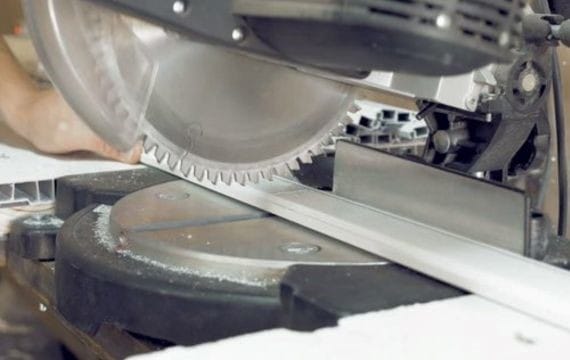
- Triple-chip grind (TCG): The teeth have alternating flat and trapezoidal shapes, which improves chip removal and surface finish.
- High tooth count: 60–80 teeth for a 10-inch blade is ideal for smooth edges.
Blade Size And Kerf
Match the blade size to your saw (e.g., 7-1/4″, 10″, or 12″). The kerf is the width of the cut. A thinner kerf reduces the load on your saw and makes cutting easier, but for thick aluminum, a standard kerf provides better durability.
Comparison Table: Wood Vs. Aluminum Cutting Blades
| Feature | Wood Blade | Aluminum Blade |
|---|---|---|
| Tooth Design | Alternate Top Bevel | Triple Chip Grind |
| Tooth Count | 24–40 | 60–80 |
| Material | Steel/Carbide | Carbide-tipped |
| Intended Use | Wood, soft plastics | Aluminum, non-ferrous metals |
Popular Blade Brands
Some trusted brands for aluminum blades include Freud, Diablo, DeWalt, and Makita. Always check the packaging for “non-ferrous” compatibility.
Essential Safety Gear And Setup
Aluminum cutting produces hot, sharp chips and loud noise. Protect yourself and your workspace with the right gear and preparation.
Personal Protective Equipment (ppe)
- Safety glasses: Protect eyes from flying chips.
- Hearing protection: Circular saws are loud, and metal cutting is even noisier.
- Gloves: Wear cut-resistant gloves, but avoid loose-fitting gloves that could get caught.
- Dust mask or respirator: Fine aluminum dust is harmful if inhaled.
Workspace Setup
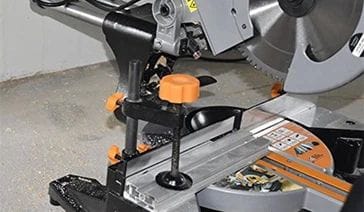
- Clamp the material: Aluminum moves easily and vibrates; always secure it with clamps.
- Support both sides: Use sawhorses or sturdy tables to support the material fully.
- Clear the area: Keep flammable materials away. Aluminum chips are sharp and can travel far.
Pro tip: Lay down a sacrificial board under thin sheets so the saw blade doesn’t hit your workbench or ground.
Step-by-step: How To Cut Aluminum With A Circular Saw
Cutting aluminum safely and cleanly involves careful preparation and steady execution. Here’s how to do it right:
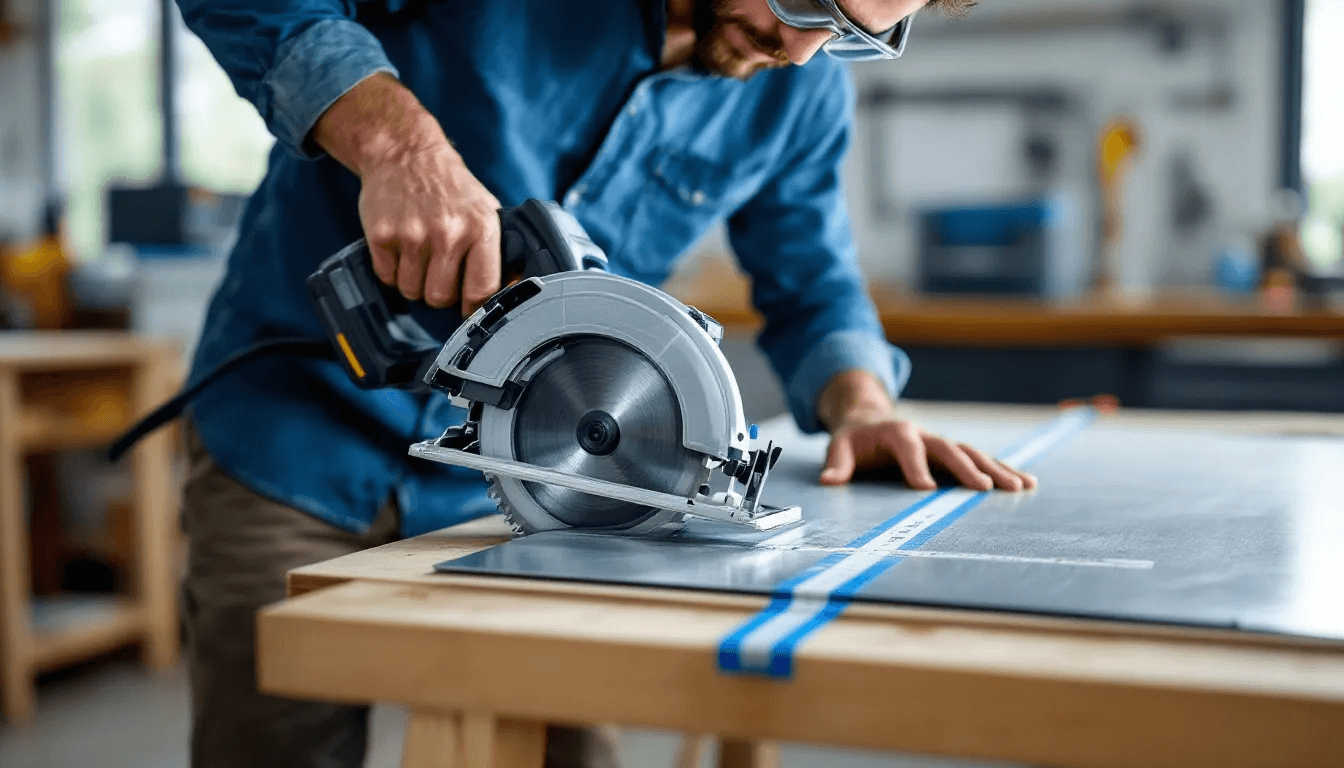
- Mark your cut line with a permanent marker or painter’s tape. Tape also helps reduce chipping.
- Clamp the aluminum firmly to your work surface. Use at least two clamps.
- Install the correct blade. Double-check the direction (arrows on the blade and saw).
- Set blade depth so it extends just 1/8″ below the material.
- Lubricate the cut line with a little wax or a special aluminum cutting fluid. This reduces heat and prevents gumming.
- Wear all your safety gear before starting.
- Start the saw at full speed before touching the aluminum.
- Feed the saw slowly and steadily. Do not force it—let the blade do the work.
- Clear chips often, especially on thick material. Stop and brush away chips if they block your view.
- Finish the cut and wait for the blade to stop before lifting the saw.
Insider tip: For very thin sheets, sandwich the aluminum between two scrap pieces of plywood. This supports the metal and prevents bending or vibration, giving you a cleaner edge.
Best Practices For Clean, Accurate Cuts
A few expert techniques make a big difference in your results:
- Use masking tape along the cut line to prevent scratches and chipping.
- Cut with the finished side down. The bottom edge is usually cleaner, as the saw teeth exit there.
- Don’t rush. Feeding too fast overheats the blade and creates rough edges.
- Cool the blade. For long cuts, pause halfway and let the blade cool off.
- Deburr after cutting. Use a file or deburring tool to smooth sharp edges.
Table: Common Mistakes And How To Avoid Them
| Mistake | Consequence | Prevention |
|---|---|---|
| Using a wood blade | Rough cuts, blade damage, safety risk | Choose a carbide non-ferrous blade |
| Not clamping material | Vibration, inaccurate cuts, kickback | Clamp securely with at least two clamps |
| No lubrication | Heat buildup, gummed teeth, rough edge | Apply wax or cutting fluid |
| Feeding too fast | Bent metal, chipped blade | Go slow and steady |
Credit: gemma-global.com
Lubrication: Why It Matters
Aluminum is “gummy”—it sticks to hot blades. Lubrication keeps the cut cool, prevents chips from welding to the blade, and makes the cut smoother. You don’t need much; a little beeswax, candle wax, or commercial cutting spray on the cut line works well. Avoid using oil, as it can be messy and hard to clean. Some professionals use WD-40 lightly, but always check your saw’s manual before applying anything.
Finishing The Edge
Even a perfect cut leaves sharp edges, called “burrs.” Always finish your work by:
- Running a file or deburring tool along the edge.
- For long, straight edges, a sanding block with medium-grit sandpaper works well.
- Wipe away all metal filings to avoid scratches or injury.
This step is essential for safety and gives your project a professional look.
Credit: www.tsinfa.com
What Thickness Of Aluminum Can You Cut?
Most standard circular saws can cut aluminum up to 1/4 inch (6mm) thick in one pass. For thicker material, use a slower feed rate and make multiple passes if your saw allows it. If the aluminum is thicker than 1/2 inch (12mm), consider a different tool, like a metal-cutting bandsaw, for safety and accuracy.
Table: Circular Saw Cutting Capacity
| Saw Blade Size | Max Aluminum Thickness | Recommended Use |
|---|---|---|
| 7-1/4″ | 1/8″–1/4″ | Sheet, angle, channel |
| 10″ | Up to 3/8″ | Sheet, thick flat bar |
| 12″ | Up to 1/2″ | Large plate, heavy extrusion |
Pro insight: If you need to cut thin aluminum (under 1/16″), a fine-tooth jigsaw or bandsaw can give you even smoother results. But for most straight cuts, a circular saw is faster.
When Not To Use A Circular Saw
Circular saws are not right for every aluminum-cutting job. Avoid them if:
- The aluminum is round (like pipes or rods). The blade can catch and kick back.
- The piece is too small to clamp safely.
- You need curves or complex shapes. A jigsaw or bandsaw is better.
For intricate work, hand tools or specialized equipment may be safer and more precise.
Real-world Examples
- DIY deck railing: Cutting 1/8″ aluminum angle for a modern railing is quick and precise with a circular saw and a TCG blade.
- Automotive repair: Mechanics often cut aluminum sheet for patch panels using a circular saw with a waxed blade, ensuring smooth edges.
- Sign making: Many sign shops use circular saws with non-ferrous blades to cut aluminum composite panels, which have an aluminum skin and plastic core.
Two Critical Insights Many Miss
- Don’t skip lubrication. Many beginners forget this step, thinking aluminum is “soft.” Skipping it leads to gummed-up blades and rough edges, especially on longer cuts.
- Clamp well beyond the cut. Some people only clamp near the cut line. Always clamp both sides of the workpiece and, for long pieces, add extra support to prevent vibration and warping.
More Tips For Success
- Check blade tightness before every job. Vibration can loosen the arbor nut over time.
- Vacuum or sweep up chips immediately after cutting. Aluminum chips can scratch floors and are hard to see.
- Store blades dry and clean. Aluminum residue attracts moisture and can rust steel parts of your blade.
Frequently Asked Questions
What Type Of Blade Should I Use To Cut Aluminum With A Circular Saw?
Use a carbide-tipped blade designed for non-ferrous metals. Look for blades with a triple chip grind and at least 60 teeth for a 10-inch blade. Never use a regular wood-cutting blade, as it will dull quickly and can be unsafe.
Do I Need To Lubricate The Blade When Cutting Aluminum?
Yes, applying a small amount of wax or cutting fluid reduces friction, keeps the blade cool, and prevents aluminum chips from sticking to the teeth. This leads to cleaner cuts and longer blade life.
How Thick Of Aluminum Can A Circular Saw Cut?
Most circular saws can cut up to 1/4 inch (6mm) thick aluminum in one pass. Thicker pieces require multiple passes or a larger saw. For anything over 1/2 inch (12mm), consider a different tool for safety and accuracy.
Is It Safe To Cut Aluminum With A Regular Wood Circular Saw?
It’s safe if you use the correct non-ferrous metal blade and proper safety gear. Always clamp the material, wear eye protection, and go slowly. Never use a wood blade or cut round stock like pipes with a circular saw.
Where Can I Find More Information On Cutting Metals Safely?
A good resource is the Wikipedia page on circular saws, which explains different types of saws, blades, and safety practices.
Cutting aluminum with a circular saw is a practical skill many DIYers and professionals can master. With the right blade, setup, and safety measures, you’ll get clean, accurate cuts every time. Always respect the material and the tool, and you’ll work safely and efficiently.
Credit: www.alldiamondtools.com
