
Lithium Ion Vs Nimh Battery: In-depth Comparison For Everyday Users
Choosing the right battery can feel confusing. With so many devices using rechargeable batteries, you will often see two main types: Lithium Ion (Li-ion) and Nickel Metal Hydride (NiMH). Both have their strengths and weaknesses. Picking the right one can affect how long your device lasts, how often you need to recharge, and even your safety. Understanding these batteries is important for everything from cameras and power tools to electric cars and solar lights.
This guide gives you a clear, detailed look at Lithium Ion vs NiMH batteries. If you want to know which one is better for your needs, how they really perform, and what beginners usually miss, you are in the right place.
What Are Lithium Ion And Nimh Batteries?
Lithium Ion (Li-ion) batteries are rechargeable batteries commonly used in smartphones, laptops, electric vehicles, and many portable electronics. They use lithium as the main chemical element. The main advantage is their high energy density, meaning they store a lot of power in a small size.
Nickel Metal Hydride (NiMH) batteries are also rechargeable but use nickel oxide hydroxide and a hydrogen-absorbing alloy instead. These batteries are popular for AA and AAA household batteries, older digital cameras, cordless phones, and some hybrid cars.
The difference in chemical makeup gives each type unique strengths and weaknesses. Let’s dive deeper.
How Do They Work?
Li-ion batteries work by moving lithium ions between the positive and negative electrodes during charging and discharging. They need special circuits to keep them safe and balanced. If handled poorly, they can overheat.
NiMH batteries move hydrogen ions between electrodes. They are less sensitive to overcharging and overheating compared to Li-ion, making them safer for some uses.
Capacity And Energy Density
One of the main reasons people choose Li-ion is because of its high energy density. This means a Li-ion battery can store more power for its size and weight compared to NiMH.
For example:
- A typical Li-ion AA battery can have a capacity of 3000 mAh (milliampere-hour).
- A NiMH AA battery often has around 2000-2500 mAh.
This difference means Li-ion batteries last longer between charges, especially in high-drain devices like digital cameras or power tools.
Voltage Differences
Li-ion and NiMH batteries have different voltages, which affects how they work in devices.
- Li-ion batteries: Usually have a voltage of 3.6 to 3.7 volts per cell.
- NiMH batteries: Provide around 1.2 volts per cell.
Some devices are designed for a specific battery voltage. For example, many older electronics expect the 1. 2V of NiMH, but modern devices are made for Li-ion’s higher voltage.
Charging Speed
Li-ion batteries usually charge faster than NiMH. They can accept higher charging currents, especially with advanced chargers. For example, many smartphones with Li-ion batteries can reach 80% charge in less than an hour.
NiMH batteries charge slower and need more careful charging to avoid reducing their lifespan. Fast charging is possible but can cause heat and shorten the battery’s life.
Self-discharge Rate
A common frustration with batteries is when they lose power even if you are not using them. This is called self-discharge.
- Li-ion batteries: Lose about 2-3% of their charge per month if stored properly.
- NiMH batteries: Can lose up to 30% of their charge per month, especially older models.
Newer “low self-discharge” NiMH batteries (like Eneloop) have improved, but Li-ion still holds its charge longer.

Credit: www.researchgate.net
Cycle Life: How Many Times Can You Recharge?
Every rechargeable battery has a limited number of charge cycles before it starts to lose capacity.
- Li-ion batteries: Usually last between 300-500 full charge cycles. After this, they often hold 80% or less of their original capacity.
- NiMH batteries: Can last 500-1000 cycles or even more if charged gently.
One thing beginners miss: Partial charging and discharging help both batteries last longer. Fully draining Li-ion batteries can shorten their life.
Memory Effect And Maintenance
Memory effect is when a battery “remembers” a lower capacity if you do not fully discharge it before recharging. This was a big problem with older Nickel Cadmium (NiCd) batteries.
- Li-ion batteries: No real memory effect. You can charge them anytime.
- NiMH batteries: Slight memory effect, but much less than NiCd. Occasional full discharge helps, but it is not required.
Weight And Size
Li-ion batteries are lighter and smaller for the same amount of power. This is why they are used in smartphones, laptops, and drones where weight matters.
NiMH batteries are heavier and bulkier, which can be a problem for portable devices.
Cost Comparison
NiMH batteries are usually cheaper up front. For example, a pack of 4 AA NiMH batteries costs less than 4 Li-ion AA batteries.
However, if you need long run time or lighter weight, Li-ion may be worth the extra cost. Over time, the longer life and higher performance can balance the higher price.
Safety And Risk
Li-ion batteries can be dangerous if damaged, overcharged, or exposed to high heat. They can catch fire or even explode in rare cases. Most devices have special circuits to prevent this.
NiMH batteries are safer. They can overheat if charged too fast, but they usually leak or swell rather than catch fire.
A non-obvious insight: Li-ion batteries are much safer today than in the early 2000s, but you should still avoid buying cheap, off-brand Li-ion batteries.
Environmental Impact
Both battery types have an environmental cost, but NiMH is considered slightly less harmful.
- NiMH batteries do not use toxic heavy metals like cadmium or lead.
- Li-ion batteries require mining lithium and cobalt, which can harm the environment if not managed well.
Both types should be recycled properly. Never throw them in the trash.
Practical Applications
Where does each battery type shine? Here’s a look at popular uses.
- Li-ion batteries: Smartphones, laptops, power banks, drones, electric bikes, electric cars, cordless tools.
- NiMH batteries: AA/AAA batteries for remotes, toys, flashlights, solar garden lights, hybrid cars (like the Toyota Prius).
Li-ion is better for high power, lightweight needs. NiMH is useful where cost and safety are more important.
Real-world Performance: Side-by-side
Let’s compare the two battery types for key qualities:
| Feature | Lithium Ion | NiMH |
|---|---|---|
| Energy Density | High (150-250 Wh/kg) | Medium (60-120 Wh/kg) |
| Self-Discharge Rate | 2-3% per month | 20-30% per month |
| Cycle Life | 300-500 cycles | 500-1000 cycles |
| Weight | Lighter | Heavier |
| Safety | Needs protection circuit | Safer, less risk |
| Cost | Higher | Lower |
Which Battery Is Best For Your Needs?
Here’s how to decide:
- For daily AA/AAA use (remotes, clocks): NiMH is usually better. It’s safe, low cost, and compatible.
- For high-drain devices (cameras, drones, power tools): Li-ion is the winner. It lasts longer and is lighter.
- For solar garden lights: Modern NiMH works well, especially low self-discharge types.
- For hybrid/electric cars: Both are used. Li-ion gives longer range but is more expensive. NiMH lasts longer in some hybrids.
- For travel gadgets: Li-ion offers more power in a smaller size.
A hidden detail: Some devices need “protected” Li-ion batteries. This means they have a built-in circuit to prevent overcharging or over-discharging.
Common Mistakes When Using Each Battery
Many people make these errors:
- Mixing old and new batteries: Always use batteries of the same age and brand together.
- Storing batteries fully charged or empty for long periods: Li-ion batteries should be stored at about 40-60% charge to last longer.
- Using the wrong charger: Never use a NiMH charger for Li-ion batteries or vice versa. It can be dangerous.
- Ignoring battery recycling: Both types must be recycled properly. Many stores accept used batteries.
Future Trends
Technology is changing fast. Li-ion batteries are improving each year, with higher energy and better safety. Solid-state batteries (a future type of Li-ion) promise more power and safety.
NiMH batteries are still developing, especially for eco-friendly uses. For example, some new hybrid cars use advanced NiMH for long life.
Data Table: Typical Aa Battery Comparison
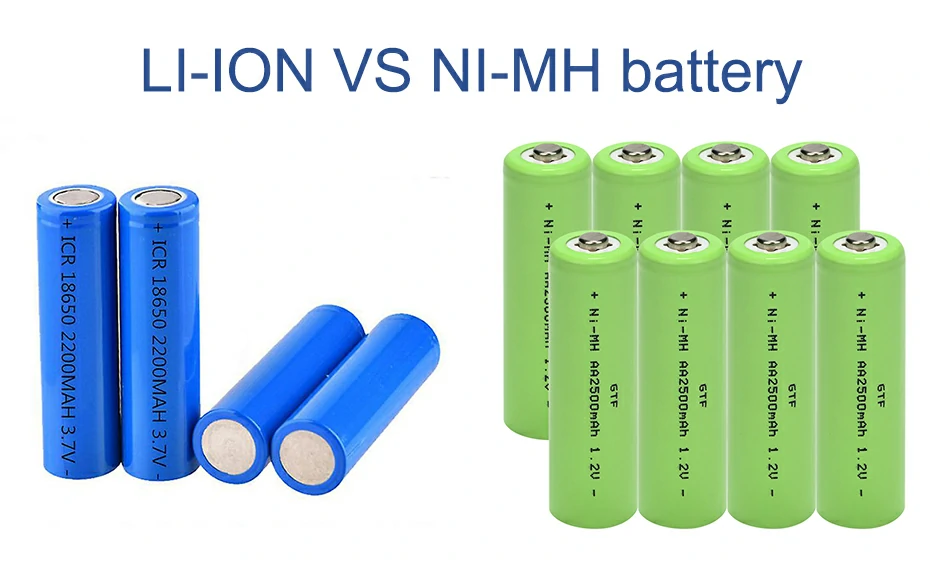
Here’s a quick look at AA battery specs for each type.
| Type | Typical Voltage | Capacity (mAh) | Recharge Cycles | Self-Discharge |
|---|---|---|---|---|
| Li-ion AA | 3.6V | 3000 mAh | 300-500 | Low |
| NiMH AA | 1.2V | 2000-2500 mAh | 500-1000 | Medium |
Credit: npplithium.com
Charging Habits That Prolong Battery Life
If you want your batteries to last:
- Avoid full discharges for Li-ion. Try to recharge when they reach 20-30%.
- Store in a cool, dry place. Heat shortens battery life for both types.
- Use the right charger. Smart chargers adjust current for each type.
- Do not overcharge. Remove from charger when full.
A tip: For NiMH, a full discharge every 20-30 cycles can help maintain capacity.
Advanced Use Cases: Electric Vehicles And Beyond
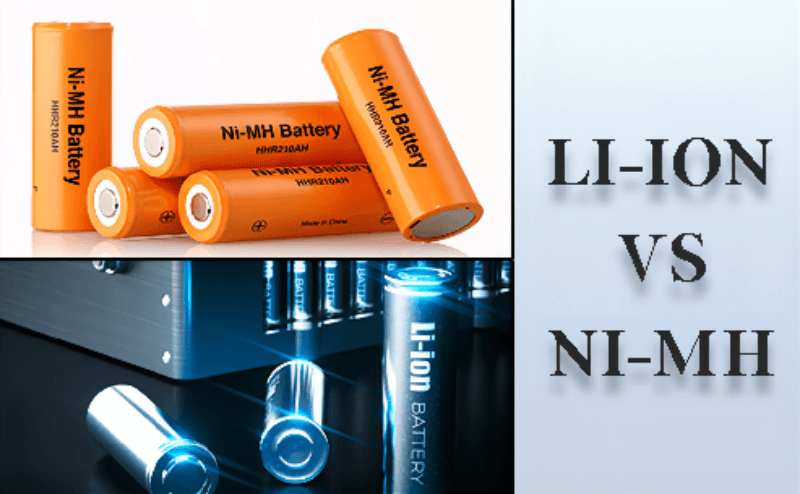
Electric vehicles (EVs) mostly use Li-ion batteries today due to their high energy density and lighter weight. For example, a Tesla Model 3 uses thousands of small Li-ion cells to power the car.
Hybrid cars like the Toyota Prius use NiMH in some models because they handle frequent charging and discharging well.
Medical devices, backup power systems, and aerospace all use both types, depending on safety, weight, and cost needs.
Credit: www.tycorun.com
Recycling And End-of-life Handling
Proper disposal is often overlooked. Both Li-ion and NiMH batteries should go to battery recycling centers. They contain valuable metals and can be dangerous in landfills.
- Check local recycling programs.
- Never toss batteries in regular trash.
- For more on recycling, visit EPA Battery Recycling.
Frequently Asked Questions
What Is The Main Difference Between Li-ion And Nimh Batteries?
The main difference is in their chemistry and performance. Li-ion batteries offer higher energy density, lighter weight, and faster charging, but they need protection circuits and cost more. NiMH batteries are heavier, have lower voltage, but are safer and cheaper.
Can I Use Li-ion Batteries In Devices Meant For Nimh?
Not usually. Li-ion batteries have higher voltage (3. 6V vs. 1. 2V), which can damage devices made for NiMH. Always check your device’s manual before switching battery types.
Which Battery Lasts Longer, Li-ion Or Nimh?
For most uses, Li-ion batteries last longer per charge because of higher capacity. However, NiMH batteries can survive more charge cycles if treated well.
Are Li-ion Batteries Safe?
Modern Li-ion batteries are safe when used in quality devices with protection circuits. However, they can be dangerous if damaged, overcharged, or exposed to heat. Always buy from trusted brands and avoid using damaged batteries.
How Should I Store Unused Batteries?
Store both Li-ion and NiMH batteries in a cool, dry place. Li-ion batteries should be stored at 40-60% charge. NiMH can be stored charged or empty, but low self-discharge types are better for long storage.
—
When choosing between Lithium Ion and NiMH batteries, think about your device, your safety, and how often you want to recharge. Both have their place in the modern world. With this knowledge, you can confidently pick the right battery for your needs and get the most from your devices.
