
Nail guns have transformed construction and DIY work. They make tasks like framing, roofing, and finishing much faster and less tiring than hammering by hand. But this speed comes with real risks. Every year, thousands of people are injured using nail guns, often because of small mistakes or not knowing simple safety steps.
Whether you’re a first-time user or a seasoned pro, understanding how to use a nail gun safely can prevent accidents that change lives in seconds.
This guide brings together the most important nail gun safety tips you need to know. You’ll learn about setup, handling, protective gear, and what to do before, during, and after using your nail gun. We’ll also cover some things even experienced users sometimes miss, so you’re prepared for every step. Let’s make sure your next project is productive—and safe.
Why Nail Gun Safety Matters
Many people underestimate the power of a nail gun. A common framing nailer fires nails at 1,400 feet per second—fast enough to pierce wood, drywall, or even bone. According to the Centers for Disease Control and Prevention (CDC), about 37,000 nail gun injuries are treated in U.
S. emergency rooms every year, and 2 out of 3 of those happen to non-professionals. Most injuries affect the hands and fingers, but some are much more serious, involving the eyes, face, or even the chest.
Even experienced workers sometimes get hurt because they grow too comfortable or rush through setup. The right safety habits are not just for beginners—they’re for everyone who uses this powerful tool.
Types Of Nail Guns And Their Risks
Not all nail guns are the same. Understanding your model helps you use it correctly and avoid mistakes.
| Type | Common Use | Main Risks |
|---|---|---|
| Framing Nailer | Building walls, floors, roofs | Deep puncture wounds, ricochet |
| Finish Nailer | Trim, molding, cabinets | Finger injuries, jams |
| Brad Nailer | Small crafts, thin trim | Eye injuries, misfires |
| Roofing Nailer | Shingles, roofing materials | Slips, double firing |
Most serious injuries happen with framing and roofing nailers, but even smaller brad nailers can cause harm if used the wrong way. Always check your tool’s manual, as safety features and handling instructions may differ.
Credit: www.tdi.texas.gov
Essential Nail Gun Safety Tips
Let’s break down the most important steps to stay safe before, during, and after using a nail gun.
1. Read The Manual First
Before you pick up the nail gun, read the instruction manual. It explains how to:
- Load nails the right way
- Adjust depth and pressure
- Clear jams safely
- Use built-in safety features
Many injuries happen because people skip this step. Each nail gun has unique controls and warnings. Even if you’ve used other brands, small differences can trip you up.
2. Wear The Right Protective Gear
Always wear safety glasses or goggles. Nails can bounce back or splinters can fly into your eyes without warning. For big jobs, ear protection is also smart, since nail guns can be as loud as a chainsaw (up to 120 decibels). Heavy-duty gloves protect your hands from slips and misfires.
Don’t forget sturdy shoes—especially steel-toe boots if you’re working on a construction site.
3. Inspect Your Nail Gun And Air Supply
Check your tool for any cracks, missing parts, or loose screws before each use. Look closely at the trigger and safety tip. Make sure your air compressor (for pneumatic guns) or battery (for cordless models) is in good shape.
If you see any damage or unusual sounds, don’t use the tool. Small problems can cause jams or unexpected firing.
4. Use The Right Nails For Your Gun
Not all nails fit every nail gun. Using the wrong size or type can jam the gun, misfire, or break the tool.
- Check the length, gauge, and angle recommended in your manual.
- Only use clean, undamaged nails.
This step is often missed, especially by beginners who mix up nails from different brands. A jammed gun is frustrating, but a sudden misfire is dangerous.
5. Set Up Your Workspace For Safety
Keep your work area clean and well-lit. Remove clutter, loose cords, or anything you might trip over. Never use a nail gun on a ladder or unstable surface.
- Make sure no one stands behind your workpiece.
- Mark areas with tape if others are nearby.
A clear space helps you focus and react quickly if something goes wrong.
6. Understand Trigger Types
Nail guns use different trigger systems, which affects how easily they fire nails.
| Trigger Type | How It Works | Risk Level |
|---|---|---|
| Contact (Bump) | Fires when tip and trigger are both pressed | Higher risk of double firing |
| Sequential | Tip must be pressed before trigger | Safer, less accidental firing |
If you’re new, always start with sequential trigger settings. They greatly reduce accidental double shots, which can happen if the gun bounces off your work.
7. Always Point Away From Yourself And Others
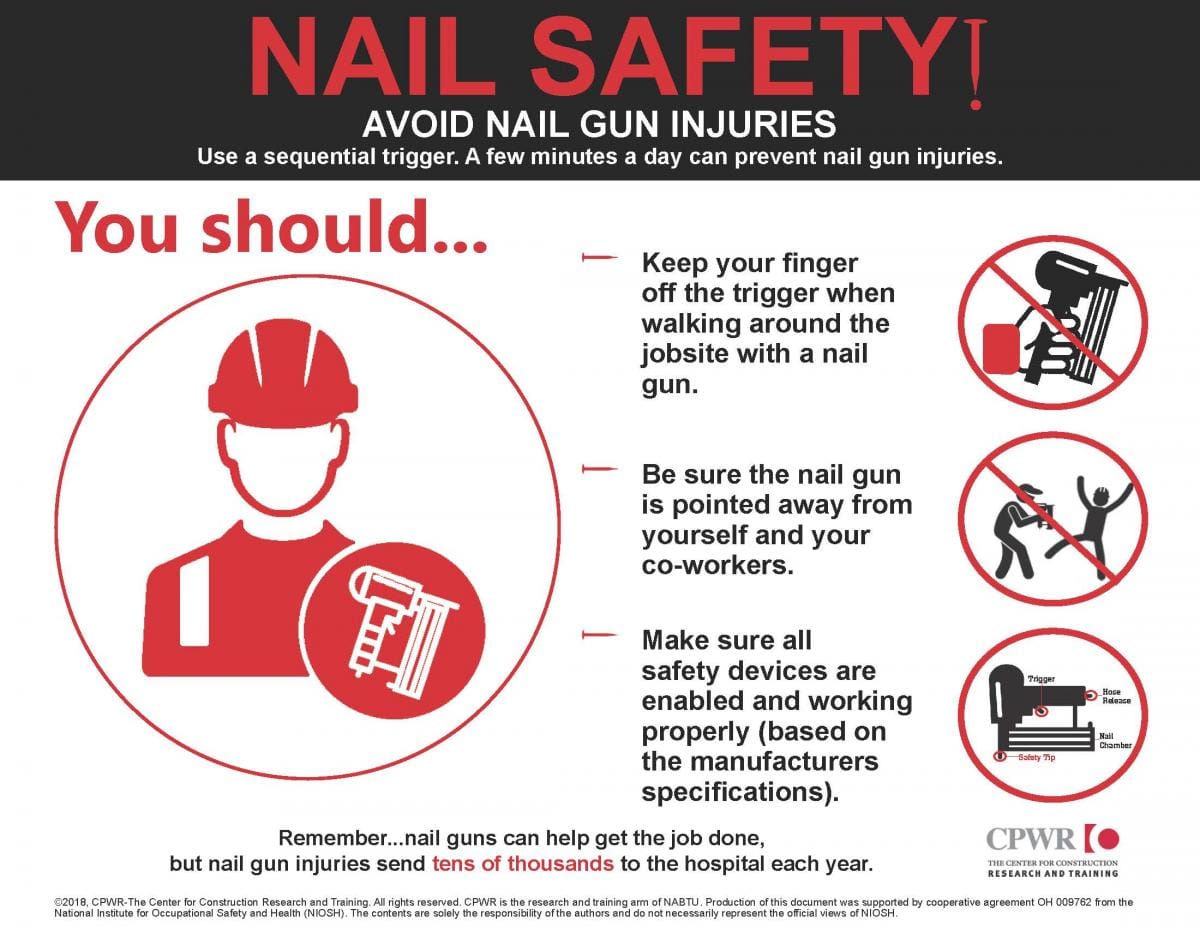
Never point a nail gun at yourself or anyone else—even if you think it’s unloaded. Many injuries happen when people are loading nails, clearing jams, or just carrying the tool.
Always keep the tip facing downward, away from your body. Treat the nail gun like a loaded firearm.
8. Disconnect Power Before Adjusting
Before you:
- Load new nails
- Clear a jam
- Change settings
- Clean the gun
Disconnect the power source—unplug the battery or disconnect the air hose. This simple habit stops the gun from firing by accident while you’re handling it.
Some users skip this because they’re in a hurry, but even a split-second mistake can cause serious harm.
9. Check Your Grip And Position
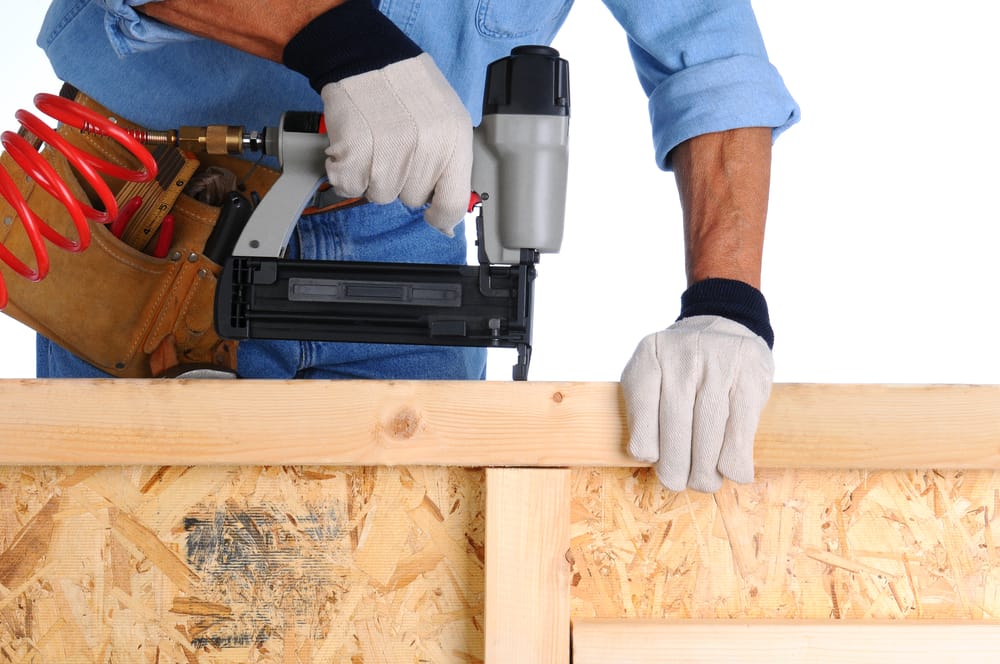
Hold the nail gun with both hands when possible. Keep your non-trigger hand clear of the nailing area.
- Avoid placing your hand behind or under the workpiece.
- Brace your body so you don’t lose balance if the gun recoils.
This is especially important when working above your head or at awkward angles.
10. Fire Nails Into Solid Surfaces Only
Never shoot nails into weak, thin, or unknown materials. Nails can pass through and hit your hand, foot, or someone nearby. Nails can also bounce off hard surfaces and fly unpredictably.
Before firing, double-check that your target is thick enough to absorb the full nail length.
11. Control Your Speed
Don’t rush. Firing nails too quickly increases the chance of double firing, jams, or missing your target.
- Take a breath between each shot.
- Make sure the tip is pressed firmly before pulling the trigger.
Seasoned pros sometimes rush to finish faster, but this habit leads to most accidents.
12. Watch For Recoil And Double Fires
Some nail guns “kick” back after firing, especially framing and roofing models. Hold the tool firmly and expect some movement.
Double fires (two nails shot quickly) can happen if you bounce the gun or don’t release the trigger fully. If you notice this happening, slow down and check your trigger settings.
13. Never Bypass Safety Features
Many nail guns come with a safety tip that must be pressed against the workpiece before firing. Never tape down or remove this feature—it’s there to protect you.
Some users disable safeties to work faster, but this increases risk of injury to yourself and others.
14. Store Nail Guns Safely
After you finish, disconnect the power and store the nail gun in a locked box or high shelf, away from children and untrained adults.
Remove all nails from the magazine before storage. This reduces the risk of someone picking up the tool and firing by accident.
15. Know What To Do If An Accident Happens
Despite your best efforts, accidents can happen. If you or someone else is injured:
- Turn off and disconnect the nail gun.
- Apply pressure to stop bleeding.
- Do not pull out any nails stuck in the body—this can cause more damage.
- Call emergency services or go to the hospital right away.
Even small wounds can cause infection or nerve damage if not treated quickly.
Advanced Tips Most People Miss
Even experienced users overlook some safety details. Here are two non-obvious but important tips:
- Check air pressure regularly: For pneumatic nail guns, using higher-than-recommended air pressure makes the gun more likely to misfire or double fire. Check your compressor gauge and stay within manufacturer limits.
- Inspect fastener quality: Cheap or old nails can bend, break, or jam. Always use fresh, high-quality nails from a reliable source.
These steps take minutes but can prevent hours of frustration or a trip to the emergency room.
Credit: www.cpwr.com
Nail Gun Safety For Beginners
If you’re new to nail guns, start with smaller models like a brad nailer. Practice on scrap wood before moving to your real project.
- Ask someone experienced to supervise your first attempts.
- Don’t be afraid to ask questions or stop if you feel unsure.
- Remember, confidence grows with safe habits, not speed.
Common Mistakes To Avoid
Many injuries result from the same basic errors. Watch out for these:
- Using the wrong trigger type for your skill level
- Firing near the edge of wood (nails can split the material or shoot out the side)
- Ignoring strange sounds or jams—always stop and check
- Letting someone else use your nail gun without proper training
Awareness of these mistakes helps you build safer habits over time.
Credit: weeklysafety.com
How Nail Gun Safety Saves Time And Money
Some users cut corners on safety to finish jobs faster. Ironically, injuries and tool damage can cost you far more in time and money. Hospital visits, repairs, and missed work add up fast.
A safe, well-maintained tool lasts longer and gives you consistent results. Most professionals agree that good safety habits set you apart as a reliable worker.
When To Replace Your Nail Gun
Like any tool, nail guns wear out. If you notice:
- Frequent jams
- Cracked housing or handles
- Worn-out trigger mechanisms
- Leaks in pneumatic hoses
…it’s time to repair or replace your gun. Don’t risk using a tool past its safe life.
For additional safety information, you can visit the CDC Nail Gun Safety Page.
Frequently Asked Questions
What Should I Do If My Nail Gun Jams?
First, disconnect the power (unplug battery or air hose). Never try to clear a jam while the tool is live. Open the jam area as shown in the manual, remove the stuck nail, and check for damage before reloading.
Can I Use Any Brand Of Nails In My Nail Gun?
No. Always use the type and size of nails listed in your manual. Mixing brands can cause jams or misfires, especially with angled or coil-fed guns.
Is It Safe To Use A Nail Gun On A Ladder?
It’s best to avoid this if possible. Nail guns require two hands for control and stability. If you must use a ladder, ask someone to hold it steady and keep your movements slow and deliberate.
How Often Should I Check My Nail Gun For Problems?
Inspect your tool before every use. Look for cracks, loose screws, and worn parts. For professionals, a weekly deep check is smart, even if the gun seems fine.
What’s The Safest Way To Transport A Nail Gun?
Unload all nails, disconnect power, and carry the gun by the handle with the tip pointed down. Never carry a loaded nail gun up or down stairs or ladders.
Nail guns are incredible tools, but only when used with care and respect. With these safety tips, you’ll not only protect yourself but also the people around you. Safe work is smart work—take the time to do it right, every time.
