
Welding is a powerful skill that helps build everything from cars to bridges. But with its bright sparks and hot metal, welding can be dangerous if you do not use the right safety equipment. Injuries like burns, eye damage, and inhaling toxic fumes are common among welders who ignore safety. The good news is that modern safety gear can protect you from almost every welding hazard, if you know how to choose and use it. This guide explains every key piece of welding safety equipment—with practical advice, real-life examples, and tips even experienced welders sometimes overlook.
Why Welding Safety Equipment Matters
Welding produces intense heat, ultraviolet light, and harmful gases. Statistics from the U.S. Bureau of Labor show that welders have one of the highest rates of workplace injury. Common risks include:
- Burns from sparks, molten metal, or hot surfaces
- Eye damage from ultraviolet (UV) and infrared (IR) radiation
- Lung problems from inhaling fumes and gases
- Electric shock from faulty equipment or wet surfaces
Many injuries happen not because welders ignore the risks, but because they use the wrong safety gear or use it incorrectly. Even a small mistake—like a cracked helmet lens or short gloves—can lead to serious harm.
Essential Welding Safety Equipment
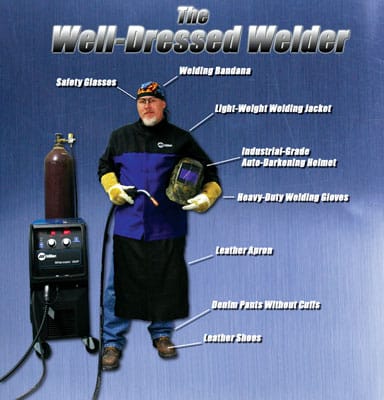
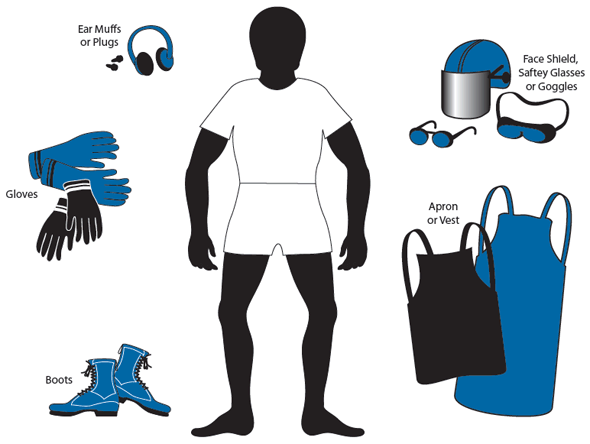
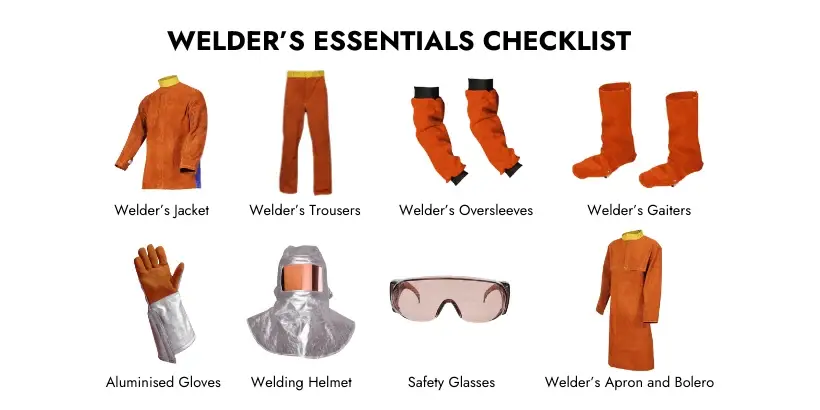
Good safety starts with the right gear. Here’s a breakdown of the most important equipment you need for safe welding.
Welding Helmet
A welding helmet is your first line of defense against sparks and radiation. Modern helmets use auto-darkening filters, which automatically adjust to the light level when you strike an arc. This protects your eyes from sudden flashes, known as “arc eye,” which can be extremely painful and cause long-term damage.
When choosing a helmet, look for:
- Shade level: Most helmets have adjustable shades (usually 9-13) to suit different welding types.
- Reaction time: Faster is better. Top helmets darken in less than 1/20,000th of a second.
- Coverage: The helmet should cover the face, neck, and even the sides of your head.
- Comfort: Lightweight, padded helmets reduce neck fatigue.
Common beginner mistake: Ignoring the fit. A loose helmet can slip and expose your eyes to sparks.
Safety Glasses
Even with a helmet, you need safety glasses under your hood. Tiny pieces of metal can bounce under your helmet, and helmets don’t protect you when you lift them.
Choose glasses with:
- Side shields for extra protection
- Anti-fog coatings if you work in humid or hot areas
- Impact resistance (look for ANSI Z87.1 rating)
Remember, you should wear safety glasses at all times in the workshop—not just when welding.
Welding Gloves
Welding gloves protect your hands from heat, sparks, and electric shock. Different types of welding need different gloves:
- MIG welding: Thick, padded gloves for high heat
- TIG welding: Thinner, flexible gloves for better control
- Stick welding: Heavy-duty gloves for intense heat and spatter
Check that gloves:
- Extend over your wrists
- Have reinforced stitching
- Fit snugly but let your fingers move
A common oversight is using old, cracked gloves. These let heat and sparks through easily.
Fire-resistant Clothing
Ordinary clothes can catch fire quickly. Always wear fire-resistant clothing made from materials like leather or treated cotton. Never wear synthetic fabrics (like nylon or polyester)—they melt and stick to your skin.
For full-body protection:
- Wear long-sleeve shirts and pants
- Make sure shirts are tucked in
- Avoid pockets or cuffs that can trap sparks
Some welders wear special welding jackets or aprons for extra protection.
Welding Boots
Your feet are especially vulnerable to falling metal and sparks. Welding boots should be:
- Made from leather or other fire-resistant materials
- Steel-toed for impact protection
- High enough to cover your ankles
Look for boots with metatarsal guards for extra protection. Never wear sneakers or open shoes when welding.
Respirators And Masks
Many welding processes release toxic fumes—especially when working with painted or coated metals. A basic dust mask is not enough. Use a respirator rated for welding fumes.
Types include:
- Half-mask respirators with replaceable filters
- Powered air-purifying respirators (PAPR) for heavy-duty work
- Disposable N95 masks for light welding (not for all fumes)
Always check the filter type. For example, P100 filters block at least 99. 97% of airborne particles.
Less obvious tip: Fumes can build up fast in small spaces. Good ventilation is as important as wearing a mask.
Ear Protection
Welding can be noisy, especially with grinders and plasma cutters. Earplugs or earmuffs protect your hearing from permanent loss. Some helmets even have built-in ear protection.
Choose earplugs that are:
- Comfortable for long use
- Easy to clean or disposable
- Rated for at least 85 decibels (dB) reduction
Welding Curtains And Screens
If you work near other people, use welding curtains or screens. These block harmful UV light and protect bystanders from sparks. Position them so they cover all open areas around your workspace.
Welding Blankets
For extra protection, especially when welding overhead or near flammable materials, use a welding blanket. Made from fiberglass or other fire-resistant fibers, these blankets can cover equipment, floors, or even wrap around objects.
Heat-resistant Mats
Standing for long periods on hot metal or concrete can damage your boots and feet. Heat-resistant mats provide comfort, insulation, and reduce fatigue. They also prevent slips in wet or oily areas.
Credit: www.millerwelds.com
How To Choose The Right Welding Safety Equipment
Not all safety gear is created equal. Here’s how to make smart choices:
| Equipment | Minimum Standard | Best For | Common Mistake |
|---|---|---|---|
| Helmet | Auto-darkening, Shade 9-13 | All welding types | Choosing fixed shade only |
| Gloves | Heat-resistant, reinforced | MIG, TIG, Stick | Using old/cheap gloves |
| Boots | Leather, steel-toe | Heavy-duty jobs | Sneakers or fabric shoes |
| Respirator | P100 or PAPR | Painted/coated metals | Dust mask only |
Key tip: Always check for safety certifications like ANSI, NIOSH, or EN. These labels mean the gear meets strict standards.
Maintenance And Care Of Welding Safety Equipment
Even the best gear fails if you don’t take care of it. Follow these steps:
- Inspect before every use: Check for cracks in your helmet lens, holes in gloves, or worn-out shoe soles.
- Clean regularly: Wipe helmets and glasses with a soft cloth. Wash gloves and jackets according to the manufacturer’s guide.
- Replace filters: For respirators, change filters as soon as you notice breathing becomes harder.
- Store safely: Keep gear away from chemicals, sunlight, and high heat.
A helmet with a scratched lens won’t protect your eyes. Damaged gloves let heat through. Make inspection and cleaning a habit, not an afterthought.
Common Welding Hazards And How Equipment Helps
Understanding hazards helps you see why each piece of equipment matters. Here’s a simple comparison:
| Hazard | Protection Needed | Equipment |
|---|---|---|
| UV/IR radiation | Eye & face protection | Helmet, safety glasses |
| Burns | Heat-resistant barriers | Gloves, clothing, boots |
| Fumes/gases | Respiratory protection | Respirator, ventilation |
| Noise | Hearing protection | Earplugs/earmuffs |
| Sparks/fire | Fire barriers | Blankets, curtains |
Non-obvious insight: Some hazards are invisible, like UV rays or fumes. You may not notice the harm until days or weeks later. That’s why using all the right gear—even if it feels like “too much”—is essential.
Practical Safety Tips And Mistakes To Avoid
- Never weld in shorts or short sleeves. Sparks bounce in unpredictable directions.
- Double-check your work area. Clear away paper, chemicals, and anything that can burn.
- Keep a fire extinguisher nearby. Know how to use it.
- Don’t share personal gear. Sweat and dirt can cause skin infections, especially with gloves.
- Replace equipment before it fails. If you’re unsure, it’s safer to get new gear.
One thing most beginners miss: fit and comfort are safety issues. If your helmet pinches or your gloves are too big, you’ll be distracted and more likely to make mistakes.
Credit: www.arccaptain.com
Legal And Workplace Standards
Many countries require welders to use certified safety equipment. For example, OSHA (Occupational Safety and Health Administration) in the U. S. sets strict rules for personal protective equipment (PPE). Using uncertified gear can lead to fines or even losing your job.
Always check your local rules.
For a deeper look at global standards, see the Wikipedia PPE entry.
Frequently Asked Questions
What Is The Most Important Piece Of Welding Safety Equipment?
While all gear is important, most experts agree the welding helmet is the most critical. It protects your eyes and face from burns and permanent vision damage.
Can I Use Regular Sunglasses Instead Of A Welding Helmet?
No. Sunglasses do not block the intense UV and IR radiation from welding. Only helmets with the correct shade rating protect your eyes properly.
How Often Should I Replace Welding Gloves?
Replace welding gloves as soon as you see cracks, holes, or feel heat coming through. For frequent welders, this could be every few months.
Are Disposable Masks Enough For Welding Fumes?
Disposable masks like N95 offer limited protection. For most welding fumes, especially with coated metals, use a certified respirator with the correct filter.
Do I Need Ear Protection When Welding?
Yes. Ear protection is important, especially when using grinders or working in loud environments. Noise damage is permanent and often goes unnoticed until it’s too late.
Welding can be a safe and rewarding job or hobby—if you respect the risks and use the right safety equipment every time. Invest in quality gear, keep it in good shape, and always stay alert to changing hazards. Your health and future are worth it.
Credit: www.oteplace.com