
Welding thick metal is a challenge that tests both skill and knowledge. Many welders start with thin sheets, but when you move to thicker plates, new problems appear. Heat builds up differently, joints need special preparation, and the risk of defects increases.
But with the right techniques and understanding, you can achieve strong, reliable welds on even the thickest steel.
This guide will walk you through everything you need to know about welding thick metal. You’ll find practical advice, step-by-step instructions, and helpful tips that even some experienced welders miss. Whether you’re working on construction equipment, heavy machinery, or structural steel, this resource will help you make confident, high-quality welds.
What Counts As Thick Metal In Welding?
In welding, thick metal usually means pieces over 1/4 inch (6 mm) thick. But “thick” can be relative. For some processes, 3/8 inch may be thick, while in shipbuilding, even 2 inches is common. Most challenges in thick metal welding start around:
- Mild steel: Over 1/4 inch (6 mm)
- Stainless steel: Over 3/16 inch (5 mm)
- Aluminum: Over 1/4 inch (6 mm)
As thickness increases, heat input, penetration, and joint design become more important. Thicker metal removes heat faster, which means you must adjust your technique and settings.
Common Challenges With Thick Metal
Welding thick plates is not just “bigger is harder.” It’s different. Here are the main challenges:
- Insufficient penetration: The weld does not go deep enough, risking weak joints.
- Distortion: Heat causes warping or bending, especially on large parts.
- Cracking: High stress areas or poor cooling can cause cracks in or near the weld.
- Porosity: Gas trapped in the weld leads to weak spots.
- Slag inclusion: Nonmetallic material gets trapped, reducing strength.
Beginners often miss that preheat, joint prep, and multiple passes are not optional—they’re critical for safety and quality.
Choosing The Right Welding Process
Not every welding process is suitable for thick metal. The main options are:
| Process | Best For | Typical Thickness Range | Notes |
|---|---|---|---|
| SMAW (Stick) | Structural steel, repair work | 1/8″ to 2″+ (3-50mm) | Portable, good for outdoors |
| MIG (GMAW) | Production, fabrication | Up to 1″ (25mm) | Fast, clean, needs good prep |
| TIG (GTAW) | High-quality, critical welds | Up to 1″ (25mm) | Slow, precise, needs skill |
| FCAW (Flux-cored) | Heavy fabrication | Up to 2″+ (50mm+) | Good for thick steel, less cleaning |
| SAW (Submerged Arc) | Industrial, very thick plate | 1/2″ to 6″ (12-150mm) | High deposition, not portable |
For most shops, SMAW and MIG are the main choices. For field welding, stick welding (SMAW) is popular because it works even if surfaces are a bit dirty. For shop fabrication, MIG is faster and cleaner.
Preparing Thick Metal For Welding
Good welds start long before you strike an arc. Preparation is critical with thick metal.
Cleaning
Remove all rust, oil, paint, and mill scale from the area to be welded. Use a grinder or wire brush. Contaminants cause porosity and weaken the weld.
Joint Design
Butting two thick plates together won’t work. The weld cannot penetrate all the way through. Instead, you need to prepare the joint with a groove.
Common joint types for thick metal:
- Single V-groove: Each plate is beveled to form a “V” shape.
- Double V-groove: Both sides are beveled, forming a double “V.”
- U-groove: Curved edges, often machined.
- J-groove: One edge is beveled in a “J” shape, common in pipe.
Choosing the right groove depends on access and plate thickness. For example, a double V-groove reduces weld volume, saving filler material.
| Groove Type | Best For | Advantages | Disadvantages |
|---|---|---|---|
| Single V | Plates, easy access | Simple to prepare | More filler needed |
| Double V | Thicker plates | Less filler, less distortion | More setup time |
| U-groove | Very thick plate | Even less filler | Needs special tools |
Tip: Use a fit-up gauge to check bevel angles and root gaps. Small errors here can cause big problems later.
Fit-up
The root gap (space between plates) is important. Too small and you risk lack of penetration. Too large and the weld may sag or burn through. Common root gaps for thick plate are 1/16″ to 1/8″ (1.5-3 mm).
Use clamps, strongbacks, or tack welds to hold pieces in position. Make sure alignment is correct before welding.
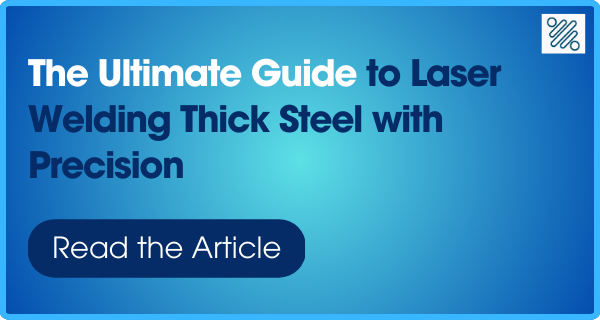
Credit: blog.inmotion.global
Preheating: Why And How To Do It
Thick metal pulls heat away from the weld fast. This can cause cracking, especially in high-strength or alloy steels. Preheating slows cooling and reduces stress.
How to preheat:
- Use a propane torch, induction heater, or oven.
- Preheat to 250°F–600°F (120°C–315°C) depending on the material.
- Check temperature with a temp stick or infrared thermometer.
Common mistake: Skipping preheat to save time. This often leads to cracks that only show up after cooling.
Selecting The Right Filler Material
The right filler rod or wire must match the base metal for strength and ductility. For steel, common choices are:
- E7018 (Stick): Good for thick carbon steel, strong and ductile.
- ER70S-6 (MIG): For mild steel, good penetration.
- E71T-1 (Flux-cored): For thick steel, high deposition rates.
Match the filler to the welding process and the plate composition. For stainless or special alloys, use the recommended wire to avoid cracking or corrosion.
Welding Technique For Thick Metal
Multi-pass Welding
One pass is rarely enough. Thick metal needs multiple passes to fill the joint, avoid defects, and control heat input.
Pass sequence:
- Root pass: The first pass, ensures full penetration at the base.
- Hot pass: Helps remove slag, refines the root.
- Fill passes: Build up to nearly the top of the joint.
- Cap pass: Final layer, smooth and slightly convex.
Clean each pass with a chipping hammer and wire brush before adding the next.
Controlling Heat Input
Too little heat: poor penetration. Too much heat: distortion and burn-through.
Set amperage and voltage based on plate thickness and electrode size. For example, 1/2″ (12 mm) steel with E7018 stick rod may need 180–220 amps. Check your machine’s chart, but also adjust by watching the weld pool.
Move the torch or stick at a steady pace. A weaving motion (side to side) is often used on fill and cap passes.
Position
Flat position is easiest and safest for thick metal. Overhead or vertical welding is possible but much harder. If possible, rotate the part for flat welding.
Avoiding Common Defects
Welding thick plate brings unique risks. Here’s how to avoid them:
- Lack of fusion: Use correct amperage, keep the arc in the joint, clean between passes.
- Slag inclusion: Clean out all slag after each pass, especially with stick and flux-cored.
- Cracking: Preheat, use low-hydrogen electrodes, don’t quench with water.
- Porosity: Clean metal, use proper shielding gas (for MIG/TIG), avoid drafts.
Insight: Many welders forget to check for undercut (grooves at weld toes), which weakens the joint. If seen, add extra passes to fill them.
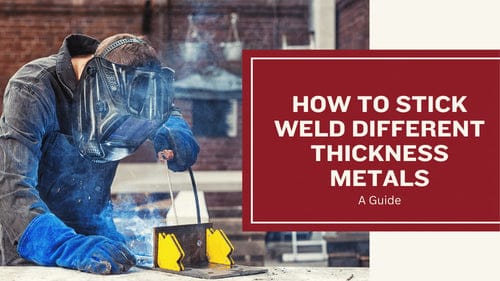
Credit: www.arccaptain.com
Testing And Inspection
Don’t assume a thick weld is strong just because it looks big. Testing is important.
- Visual inspection: Look for cracks, undercut, surface porosity.
- Bend test: Bend a sample to check ductility.
- Ultrasonic testing: Detects internal flaws in thick plate.
- X-ray: Used for critical joints, especially in pipelines or heavy equipment.
For home or shop projects, a bend test is often enough. For structural jobs, more advanced testing is required.
Practical Tips For Success
- Plan the sequence. Weld from the center out to reduce distortion.
- Use strong tacks. Weak tacks can break under heat, causing misalignment.
- Allow for cooling. Don’t rush. Let the joint cool slightly between passes.
- Keep rods and wires dry. Moisture causes hydrogen cracking, especially with low-hydrogen rods like E7018.
- Don’t over-weld. More weld metal isn’t always better. Excess welds waste material and increase stress.
Many beginners skip post-weld cleaning or inspection. Make it a habit to check your work closely.
Credit: www.arccaptain.com
Safety When Welding Thick Metal
High amperage means more heat, more UV light, and more fumes. Protect yourself:
- Wear a welding helmet with correct shade.
- Use heavy gloves and flame-resistant clothing.
- Ventilate the work area—thick metal takes longer to weld, so more fumes.
- Keep a fire extinguisher nearby.
Never weld thick sections without eye and skin protection. Burns and eye injuries are common in heavy welding.
Real-world Example: Repairing A Loader Bucket
Imagine you need to repair a 1-inch-thick steel loader bucket. Here’s how a pro would do it:
- Grind the area clean, bevel the edges to a 60° V-groove.
- Preheat with a propane torch to 300°F (150°C).
- Fit and clamp the pieces, leaving a 1/8″ root gap.
- Use E7018 stick rod at 210 amps.
- Weld a root pass, clean, then add fill passes, cleaning each time.
- Cap with a smooth final pass.
- Allow to cool slowly, check for either visible cracks or undercut.
This approach ensures a repair as strong—or stronger—than the original.
Frequently Asked Questions
How Thick Can You Weld With Mig?
MIG welding can handle up to about 1 inch (25 mm) in a single joint, but welding thicker than 1/2 inch (12 mm) usually needs multiple passes and high-power machines. For thicker sections, industrial processes like Submerged Arc Welding (SAW) are better.
Do You Always Need To Preheat Thick Steel?
Not always, but it’s strongly recommended for carbon steel over 1/2 inch (12 mm), alloy steels, or when working in cold environments. Preheating helps avoid cracks and ensures a stronger weld.
What’s The Best Rod For Welding Thick Steel?
For most thick mild steel, the E7018 rod is a popular choice because it provides strong, ductile welds with low hydrogen content. For stainless steel or special alloys, use the filler recommended by the manufacturer.
How Do You Avoid Distortion When Welding Thick Plate?
Use proper joint design (like double V-grooves), weld in sequence, balance welds on both sides, and allow time for cooling. Clamping and tacking can help keep parts aligned during welding.
Can You Weld Thick Metal With A Standard Home Welder?
Small home welders usually don’t have enough power for thick plate. For steel over 1/4 inch (6 mm), a machine with at least 180 amps is recommended. For anything over 1/2 inch (12 mm), industrial machines are often needed. If you need to weld thick metal at home, consider beveling joints and making several passes to improve strength.
Welding thick metal is a test of both your knowledge and your hands-on skill. With careful preparation, the right process, and attention to detail, you can achieve strong, safe welds on even the heaviest steel. For deeper technical resources, see the Welding page on Wikipedia. Every weld is a learning opportunity—so keep practicing, and your results will get stronger every time.
