
Have you ever wondered what makes a nail gun such a game-changer for builders and DIY enthusiasts alike? If you want to save time and effort on your projects, understanding how a nail gun works can unlock a whole new level of efficiency for you.
This powerful tool drives nails quickly and precisely, but what exactly happens inside when you pull the trigger? You’ll discover the simple yet clever mechanics behind nail guns, the different power sources they use, and how safety features keep you protected as you work.
By the end, you’ll not only know how a nail gun works but also feel confident using one to tackle your next project like a pro. Keep reading to learn the secrets behind this essential tool!
Power Sources
Nail guns use different power sources to drive nails quickly and efficiently. Each type provides the force needed to push nails into wood or other materials. Understanding these sources helps you choose the right tool for your project.
Power sources affect the nail gun’s weight, mobility, and ease of use. Some require extra equipment, while others offer cordless convenience. Let’s explore the main types of power sources found in nail guns.
Pneumatic Power
Pneumatic nail guns run on compressed air. An air compressor pumps air through a hose to the gun. The compressed air pushes a piston that drives the nail.
This type delivers strong, fast nailing power. It works well for large jobs but needs a compressor and hose. That limits mobility and adds setup time.
Battery-powered
Battery-powered nail guns use rechargeable batteries. Inside, a motor compresses air or moves a piston to fire nails. These tools are cordless and easy to carry.
They offer good power for most tasks. Batteries must be charged, but there is no need for hoses or compressors. Great for small jobs and quick fixes.
Gas-powered
Gas-powered nail guns use a small fuel cell. The fuel ignites and creates pressure to drive the nail. This method is cordless and very powerful.
These guns are common in roofing and framing. They combine mobility with strong force. Fuel cells need replacement after use, adding cost.
Credit: www.everwinpneumatic.com
Pneumatic Systems
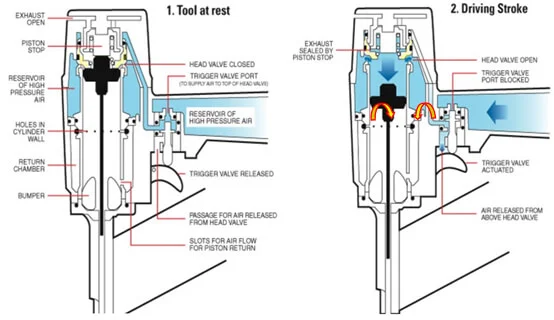
Pneumatic nail guns use compressed air to drive nails quickly and efficiently. This system relies on an air compressor that pumps air into the nail gun through a hose. The compressed air powers a piston inside the tool, which pushes the nail into the material with strong force.
The process is fast and consistent, making pneumatic nail guns popular for construction and woodworking. These tools need a reliable air compressor to maintain the right pressure for each nail shot.
How Compressed Air Powers The Nail Gun
Air compressors store and release air at high pressure. When the nail gun’s trigger is pulled, compressed air flows into a chamber. This air pushes a piston forward. The piston strikes the nail, driving it deep into wood or other materials.
The force from the air is strong enough to work with tough materials. It also allows the nail gun to fire nails rapidly without tiring the user.
Components Of A Pneumatic Nail Gun
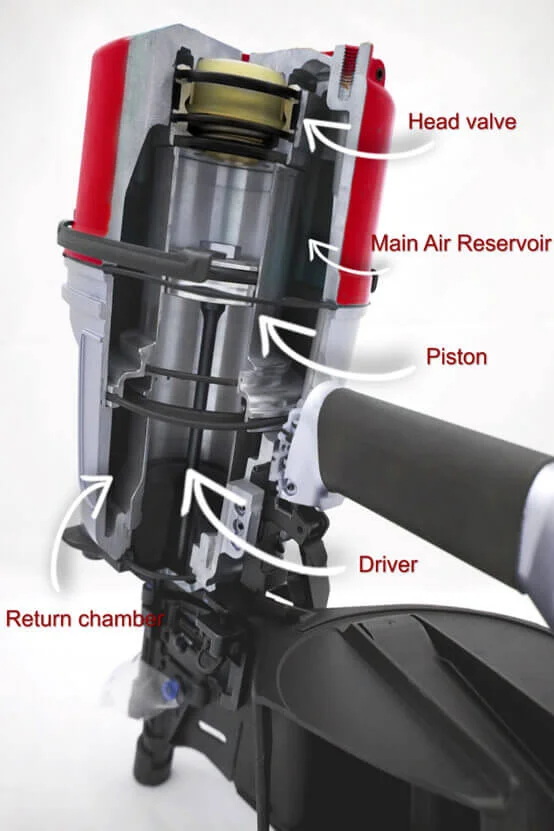
Key parts include the air hose, piston, trigger, and safety tip. The air hose connects the compressor to the nail gun. The piston moves inside the gun to push nails. The trigger controls when nails are fired. The safety tip must press against a surface to allow firing.
This safety feature helps prevent accidents by stopping the gun from firing in mid-air.
Advantages Of Pneumatic Systems
Pneumatic nail guns are lighter than battery-powered models because they have fewer heavy parts. They offer strong, consistent power for driving nails deeply. The tools can fire many nails quickly, speeding up work on large projects.
These systems are reliable and easy to maintain. Regular checks of the compressor and hoses keep the nail gun working well.
Battery-powered Models
Battery-powered nail guns use a rechargeable battery to create pressure inside. This pressure pushes a piston or hammer that drives nails quickly. They work without hoses, making them easy to carry and use anywhere.
Battery-powered nail guns offer cordless convenience for many projects. They rely on rechargeable batteries to provide power. This eliminates the need for hoses or compressors.
These models use an electric motor to generate pressure inside the tool. The pressure then drives a piston or hammer that fires the nail. This makes them ideal for jobs in tight spaces or outdoors.
How The Motor Creates Power
An electric motor inside the nail gun spins a small compressor. The compressor builds air pressure in a chamber. When triggered, this pressure pushes a piston forward. The piston strikes the nail quickly and with force.
This process allows the nail to embed firmly into wood or other materials. Battery power keeps the tool lightweight and easy to handle. It also provides consistent power without the noise of gas or air tools.
Advantages Of Battery-powered Nail Guns
Battery-powered nail guns give freedom of movement. No cords or hoses limit where you can work. They start instantly without waiting for air pressure to build.
These models need less maintenance since they have fewer moving parts. The battery can be recharged many times, making the tool cost-effective. Many also feature adjustable depth controls for precise nailing.
Common Uses And Limitations
Battery-powered nail guns work well for finish work and framing. They suit indoor and outdoor jobs, especially where cords cause hazards. The battery life limits how long you can use the gun continuously.
Heavy-duty jobs may require pneumatic or gas-powered nailers for more power. Still, battery models balance power, portability, and ease of use for most tasks.
Spring-powered Mechanism
A spring-powered mechanism uses a compressed spring to push nails quickly into surfaces. Pressing the trigger releases the spring’s energy, driving the nail forward. This simple system does not need air or batteries to work.
Understanding The Spring-powered Mechanism
The spring-powered mechanism is one of the simplest ways a nail gun works. It uses a tightly coiled spring to store energy. When you pull the trigger, the spring releases its energy quickly.
This fast release pushes a piston or hammer forward. The piston then drives the nail into the wood or other material. No external power source like air or batteries is needed.
How The Spring Stores And Releases Energy
Inside the nail gun, a spring sits in a compressed state. Pulling the trigger frees the spring to expand rapidly. This expansion moves the piston with great force.
The piston hits the nail, pushing it out of the gun and into the surface. After firing, the spring is compressed again, ready for the next nail.
Advantages Of Spring-powered Nail Guns
Spring-powered nail guns are lightweight and easy to handle. They do not need cords or hoses, making them very portable. These nail guns work well for small projects and light tasks.
The simple design means fewer parts can break or wear out. This reliability makes them a good choice for beginners or quick jobs.
Firing Mechanism
A nail gun’s firing mechanism uses compressed air, electricity, or a spring to drive nails quickly. Pressing the safety tip and pulling the trigger releases energy that pushes a piston or hammer, forcing the nail into the surface. This system ensures fast, secure nailing.
Understanding The Firing Mechanism
The firing mechanism is the heart of a nail gun. It controls how the nail is pushed into the material. This mechanism uses energy from different power sources. It turns this energy into a strong, fast push.
The mechanism must be quick and precise. It fires nails with enough force to hold materials tight. At the same time, it keeps the user safe. Each type of nail gun has a unique firing system.
Pneumatic Firing Mechanism
Pneumatic nail guns use compressed air to fire nails. The air comes from an external compressor connected by a hose. When the trigger is pulled, air pushes a piston fast.
The piston hits a blade or driver. This blade drives the nail into the surface. The whole action happens in a split second. The force depends on the air pressure set in the compressor.
Battery-powered Firing Mechanism
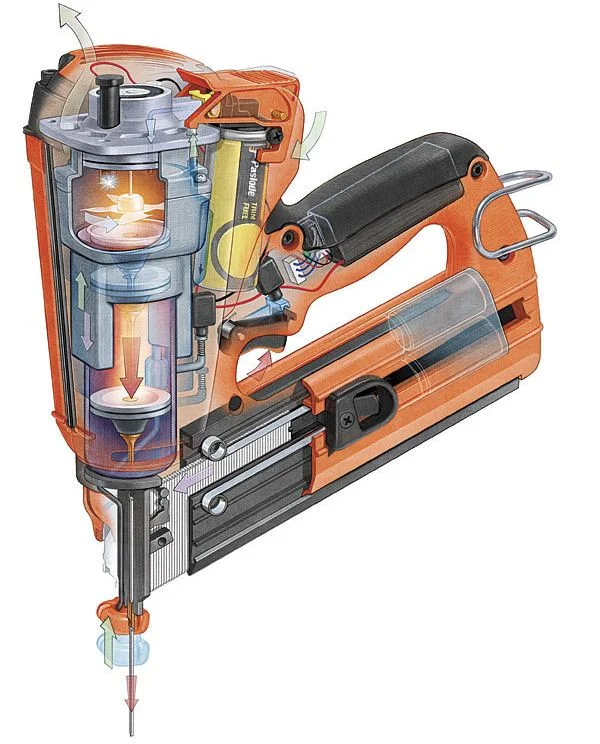
Battery-powered nail guns use electricity to create pressure. A small motor runs a compressor inside the gun. This builds air pressure without a hose or external compressor.
When triggered, the stored pressure pushes a piston or hammer. This strikes the nail, driving it into the material. The battery allows for cordless use and easy movement.
Spring-powered Firing Mechanism
Spring-powered nail guns use a tightly compressed spring. Pulling the trigger releases the spring quickly. The spring pushes a hammer or piston forward.
This hammer hits the nail to drive it into the surface. These guns do not need air or electricity. They are simple but less powerful than other types.
Credit: www.finehomebuilding.com
Safety Features
Nail guns are powerful tools designed to drive nails quickly and efficiently. Safety features protect users from accidental firing and injuries. These features make nail guns safer to use on job sites and at home.
Understanding these safety elements helps users handle nail guns with care. Each safety feature plays a key role in preventing accidents.
Contact Safety Tip
The contact safety tip must be pressed firmly against a surface. This action allows the nail gun to fire only when the tip is engaged. It prevents nails from shooting out randomly in the air. This feature reduces the risk of accidental nail discharge.
Trigger Safety Mechanisms
Nail guns include triggers that require intentional pulling to fire nails. Some models have sequential triggers, which need the safety tip pressed before pulling the trigger. Others have bump triggers, allowing rapid firing but needing careful control. These trigger systems help avoid unintended firing.
Exhaust And Pressure Control
Many nail guns have adjustable exhaust vents to direct air away from users. Pressure control limits the force used to drive nails. Proper pressure reduces nail ricochet and damage to materials. These controls contribute to safer operation and better nail placement.
Lockout And Safety Switches
Lockout features prevent the nail gun from firing when not in use. Safety switches can disable the trigger to avoid accidental use. These switches are useful during tool maintenance or when carrying the nail gun. They add an extra layer of protection for users.
Trigger And Firing Modes
The trigger and firing modes are vital for controlling a nail gun safely and effectively. They determine how nails are fired and help prevent accidents. Understanding these parts makes using a nail gun easier and safer.
Types Of Triggers
Nail guns usually have two main trigger types: sequential and contact. Sequential triggers require the user to press the safety tip first, then pull the trigger to fire one nail at a time. This method offers better control and reduces accidental firing.
Contact triggers allow the gun to fire nails continuously as long as the trigger is held and the safety tip is pressed. This mode speeds up work but increases the risk of mistakes, so it needs careful handling.
How Firing Modes Work
Firing modes control how the nail gun shoots nails during operation. The most common modes are single-fire and bump-fire. Single-fire mode shoots one nail per trigger pull, making it precise for detailed work.
Bump-fire mode lets the user fire nails rapidly by holding the trigger and tapping the safety tip against the surface. This mode suits large projects needing speed but requires skill to avoid errors.
Safety Features In Trigger Design
Most nail guns include safety mechanisms linked to the trigger. A safety tip must be pressed firmly against a surface before the trigger works. This prevents nails from firing into open air or accidentally.
Some models have lock-off switches to disable the trigger when not in use. These features protect users and bystanders, making the tool safer on job sites.
Credit: www.everwinpneumatic.com
Nail Feeding And Depth Control
Nail feeding and depth control are vital parts of a nail gun’s function. They ensure nails are loaded smoothly and driven to the right depth every time. Proper feeding keeps the work fast and efficient. Depth control helps avoid damage to the material.
Understanding these systems helps users work more safely and precisely. Both features improve the quality of the finished project.
Nail Feeding System
The nail feeding system moves nails from the magazine to the firing chamber. Nails are usually held in strips or coils. A spring or motor pushes nails forward one by one. This action prevents jams and keeps nails ready to fire.
Some nail guns have adjustable feeders for different nail sizes. This allows more flexibility for various tasks. A smooth feeding system reduces downtime and frustration on the job.
Depth Control Mechanism
Depth control adjusts how far nails enter the material. It helps prevent over-driving or under-driving nails. Over-driving can damage the surface or weaken the hold. Under-driving leaves nails sticking out, which is unsafe.
Most nail guns feature an adjustable depth dial or trigger pressure system. Users can set the nail depth based on the material type. Soft wood needs less depth, while hard wood requires more force.
How Nail Feeding And Depth Control Work Together
Both systems must work smoothly for best results. Nail feeding supplies nails quickly and reliably. Depth control ensures nails are set at the correct depth every time. Together, they help users finish projects faster and with better quality.
Proper adjustment of these features suits different materials and nail sizes. This makes the nail gun a versatile tool for many tasks.
Frequently Asked Questions
Will A Nail Gun Fire Without Nails?
A nail gun usually won’t fire without nails loaded. The safety mechanism and trigger rely on nails being in place to operate.
How Does A Cordless Nail Gun Work?
A cordless nail gun uses a battery-powered motor to drive a piston or hammer. Pressing the safety tip against a surface and pulling the trigger releases energy, firing a nail into the material quickly and efficiently without needing an air compressor.
Do All Nail Guns Require A Compressor?
Not all nail guns require a compressor. Pneumatic nail guns need compressors, but cordless and battery-powered ones do not.
Why Don’t Roofers Use Nail Guns?
Roofers avoid nail guns because roofing nails need precise placement and depth control. Nail guns risk damaging shingles or causing leaks. Hand nailing ensures secure fastening and prevents over-penetration. This method maintains roof integrity and durability, which is crucial for weather resistance and long-term performance.
How Does A Nail Gun Drive Nails So Quickly?
A nail gun uses compressed air, battery power, or a spring to push nails fast into wood or other materials.
Conclusion
A nail gun uses force to quickly drive nails into surfaces. It works by releasing energy from compressed air, a battery, or a spring. Safety tips prevent accidental firing, keeping users secure. Different firing modes allow for single or rapid nail placement.
Understanding these basics helps use nail guns safely and effectively. Nail guns save time and effort in many projects. With proper care, they remain reliable tools for building and repairs.