
Choosing the right size nail gun for framing can make all the difference in how smoothly your project goes. If you’re tackling a framing job, you might wonder: what size nail gun should you use to get strong, reliable results without damaging the wood?
Picking the wrong size could lead to weak joints or wasted time fixing mistakes. But don’t worry — this guide will help you understand exactly which nail gun size fits your framing needs, so you can work smarter, faster, and with confidence.
Keep reading to discover the simple rules and expert tips that will make your framing project a success from start to finish.
Credit: mcswusa.com
Types Of Nail Guns For Framing
Nail guns for framing come in several types. Each type serves different needs. Choosing the right one helps finish your project faster. It also ensures strong and safe construction.
Understanding each type makes picking easier. Here is a breakdown of common framing nail guns.
Pneumatic Framing NailersPneumatic nailers use air pressure to drive nails. They need an air compressor to work. These guns are popular for framing because they are powerful. They handle large nails easily. Pneumatic nailers are lightweight and easy to use for long hours.
Gas-Powered Framing NailersGas-powered nailers run on fuel cells and batteries. They do not need a compressor or hose. These nailers offer great mobility on job sites. They are slightly heavier but very efficient. Perfect for outdoor or remote framing tasks.
Cordless Electric Framing NailersElectric nailers use batteries only. They provide freedom from cords and hoses. These are less powerful than pneumatic or gas types. Best suited for small to medium framing jobs. Easy to carry and quick to start.
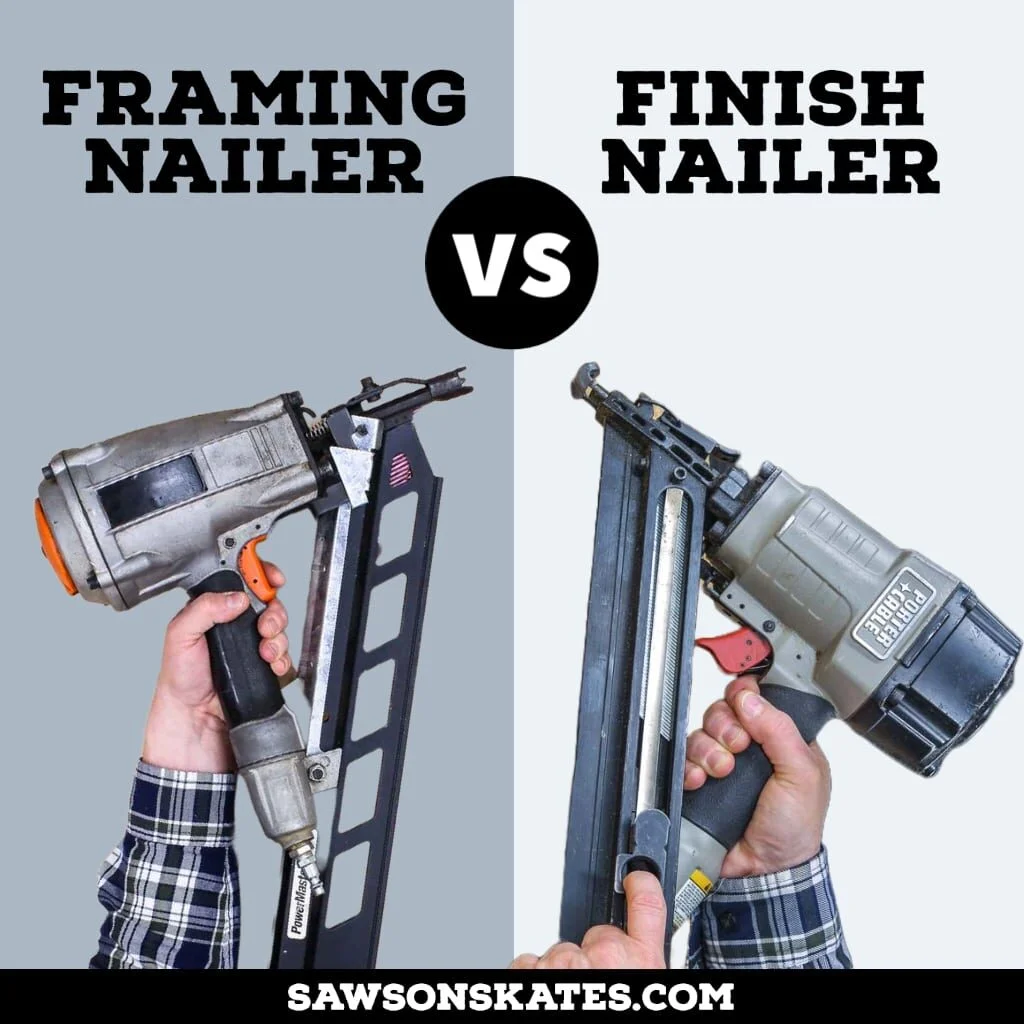
Strip Nailers vs. Coil NailersStrip nailers hold nails in a straight strip. Coil nailers hold nails in a round coil. Strip nailers are lighter and easier to control. Coil nailers hold more nails and need fewer reloads. Both types work well, depending on your needs.
Credit: sawsonskates.com
Common Nail Sizes Used In Framing
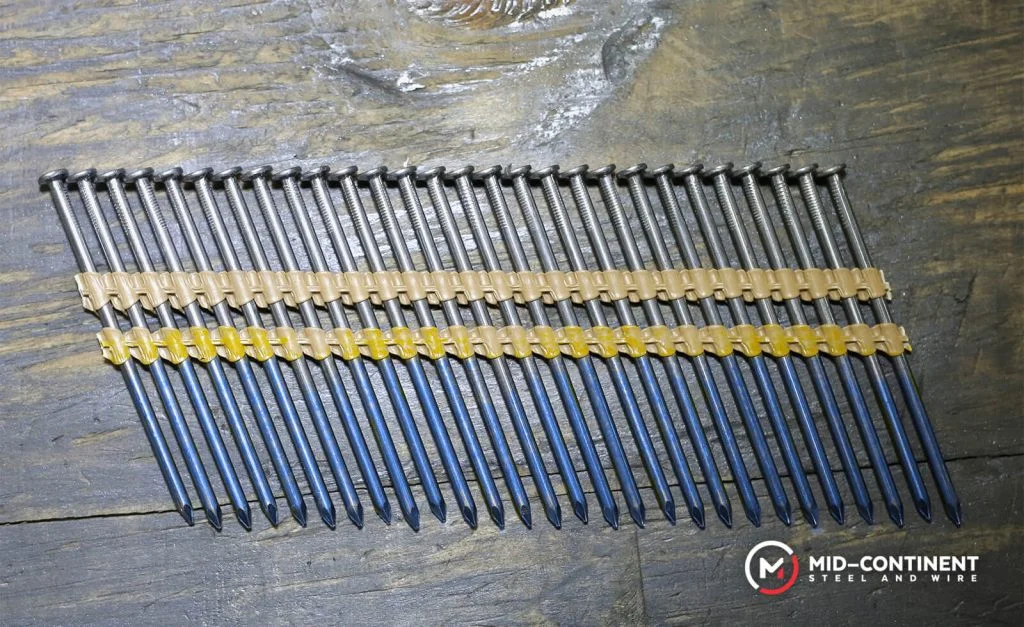
Nails play a key role in framing projects. Choosing the right size nail ensures strong, lasting joints. Different nail sizes serve different framing needs. Understanding common nail sizes helps you pick the best option.
Framing nails are usually longer and thicker than finishing nails. They must hold heavy lumber securely. Nail length and gauge affect strength and holding power. Let’s explore the most common nail sizes used in framing.
3 ½ Inch Nails (16d)
These nails are the most popular for framing. They measure 3 ½ inches long. Strong and thick, they work well for 2×4 and 2×6 lumber. Builders rely on 16d nails for wall studs and plates. They provide excellent grip and support.
2 ½ Inch Nails (10d)
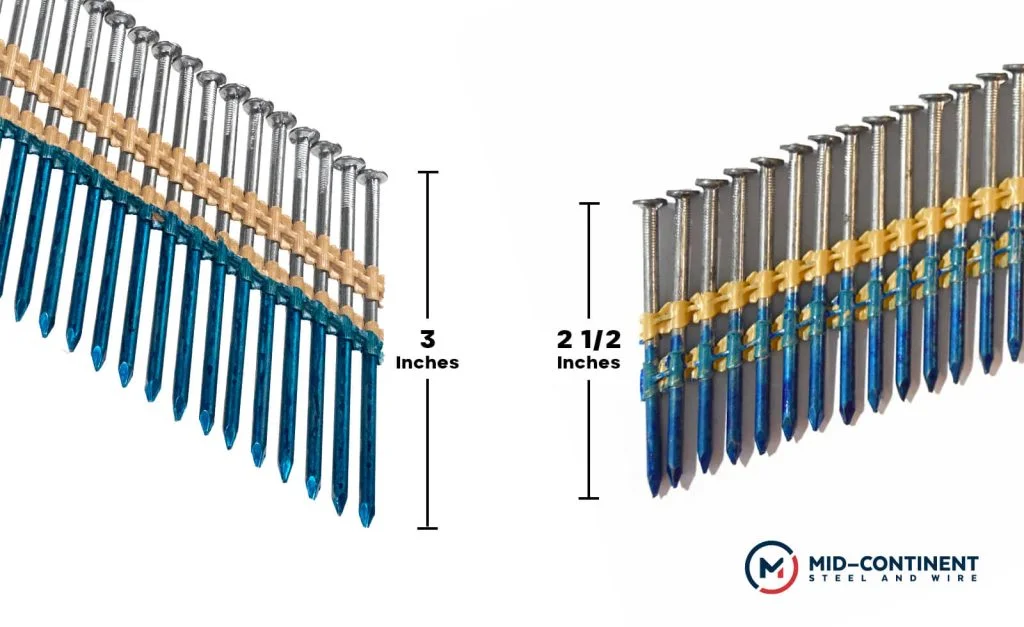
These nails are shorter but still strong. They measure 2 ½ inches in length. Ideal for smaller wood pieces or thinner framing parts. Use 10d nails for blocking, bracing, or lighter framing tasks. They are easier to drive in tight spots.
3 Inch Nails (12d)
These nails strike a balance between length and strength. Measuring 3 inches long, they fit medium framing jobs well. Often used for roof sheathing or subfloor fastening. They provide solid holding power without splitting the wood.
Ring-shank Vs. Smooth-shank Nails
Ring-shank nails have ridges for extra grip. They resist pulling out better than smooth-shank nails. Smooth-shank nails slide in easily but hold less tightly. Choose ring-shank nails for outdoor or high-stress framing. They increase frame stability and durability.
Matching Nail Length To Wood Thickness
Matching the nail length to the wood thickness is key for strong framing. Using the right nail size keeps wood pieces tight and secure. Nails that are too short won’t hold well. Nails that are too long can split the wood.
Choosing the proper nail length depends on the thickness of the wood you are working with. The nail should penetrate deep enough to provide a firm hold. Usually, the nail length should be about three times the thickness of the wood piece being nailed.
Why Nail Length Matters
Proper nail length ensures the wood stays firmly joined. Short nails can pop out or fail under pressure. Long nails may damage the wood or cause cracks. The right size helps avoid these problems.
Standard Nail Lengths For Framing
Common framing nails range from 2 to 3.5 inches. For 2×4 lumber, 3-inch nails work best. Thicker wood like 2×6 needs longer nails, around 3.5 inches. Match the nail size to the wood thickness for best results.
Tips For Selecting Nail Length
Measure the wood thickness before choosing nails. Pick a nail that is about three times longer than the wood thickness. Avoid nails that are too long to prevent splitting. Use nails made for framing nail guns for easy handling.
Nail Gauge And Its Importance
Nail gauge is a key factor in choosing the right framing nail gun. It measures the thickness of the nail wire. The smaller the gauge number, the thicker the nail. Thicker nails provide more strength and hold.
Choosing the correct nail gauge affects the durability and safety of your framing project. Too thin nails may bend or break easily. Too thick nails can split the wood.
Nail Gauge And Wood Compatibility
Different wood types need different nail gauges. Softwoods like pine work well with thinner nails. Hardwoods require thicker nails to penetrate deeply. Matching nail gauge to wood prevents damage and ensures strong joints.
Impact Of Nail Gauge On Framing Strength
Thicker nails hold framing pieces firmly. They resist pulling out under pressure. Thin nails can loosen over time. For structural framing, use nails between 8 and 11 gauge for the best strength.
Choosing The Right Gauge For Your Nail Gun
Most framing nail guns use 8, 9, or 10 gauge nails. Check your nail gun’s specifications before buying nails. Using the wrong gauge may jam or damage the tool. Proper gauge ensures smooth operation and reliable fastening.
Choosing Nails For Treated Vs. Untreated Lumber
Choosing nails depends on lumber type: use galvanized nails for treated wood to resist rust. Untreated lumber works well with standard nails. Match nail size to your framing nail gun for secure, strong joints.
Choosing the right nails for framing depends on the type of lumber used. Treated wood and untreated wood need different nails. Using the wrong nails can cause rust, weaken the structure, or damage the wood.
Treated lumber is chemically treated to resist rot and insects. This treatment can cause regular nails to corrode faster. Untreated lumber does not have this chemical treatment and needs nails that work well with natural wood.
Best Nails For Treated Lumber
Use galvanized or stainless steel nails for treated wood. These nails resist rust and corrosion caused by the chemicals in the wood. Hot-dipped galvanized nails are the most common choice for framing with treated lumber.
Ring-shank nails provide extra holding power. They grip the wood fibers better, which is important for outdoor or heavy-duty framing. Avoid using plain steel nails as they will rust and weaken over time.
Best Nails For Untreated Lumber
Plain steel nails are usually fine for untreated wood. These nails are less expensive and hold well in dry, natural wood. Smooth-shank nails work well for general framing tasks with untreated lumber.
Ring-shank nails can also be used if extra grip is needed. Choose nails long enough to penetrate both pieces of wood securely. Avoid nails that are too short, as they may not hold the framing properly.
Tips For Using Nails With Both Types Of Lumber
Match nail length to lumber thickness for a strong hold. For most framing jobs, 3 to 3 ½ inch nails work well. Use a framing nail gun designed to handle these nail sizes.
Check the nail coating before starting the project. Galvanized or stainless steel nails are best for outdoor and treated wood. Plain steel nails suit indoor projects with untreated lumber.
Keep nails dry and store them in a cool place. This helps prevent rust before use. Always follow the manufacturer’s guidelines for nail and gun compatibility.
Nailer Compatibility And Capacity
Nailer compatibility and capacity are key factors for framing projects. Choosing a nail gun that fits your nails ensures smooth work. Capacity affects how many nails you can load at once. Both affect efficiency and ease of use.
Nail Size Compatibility
Each nail gun supports specific nail sizes. Framing nailers usually accept nails from 2 to 3.5 inches. Using the right nail size avoids jams and misfires. Check the gun’s manual for exact nail size limits. Matching nail size to the wood thickness is important. Too short nails won’t hold well. Too long nails can split the wood.
Magazine Capacity
The magazine holds collated nails for quick firing. Larger capacity means fewer reloads and faster work. Typical framing nailers hold 60 to 100 nails per strip. Higher capacity models reduce downtime on big projects. Consider your project size when picking capacity. Small jobs may not need large magazines.
Collation Type Compatibility
Nails come collated by wire, plastic, or paper strips. Nail guns are designed for specific collation types. Using the wrong collation can cause feeding problems. Plastic collation is common and clean but can leave debris. Wire collation is strong but noisier. Confirm your nail gun supports your chosen collation.
Tips For Avoiding Wood Splitting
Wood splitting is a common problem during framing. It weakens the structure and ruins the wood’s look. Preventing splits keeps your project strong and neat. Simple steps can protect wood and improve your results.
Choose The Right Nail Size And Type
Use nails that match the wood thickness. Nails that are too long or thick can split wood easily. Ring-shank nails hold better and reduce movement, lowering the chance of splits.
Pre-drill Holes For Hard Or Dry Wood
Drill small pilot holes before nailing into hard or dry wood. This reduces pressure and prevents cracks. The hole should be slightly smaller than the nail diameter.
Keep Nails Away From Wood Edges
Place nails at least one inch away from edges and ends. Nailing too close creates stress points that cause splits. Center nails in the wood surface for best results.
Use A Nail Gun With Adjustable Depth Control
Set your nail gun to drive nails below the wood surface gently. Too much force can crack the wood. Adjusting depth control helps avoid damage and keeps nails secure.
Work With Wood At The Right Moisture Level
Wood that is too dry or too wet splits easier. Use wood with moderate moisture content. Store wood properly before framing to keep the moisture balanced.
Alternative Fastening Options For Framing
Framing projects often require strong, reliable fastening methods. While nail guns are popular, other fastening options exist. These alternatives can suit different materials, budgets, or project needs. Understanding these options helps choose the best tool for your framing work.
Staple Fasteners For Framing
Staples can hold thin materials quickly and firmly. They work well with sheathing, house wrap, and paneling. Staple guns are easier to control for delicate tasks. They are less suitable for heavy framing but useful for minor attachments.
Construction Screws
Screws provide a stronger hold than nails in many cases. They resist pulling out and offer more durability. Screws require a drill or screwdriver, which takes more time. Their grip works well for heavy framing or outdoor projects.
Adhesive Fastening
Construction adhesives add extra strength between wood pieces. They reduce the need for many nails or screws. Adhesives are ideal for reducing wood movement and noise. Use them with mechanical fasteners for best results.
Bolts And Lag Screws
Bolts and lag screws secure large structural parts firmly. They require pre-drilling holes and tools like wrenches. These fasteners offer high strength for beams and posts. They are essential in heavy framing or load-bearing areas.
Credit: mcswusa.com
Frequently Asked Questions
What Size Nail For 2×4 Framing?
Use 3-inch common nails or 3¼-inch framing nails for 2×4 framing. Choose ring-shank nails for better holding power.
What Size Nail Gun Nails For Framing?
Use 3 to 3. 5-inch nails for framing with a framing nail gun. Choose ring-shank nails for stronger hold.
Should I Buy A 21 Or 30 Degree Framing Nailer?
Choose a 21-degree framing nailer for tighter spaces and easier nail loading. Pick a 30-degree for angled nailing and better maneuverability. Your project type and accessibility determine the best choice.
Do I Want A 16 Or 18 Gauge Nailer?
Choose a 16 gauge nailer for heavier trim and cabinetry. Use an 18 gauge nailer for delicate, detailed trim and smaller molding projects.
What Size Nail Gun Is Best For Framing Wood?
A 3-1/2 inch framing nail gun is ideal for most wood framing tasks.
Conclusion
Choosing the right nail gun size makes framing easier and safer. Most framing jobs need a 3 to 3. 5-inch nail gun. Using nails that fit your gun and project keeps wood strong. Avoid nails that are too long or short to prevent damage.
Always pick nails that match your building materials. This simple step helps your work last longer and look better. Keep your tools ready and nails in proper size for best results. Nail gun size matters—choose wisely for smooth framing work.