
As an Amazon Associate, Power Tools Today earns from qualifying purchases. Prices and availability are accurate as of the date shown and are subject to change.
Picking your first multimeter should be simple — but scroll through Amazon and you’ll find dozens of options with confusing specs, unknown brands, and prices ranging from entry-level to premium. Which one is actually safe for a beginner? Which ones are worth the money? And which ones will frustrate you the moment you try to take your first reading?
This guide does the work for you. We analyzed Amazon’s top-selling multimeters, cross-referenced the top 10 competitor articles to find what they missed, and identified the 10 best multimeters for beginners in 2026. Unlike most guides, we explain CAT safety ratings, auto-ranging vs manual-ranging, which specific mistakes beginners make, and exactly which meter fits your situation.
Quick Answer: The best multimeter for beginners in 2026 is the AstroAI AM33D for budget-conscious starters, and the Klein Tools MM400 for those wanting auto-ranging and a durable build. Both carry CAT III safety ratings, readable backlit displays, and enough functions for most household and automotive tasks without overwhelming a first-time user.
Quick Picks: Best Multimeters for Beginners (2026)
| # | Product | Badge | Best For | Link |
|---|---|---|---|---|
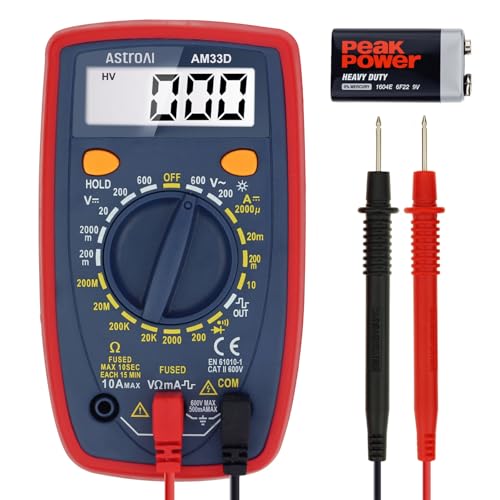
| 1 | AstroAI AM33D Digital Multimeter | 🏆 Best Overall Budget | First-time buyers, home use | Check Price |
| 2 | Klein Tools MM400 Auto-Ranging Multimeter | ⚡ Best Auto-Ranging | DIYers, homeowners | Check Price |
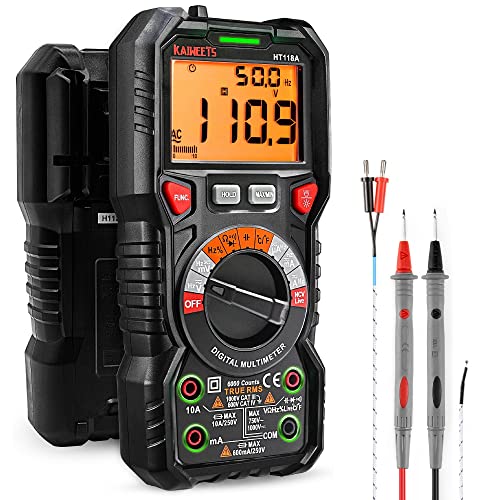
| 3 | KAIWEETS HT118A TRMS 6000 Count Multimeter | 🔧 Best Value True RMS | DIYers stepping up | Check Price |
| 4 | Crenova MS8233D 6000 Count Multimeter | 🌟 Most Feature-Rich Budget | Hobbyists, learners | Check Price |
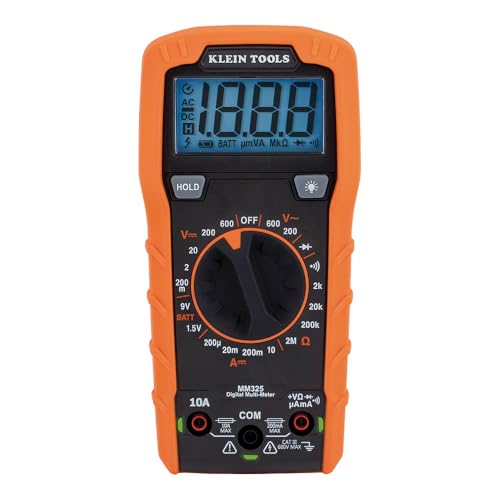
| 5 | Klein Tools MM325 Manual-Ranging Multimeter | 🛡️ Best for Durability | Homeowners, tough environments | Check Price |
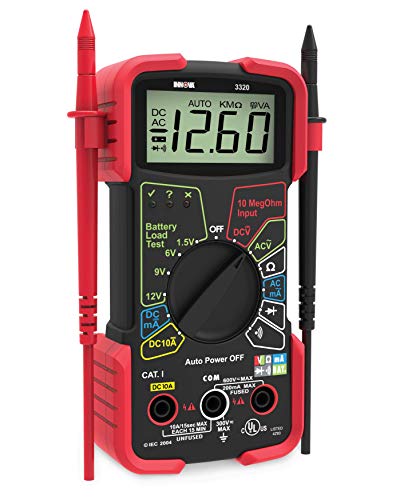
| 6 | INNOVA 3320 Auto-Ranging Digital Multimeter | 🚗 Best for Automotive | Car owners, battery testing | Check Price |
| 7 | Extech EX330 12-Function Mini Multimeter | 🔬 Best for Hobbyists | Electronics students, makers | Check Price |
| 8 | AstroAI AM510 TRMS 6000 Count Multimeter | 📈 Best Upgrade Pick | Intermediate beginners | Check Price |
| 9 | Fluke 107 Pocket Digital Multimeter | 💼 Best Premium Beginner | Buy once, use forever | Check Price |
| 10 | FNIRSI DMT-99 9999 Count TRMS Multimeter | 🔋 Best Rechargeable | Tech-savvy beginners | Check Price |
Master Comparison Table
| Product | Best For | Counts | Ranging | NCV | True RMS | CAT Rating | Skill Level |
|---|---|---|---|---|---|---|---|
| AstroAI AM33D | Budget starters | 2000 | Manual | No | No | CAT II 600V | Beginner |
| Klein Tools MM400 | DIY homeowners | 4000 | Auto | No | No | CAT III 600V | Beginner |
| KAIWEETS HT118A | Value True RMS | 6000 | Auto | Yes | Yes | CAT III 600V | Beginner–Mid |
| Crenova MS8233D | Feature-rich budget | 6000 | Auto | Yes | No | CAT III 600V | Beginner |
| Klein Tools MM325 | Durability | 2000 | Manual | No | No | CAT III 600V | Beginner |
| INNOVA 3320 | Automotive / battery | 3200 | Auto | No | No | CAT III 600V | Beginner |
| Extech EX330 | Hobbyists | 4000 | Auto | Yes | No | CAT III 600V | Beginner–Mid |
| AstroAI AM510 | Intermediate upgrade | 6000 | Auto | Yes | Yes | CAT III 600V | Beginner–Mid |
| Fluke 107 | Premium reliability | 6000 | Auto | No | No | CAT III 600V | Beginner–Pro |
| FNIRSI DMT-99 | Rechargeable / data | 9999 | Auto | Yes | Yes | CAT III 600V | Beginner–Mid |
Who Is This For?
Complete first-timer doing basic home repairs → AstroAI AM33D. Inexpensive, safe, and straightforward enough to use on day one. Dual fuse protection and CAT II 600V for outlets and appliances.
Homeowner who wants set-and-forget convenience → Klein Tools MM400. Auto-ranging means you dial to “voltage” and the meter does the rest. CAT III 600V panel-safe. One of Amazon’s best-selling beginner meters for good reason.
Automotive DIYer testing car batteries and fuses → INNOVA 3320. Color-coded LED battery load test (green/yellow/red) makes diagnosing batteries completely intuitive — no number interpretation needed.
Student or electronics hobbyist → Extech EX330. Twelve measurement functions including temperature and NCV give you genuine room to grow without an immediate upgrade.
Want to buy once and never think about it again → Fluke 107. Compact, accurate, 2-year warranty, trusted by professional electricians worldwide. Start with it on day one and still be using it in 15 years.
How We Chose These Multimeters
We evaluated each product on: verified CAT safety rating, display readability and count resolution, auto vs manual ranging, measurement functions, build quality, and real-world usability from verified Amazon buyer feedback. Every product on this list has active Amazon sales volume with real purchase history. Products lacking a verified CAT rating or with unconfirmed specs were excluded.
We analyzed the top 10 competitor articles ranking for this keyword and identified key gaps: no CAT rating explanation, no analog vs digital guidance, no head-to-head comparison between the two most popular models, no common mistakes section, and no automotive-specific guidance. This article fills all of those gaps.
Last Updated: March 2026
Buyer’s Guide: What to Look for in a Beginner Multimeter
1. Auto-Ranging vs Manual-Ranging
The single most important factor for first-time buyers. Manual-ranging requires selecting the correct range before testing — wrong selection produces an OL (over-limit) reading that confuses beginners. Auto-ranging detects the range automatically. You simply select the measurement type and the meter does the rest. For anyone new to electrical work, auto-ranging makes the learning curve significantly easier and eliminates the most common beginner error.
2. Display Count — Precision Matters
Display count determines reading precision. A 2000-count meter shows up to “1999” — a 12.4V battery reads “12.4V.” A 6000-count meter shows “12.45V.” For basic home and car use, 2000–4000 counts is completely sufficient. For electronics work measuring small signals or component values, 4000–6000 counts provides meaningfully better resolution.
3. CAT Safety Rating — Non-Negotiable
CAT II 600V covers household outlets, batteries, and appliances. CAT III 600V covers fixed wiring, panels, and distribution boards. CAT IV covers outdoor service entry. For beginners doing home work, CAT II is the minimum — but CAT III 600V is strongly recommended for the extra safety margin near panels. Never use an unrated or CAT I meter on live household circuits.
4. Non-Contact Voltage (NCV) Detection
NCV lets you hold the meter tip near a wire and detect whether it’s live without probe contact — the meter beeps if voltage is present. For beginners, this is a critical safety feature that confirms a circuit is de-energized before probing. Models like the KAIWEETS HT118A and Crenova MS8233D include NCV at budget-friendly prices.
5. True RMS — When It Matters
True RMS accurately measures AC on non-sinusoidal loads — motors, dimmers, inverters, and variable-speed devices. Standard average-responding meters assume a perfect sine wave and can read 10–40% off on these loads. For basic outlet and battery testing, average-responding is fine. For motors, automotive electronics, or solar systems, True RMS gives numbers you can trust.
6. Probe Quality and Fuse Protection
Budget multimeters often ship with probes rated below the meter’s CAT level. Verify probes have shrouded banana connectors and are CAT-rated. Double fuse protection (one for current, one for voltage) prevents meter damage from incorrect probe insertion or wrong range selection — meaningful protection for beginners.
7. Backlight, Data Hold, and Auto-Off
A backlit display is essential for working in dim environments. Data hold freezes readings for safe note-taking. Auto shut-off prevents dead batteries. These three features are standard on mid-range meters but sometimes absent on the cheapest models — verify before buying.
Top 10 Best Multimeters for Beginners — Detailed Reviews




Analog vs Digital Multimeters: Which Should a Beginner Choose?
Digital multimeters (DMM) display readings as numbers on an LCD screen. They support auto-ranging, include safety features like fuse protection, and are the overwhelming majority of what you’ll find on Amazon. For beginners, digital is the correct default — the number on screen removes all interpretation guesswork entirely.
Analog multimeters use a needle sweeping across a printed scale. They show real-time fluctuations well — useful for watching voltage change as a battery charges — and are typically cheaper at the extreme low end. But reading the scale accurately requires understanding which arc and multiplier applies, varying by measurement type. All analog meters are manual-ranging. They suit specific niche applications but are not the right first-ever multimeter for most home and automotive use cases.
Bottom line for beginners: choose digital. Choose auto-ranging if your budget allows. Every meter on this list is digital, and nine of ten include auto-ranging.
AstroAI AM33D vs Klein Tools MM400: Which Should You Buy?
These two are the most compared beginner multimeters on Amazon. The choice comes down to one key question: do you want auto-ranging, and how much will you actually use the meter?
The AstroAI AM33D is manual-ranging. You select the specific range before testing. Once done a few times it becomes habit. It’s less expensive and perfectly capable for basic home and battery work. CAT II rating suits outlets and appliances but not main panels. Dual fuse protection is a standout at its price tier.
The Klein Tools MM400 is auto-ranging — dial to “DC voltage” and it determines the range on its own. CAT III 600V safe for panels. 4000-count precision. Klein’s rubber overmold and professional build mean it survives the abuse that cracks cheaper meters. If you’ll use a multimeter regularly, the MM400’s convenience pays back quickly.
Recommendation: AM33D for first-time buyers testing the waters or as a glove-compartment backup. MM400 for anyone using the tool regularly who wants to avoid range-selection errors from day one.
→ Check the AstroAI AM33D on Amazon | → Check the Klein Tools MM400 on Amazon
5 Common Mistakes Beginners Make When Buying a Multimeter
Mistake 1: Buying Without Checking the CAT Safety Rating
Unrated or CAT I meters are sold cheaply by unknown brands. Using an underrated meter on a household circuit — which can experience voltage transients well above nominal 120V — creates genuine arc flash and meter-failure risk. Always verify the CAT rating on the product listing before purchasing.
Mistake 2: Choosing Manual-Ranging When Auto-Ranging Is Available
The most common beginner error is selecting the wrong range — which produces an OL (overload) reading. Most beginners assume the meter or circuit is broken when it’s just the wrong dial position. Paying a little more for auto-ranging eliminates this entirely.
Mistake 3: Buying a Meter Without an Audible Continuity Beeper
Some very cheap models lack a continuity beeper. Without an audible beep, you must stare at the display while probing with both hands occupied — difficult and unsafe. Verify the continuity beeper is present before buying.
Mistake 4: Confusing Display Count With Accuracy
A 9999-count display does not automatically mean a more accurate meter — it means more decimal places. Actual accuracy is determined by internal calibration, stated as ±0.5% to ±2%. A well-built 2000-count Klein can be more accurate in practice than a poorly built 9999-count unknown brand. Check the stated accuracy spec alongside the count.
Mistake 5: Ignoring the Probe Safety Rating
Budget meters often ship with probes rated below the meter’s CAT level. A CAT III meter with CAT II probes is only CAT II safe at the point of contact. Check the probe body for a printed CAT rating. Unrated or cracked probes should be replaced before use on live circuits.
Decision Guide: Which Beginner Multimeter Is Right for You?
The right multimeter depends entirely on what you’re testing. Most beginners fall into clear categories, and matching the tool to the task makes a significant difference in how useful the meter feels from day one.
For general household electrical work — checking outlets, testing whether a circuit is live, verifying panel voltages — the Klein Tools MM400 is the most straightforward choice. Auto-ranging, CAT III panel-safe, no learning curve. For hands-on technique once you have your meter, our guide on how to test a battery with a multimeter walks through the exact steps.
For automotive use — car batteries, fuses, 12V circuits — the INNOVA 3320’s color-coded battery test removes all ambiguity. Pair it with our guide on how to test a fuse with a multimeter for automotive electrical diagnostics.
For students and electronics hobbyists, the Extech EX330’s 12 functions provide room to grow. For ground testing specifically, our how to test ground with a multimeter guide covers exact technique.
For solar and renewable energy work, the KAIWEETS HT118A’s True RMS is ideal for inverter output measurements. See our complete guide on how to test a solar panel with a multimeter.
Frequently Asked Questions
What is the best multimeter for beginners in 2026?
The best multimeter for beginners in 2026 depends on budget and use. For budget-conscious first-time buyers, the AstroAI AM33D covers all basic functions with dual-fuse safety. For those wanting auto-ranging and panel-safe ratings, the Klein Tools MM400 is the most-recommended option by professional electricians. For a long-lasting investment, the Fluke 107 offers professional reliability in a beginner-friendly package.
What is the difference between auto-ranging and manual-ranging multimeters?
Auto-ranging meters automatically detect and select the correct measurement range — you dial to “voltage” and the meter determines whether you’re measuring 1.5V or 120V. Manual-ranging requires selecting both measurement type and specific range. Auto-ranging significantly reduces beginner errors and is strongly recommended for first-time buyers.
What CAT rating do I need for home electrical work?
CAT II 600V is the minimum for household outlets and appliances. CAT III 600V is required for work near your main electrical panel, circuit breakers, or fixed wiring. Never use an unrated meter on live household circuits.
What does True RMS mean, and do beginners need it?
True RMS accurately measures AC even when the waveform isn’t a perfect sine wave — which occurs with motors, dimmers, inverters, and variable-speed devices. Non-TRMS meters can read 10–40% off on these loads. For basic outlet and battery testing, non-TRMS is adequate. For motors, automotive electronics, or solar inverters, True RMS gives accurate readings worth having.
What is NCV detection on a multimeter?
Non-Contact Voltage detection lets you check whether a wire is live by holding the meter tip near it — no probe contact needed. It beeps if voltage is detected. For beginners, this is a critical safety feature that confirms a circuit is de-energized before probing. The KAIWEETS HT118A and Crenova MS8233D include NCV at budget-friendly prices.
How many display counts does a beginner multimeter need?
For basic home and automotive use, 2000–4000 counts is sufficient for reading household voltage with a decimal place of precision. For electronics projects requiring precise low-voltage measurements, 4000–6000 counts provides more useful resolution.
Is Fluke worth the price for a first-time buyer?
Yes — the Fluke 107 is beginner-accessible and recommended for anyone who can afford it. You won’t need to upgrade for years. Budget alternatives like the Klein MM400 and KAIWEETS HT118A offer excellent real-world performance at significantly lower cost.
Can I test car batteries with a regular digital multimeter?
Yes. Set to DC voltage, connect red probe to positive terminal, black to negative. A fully charged 12V lead-acid battery reads around 12.6V. Below 12.0V typically indicates discharged or failing. For complete technique, see our guide on how to test a battery with a multimeter.
What should I test first with a new multimeter?
Start with low-risk tests to learn the interface: check a AA or 9V battery on DC voltage setting, test continuity on a known-good wire, and measure resistance on a resistor. These exercises teach dial positions and display reading without working on live circuits.
How do I know if my multimeter probes are safe?
Look for a printed CAT rating on the probe body matching the meter’s rating. Probes should have shrouded banana plugs, insulated leads with no cracks, and insulated tips with minimal exposed metal. Replace unmarked or damaged probes before use on live circuits.
Final Recommendation
Best Overall Budget Multimeter: AstroAI AM33D — all basic functions, dual fuse protection, entry price makes it essentially risk-free as a first meter.
Best Auto-Ranging Beginner Multimeter: Klein Tools MM400 — auto-ranging, CAT III panel-safe, Klein build quality. The small premium over basic models pays back immediately in ease of use and durability.
Best Premium Beginner Multimeter: Fluke 107 — if you want a multimeter you’ll use for 15 years without questioning its accuracy, this is it. Compact, 2-year warranty, trusted by electricians worldwide.
Choose based on what you’re testing and how often — that’s the decision that matters most.